

In product design, the first physical interaction a user has with a device often occurs at the point of “opening and closing.” Whether it is the display of a medical monitor, a concealed panel in high-end furniture, or the flip cover of an industrial control terminal, the hinge dictates the user’s perception of quality. If a lid slams shut when released, or if a screen wobbles when adjusted, the user’s trust in the product’s engineering immediately drops.
This “stay-at-any-angle” functionality is driven by a critical component: the Friction Hinge, also known in engineering circles as a Constant Torque Hinge.
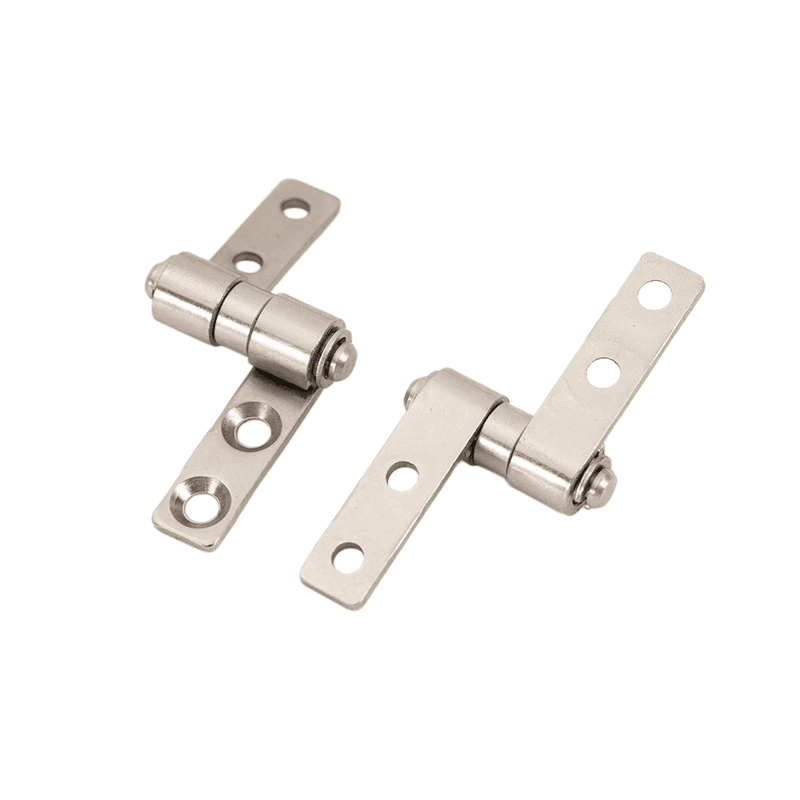
Table of Contents
1. The Science of “Feel”: Why the Hinge Defines the Product
Many designers fall into the trap of treating a hinge as a mere connector. However, from a customer’s perspective, the hinge is an extension of the User Interface (UI).
Imagine a surgeon needing to quickly adjust a monitor angle during a procedure. If the hinge is too loose, the screen droops; if it is too tight, it requires two hands and excessive force. This “damping feel” is essentially a matter of friction coefficient consistency. Friction hinges generate controlled resistance through internal mechanisms to counteract the gravitational torque of the lid, achieving what is known as “position control.”
2. Deep Dive into Friction Mechanics: What Happens Inside?
To select the right hinge, one must understand how the damping is generated. There are two primary friction mechanisms used in the industry today:
Wrapped Band Technology
This is the most common structure. A high-strength spring steel band is tightly wrapped around a center shaft. The advantage here is high torque density, allowing for significant resistance in an extremely small footprint.
Disk/Washer Stack
This uses multiple layers of wear-resistant washers (typically specialized polymers or metals) pressed together under axial pressure. This design excels in providing an incredibly smooth, “silky” feel, ideal for premium consumer electronics.
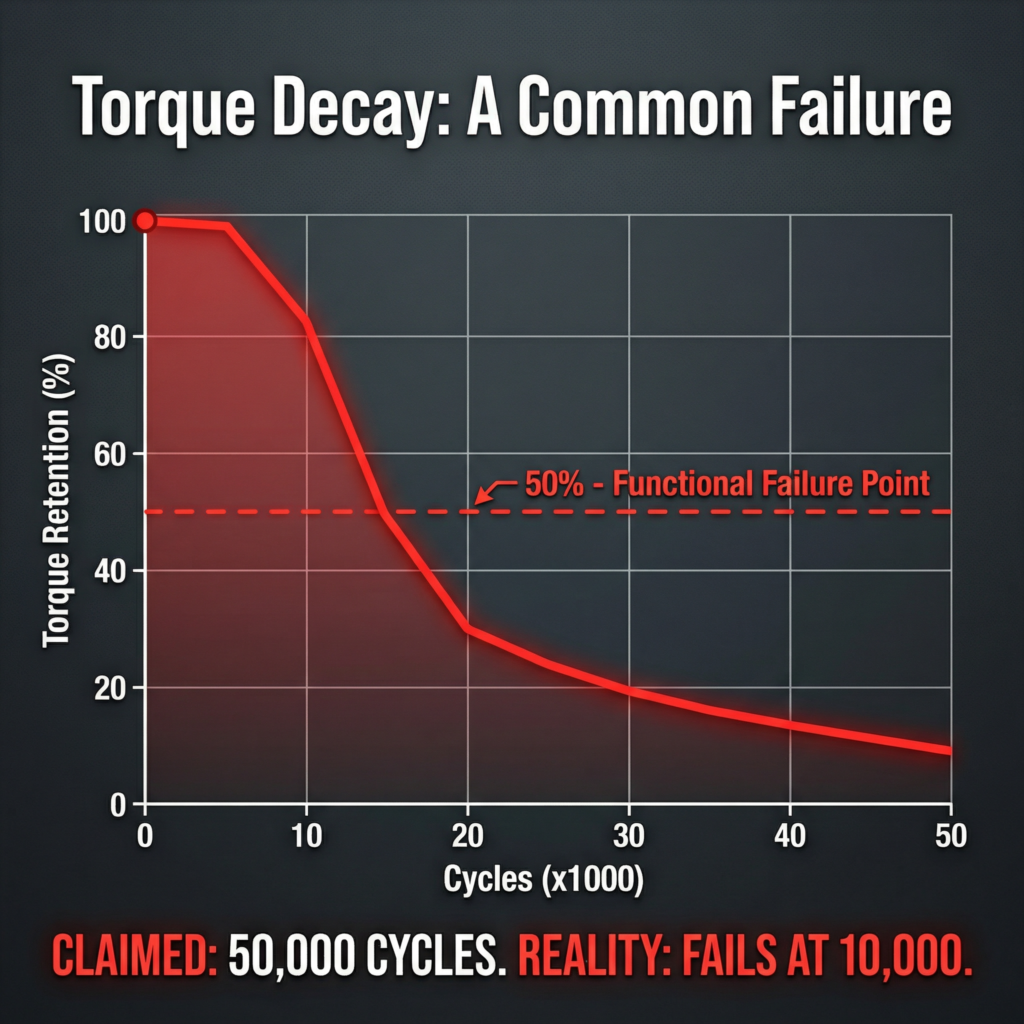
The Engineer’s Metric: Torque Decay
All friction hinges lose torque over time. A qualified industrial-grade hinge should limit torque decay to within 15% after 20,000 cycles. If a product fails to hold its position after six months of use, it is usually due to grease drying out or material fatigue.
3. Material Selection: Why Stainless Steel is the Standard
Clients often ask, “Is zinc alloy not cheaper?” While true, in the realm of high-performance friction hinges, Stainless Steel (specifically 304 and 316 grades) is the non-negotiable standard for several reasons:
- Creep Resistance: Friction hinges are under constant internal stress. Zinc alloys tend to “creep” or deform under long-term pressure, leading to rapid torque loss. Stainless steel maintains constant clamping force for years.
- Corrosion Resistance: Laboratory equipment faces chemical reagents, and outdoor electrical cabinets face salt spray. A 316 stainless steel hinge can pass 96-hour (or longer) salt spray tests, ensuring the pivot does not seize due to rust.
- Hardness Consistency: Friction generates heat. Stainless steel remains physically stable under repeated movement and does not produce the metallic debris that causes “creaking” noises in lower-grade carbon steels.
4. The Trend of Miniaturization: Challenges of Small Hinges
As electronic devices become thinner and lighter, the demand for Small Friction Hinges has surged. Achieving 1.0Nm or more in a diameter of less than 10mm is a significant manufacturing feat.
The difficulty with miniature hinges lies in heat dissipation and tolerance control. Because the volume is small, heat generated by friction cannot dissipate quickly, which can cause internal lubricants to fail. When sourcing small hinges, always verify the sealing technology and the brand of high-temperature synthetic grease used.
5. Adjustable vs. Fixed Torque: Which Fits Your Project?
During the prototyping phase, many engineers prefer Adjustable Friction Hinges.
- Adjustable Type: By turning a side adjustment screw, the resistance can be fine-tuned on-site. This is perfect for R&D where the exact weight or center of gravity of a lid might still be changing.
- Fixed Torque Type: Once a product design is finalized for mass production, fixed torque is the superior choice. It ensures that every unit coming off the assembly line has an identical “feel,” removing the risk of human error during manual adjustment.
Furthermore, the Friction Stay Hinge is a common variant. These are typically used for large lids on heavy enclosures, providing safety by preventing a heavy panel from accidentally falling and causing injury.
6. Prototyping Pitfalls: Why 3D Printed Hinges Fail
Many startups use 3D printed friction hinges for early functional verification, but this is a dangerous trap.
Thermoplastics used in 3D printing (like PLA or PETG) have low thermal stability. As soon as friction generates a small amount of heat, the plastic softens, and the friction force vanishes instantly. Additionally, the “stair-step” surface texture of 3D prints causes massive torque fluctuations. Advice: Use 3D printing to verify Fit (spatial alignment), but never to verify Function (damping feel). Functional tests must be conducted with metal samples.
7. The Engineer’s Selection Checklist
Before speaking with a supplier, prepare these data points to ensure a professional and efficient consultation:
- Static Torque Requirement: What is the maximum gravitational torque when the lid is in its worst position (usually horizontal)?
- Dynamic-to-Static Ratio: Do you need “easy to open, firm to hold” performance? (Some one-way hinges can make the opening torque only 60% of the closing torque).
- Cycle Life: How many years is the product expected to last? (Standard industrial grade is 20,000 cycles).
- Operating Environment: Are there acidic or alkaline conditions? Will the temperature range exceed -20°C to 60°C?
- Mounting Redundancy: Is there enough space to reinforce the mounting holes? Friction hinges exert high force; thin plastic housings often require metal backing plates.
8. Procurement Strategy: Identifying High-Quality Suppliers
Beyond technical specs, procurement teams should look for quality control details:
- 100% Torque Testing: Premium suppliers test every single hinge for torque before it leaves the factory and record the data.
- Grease Management: Ask about the lubricant used. High-end damping greases (like the Nyogel series) are expensive but essential for a smooth, consistent feel.
- Material Certification: Can they provide a spectrographic analysis of the metal? This ensures the 304 stainless steel is not produced from low-grade recycled scrap.
Conclusion
A friction hinge may be a small part of your product, but it carries the weight of the user’s judgment regarding “reliability” and “precision.” For engineers, success lies in understanding the friction mechanism and choosing the right material. For procurement, focusing on long-term consistency rather than short-term unit price saves significant after-sales costs.
In your next product iteration, take the time to test that small hinge. Great products are won in the details that others ignore.