
Friction Hinges Manufacturer
We support OEM & ODM customization, structural optimization, and strict torque testing to provide stable, reliable, and high-quality hinge solutions for your products.
✅ Stable hovering at any angle
✅ Smooth feel, no shifting jerks
✅ Customizable torque (light/medium/heavy)
✅ Long lifecycles, 10,000 opening and closing cycles
What is a friction hinges?
Friction hinges, also known as damping hinges or torque hinges, are precision rotating components that achieve stable hovering at any angle through an internal damping structure.
At Janhinge, It’s not only a connecting and rotating component, but also self-lock at any position within a 360° rotation range, preventing wobbling, sagging, and rebound, providing a smooth feel, precise positioning, any angle stop and long-lasting durability for your products.
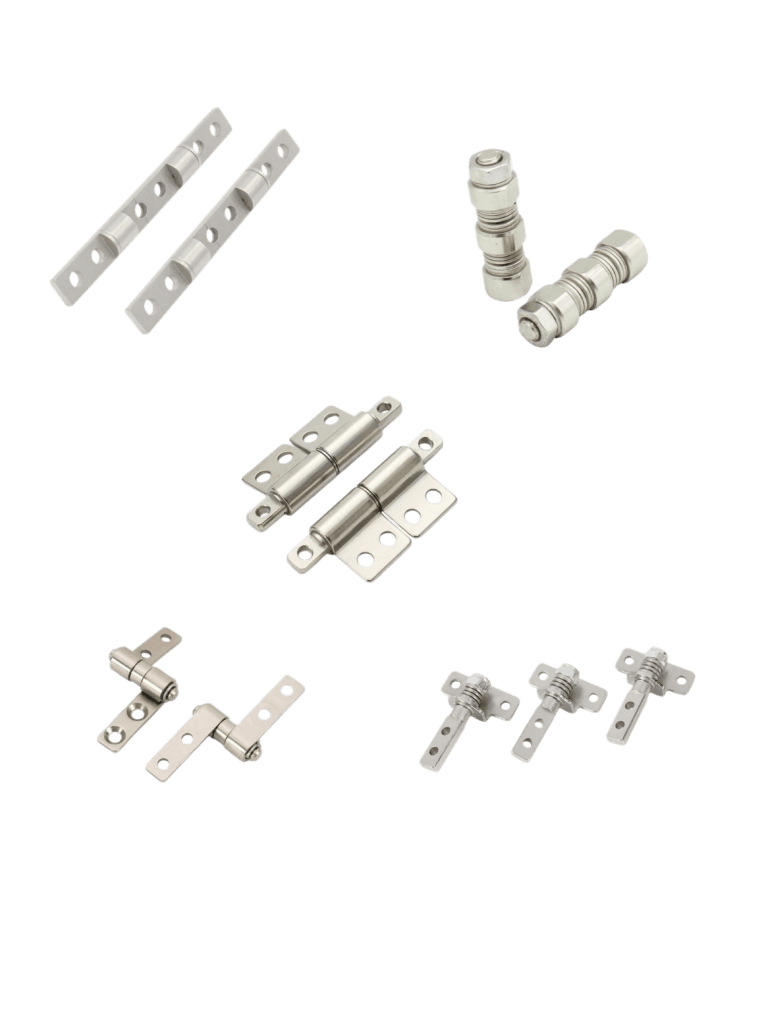
Janhinge Friction Hinges Application
1. Consumer Electronics
Laptops & Tablets: Achieving a perfect "one-finger open" and stable "free-stop."
Foldable Devices: Consistent torque for smooth, reliable screen folding.
2. Smart Home & Appliances
Soft-Close Lids: Silent, dampened closing for premium trash cans and washers.
Control Panels: High-end tactile feel for pop-up outlets and appliance knobs.
3. Automotive Interiors
Storage Compartments: Smooth, slow-opening glove boxes and center consoles.
Rear-Seat Displays: Rock-solid stability for entertainment and navigation screens.
4. Medical & Healthcare
Diagnostic Monitors: Precise positioning for surgical and patient monitoring displays.
Adjustable Equipment: Smooth, ergonomic movement for dental and laboratory tools.
5. UAVs & Robotics
Folding Arms: High-strength, zero-play hinges for high-vibration flight.
Stabilizers: Precise friction for cameras and industrial sensor mounts.
6. Office & Industrial
Ergonomic Furniture: Tension-controlled recline and tilt for high-end seating.
Access Panels: Safe, dampened opening for heavy machine covers and hatches.
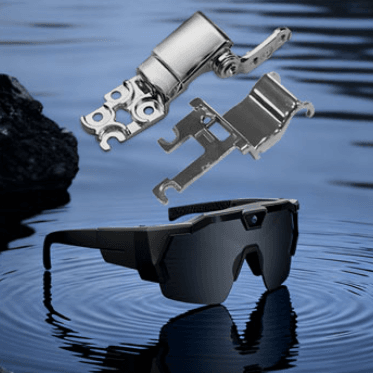




Precision Folding Hinges for Drones

Position Hinges for Consumer Electronics

Hinge Function
How do friction hinge work?
Friction hinges utilize a shaft, spring, and friction plate to generate a stable torque.
These provide smooth damping force for positioning at any angle, ensuring a stable stop without sagging or wobbling.
The core working principle of a damped hinge is the generation of a stable frictional torque (damping force) through its internal structure.
The compression of the shaft, washer, spring, and friction plate produces consistent and uniform resistance during rotation.
This resistance balances the weight of the device and external pressure, allowing the hinge to remain stable at any angle within its rotational range, without sagging, rebounding, or wobbling.
Torque can be customized to meet different product requirements, ensuring smooth operation, precise positioning, and a long service life.
How to make a friction hinge?
Design: Structural modeling is performed using CAD software to simulate torque curves. Materials: The core shaft (pin) is typically made of high-strength stainless steel or alloy steel (requiring heat treatment); blades or support components are typically made of zinc alloy, aluminum alloy, or stainless steel.
Shaft Machining: Machining is performed using a precision lathe (CNC lathe) to ensure roundness and coaxiality. Blade/Housing Machining: High-speed CNC milling or precision stamping (pressing) technology is used. For complex shapes, powder metallurgy (powder metallurgy) or zinc alloy die casting (die casting) is often used for forming.
Electroplating/Anodizing: Used for rust prevention and coloring of metal parts. Treatment of lymphoma (heat treatment): such as quenching or hardening, to increase the hardness of the shaft surface and prevent severe wear during use (this is the core of shaft wear).
Internal Component Assembly: Precision assembly of springs, washers, spindles, etc. Greasing: Application of high-viscosity damping grease to the friction surfaces. This is crucial for achieving a smooth feel and responsive stopping. The grease formulation directly determines the shaft’s stability.
Torque Test: Using a torque meter to test whether the opening and closing torque meets design standards. Life Cycle Test: Simulating real-world user scenarios, tens of thousands of continuous opening and closing cycles are performed on an automated machine to test torque decay. Salt Spray Test: Checking the corrosion resistance of components.
How to fit friction hinges
To measure the installation position of the friction hinge accurately by measuring tools. Typically, the hinge should be 100–150mm from the top lower edge of the door.
Crucial: Maintain the coaxiality of the left and right hinges (i.e., the rotation axes must coincide
Drill guide holes according to the markings. The depth should be moderate, avoiding penetration of the panel.
First, fix the hinge to the door panel or frame. Screw in one screw first, ensuring correct positioning, then screw in the remaining screws. Note: Do not completely lock it at this stage; leave room for fine-tuning.
Close the door panel and check if the gap is even. Observe if the door panel can “stop” at the predetermined angle. If there is rebound or sagging, it indicates a problem with the installation angle or balance force.
After confirming that the movement is smooth and the position is accurate, tighten all screws completely.
How to measure a friction hinge
Before measurement, determine left/right, front/back, and rotation direction.