
In the cabin of a modern car, luxury is no longer just about the leather materials, but also about the tactile feedback of every moving part. The glove box closing gracefully and silently, or the armrest retracting without a harsh “click,” conveys the vehicle’s superior engineering design philosophy to the consumer.
At the heart of these subtle movements lies the car’s rotary dampers. As a professional manufacturer of high-precision motion control components, we provide comprehensive technical analysis to help engineers and purchasing teams navigate the complexities of dampers technology within the automotive supply chain.
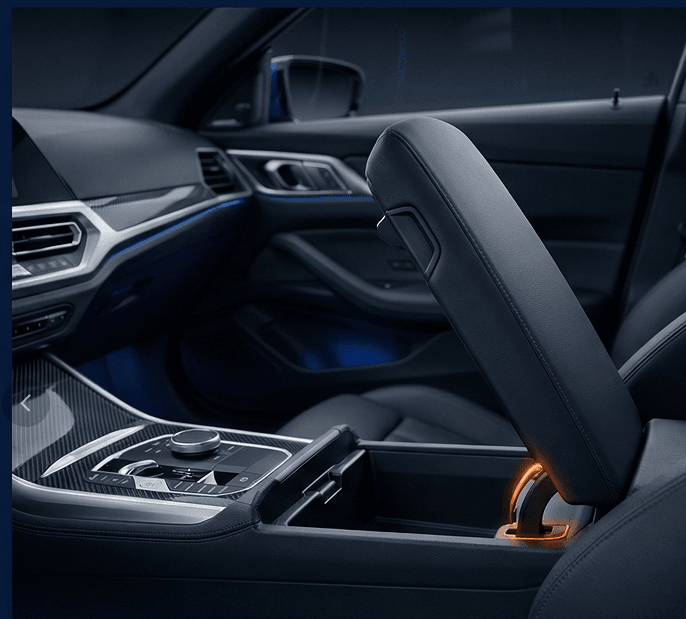
I. The Role of rotary Dampers in Automotive NVH and Perceived Quality
In the era of Electric Vehicles (EVs), the interior acoustic environment has undergone a dramatic transformation. Without the masking noise of an Internal Combustion Engine (ICE), any mechanical vibrations, squeaks, or severe impacts are amplified. This makes noise, vibration, and harshness (NVH) paramount in interior design.
Automotive dampers are the “silent heroes” that manage kinetic energy. Whether it is a glove box damper or a console lid buffer, the goal is to convert kinetic energy into thermal energy through viscous friction, thereby ensuring a superior user experience and protecting fragile plastic latches from impact fatigue.
II. Technical Deep Dive: Mechanism and Classification
Understanding the physics behind damping is crucial for correct component selection. In the automotive interior sector, we primarily categorize dampers based on their resistance medium.
1. Hydraulic Dampers (Viscous Rotary Dampers)
These are the industry standard for high-end applications like glove boxes and retractable cup holders.
- The Physics: They operate on the principle of fluid shear stress. A rotor moves through high-viscosity silicone oil within a sealed housing.
- Engineering Advantage: They provide a smooth, consistent velocity curve and are virtually silent.
2. Friction Dampers Hinges
Used in lower-load applications or where cost-efficiency is the primary driver.
- The Mechanism: They rely on the mechanical friction between two surfaces (often enhanced by high-tack grease).
- Engineering Trade-off: While cost-effective, they are more prone to “stiction” (static friction being higher than kinetic friction), which can cause a jerky initial movement.
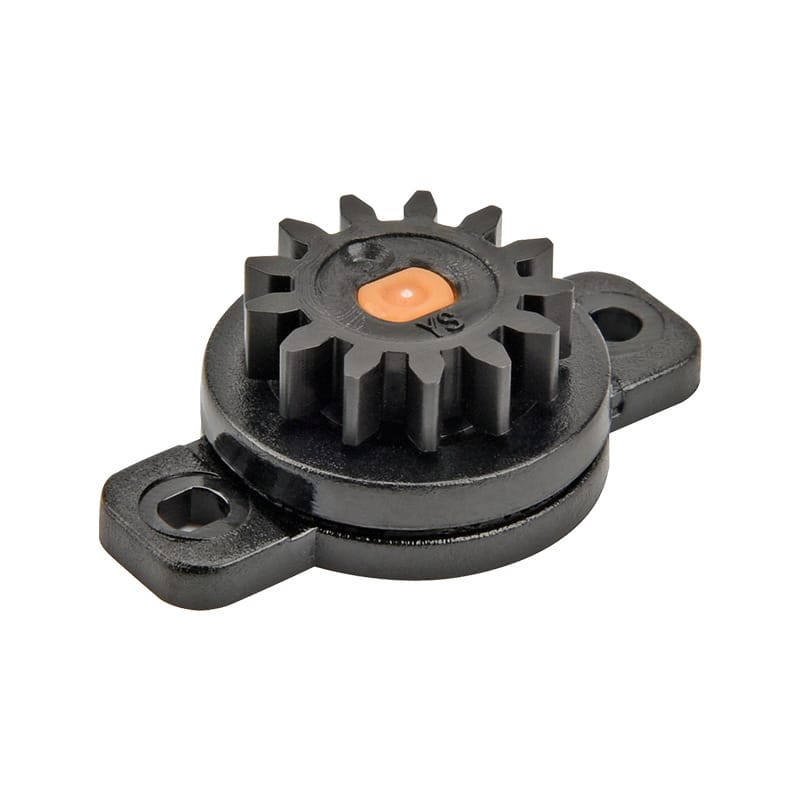
III. The Engineer’s Perspective: Critical Performance Metrics
When a Product Engineer evaluates a rotary damper, the following three parameters determine the success or failure of the sub-assembly.
1. Thermal Stability and the Viscosity Index
The greatest challenge for automotive dampers is the operating temperature range. A vehicle parked in Northern Sweden at -40C must have a glove box that still opens, while a vehicle in the Arizona desert at +85 C must not have a glove box that slams down.
- Our Solution: We use specialized High Viscosity Index (HVI) silicone oils. These synthetic fluids have a flat viscosity-temperature slope, ensuring that the closing time deviation is kept within a strict pm 15% tolerance across the entire automotive temperature envelope.
2. Torque Consistency and Deca
“Torque decay” refers to the loss of damping force over time. This is often caused by the degradation of the silicone oil or the physical wear of the internal vanes.
- The Standard: We design for a minimum of 50,000 cycles.
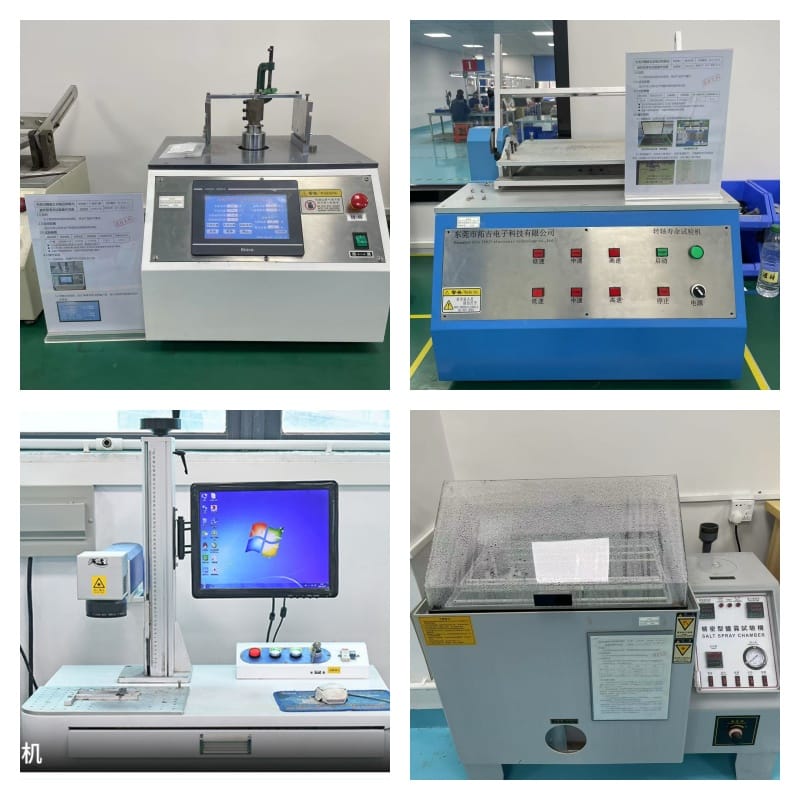
- Testing Protocol: Our dampers undergo accelerated aging tests where they are cycled at peak loads to ensure that the torque at the 50,000th cycle is within 85% of the initial value.
3. Chemical Compatibility and Stress Cracking
Dampers are often housed in assemblies made of PC/ABS or PP. If the silicone oil or the damper’s own housing material (usually POM or PA66) is not chemically compatible with the surrounding grease or cleaning agents, Environmental Stress Cracking (ESC) occurs. We perform rigorous compatibility matrices to ensure no chemical migration happens between the damper and the interior trim.
IV. The Sourcing Guide: Managing Risk and Total Cost
For a Procurement Manager, the “unit price” of a damper is only the tip of the iceberg. The real cost lies in the PPM (Parts Per Million) failure rate and the potential for a line-stop at the OEM.
1. Eliminating the Leakage Risk
The most common failure mode in hydraulic dampers is oil leakage. This is typically a result of poor ultrasonic welding or inferior O-ring seals.
- Procurement Audit Tip: Ask your supplier if they perform 100% vacuum leak testing. High-quality factories utilize automated sensors to detect even microscopic pressure drops before the parts are packed.
2. IATF 16949 Compliance and Traceability
In the automotive world, traceability is non-negotiable. Every batch of dampers should be traceable back to the raw material lot of the silicone oil and the resin. As an IATF 16949 certified facility, our quality management system ensures that every part has a “digital birth certificate.”
3. Customization vs. Off-the-Shelf
A 50g glove box and a 2kg glove box cannot use the same damper. Procurement should look for a supplier that offers Torque Customization. We provide rapid prototyping (3D printed samples followed by soft-tooling) to help engineers dial in the perfect “feel” before mass production begins.
V. Advanced Applications: From Glove Boxes to EV Charging Ports
The application of damping technology is expanding beyond the dashboard:
- EV Charging Covers: Dampers ensure that the charging port door opens with a futuristic, motorized-like precision, protecting the sensor-heavy hinge mechanisms.
- Exterior Door Handles: Hidden “pop-out” handles on modern EVs require micro-dampers to control their deployment speed and prevent finger-pinch hazards.
- Center Console Lids: Multi-stage dampers allow for a “soft-start” and “soft-stop” at both ends of the opening arc.
VI. Why Choose Jan Rotary Damper Solutions?
Our factory is not just a parts manufacturer; we are a center of excellence for motion control. We bridge the gap between complex fluid dynamics and high-volume automotive production.
| Metric | Our Standard | Competitor Average |
| Material Quality | 100% Virgin PA66-GF30 | Recycled/Regrind blends |
| Sealing Life | Dual-lip FKM Seals | Single-lip Nitrile |
| Testing | 100% Automated Torque Check | Batch/Sampling only |
| Response | 48-hour CAD Turnaround | 1-week Lead time |
How do you ensure consistent damper performance across extreme temperatures (e.g., -40°C to +80°C)?
Automotive interiors must withstand harsh environmental shifts. We address this challenge by utilizing High Viscosity Index (HVI) synthetic silicone oils. Unlike standard oils that fluctuate wildly in thickness, HVI fluids maintain a flat viscosity-temperature curve. Combined with housing materials like PA66-GF30 (Glass-Filled Polyamide), our dampers ensure that closing times remain within a strict 15% tolerance, preventing “freezing” in winter or “slamming” in summer.
What prevents your rotational dampers from leaking over a long vehicle lifecycle?
Leakage is the “Achilles’ heel” of poor-quality dampers. We mitigate this through a dual-layered defense:
Precision Sealing: We use high-grade Fluorocarbon (FKM) O-rings that offer superior chemical resistance to silicone oil.
Automated Testing: Our production line includes 100% vacuum leak testing and automated torque verification. This ensures that every unit leaving our IATF-certified facility maintains its hermetic seal for a minimum of 50,000 cycles.
Can your dampers be customized for specific torque requirements of different glove box weights?
Absolutely. A 500g plastic glove box and a 2kg premium leather-wrapped unit require vastly different damping forces. We provide Customized Torque Calibration (0.1Nm to 5.0Nm based on your sub-assembly’s center of gravity and opening angle. Our engineering team can analyze your CAD models to simulate the ideal movement curve, ensuring a smooth, premium “soft-start and soft-stop” effect.
Do your products comply with international automotive standards and environmental regulations?
Yes. Our factory operates under the IATF 16949 quality management system, which is the gold standard for the automotive supply chain. Furthermore, all materials used in our dampers are fully compliant with RoHS and REACH regulations, and we provide full material traceability (IMDS reporting) to support your global compliance requirements.
Conclusion: Securing Your Supply Chain for 2026 and Beyond
As automotive interiors become more interactive and EV-driven, the demand for precision hydraulic dampers and friction dampers will only increase. Choosing a supplier that speaks the language of your engineers and respects the budget constraints of your procurement team is vital.
We don’t just sell rotary dampers; we sell the sound of quality—silence.