
When designing products with movable covers, hoods, or display panels, engineers face a critical decision: what effects and functions does the product need—stopping at any position, or a slow-close effect? How can this movement be controlled? Two of the most common solutions are rotary damper and friction hinge (also known as torque hinges or position hinges).
While they may seem similar and both provide resistance to movement, their physics, feel, and primary applications are quite different. Choosing the wrong component can lead to a poor user experience or product malfunction.
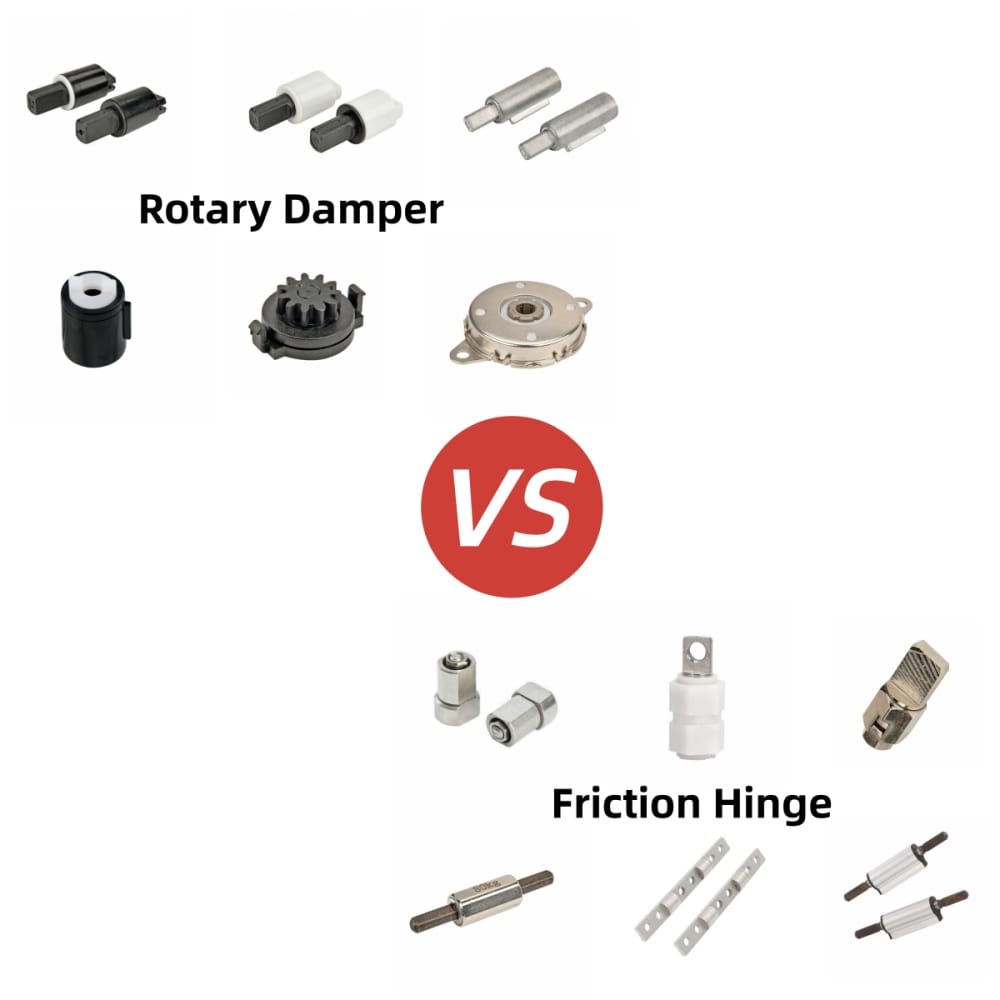
The Core Difference: Speed vs. Position
The easiest way to understand the difference is to look at their primary function:
•Rotary Damper = Speed Control (Soft-Close). It slows down a moving object.
•Friction Hinge = Position Control (Free-Stop). It holds an object stationary at any given angle.
How a Rotary Damper Works (The “Soft-Close” Effect)
As discussed in previous articles, a rotary damper uses viscous fluid resistance (silicone oil) to generate drag.
Key Characteristic: The resistance is speed-dependent.
If you try to move it fast, it fights back hard. If you move it slowly, it offers very little resistance.
Typical Scenario: You let go of a washing machine lid. Gravity pulls it down. The damper engages, the fluid shear creates resistance, and the lid slowly and elegantly glides to a closed position without slamming.
How a Friction Hinge Works (The “Free-Stop” Effect)
It relies on mechanical friction—usually generated by tightly compressed metal bands, spring steel clips, or plastic friction washers rubbing against a steel shaft.
Key Characteristic: The resistance is constant, regardless of speed. Discuss on Whatsapp
Typical Scenario: You open a laptop screen to 115 degrees and let go. It provides a constant holding torque that is greater than the force of gravity pulling the screen down. The screen stays exactly where you left it.
Direct Comparison
| Feature | Rotary Damper | Friction Hinge |
| Primary Function | Slow down motion (Soft-Close) | Hold position (Free-Stop) |
| Resistance Type | Viscous fluid (Dynamic) | Mechanical friction (Static) |
| Speed Dependency | Yes (Faster = More resistance) | No (Constant resistance) |
| What happens when you let go? | The object slowly falls to the closed position. | The object stays exactly where you left it. |
| Uni-directional capability? | Yes (Easy open, slow close) | Yes (Asymmetric torque hinges exist) |
| Typical Applications | Toilet seats, piano lids, glove boxes, trash cans | Laptops, diagnostic monitors, POS terminals, folding tables |
Can You Use Them Together?
Yes, but this is rare and usually unnecessary. In some highly specialized heavy-duty applications, engineers may use friction hinges to keep heavy access panels open and rotary dampers to ensure that the panel does not slam shut dangerously even if it is hit and overcomes the holding force of the friction hinges.
How to Choose: The Decision Matrix
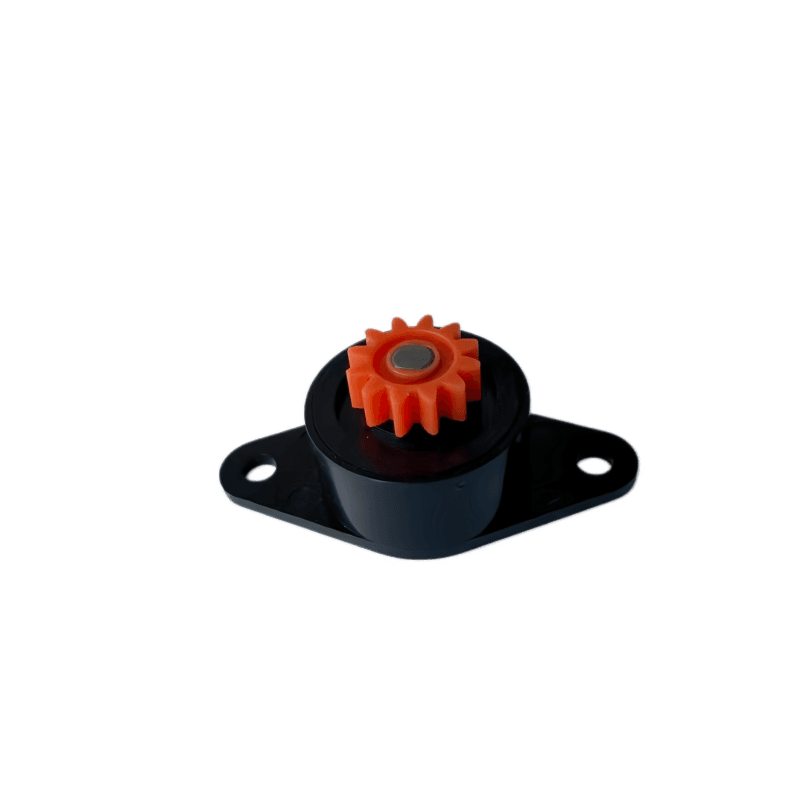
Rotary dampers are the preferred choice
primarily suited for scenarios with core requirements of “buffering and protection, quiet experience, and high-end feel.” These can be divided into four core scenarios, each addressing key pain points and experience upgrade needs during product use. Firstly, addressing situations where users might accidentally release their grip or the cover might fall, the rotary damper provides uniform reverse resistance through its built-in damping structure. Even if the user suddenly releases their grip, the cover will close slowly and steadily, preventing damage from impact and reducing safety hazards from accidental drops. This is commonly found in appliance covers, car storage compartments, and instrument/equipment doors.
Secondly, in scenarios where the impact noise from the violent slamming of covers or cabinet doors needs to be avoided, the rotary damper’s buffering effect effectively absorbs the impact force during closure, eliminating the harsh “bang” sound and creating a quiet environment. This is particularly suitable for products with strict noise control requirements, such as bedroom furniture, medical equipment, and high-end appliances, enhancing user comfort. Thirdly, in scenarios where the risk of pinching fingers is eliminated from the design stage, whether it’s appliance covers, children’s furniture, or office equipment, the slow-closing characteristic of rotary dampers prevents users from being pinched during the closing process due to excessively rapid operation. This is especially suitable for products designed for children, enhancing product safety and reducing the risk of safety complaints.
Fourthly, in scenarios seeking a high-end feel and a smooth, automated experience, the uniform opening and closing effect of rotary dampers adds a sense of ceremony to product operation, eliminating the stiffness of ordinary component opening and closing. This conveys the product’s refined design and high-end positioning, commonly found in high-end smartphone cases, luxury packaging boxes, high-end cabinets, and precision instruments, helping to increase the product’s premium value. Furthermore, rotary dampers can adjust the damping force according to product needs, adapting to components of different weights and sizes, offering exceptional flexibility.
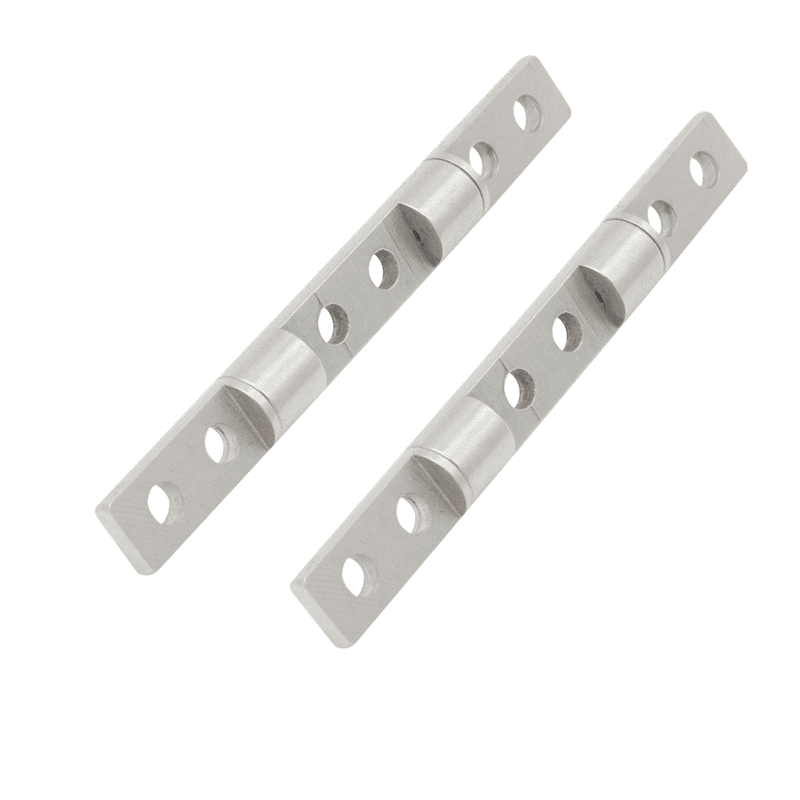
Friction hinges are preferred
Firstly, with core compatibility for scenarios requiring “angle adjustment, stable hovering, and positioning support.” This also corresponds to the three core usage scenarios, precisely addressing the core pain points of product positioning and support. Firstly, in scenarios where product screens and panels need to be freely adjustable to any comfortable viewing angle, friction hinges rely on their own friction to achieve multi-angle positioning. Users can adjust the screen or panel to the optimal viewing angle according to their usage habits without the need for additional fixing devices. This is commonly found in products such as laptop and tablet cases, monitor stands, and medical examination equipment, meeting diverse user needs.
Secondly, in scenarios where components need to rely on their own friction to counteract gravity and remain suspended at any position without slipping, friction hinges provide stable friction, balancing the component’s weight and ensuring that the component remains stationary at any rotation angle, preventing it from rotating or slipping due to gravity. Examples include folding desk lamps, industrial control panels, and vehicle mounts, all of which rely on friction hinges for stable suspension and ensure ease of operation.
Thirdly, for clamshell devices, especially laptop and tablet cases, foldable phones, and portable instruments, friction hinges not only enable smooth rotation but also provide stable support when the lid is open, preventing the device from wobbling during use. Furthermore, the opening angle can be adjusted according to product design requirements, balancing practicality and portability. Unlike rotary dampers, the core advantage of friction hinges lies in “positioning” rather than “buffering.” Their friction can be precisely adjusted according to the product’s weight, adapting to different sizes of clamshell devices. They are also durable and resistant to wear, making them suitable for products requiring frequent opening and closing.
Frequently Asked Questions (FAQ)
Q1: Can a rotary damper hold a lid open?
A: No. A rotary damper only slows down motion; it does not stop it. Gravity will eventually pull the lid closed. If you need it to stay open, you need a friction hinge or a mechanical latch.
Q2: Do friction hinges wear out faster than rotary dampers?
A: Friction hinges rely on mechanical wear, so they can experience “torque drop” over tens of thousands of cycles. High-quality friction hinges from JAN use hardened steel and specialized greases to minimize this wear, ensuring long life.
Q3: Which is more expensive?
A: It depends on the torque rating and size, but generally, high-torque friction hinges are slightly more expensive to manufacture due to the precision hardened steel components required, compared to the plastic and silicone oil construction of standard rotary dampers.
Q4: Can I get an asymmetric friction hinge?
A: Yes. Just like rotary dampers, friction hinges can be designed to provide high resistance in one direction (to hold a heavy monitor up) and low resistance in the other (so the user can easily push it down).
Q5: What if my application requires both free-stop and soft-close?
A: This requires a complex hybrid hinge design or utilizing a cam-mechanism that engages a damper only at the last 20 degrees of closure. Contact JAN Hinge Damper engineering for custom hybrid solutions.