
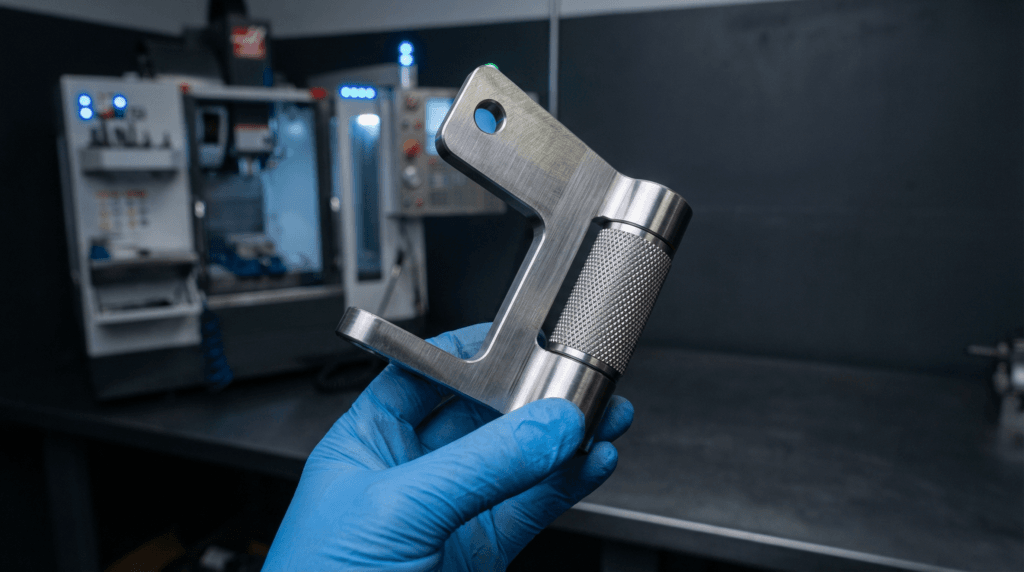
Standardization is central to modern engineering. Designers select standard components from product catalogs whenever possible to save time, reduce costs, and streamline the supply chain. For 80% of applications—whether it’s a simple access panel, a monitor stand, or a laptop screen—standard off-the-shelf torque hinges (friction hinges) are perfectly adequate.
But what about the remaining 20%?
What if you’re designing a ruggedized military tablet that must operate at -40°C? Or a precision medical diagnostic device where the hinge must be completely concealed externally? Or an aerospace cabin where every gram of weight is critically controlled?
In these special cases, forcing the use of standard hinges can negatively impact the performance of the final product. Of course, there is thousands of stock friction hinges models in Janhinge manufacturer; we can send you a catalog if needed. Email: [email protected]. Or communicate on Whatsapp.
Scenario 1: Extreme Environmental Requirements
Standard torque hinges are typically lubricated with general-purpose synthetic grease and use zinc alloy or standard steel components. They are designed for climate-controlled environments (0°C to 40°C).
If your application operates outside these bounds, a custom solution is mandatory:
•Temperature Extremes: In aerospace or military applications, standard grease freezes solid at -40°C (locking the hinge) or liquefies at +85°C (causing the hinge to lose all torque and drop the panel). Custom hinges use specialized aerospace-grade silicone oils or dry-lubricant friction bands.
•Corrosive Environments: For marine equipment exposed to saltwater, or medical devices subjected to harsh chemical washdowns, standard zinc plating will quickly corrode. Custom hinges are machined from 316L stainless steel with passivated finishes to ensure decades of rust-free operation.
Scenario 2: Highly Specific Torque Profiles
A standard torque hinge usually provides a symmetric torque profile—meaning it takes the exact same amount of force to open the panel as it does to close it.
However, advanced ergonomics often require a custom asymmetric profile. For example, if you are designing a heavy top-loading lid for an industrial centrifuge, you want the lid to be easy to lift (low opening torque) but highly resistant to falling (high closing torque).
Furthermore, custom manufacturers can engineer detent (click-stop) features into the friction hinge. This allows the panel to move smoothly with friction, but “snap” securely into predefined angles (e.g., exactly 0°, 90°, and 180°), providing tactile feedback to the user .
Scenario 3: Extreme Space and Weight Constraints
Consumer electronics, such as 2-in-1 convertible laptops, ultra-thin tablets, and foldable smartphones, push the limits of mechanical engineering.
Standard hinges have bulky mounting leaves (the flat plates with screw holes). In a 5mm thick tablet, there is simply no room for standard screw mounting. Custom torque hinges are designed to be integrated directly into the chassis:
•Press-Fit / Knurled Barrels: The hinge is manufactured as a tiny cylinder with a knurled (textured) outer surface. It is press-fitted directly into a cavity in the plastic or magnesium chassis, eliminating screws entirely.
•Miniaturization: Custom friction elements (like stacked Belleville washers or miniature curled bands) can be engineered to deliver high torque in a barrel diameter as small as 3mm .
Scenario 4: Aesthetic and Aesthetic Integration
In high-end architectural hardware, luxury automotive interiors, or premium appliances, the sight of a bulky industrial hinge with exposed screws ruins the design language.
Custom hinges can be designed as concealed (hidden) hinges. The pivot point and friction mechanism are engineered to sit entirely inside the wall or cabinet, completely invisible when the door is closed. Additionally, custom mounting brackets can be laser-cut or CNC-machined to match the exact contours of your unique injection-molded or die-cast parts.
The Custom Hinge Engineering Process
Many engineers hesitate to request custom components because they fear long lead times and exorbitant tooling costs. However, partnering with a specialized manufacturer like Janhinge makes the process highly efficient.
Here is the typical 4-step process for developing a custom torque hinge:
| Phase | Description | Typical Timeline |
| 1. Engineering Consultation | You provide panel weight, CG dimensions, cycle life requirements, and 3D CAD models of your assembly. | 1 – 3 Days |
| 2. Design & Simulation | Our engineers design the custom friction mechanism, calculate the torque decay over time, and provide a 3D CAD model for you to drop into your assembly. | 1 – 2 Weeks |
| 3. Rapid Prototyping | We manufacture physical, fully functional prototypes (often using CNC machining) for you to test in your actual product. | 2 – 3 Weeks |
| 4. Mass Production | Once approved, we build the final stamping/casting tooling and begin automated mass production with strict quality control. | 4 – 6 Weeks |
Conclusion
Standard torque hinges are fantastic for standard problems. But when your design demands extreme temperature resilience, complex asymmetric torque, zero-footprint mounting, or perfect aesthetic concealment, a custom torque hinge is not just an option—it is an engineering necessity.
At Janhinge, we specialize in solving the motion control problems that standard catalogs cannot. If you have a challenging application, contact our engineering team today. We will turn your unique requirements into a precision-engineered reality.
Frequently Asked Questions (FAQ)
Q1: Are custom torque hinges much more expensive than standard ones?
It depends on the volume. For low-volume orders (under 500 units), the tooling and NRE (Non-Recurring Engineering) costs make custom hinges significantly more expensive per unit. However, for high-volume production (10,000+ units), a custom hinge can actually be cheaper. By integrating the hinge directly into your chassis design, you eliminate the need for secondary mounting brackets and assembly screws, lowering your total manufacturing cost.
Q2: What is the minimum order quantity (MOQ) for a custom hinge?
This varies by manufacturer and the complexity of the design. At Janhinge, we are highly flexible. While mass production pricing typically requires an MOQ of 1,000 to 5,000 units, we regularly produce small batches (100-500 units) for specialized aerospace, medical, and military applications where quality is more important than volume.
Q3: Can you customize the torque of a standard hinge without changing its physical shape?
Absolutely. This is the most common form of “semi-customization.” If a standard hinge fits perfectly in your design but you need 3.5 Nm of torque instead of the catalog’s 2.0 Nm, we can often achieve this simply by modifying the internal friction bands or disc springs, without changing the external dimensions or requiring new tooling.
Q4: How long does it take to get a custom hinge prototype?
Once the 3D CAD design is approved by your engineering team, we can typically produce fully functional CNC-machined prototypes within 2 to 3 weeks. These prototypes will have the exact torque characteristics of the final mass-produced parts, allowing you to perform accurate ergonomic testing.
Q5: Can you design a hinge that holds the panel, but also acts as an electrical conductor?
Yes. In applications like laptops or illuminated display cases, routing wires through a moving joint is a major point of failure. Custom torque hinges can be engineered with hollow center shafts (allowing wires to pass safely through the pivot axis) or designed using specific conductive alloys to act as a ground path or low-voltage conductor.
To discuss your custom torque hinge requirements, visit www.janhinge.com.