
In the realm of mechanical design, achieving the perfect tactile response is often the difference between a product that feels “good enough” and one that feels truly premium. While the basic functions of rotary dampers (slowing motion) and friction hinges (holding position) are well understood, the engineering nuances required to implement them flawlessly in high-stakes environments are often overlooked.
For engineers and procurement professionals tasked with sourcing components for automotive interiors, high-end consumer electronics, or critical medical devices, a deeper understanding of torque decay, one-way vs. two-way damping, and lifecycle testing is essential. Janhinge, a premier OEM/ODM manufacturer with over two decades of expertise, provides this advanced guide to help you navigate the complexities of motion control specification. Discuss more on Whatsapp.
The Nuances of Damping: One-Way vs. Two-Way Rotary Dampers
When specifying a rotary damper, one of the most critical decisions an engineer must make is determining the required direction of the damping force. While standard dampers provide resistance in both directions, many applications require a more sophisticated approach.
Two-Way (Bidirectional) Dampers
A two-way rotary damper provides equal fluid resistance regardless of the rotation direction. The internal rotor forces silicone oil through the same throttling channels whether the component is opening or closing.
Best for: Applications where controlled motion is required throughout the entire operational cycle.
•Examples: Heavy industrial access panels, certain types of monitor height adjustments, and specialized medical equipment where sudden movements in any direction could be hazardous.
One-Way (Unidirectional) Dampers
A one-way rotary damper is engineered with an internal clutch or check-valve mechanism. It provides high fluid resistance (damping) in one direction, but allows the rotor to spin freely with near-zero resistance in the opposite direction.
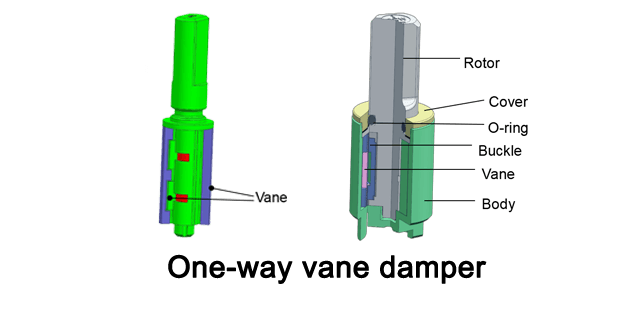
Figure 1: Internal clutch mechanisms differentiate one-way dampers from standard two-way designs.
Best for: Applications where a lid or door needs to be lifted easily by the user, but must close slowly and silently on its own.
•Examples:
•Toilet Seats: You want the seat to lift effortlessly (no damping), but drop slowly to prevent slamming (high damping).
•Automotive Glove Boxes: The door should drop open smoothly and slowly, but closing it back up should require minimal effort.
•Top-Loading Washing Machines: The heavy glass lid must be easy to open but safe and slow to close.

Figure 2: Automotive glove boxes rely heavily on one-way rotary dampers for a luxurious, slow-opening feel.
Specifying the wrong type can ruin the user experience. If a two-way damper is used on a glove box, the user will have to fight the damping resistance just to close it. Janhinge’s engineering team specializes in customizing the internal clutch mechanisms of one-way dampers to ensure the “free-spin” direction has virtually zero drag. Discuss more on Whatsapp.
Combating Torque Decay in Friction Hinges
For friction hinges (torque hinges), the primary engineering challenge is not generating the initial torque, but maintaining that torque over the product’s entire lifecycle. The phenomenon where a hinge loses its holding power over time is known as torque decay.
Understanding the Causes of Torque Decay
Friction hinges rely on the mechanical compression of spring washers (like Belleville springs) against friction plates. Over thousands of cycles, several factors contribute to torque loss:
1.Material Wear (Galling): As the metal friction plates rub against each other, microscopic surface asperities are smoothed out or sheared off. This reduces the coefficient of friction.
2.Spring Fatigue: The spring washers that provide the compressive force can experience metallurgical fatigue, slowly losing their tension over time.
3.Lubricant Degradation: If the internal damping grease dries out or is pushed out of the friction zone, the wear rate accelerates dramatically.

Figure 3: A typical torque decay curve. High-quality hinges maintain a stable plateau for tens of thousands of cycles before dropping off.
Engineering Solutions for Stable Torque
To combat torque decay, premium manufacturers like Janhinge employ advanced metallurgical and structural strategies:
•Asymmetric Friction Plate Design: Using dissimilar metals for the mating friction surfaces (e.g., hardened stainless steel against a specific zinc alloy) prevents galling and cold-welding, significantly reducing wear.
•Pre-Setting (Run-In): High-quality hinges are often cycled several times at the factory. This “run-in” period intentionally smooths the initial microscopic asperities so that the hinge delivered to the customer is already operating on the stable plateau of the torque curve.
•Advanced Spring Steels: Utilizing high-carbon spring steels with precise heat treatments ensures the Belleville washers maintain their compressive force even after 50,000 cycles.
When sourcing friction hinges for critical applications like laptop screens or medical monitors, procurement teams must demand lifecycle testing data. A hinge that feels perfect on day one but sags after three months is a liability.
The Rise of Integrated Damping Hinges
Historically, engineers had to design systems that used a standard mechanical hinge for structural support, paired with a separate rotary damper mounted nearby to control the speed. Today, the industry is shifting rapidly toward integrated damping hinges.
What is an Integrated Damping Hinge?
An integrated damping hinge combines the load-bearing structural elements of a traditional hinge with the fluid-resistance mechanism of a rotary damper into a single, compact unit.

Figure 4: Modern integrated damping hinges used in premium cabinetry and furniture.
Engineering Advantages
1.Space Optimization: By eliminating the need for a secondary damper housing, engineers can design sleeker, more compact products. This is especially critical in modern furniture design and compact appliances.
2.Simplified Assembly: Procurement teams only need to source one SKU instead of two. Assembly lines save time because there is no need to align a separate damper with the hinge axis.
3.Precise Actuation: Integrated hinges often feature a “catch” mechanism. For example, a cabinet door might swing freely until the last 20 degrees of closure, at which point the internal hydraulic damper engages to pull the door shut silently.
Janhinge’s friction and damping hinges are engineered to provide this seamless integration, offering custom torque profiles that dictate exactly when and how strongly the damping effect engages. Discuss more on Whatsapp.
The True Cost of Quality: Why Lifecycle Testing Matters
For procurement professionals, the initial unit cost of a rotary damper or friction hinge is only a fraction of the total cost of ownership. A component failure in the field can result in expensive warranty claims, brand damage, and even safety hazards.
The Hidden Costs of Cheap Components
When sourcing motion control components, the temptation to select the lowest bidder is strong. However, inferior components often suffer from:
•Premature Torque Decay: A laptop screen that won’t stay up after six months of use.
•Oil Leakage: Poorly sealed rotary dampers can leak silicone oil, ruining the aesthetics of a premium appliance or automotive interior.
•Inconsistent Damping: Variations in fluid viscosity or internal clearances can cause one washing machine lid to slam shut while another takes ten seconds to close.
Rigorous Testing Protocols
To mitigate these risks, leading OEM/ODM manufacturers like Janhinge invest heavily in comprehensive testing protocols.

Figure 5: Automated lifecycle testing rigs simulate tens of thousands of operations to ensure long-term reliability.
1. 100% Torque Inspection: Every single rotary damper and friction hinge must be tested on a precision torque meter before packaging. This ensures that the component falls within the specified torque tolerance (e.g., ±15%).
2. Automated Lifecycle Testing: Components are subjected to continuous opening and closing cycles on automated test rigs. For consumer electronics, this might be 20,000 cycles. For automotive and medical applications, the requirement often exceeds 50,000 cycles. The torque is measured periodically to ensure the decay curve remains within acceptable limits.
3. Environmental Stress Testing: Components are placed in environmental chambers to simulate extreme conditions. This includes temperature cycling (e.g., -40°C to +85°C) to verify the stability of the damping fluid and the integrity of the seals, as well as salt spray testing to ensure the metal components resist corrosion.
By partnering with a manufacturer that prioritizes these rigorous testing standards, engineers and procurement teams can confidently specify components that will deliver reliable, long-lasting performance.
Frequently Asked Questions (FAQs)
Q1: What is the difference between a one-way and a two-way rotary damper?
A two-way rotary damper provides equal fluid resistance in both directions of rotation. A one-way rotary damper incorporates an internal clutch mechanism that provides high resistance in one direction (for a slow, controlled close) and near-zero resistance in the opposite direction (for easy opening).
Q2: Why does my friction hinge lose its holding power over time?
This phenomenon is known as torque decay. It is primarily caused by the wear of the internal friction plates (galling) and the fatigue of the spring washers that provide the compressive force. High-quality hinges combat this by using dissimilar metals, advanced spring steels, and factory pre-setting (run-in) to ensure stable long-term performance.
Q3: Can I use a standard rotary damper instead of an integrated damping hinge?
Yes, but it requires more space and a more complex assembly process. An integrated damping hinge combines the structural support of a hinge with the fluid resistance of a damper into a single unit, saving space and simplifying the bill of materials. However, for very heavy loads or specific spatial constraints, a separate heavy-duty rotary damper may still be the best choice.
Q4: How do I know if a rotary damper will leak silicone oil?
High-quality rotary dampers utilize advanced sealing technologies, such as precision NBR/EPDM O-rings and ultrasonic welding encapsulation, to prevent leakage. You should always request lifecycle testing data from the manufacturer to verify the integrity of the seals over tens of thousands of cycles. Leakage is typically a sign of inferior manufacturing or improper installation (e.g., applying excessive lateral force to the rotor).
Q5: Does Janhinge offer custom torque profiles for specific applications?
Yes. As an experienced OEM/ODM manufacturer, Janhinge specializes in customizing the internal fluid viscosity, friction plate compression, and clutch mechanisms to achieve the exact tactile response required by your product design. They can provide custom samples and 3D CAD models to support your engineering team. Contact Janhinge for a custom solution.
Conclusion
The specification of rotary dampers and friction hinges is a critical engineering decision that directly impacts the perceived quality, safety, and longevity of a product. By understanding the nuances of one-way vs. two-way damping, the causes of torque decay, and the advantages of integrated damping hinges, engineers and procurement professionals can make informed decisions that elevate their designs.
Partnering with a specialized manufacturer like Janhinge ensures access to custom torque solutions, rapid prototyping, and rigorous quality assurance. Whether you are designing the next generation of automotive interiors, premium home appliances, or critical medical devices, explore Janhinge’s comprehensive range of motion control solutions to find the perfect mechanism for your application. Discuss more on Whatsapp.
The Role of Material Science in Motion Control
Beyond the mechanical design, the materials used in manufacturing rotary dampers and friction hinges play a pivotal role in their performance and longevity. For engineers, understanding these material choices is crucial when specifying components for harsh environments.
Plastics and Polymers: The housing of a rotary damper is often subjected to significant internal pressure from the viscous silicone oil, especially during rapid actuation. High-performance engineering plastics like Polybutylene Terephthalate (PBT) and Polycarbonate (PC) are favored for their excellent dimensional stability, high tensile strength, and resistance to thermal deformation. For applications requiring self-lubricating properties, such as the internal rotor shaft, Polyoxymethylene (POM) is frequently utilized to minimize friction and wear.
Metals and Alloys: In friction hinges, where mechanical compression is the primary source of torque, the choice of metal is paramount. Zinc alloy die-casting is commonly used for the hinge body due to its excellent castability, allowing for complex geometries and tight tolerances. However, for the critical friction plates and the central shaft, high-strength stainless steel (such as SUS304 or SUS316) is essential. Stainless steel provides the necessary hardness to resist galling and the corrosion resistance required for medical and sanitary applications.
Elastomers and Seals: The integrity of a rotary damper relies entirely on its seals. Nitrile Butadiene Rubber (NBR) and Ethylene Propylene Diene Monomer (EPDM) are the industry standards for O-rings. These elastomers offer superior resistance to silicone oil degradation and maintain their elasticity across broad temperature ranges, ensuring that the damper remains leak-free over its 50,000+ cycle lifespan.
By carefully selecting and combining these advanced materials, manufacturers like Janhinge can engineer motion control solutions that not only meet but exceed the rigorous demands of modern industrial and consumer applications. Procurement teams should always verify the material specifications of their sourced components to ensure they align with the product’s intended operating environment and lifecycle expectations.