
When a product engineer designs a new laptop, a luxury car interior, or a high-end kitchen appliance, the motion control components are often an afterthought—until they fail. A slamming lid, a loose hinge, or a leaking damper can instantly destroy the perceived value of a premium product. To prevent this, global brands do not just buy parts; they partner with a dedicated rotary damper factory capable of scaling precision manufacturing.
But what exactly happens inside a world-class rotary damper manufacturer? How does a concept on a CAD screen transform into millions of identical, flawless components?
At Janhinge, we have spent years perfecting the art of high-volume motion control manufacturing. In this article, we take you behind the scenes of a premium OEM rotary damper facility to explore the advanced machinery, the rigorous quality control loops, and the engineering expertise required to scale production without sacrificing precision. Discuss more on Whatsapp.
1. The Foundation: Precision CNC Machining and Tooling
The journey of every rotary damper and friction hinge begins in the tooling department. You cannot mass-produce a precision component if the mold itself is flawed.
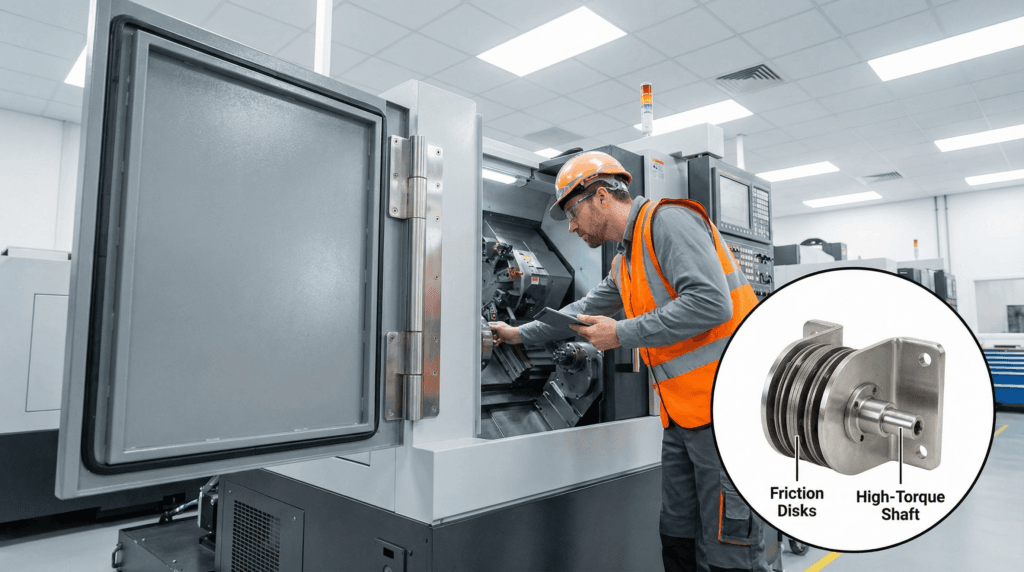
A top-tier rotary damper factory does not outsource its mold-making. Instead, it relies on an in-house fleet of multi-molding machine(Computer Numerical Control) machines. These machines carve the injection molds out of hardened steel with tolerances measured in microns (thousandths of a millimeter).
Why Micron-Level Tolerances Matter
In a rotary damper, the gap between the internal rotor and the outer housing is where the magic happens. This gap holds the silicone oil. If the molding machining of the mold is off by even 0.01mm, the gap changes, the fluid shear force changes, and the final torque output of the damper will be inconsistent. By keeping mold workshop in-house, a rotary damper manufacturer maintains absolute control over the dimensional accuracy of every batch.
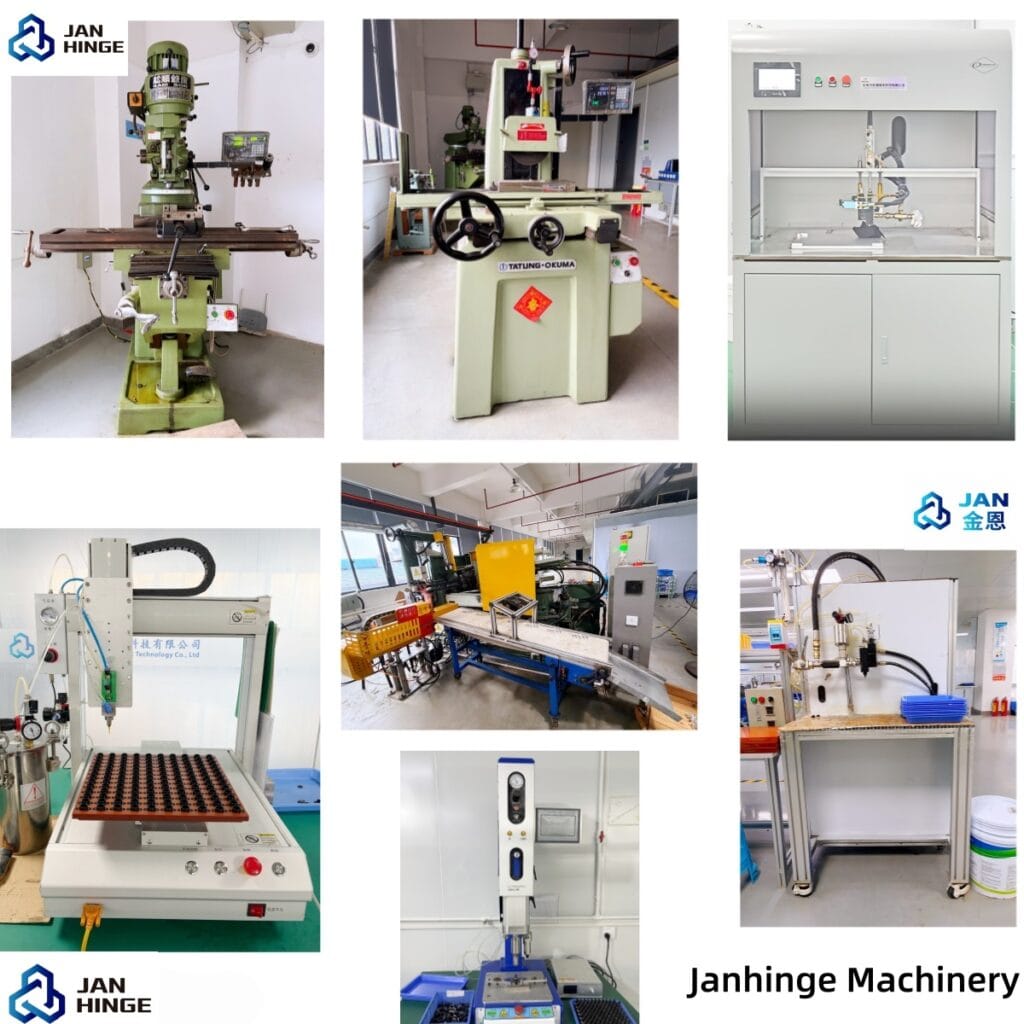
Advanced multi-axis CNC machining centers are the backbone of a premium rotary damper factory, ensuring micron-level precision for injection molds.
2. Injection Molding: The Science of Polymers
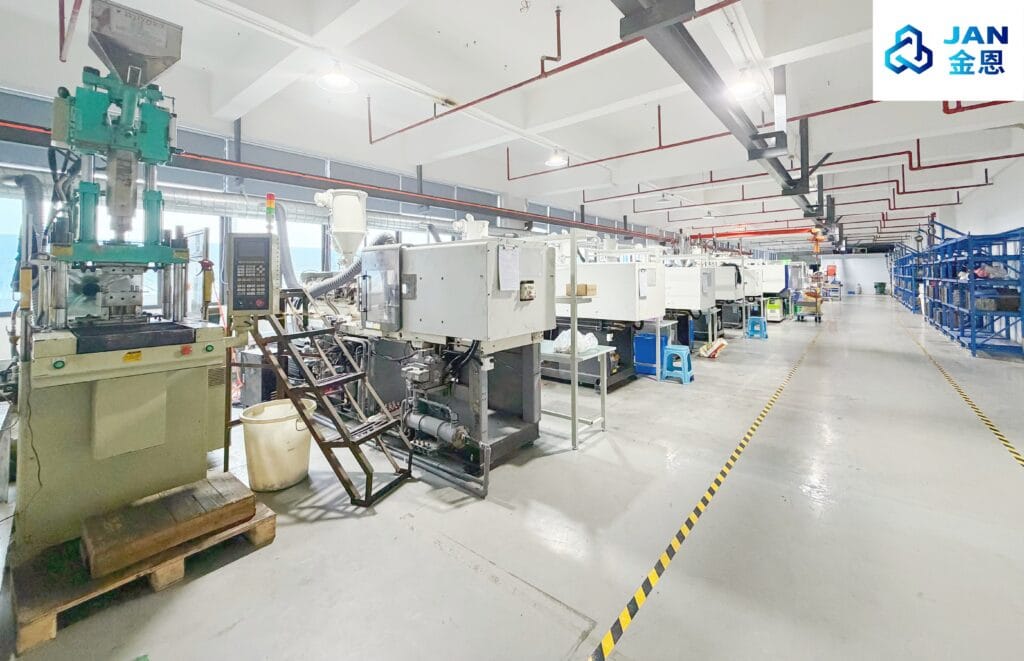
Once the steel molds are perfected, production moves to the injection molding floor. Here, engineering plastics like POM (Polyoxymethylene), PC (Polycarbonate), and PBT (Polybutylene Terephthalate) are melted and injected into the molds under immense pressure.
Managing Shrinkage and Warpage
Plastics shrink as they cool. A novice supplier might struggle with this, resulting in warped damper housings or oval-shaped rotors. A specialized OEM rotary damper factory utilizes advanced mold flow analysis software before production even begins. This software predicts how the plastic will flow and cool, allowing engineers to adjust the mold design to compensate for shrinkage.
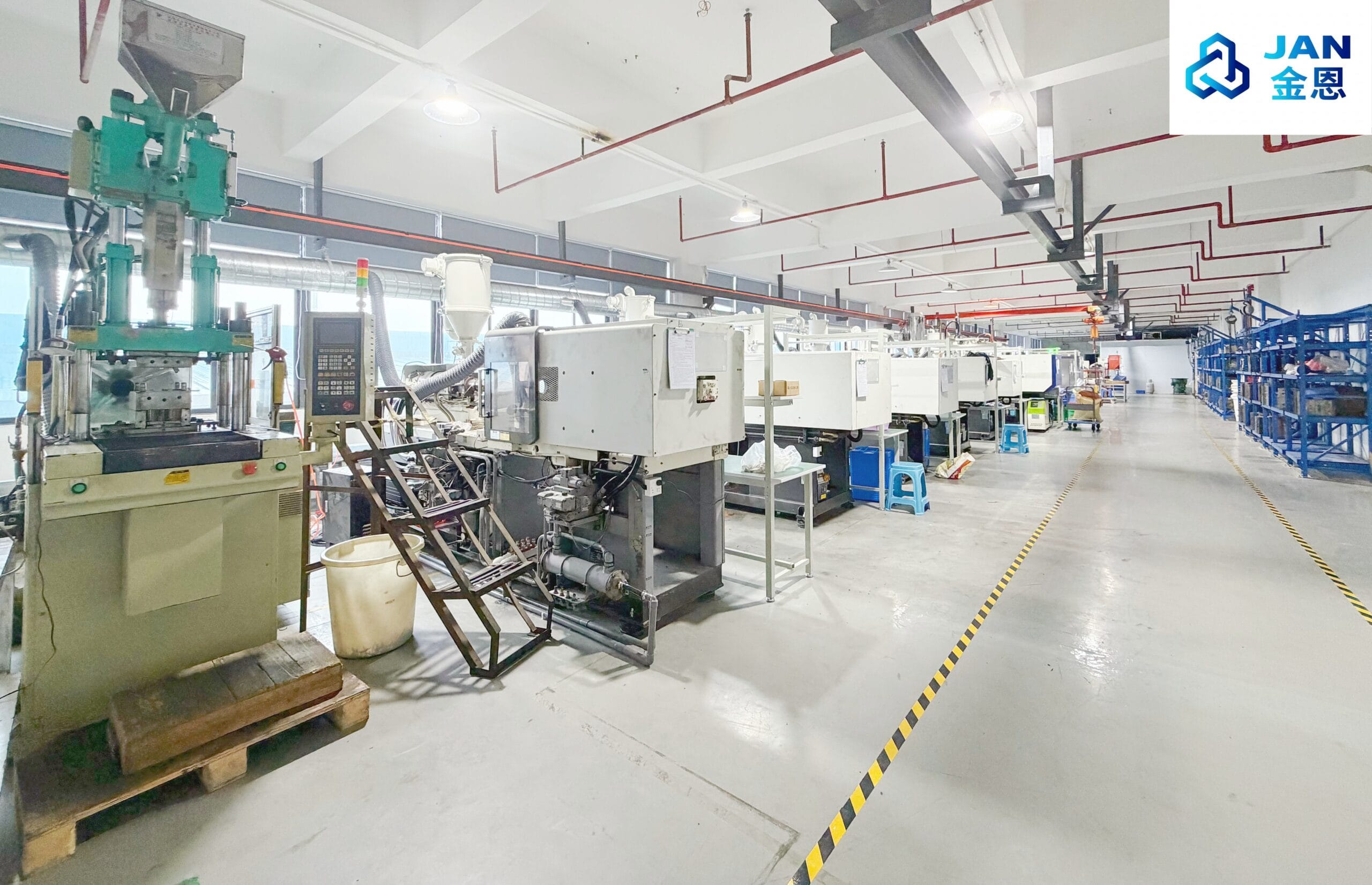
Furthermore, premium factories use closed-loop temperature controllers on their injection molding machines. This ensures that the plastic is injected at the exact optimal temperature, eliminating internal stresses that could cause the damper housing to crack under rotational load months later.
A modern rotary damper factory floor features rows of automated injection molding machines equipped with closed-loop temperature controls.
3. The Assembly Line: Automation Meets Fluid Dynamics
The assembly of a rotary damper is a delicate dance. The rotor must be inserted into the housing, the exact volume of silicone oil must be injected, and the unit must be sealed—all without trapping air bubbles.
Automated Silicone Oil Dispensing
If you visit a low-tier rotary damper supplier, you might see workers manually squirting oil into dampers using syringes. This is a recipe for disaster. Manual filling leads to inconsistent oil volumes, which directly causes inconsistent torque.
A world-class rotary damper factory employs fully automated, pneumatic dispensing systems. These robotic stations inject the silicone oil with milligram precision. Because the process is automated in a controlled environment, the risk of air entrapment—which causes a “spongy” or inconsistent damping feel—is virtually eliminated.
Ultrasonic Welding for Leak-Proof Seals
Once the oil is injected and the O-ring is seated, the damper must be permanently sealed. Premium manufacturers use ultrasonic welding machines to fuse the plastic cap to the housing. This process uses high-frequency acoustic vibrations to melt the plastics together at the molecular level, creating a hermetic seal that prevents oil leakage even under extreme pressure and temperature fluctuations.
Automated assembly lines ensure that every rotary damper is filled with the exact volume of silicone oil and hermetically sealed.
4. The 100% Torque Inspection Protocol
The final step in the manufacturing process is the most critical: quality control. A true rotary damper manufacturer does not rely on statistical sampling (AQL) for its finished products. They test every single unit.
Why AQL is Not Enough for Motion Control
In many industries, testing 5% of a batch is acceptable. But if a rotary damper fails in a car’s glove box, the glove box slams open, potentially hitting the passenger’s knees. If a friction hinge fails on a laptop, the screen flops backward. Discuss more on Whatsapp.
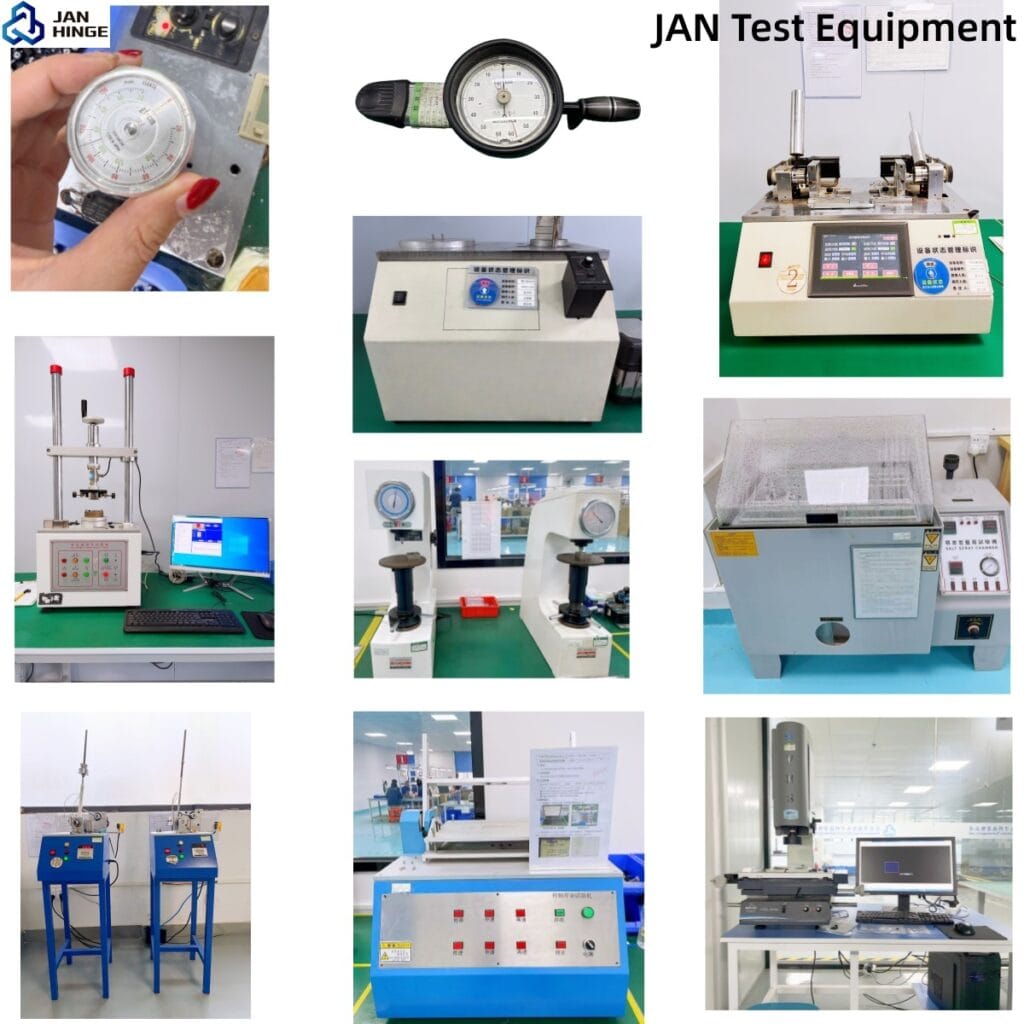
A premium rotary damper factory employs a 100% torque inspection policy. At the end of the assembly line, every damper is placed into an automated torque testing rig. The machine rotates the damper at a specific RPM (Revolutions Per Minute) and measures the torque output in Newton-meters (N·m) or kilogram-force centimeters (kgf·cm). If the torque falls outside the specified tolerance window (typically ±10% to ±15%), the machine automatically rejects the unit.
A 100% automated torque inspection line guarantees that every rotary damper shipped meets the exact specifications of the OEM customer.
5. The Role of the OEM Engineering Team
A rotary damper factory is not just a production facility; it is an engineering hub. When an OEM approaches a manufacturer with a new product design, the factory’s R&D team must translate that concept into a manufacturable component.
Rapid Prototyping and Customization
Suppose a customer needs a damper for a heavy, asymmetrical lid. A standard off-the-shelf damper will not work. The factory’s engineers will use 3D CAD software to design a custom housing, perhaps incorporating a one-way clutch mechanism or a specific gear profile. They will then use 3D printers (SLA or SLS) to create a physical prototype within days.
Fluid Viscosity Tuning
The engineers will also tune the silicone oil. By adjusting the viscosity index of the fluid, they can change the damping characteristics to match the exact weight and center of gravity of the customer’s lid. This iterative process of design, prototyping, and tuning is what separates a true OEM rotary damper partner from a simple parts supplier.
Custom OEM engineering allows a rotary damper manufacturer to design specialized components, such as asymmetric friction hinges, for unique applications.
6. The Hidden Costs of Poor Manufacturing
When procurement teams evaluate a rotary damper manufacturer, the unit price is often the primary focus. However, the true cost of a motion control component extends far beyond the invoice. A cheap damper produced in a sub-standard factory carries hidden costs that can devastate an OEM’s bottom line.
Warranty Claims and Brand Damage
Consider a high-end washing machine. If the rotary damper controlling the glass lid fails after six months, the lid will slam shut. This not only creates a terrible user experience but also risks shattering the glass. The cost to dispatch a technician, replace the damper, and repair the lid far exceeds the $0.50 saved on the initial component purchase. Furthermore, the damage to the brand’s reputation—often amplified by negative online reviews—is incalculable.
Assembly Line Downtime
A reliable rotary damper factory ensures that every batch of components is dimensionally identical. If a low-tier supplier ships a batch of dampers with housings that are 0.1mm too large, those dampers will not fit into the OEM’s assembly line fixtures. This causes immediate production downtime, forcing the OEM to halt the line, quarantine the defective parts, and scramble for replacements. The cost of a stalled assembly line can run into thousands of dollars per hour.
By partnering with a premium OEM rotary damper manufacturer that utilizes in-house CNC machining and 100% automated torque inspection, OEMs eliminate these hidden costs and secure a predictable, high-quality supply chain.
7. Scaling Production: The Supply Chain Advantage
Once the prototype is approved, the factory must scale production from a few dozen units to millions. This requires a robust supply chain and a deep understanding of logistics.
Material Traceability and Compliance
A premium rotary damper manufacturer maintains strict control over its raw materials. They ensure that all plastics, metals, and silicone oils are RoHS and REACH compliant, meaning they are free from hazardous substances like lead and hexavalent chromium. They also maintain full traceability, so if a defect is discovered in the field, they can trace it back to the specific batch of raw material used on a specific day.
Global Logistics
Finally, the factory must be able to deliver the dampers to the customer’s assembly lines anywhere in the world, on time, every time. This requires a sophisticated ERP (Enterprise Resource Planning) system to manage inventory, production schedules, and shipping logistics.
Frequently Asked Questions (FAQs)
1. What is the difference between a rotary damper manufacturer and a trading company?
A manufacturer owns the factory, the CNC machines, the injection molding equipment, and the assembly lines. They control the quality and the engineering. A trading company simply buys from a factory and resells to you, adding a markup and reducing your direct communication with the engineers.
2. Why is in-house CNC machining important for a rotary damper factory?
In-house CNC machining allows the factory to maintain absolute control over the dimensional tolerances of the injection molds. This ensures that the gap between the rotor and the housing is perfectly consistent, which is critical for stable torque output.
3. How does automated oil dispensing improve rotary damper quality?
Automated dispensing ensures that the exact volume of silicone oil is injected into every damper. This eliminates the inconsistencies and air bubbles associated with manual filling, resulting in a smooth, reliable damping feel.
4. What is 100% torque inspection?
100% torque inspection means that every single damper is tested on an automated rig at the end of the assembly line. Any unit that falls outside the specified torque tolerance is automatically rejected, ensuring that only perfect dampers are shipped to the customer.
5. Can an OEM rotary damper factory customize the torque for my application?
Yes. A capable factory can customize the torque by adjusting the viscosity of the silicone oil, modifying the internal rotor geometry, or designing a completely new housing to fit your specific application.
Conclusion: The Value of a True Manufacturing Partner
The journey from a CAD drawing to a mass-produced rotary damper is complex and fraught with potential pitfalls. By partnering with a premium rotary damper manufacturer that controls every step of the process—from CNC mold-making and automated injection molding to 100% torque inspection and global logistics—OEMs can mitigate risk and ensure the success of their products.
At Janhinge, we are proud to be a world-class rotary damper factory and a trusted OEM rotary damper partner for global brands. Our commitment to precision engineering, automated manufacturing, and uncompromising quality control ensures that every damper we produce delivers the perfect motion control experience.
Contact our engineering team today to discuss your custom OEM requirements, request a factory audit, or order engineering samples. Let us show you what happens inside a true premium manufacturing facility. Discuss more on Whatsapp.