
In the highly competitive world of OEM manufacturing, product differentiation is everything. Whether you are designing a luxury automotive interior, a high-end coffee machine, or a smart toilet seat, the tactile feedback of moving parts plays a massive role in how consumers perceive quality. A lid that slams shut feels cheap; a lid that glides to a silent, controlled close feels premium.
While many procurement teams default to searching for standard rotary damper wholesale catalogs to save time, this approach often leads to compromised product design. An off-the-shelf damper might be “good enough,” but it rarely delivers the perfect motion profile required for a flagship product.
In this article, we will explore why forward-thinking engineering teams are shifting toward custom rotary damper solutions, how the customization process works, and how partnering with a specialized OEM manufacturer like Janhinge can actually reduce total manufacturing costs at scale. Discuss more on Whatsapp.
1. The Limitations of Standard Wholesale Dampers
When you buy a standard rotary damper from a wholesale catalog, you are purchasing a component designed for the “average” application. The manufacturer has selected a generic housing size, a standard gear profile, and a middle-of-the-road silicone oil viscosity.
The “Good Enough” Trap
For a low-cost trash can lid, a standard damper is perfectly fine. But what happens when you are designing a heavy, asymmetrical oven door? Or a delicate, lightweight sunglass holder in a car dashboard?
If you use a standard damper on a heavy door, the torque will be insufficient, and the door will still slam. If you use it on a lightweight lid, the torque will be too high, and the user will have to force the lid closed. Engineers often try to solve this by adding counter-springs or changing the hinge geometry, which adds complexity, weight, and cost to the final product.
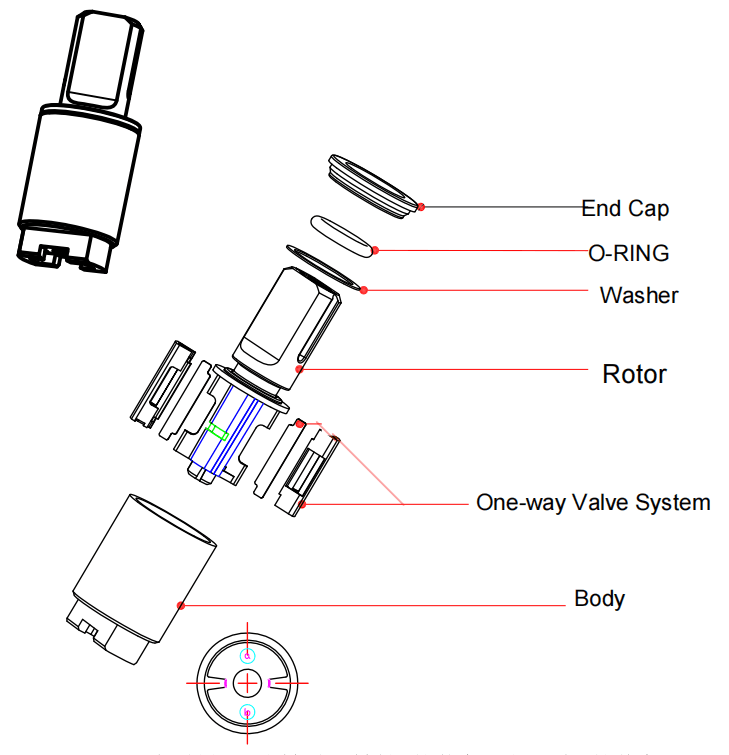
A standard rotary damper consists of a rotor, housing, O-ring, and silicone oil. While effective for generic uses, standard designs often fall short in specialized OEM applications.
2. The Anatomy of a Custom Rotary Damper
A custom rotary damper is engineered from the ground up to match the exact physical dynamics of your specific product. When you partner with a true OEM manufacturer, their engineering team will analyze the weight, center of gravity, and desired closing speed of your lid or panel.
Tuning the Fluid Dynamics
The core of any rotary damper is the silicone oil trapped between the rotor and the housing. The resistance (torque) is generated by the shear force of this fluid. In a custom damper, engineers can precisely tune the torque by altering two variables:
1.Oil Viscosity: By selecting a silicone oil with a higher or lower centistoke (cSt) rating, the manufacturer can dramatically alter the damping force without changing the physical size of the damper.
2.Gap Clearance: By machining a custom rotor with a slightly larger or smaller diameter, the engineers change the gap clearance, which exponentially affects the fluid shear force.
Custom Gear Profiles and Housings
Beyond the fluid, a custom rotary damper can feature specialized external geometries. If your product has tight space constraints, the manufacturer can design a low-profile housing. If you need the damper to integrate directly into a complex gear train, they can mold a custom spur gear or pinion directly onto the rotor shaft, eliminating the need for secondary assembly steps.

A premium manufacturer offers a vast array of custom rotary damper configurations, including specialized gear profiles, barrel designs, and vane architectures.
3. The Customization Process: From Concept to Mass Production
Many procurement managers avoid custom rotary damper solutions because they fear long lead times and exorbitant NRE (Non-Recurring Engineering) costs. However, a modern, vertically integrated manufacturer has streamlined this process.
Phase 1: Application Analysis
The process begins with data. The OEM provides the 3D CAD files of their product, along with the weight of the moving part and the desired closing time (e.g., “The 2kg lid must close from 90 degrees to 0 degrees in exactly 4.5 seconds”).
Phase 2: Rapid Prototyping
Using advanced fluid dynamics simulation software, the manufacturer’s engineers calculate the exact torque curve required. They then use 3D printing (SLA or SLS) to create a physical prototype of the custom housing and rotor. They inject the calculated viscosity of silicone oil and ship the prototype to the OEM for tactile testing. This entire phase can often be completed in less than two weeks.
Phase 3: Steel Tooling and Wholesale Scaling
Once the OEM approves the prototype, the manufacturer cuts the hardened steel injection molds using in-house CNC machines. Because the manufacturer controls the tooling, they can quickly transition from prototyping to rotary damper wholesale production, churning out millions of identical, custom-tuned units.
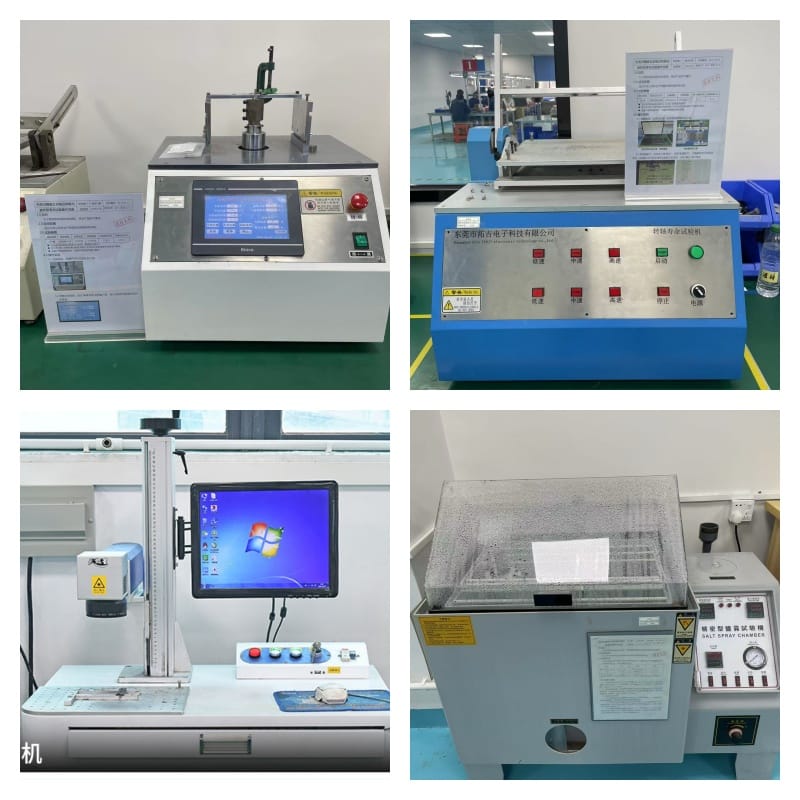
Once a custom rotary damper is validated, the manufacturer leverages automated injection molding and assembly lines to scale up to wholesale production volumes.
4. Overcoming Environmental Challenges with Customization
One of the most significant advantages of a custom rotary damper is the ability to engineer it for specific environmental extremes. A standard damper from a rotary damper wholesale catalog is typically designed to operate in a benign indoor environment, usually between 0°C and 40°C.
But what if your product is an automotive glove box that must function flawlessly in the freezing winters of Canada (-30°C) and the scorching summers of Dubai (+85°C)?
Thermal Compensation Engineering
Silicone oil, the lifeblood of any rotary damper, changes viscosity with temperature. It thickens in the cold (increasing torque) and thins in the heat (decreasing torque). If you use a standard damper in a car, the glove box might slam shut in the summer and refuse to open in the winter.
When you partner with a premium OEM manufacturer, their engineers can design a custom thermal compensation mechanism inside the damper. This often involves using specialized bimetallic springs or thermal expansion valves that physically alter the gap clearance between the rotor and the housing as the temperature changes. As the oil thins in the heat, the valve closes the gap, maintaining consistent fluid shear force. This level of advanced engineering is impossible to find in off-the-shelf wholesale components.
Chemical and Moisture Resistance
Similarly, if your product is a medical device subjected to harsh chemical washdowns, or an outdoor kiosk exposed to driving rain, a standard polycarbonate housing and basic NBR O-ring will quickly degrade. A custom damper can be molded from chemically resistant plastics like PBT or POM, and sealed with high-grade EPDM or Viton O-rings, ensuring years of leak-free operation in the harshest environments.
5. The Hidden Value of Customization
While a custom rotary damper may have a slightly higher unit cost than a generic wholesale part, the total cost of ownership (TCO) is often lower.
Eliminating Secondary Components
When an OEM uses a standard damper that is too weak, they often have to add a counter-spring to the hinge mechanism to assist the damper. This adds the cost of the spring, the cost of the extra assembly step, and the risk of the spring failing over time. A custom damper, tuned to the exact weight of the lid, eliminates the need for the spring entirely.
Reducing Assembly Time
A custom damper can be designed with integrated mounting features—such as snap-fit clips or specialized screw bosses—that perfectly match the OEM’s product housing. This reduces the time it takes a worker on the assembly line to install the damper, saving significant labor costs over millions of units.
Enhancing Brand Perception
Finally, the value of a perfect user experience cannot be overstated. When a consumer closes the lid of a premium washing machine or a luxury car glove box, the smooth, silent motion communicates quality. A generic damper might close the lid, but a custom damper closes it with the exact tactile feel the brand’s designers intended.

Custom rotary dampers are essential for achieving the perfect “soft close” feel in premium household appliances and automotive interiors.
5. The Role of the OEM Manufacturer
When sourcing a custom rotary damper, the choice of manufacturer is critical. A trading company cannot design a custom damper; they can only sell you what is in their catalog.
A true OEM manufacturer like Janhinge has an in-house engineering team, a fluid dynamics lab, and a CNC tooling department. They do not just manufacture parts; they solve motion control problems.
The Importance of 100% Torque Inspection
When scaling a custom design to rotary damper wholesale volumes, quality control is paramount. Because the damper is custom-tuned, any deviation in manufacturing will result in a noticeable change in the closing speed of the OEM’s product.
A premium manufacturer employs 100% automated torque inspection. Every single custom damper is tested on a specialized rig at the end of the assembly line. If the torque falls outside the tight tolerance window specified by the OEM, the unit is rejected. This guarantees that the millionth damper performs exactly like the approved prototype.

From washing machines to smart toilets, custom rotary dampers ensure that every lid and door operates with consistent, premium motion control.
Frequently Asked Questions (FAQs)
1. What is the difference between a standard and a custom rotary damper?
A standard damper is a generic, off-the-shelf component designed for average applications. A custom damper is engineered specifically for your product, with the silicone oil viscosity, rotor geometry, and housing design tuned to match the exact weight and closing speed you require.
2. Is it expensive to develop a custom rotary damper?
While there are initial NRE (Non-Recurring Engineering) costs for custom steel tooling, these costs are often offset by the elimination of secondary components (like counter-springs) and reduced assembly time. At high wholesale volumes, the unit cost difference is negligible.
3. How long does it take to prototype a custom damper?
A premium OEM manufacturer can often design, simulate, 3D print, and assemble a custom prototype in less than two weeks, allowing you to test the tactile feel before committing to mass production tooling.
4. Can a custom damper integrate directly into my product’s gears?
Yes. A custom damper can be designed with a specialized spur gear or pinion molded directly onto the rotor shaft, allowing it to mesh perfectly with your product’s existing gear train without additional assembly steps.
5. How do I ensure consistent quality when ordering custom dampers at wholesale volumes?
Partner with a manufacturer that utilizes 100% automated torque inspection. This ensures that every single damper is tested against your custom torque specifications before it leaves the factory, guaranteeing consistent performance across millions of units.
Conclusion: The Strategic Advantage of Custom Motion Control
In a crowded marketplace, the tactile feel of your product is a powerful differentiator. While standard rotary damper wholesale catalogs offer convenience, they force engineers to compromise on design and user experience.
By partnering with a specialized OEM manufacturer to develop a custom rotary damper, you gain absolute control over the motion profile of your product. You eliminate unnecessary components, streamline your assembly line, and deliver a premium, silent, soft-close experience that generic parts simply cannot match.
At Janhinge, we specialize in transforming complex motion control challenges into mass-produced reality. Our engineering team, in-house CNC tooling, and automated 100% torque inspection lines make us the trusted partner for global brands seeking custom rotary damper solutions at wholesale scale.
Contact our engineering team today to discuss your custom OEM requirements, request a prototype, or explore our advanced manufacturing capabilities. Let us help you engineer the perfect motion control experience for your next flagship product. Discuss more on Whatsapp.