
In the highly competitive world of industrial design and consumer electronics, the tactile feel of a product often dictates its perceived value. A screen that holds its position perfectly, a heavy industrial lid that opens with a smooth, controlled motion—these are the subtle engineering triumphs that separate premium brands from the rest. At the heart of this user experience is the position control hinge.
For procurement managers and engineering directors tasked with sourcing these critical components at scale, the supply chain landscape can be treacherous. The market is flooded with resellers and trading companies masking themselves as manufacturers. In this article, we will explore the strategic advantages of bypassing the middlemen and partnering directly with a verified friction hinge factory in China. We will delve into the economics of position control hinge wholesale, the engineering depth required for torque hinge OEM production, and how direct factory partnerships mitigate supply chain risks.
1. The Economics of Position Control Hinge Wholesale
When an OEM requires tens of thousands of hinges annually, the unit cost becomes a critical factor in the overall bill of materials (BOM). However, sourcing position control hinge wholesale from a trading company introduces hidden costs that erode profit margins.
The Middleman Markup
Trading companies typically add a markup of 20% to 40% on top of the factory price. While they may offer the convenience of English-speaking sales reps and consolidated shipping, they add zero engineering value to the product itself. By partnering directly with a friction hinge factory in China, OEMs can reclaim this margin.
Sourcing position control hinges directly from the factory eliminates middleman markups, allowing OEMs to invest more in custom engineering and higher-grade materials.
Volume-Based Tiered Pricing
A direct manufacturer has full control over its production schedule and raw material procurement. This allows them to offer genuine volume-based tiered pricing. As your production scales from 10,000 units to 100,000 units, a true factory can optimize its CNC machining runs and injection molding cycles, passing those economies of scale directly back to the OEM.
2. The Engineering Depth of a Torque Hinge OEM
The true value of a direct factory partnership extends far beyond unit cost. It lies in the engineering depth required to customize a hinge for a specific application. A trading company sells what is in their catalog; a torque hinge OEM builds what you need.
The Myth of the “Standard” Hinge
In many advanced applications—such as medical equipment, ruggedized laptops, or self-service kiosks—a standard off-the-shelf hinge simply will not work. The torque profile may be too weak, the physical footprint too large, or the mounting hole pattern incompatible with the chassis design.
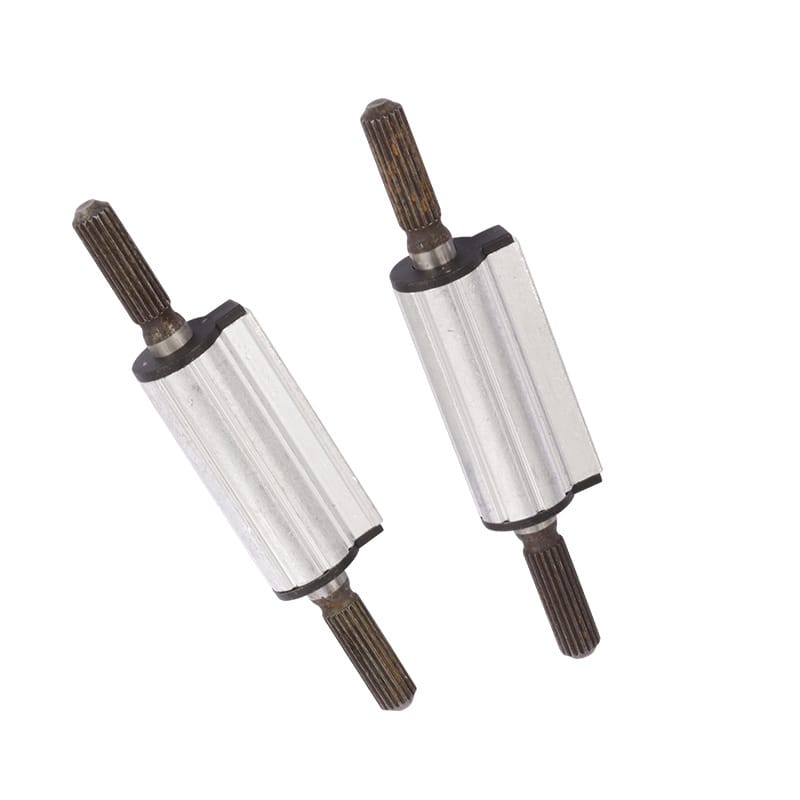
While standard torque hinges are suitable for basic applications, complex OEM projects often require custom torque profiles, specialized materials, and unique mounting geometries.
A direct friction hinge factory acts as an extension of your engineering team. If you need an asymmetric torque profile (e.g., easy to open, hard to close) or a specific detent mechanism that “clicks” into place at 90 degrees, the factory’s R&D team can design it. They utilize advanced 3D CAD software and finite element analysis (FEA) to simulate the torque dynamics before a single piece of metal is cut.
Rapid Prototyping and Tooling
When developing a custom hinge, speed is critical. A direct manufacturer possesses in-house rapid prototyping capabilities, such as SLA 3D printing and CNC sample machining. They can turn a concept into a physical, testable prototype in a matter of days. Furthermore, because they own the tooling shop, the cost and lead time for creating the final steel production molds are significantly reduced compared to working through a broker.
3. Quality Control: The Factory Floor Advantage
Perhaps the most significant risk of sourcing through a trading company is the lack of visibility into the quality control process. You are relying on a third party to ensure that the hinges meet your specifications, which often leads to disastrous results when a batch of faulty hinges reaches your assembly line.
100% Torque Inspection
In the realm of position control, torque consistency is everything. If the torque varies by more than ±15% from hinge to hinge, the user experience is ruined. A premium friction hinge factory in China does not rely on random sampling (AQL). Instead, they implement 100% torque inspection on the assembly line. Every single hinge is tested on a digital torque meter before it is packaged.

Premium factories utilize digital torque meters to test 100% of their production output, ensuring that every hinge delivers the exact rotational resistance specified by the OEM.
Lifecycle and Environmental Testing
A true manufacturer will also have an in-house reliability lab. Before a new hinge design is approved for mass production, it undergoes rigorous testing:
•Lifecycle Testing: Automated rigs open and close the hinge 50,000 times to measure torque decay.
•Salt Spray Testing: To ensure the plating or coating can withstand corrosive environments.
•Thermal Shock Testing: To verify that the synthetic greases do not break down or freeze in extreme temperatures.
When you partner directly with the factory, you can demand these test reports for every production batch, ensuring complete traceability and peace of mind.
4. Application Focus: Self-Service Kiosks and Industrial Displays
The demand for robust, reliable position control hinges is skyrocketing in the self-service kiosk and industrial display markets. These applications require hinges that can withstand constant use by the public, often in harsh environments.
The 360-Degree Challenge
A common requirement for modern kiosks is a display that can be rotated 360 degrees, allowing users on both sides of a counter to interact with the screen. This requires a highly specialized dual-axis friction hinge. A trading company will struggle to source a reliable 360-degree hinge because the engineering tolerances are incredibly tight.
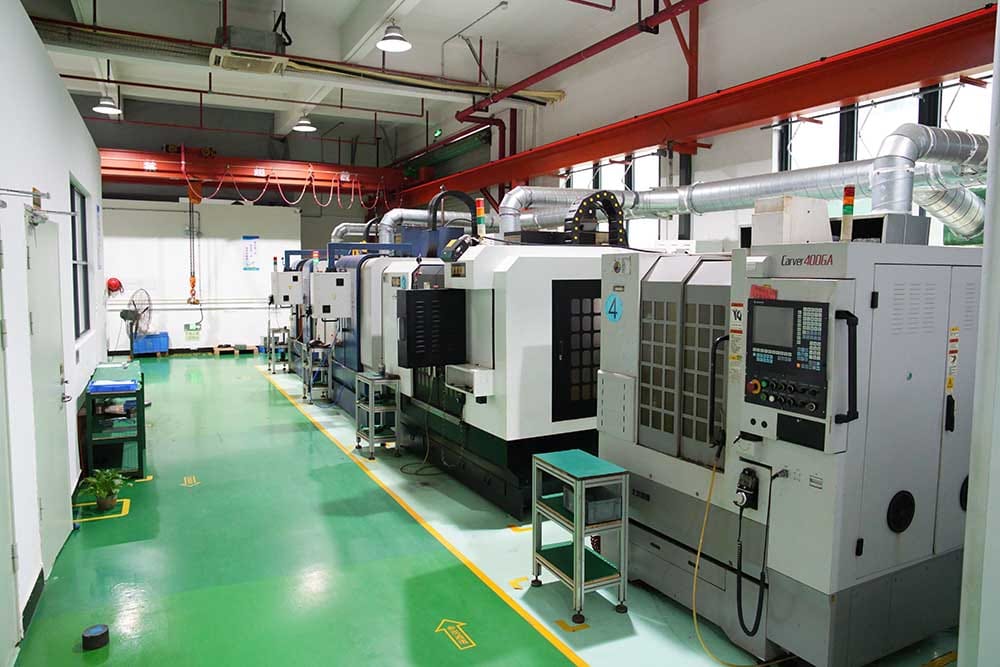
Self-service kiosks and industrial displays often require complex 360-degree dual-axis friction hinges, demanding precision engineering and robust materials to withstand constant public use.
A direct torque hinge OEM will design a dual-axis hinge with synchronized gears, ensuring that both shafts rotate smoothly and simultaneously. They will use hardened stainless steel (SUS304 or SUS316) to prevent the gears from stripping under heavy loads, and they will apply specialized synthetic greases that will not degrade over tens of thousands of cycles.
Vandalism and Abuse Resistance
In public environments, hinges are often subjected to abuse. A user might try to force a screen past its intended stopping point, or they might lean heavily on a deployed keyboard tray. A premium friction hinge factory in China engineers their products with built-in overload protection. They might incorporate a slip-clutch mechanism that allows the hinge to rotate freely if the torque exceeds a safe limit, preventing the chassis from cracking or the screen from shattering.
5. Navigating the Supply Chain: How to Audit a Factory
When evaluating a potential friction hinge factory in China, procurement teams must look beyond the glossy website and the polished sales pitch. A true audit requires a deep dive into the factory’s engineering capabilities and quality control processes.
The “Engineering First” Approach
A reliable factory will not simply say “yes” to every request. They will ask detailed engineering questions: What is the weight of the object being held? What is the distance to the center of gravity? What is the operating temperature range? What is the required lifecycle? If a supplier does not ask these questions, they are likely a trading company that does not understand the physics of position control.
A true manufacturer understands the fundamental physics of friction hinges, including torque calculations, material science, and the critical difference between static and dynamic friction.
Traceability and Compliance
In today’s global market, compliance is non-negotiable. A premium factory will provide full material traceability, ensuring that the stainless steel or zinc alloy used in your hinges meets international standards. They will also provide RoHS and REACH compliance certificates, guaranteeing that their products are free from hazardous substances like lead and hexavalent chromium.
6. The Hidden Costs of Poor Sourcing
When evaluating a position control hinge wholesale supplier, procurement teams often focus solely on the unit price. However, the true cost of a hinge includes the cost of field failures, warranty claims, and brand damage.
The “Stiction” Problem
A common issue with low-quality friction hinges is “stiction”—the static friction that must be overcome to start moving the hinge. If the stiction is too high, the user experiences a jerky, unpleasant motion. A premium manufacturer mitigates this by carefully selecting the base metals and applying proprietary synthetic greases that smooth the transition from static to dynamic friction.
Torque Decay and Lifecycle Testing
The most critical metric for a friction hinge is its torque decay curve. Over 50,000 cycles, a low-quality hinge may lose 50% of its holding power, causing the screen or lid to flop down. A world-class torque hinge OEM engineers their products to maintain at least 80% of their original torque after 50,000 cycles. They prove this by providing automated lifecycle testing reports with every batch.
Frequently Asked Questions (FAQs)
1. Why should I buy position control hinges wholesale directly from a factory instead of a distributor?
Buying directly from a factory eliminates middleman markups, provides access to volume-based tiered pricing, and ensures direct communication with the engineers who are actually designing and building your hinges.
2. Can a torque hinge OEM customize the torque profile for my specific application?
Yes. A true OEM manufacturer can adjust the interference fit, spring tension, and grease viscosity to create a custom torque profile, including asymmetric torque (different resistance in each direction) and detent mechanisms (tactile “clicks” at specific angles).
3. How do I know if a supplier is a real friction hinge factory in China or just a trading company?
A real factory will have in-house CNC machining, stamping presses, and automated torque testing equipment. They will also ask detailed engineering questions about your application, whereas a trading company will typically just offer off-the-shelf catalog items.
4. What materials are best for high-cycle friction hinges?
For high-cycle applications (50,000+ cycles), hardened stainless steel (SUS304 or SUS316) is preferred for the shafts and bands to prevent galling and wear. High-performance synthetic greases are also critical for maintaining consistent friction.
5. How does a factory ensure consistent torque across a large wholesale order?
Premium factories do not rely on random sampling. They implement 100% torque inspection on the assembly line, using digital torque meters to verify that every single hinge meets the specified torque tolerance (typically ±15%) before packaging.
Conclusion: The Strategic Imperative of Direct Sourcing
In the complex world of mechanical design, the position control hinge is a critical component that directly impacts the user experience and the perceived quality of the final product. Sourcing these hinges through a trading company introduces unnecessary costs, limits customization options, and exposes OEMs to significant quality control risks.
By partnering directly with a verified friction hinge factory in China, procurement teams and engineering directors can secure a strategic advantage. They gain access to deep engineering expertise, rapid prototyping, 100% torque inspection, and the scalable production necessary to compete globally.
At Janhinge, we are a premier torque hinge OEM dedicated to the precision engineering of motion control components. With our in-house CNC machining, automated lifecycle testing, and deep expertise in friction dynamics, we are the trusted partner for OEMs demanding the highest standards of position control.
Contact our engineering team today to discuss your custom torque requirements and discover how our direct manufacturing capabilities can elevate your product design and streamline your supply chain. Discuss more on Whatsapp.