
In the highly competitive automotive industry, the battle for consumer loyalty is increasingly fought inside the cabin. While horsepower and exterior styling still matter, the modern driver evaluates a vehicle’s quality through tactile interactions. The smooth, silent deployment of a cup holder, the controlled descent of a glove box, or the damped return of a grab handle—these micro-interactions collectively define the “premium feel” of a car.
At the core of these interactions are precision-engineered motion control components. For automotive Tier 1 suppliers and OEM procurement teams, sourcing a reliable rotary damper automotive solution is not just about finding a part; it is about finding a partner capable of meeting the industry’s grueling standards. In this article, we will explore the critical role of a motion control component supplier in automotive design, the specific engineering challenges of the cabin environment, and how to evaluate a glove box damper manufacturer. Discuss more on Whatsapp.
1. The Psychology of the Automotive Interior
When a consumer sits in a new car, their initial impression is formed within seconds. They touch the dashboard, open the center console, and pull down the sun visor. If a compartment lid snaps open violently or a cup holder rattles out with a cheap plastic clatter, the perception of the entire vehicle is instantly downgraded.
The “Soft Close” Expectation
The “soft close” or “soft open” mechanism, powered by a rotary damper, transforms a jarring mechanical action into a fluid, deliberate motion. This controlled resistance signals to the user that the vehicle is well-built, safe, and luxurious.

In modern automotive design, the tactile feedback of interior components—such as center consoles and glove boxes—is a primary driver of perceived vehicle quality and luxury.
A premium motion control component supplier understands this psychology. They do not just manufacture plastic and silicone; they engineer the tactile feedback that automotive brands rely on to differentiate their vehicles in a crowded market.
2. The Glove Box: A Case Study in Motion Control
The glove compartment is one of the most frequently used storage areas in a vehicle, and it presents a unique set of engineering challenges for a glove box damper manufacturer.
Managing Weight and Gravity
A glove box door is relatively heavy, and when released, gravity accelerates its descent. Without damping, it would slam open, potentially striking the passenger’s knees and causing damage to the hinge mechanism over time. A rotary damper is integrated into the side of the glove box assembly, utilizing a gear-and-rack or a direct-drive mechanism to provide fluid resistance against the opening force.
A high-quality glove box damper ensures a smooth, controlled descent, protecting the hinge mechanism from impact damage and enhancing the passenger’s experience.
The Unidirectional Requirement
Crucially, the damping effect is usually only desired in one direction—when the glove box is opening. When the user pushes the door closed, they expect minimal resistance. A sophisticated rotary damper automotive solution incorporates a one-way clutch mechanism (often a specialized gear design) that engages the fluid resistance during the opening phase but freewheels during the closing phase.
3. The Harsh Reality of the Automotive Cabin
Designing a rotary damper for a kitchen cabinet is relatively straightforward. Designing one for a car interior is an engineering gauntlet. The automotive cabin is an extreme environment, subjecting components to severe temperature fluctuations, constant vibration, and chemical exposure.
The Thermal Challenge: -40°C to +85°C
A car parked in the Arizona sun can see interior temperatures soar above 85°C (185°F), while a car in a Canadian winter might sit at -40°C (-40°F). Because rotary dampers rely on the viscosity of silicone oil to generate torque, these temperature extremes are highly problematic.

Automotive dampers integrated into dashboards must withstand extreme temperature fluctuations without losing their damping characteristics or leaking silicone oil.
If a motion control component supplier uses cheap silicone oil, the fluid will thin out in the heat, causing the glove box to slam open. In the cold, the oil will thicken, making the compartment nearly impossible to open. Premium manufacturers utilize highly specialized, high-viscosity-index (VI) silicone oils that maintain a stable torque profile across the entire automotive temperature spectrum.
Vibration and NVH (Noise, Vibration, and Harshness)
Automotive components are subjected to constant road vibration. A poorly designed damper will rattle, contributing to the vehicle’s overall NVH—a major negative for consumer satisfaction. Furthermore, constant vibration can cause inferior ultrasonic welds to crack, leading to catastrophic oil leaks. A verified glove box damper manufacturer engineers their housings with high-strength thermoplastics (like POM or PC/ABS blends) and utilizes advanced welding techniques to ensure the damper remains silent and leak-free for the life of the vehicle.
4. Beyond the Glove Box: Expanding Applications
While the glove box is the most prominent application, the demand for rotary damper automotive solutions is expanding rapidly throughout the vehicle interior as automakers strive to elevate the user experience.
Center Consoles and Cup Holders
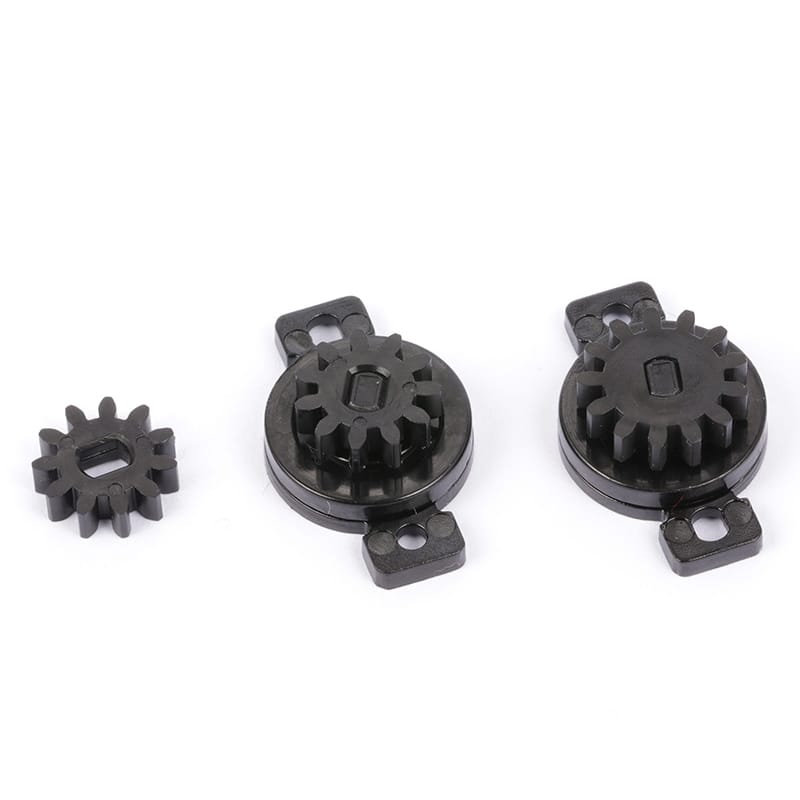
The center console is a high-traffic area. Retractable cup holders, sliding storage covers, and pop-up ashtrays all benefit from rotary damping. In these applications, space is at a premium. A top-tier motion control component supplier must be able to manufacture ultra-miniature gear dampers that can fit into tight spaces without sacrificing torque output or durability.

Ultra-miniature gear dampers are essential for center console applications, providing smooth deployment of cup holders and storage covers where space is severely limited.
Grab Handles and Sun Visors
The overhead grab handle (often referred to as the “oh shit” handle) is another critical touchpoint. When released, a spring pulls the handle back against the headliner. Without a damper, it would snap back with a loud, cheap-sounding “clack.” A small barrel damper integrated into the hinge ensures a slow, silent return.
5. Auditing an Automotive Motion Control Supplier
Sourcing components for the automotive industry requires a level of due diligence far beyond standard commercial procurement. The cost of a recall due to a failing component is astronomical. When evaluating a glove box damper manufacturer, procurement teams must look for specific automotive-grade qualifications.
IATF 16949 Certification
The baseline requirement for any automotive supplier is IATF 16949 certification. This is the global quality management standard for the automotive industry. It ensures that the motion control component supplier has rigorous processes in place for defect prevention, variation reduction, and continuous improvement in the supply chain. If a factory does not hold this certification, they are not equipped to handle automotive OEM production.
PPAP (Production Part Approval Process)
A verified automotive supplier will be fully versed in the PPAP methodology. They must be able to provide comprehensive documentation, including Design Failure Mode and Effects Analysis (DFMEA), Process Failure Mode and Effects Analysis (PFMEA), and Control Plans. This documentation proves that the supplier understands the critical characteristics of the rotary damper automotive component and has a robust manufacturing process to ensure consistent quality.
In-House Reliability Testing
Automotive OEMs require extensive validation testing before a part is approved for production. A premium supplier will have an in-house laboratory capable of performing:
•Lifecycle Testing: 50,000 to 100,000 cycles at various temperatures.
•Vibration Testing: Simulating years of road vibration to ensure structural integrity.
•Chemical Resistance Testing: Ensuring the plastics and seals do not degrade when exposed to interior cleaners, sunscreens, or spilled beverages.
6. The Future of Automotive Motion Control: Electrification and Smart Interiors
As the automotive industry rapidly transitions toward electric vehicles (EVs) and autonomous driving, the interior cabin is undergoing a radical transformation. The vehicle is no longer just a mode of transportation; it is becoming a mobile living space, a mobile office, and an entertainment hub. This shift is placing unprecedented demands on a motion control component supplier.
The Silent EV Cabin
In a traditional internal combustion engine (ICE) vehicle, the background noise of the engine masks many minor squeaks and rattles. In an EV, the cabin is eerily silent. This means that any noise generated by interior components—such as a glove box opening or a cup holder deploying—is magnified. A premium rotary damper automotive solution is no longer a luxury; it is an absolute necessity in an EV to maintain the illusion of a serene, high-tech environment.
Smart and Motorized Integration
The future of the automotive interior involves motorized, automated movements. Screens that deploy from the dashboard, steering wheels that retract during autonomous mode, and center consoles that slide electronically all require sophisticated motion control. While electric motors provide the driving force, rotary dampers are still essential to provide the “soft stop” at the end of the travel, preventing the motorized components from slamming into their end-stops and causing damage. A forward-thinking glove box damper manufacturer is already developing hybrid solutions that integrate fluid damping with electronic actuation.
Frequently Asked Questions (FAQs)
1. Why are rotary dampers necessary in automotive interiors?
Rotary dampers provide controlled, fluid motion for interior components like glove boxes, cup holders, and grab handles. This eliminates jarring impacts and loud noises, significantly enhancing the perceived quality and “premium feel” of the vehicle.
2. What makes an automotive rotary damper different from a standard furniture damper?
Automotive dampers must survive extreme environments. They use specialized high-viscosity-index silicone oils to maintain stable torque from -40°C to +85°C, and they are built with high-strength plastics to withstand constant road vibration without leaking.
3. What is a one-way clutch mechanism in a glove box damper?
A one-way clutch allows the damper to provide resistance in only one direction (when the glove box is opening and gravity is pulling it down). When the user pushes the door closed, the clutch disengages, allowing the door to close easily without fighting the damper’s resistance.
4. What certifications should I look for in a motion control component supplier for the automotive industry?
The most critical certification is IATF 16949, which is the global quality management standard for automotive suppliers. The supplier should also be capable of providing full PPAP (Production Part Approval Process) documentation.
5. Can a glove box damper manufacturer customize the opening speed for a specific vehicle model?
Yes. A true OEM manufacturer can adjust the internal geometry of the rotor, the gear ratio, and the viscosity of the silicone oil to precisely calibrate the torque output, ensuring the glove box opens at the exact speed specified by the automotive design team.
Conclusion: Partnering for Automotive Excellence
In the automotive industry, the interior tactile experience is a critical battleground for brand perception. The smooth, silent operation of a glove box or a cup holder is not an accident; it is the result of precision engineering and rigorous quality control.
For automotive OEMs and Tier 1 suppliers, partnering with a verified, IATF 16949-certified motion control component supplier is essential. By sourcing a rotary damper automotive solution from a manufacturer that understands the extreme demands of the cabin environment, procurement teams can mitigate risk, ensure long-term reliability, and deliver the premium feel that modern drivers demand.
At Janhinge, we are a premier glove box damper manufacturer dedicated to the automotive industry. With our advanced engineering capabilities, in-house reliability testing, and strict adherence to automotive quality standards, we are the trusted partner for motion control excellence.
Contact our automotive engineering team today to discuss your custom damper requirements and discover how we can elevate your vehicle’s interior experience. Discuss more on Whatsapp.