
In the fast-paced world of consumer electronics, hardware innovation is often defined by the screen—its resolution, refresh rate, and bezel size. However, the physical interaction between the user and the device is governed by a component that is rarely seen but constantly felt: the friction hinge. Whether it is the satisfying resistance of opening a premium laptop, the seamless rotation of a 2-in-1 convertible, or the precise positioning of a dual-screen workstation, the hinge is the mechanical heart of the user experience.
For hardware engineers and procurement teams, sourcing the right friction hinge for notebook and tablet applications is a high-stakes decision. A poorly engineered hinge leads to screen wobble, torque decay, and ultimately, a compromised brand reputation. In this article, we will explore the complex engineering behind consumer electronics hinges, the rise of 360-degree and foldable designs, and how to evaluate a laptop hinge supplier for your next OEM project. Discuss more on Whatsapp.
1. The Anatomy of a Premium Laptop Hinge
The modern laptop hinge is a marvel of miniaturization and mechanical engineering. It must provide enough torque to hold a heavy display steady at any angle, yet be smooth enough to allow for one-handed opening. This delicate balance is achieved through precise friction engineering.
Stiction vs. Dynamic Friction
When a user first begins to open a laptop, they must overcome “stiction” (static friction). If the stiction is too high, the base of the laptop will lift off the desk. Once in motion, the hinge relies on dynamic friction to provide smooth, consistent resistance.

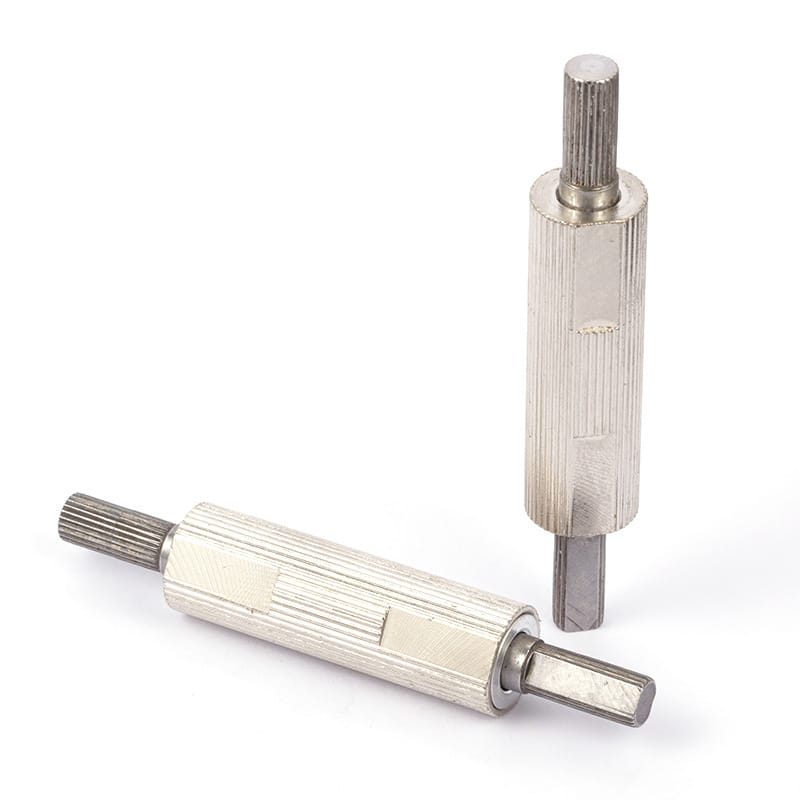
A premium laptop friction hinge utilizes precision-machined shafts and specialized synthetic greases to eliminate “stiction,” ensuring a smooth, one-handed opening experience.
A top-tier laptop hinge supplier engineers this transition seamlessly. They utilize proprietary synthetic greases and micron-level CNC machining on the hinge shaft and friction bands to ensure the dynamic torque remains perfectly consistent, eliminating the “jerky” or “sticky” feel associated with low-quality components.
Asymmetric Torque Profiles
Many modern laptops utilize asymmetric torque hinges. These hinges provide less resistance when opening the lid (facilitating the one-handed open) and more resistance when closing it (preventing the lid from slamming shut under its own weight). This is achieved through sophisticated one-way clutch mechanisms or directional friction bands integrated directly into the hinge chassis.
2. The 360-Degree Revolution: Convertible and Dual-Screen Devices
The traditional clamshell laptop is evolving. The rise of 2-in-1 convertibles and dual-screen workstations has pushed hinge engineering to its absolute limits. These devices require hinges that can rotate a full 360 degrees while maintaining consistent torque and perfect alignment between the two halves of the chassis.
Synchronized Dual-Axis Mechanisms
A standard single-axis hinge cannot achieve a flush 360-degree fold. Instead, a laptop hinge supplier must design a dual-axis mechanism. This involves two parallel shafts connected by a complex gear train. As the user opens the device, the gears synchronize the rotation of both shafts, ensuring the display moves smoothly from laptop mode to tent mode, and finally to tablet mode.
Dual-axis 360-degree hinges utilize synchronized gear trains to allow convertible laptops to fold completely flat into tablet mode while maintaining consistent torque.
The precision required for these gears is extreme. If the gear teeth are not hobbed to exact tolerances, the hinge will exhibit “backlash” (play or looseness), resulting in a wobbly screen. Premium manufacturers utilize advanced gear hobbing machinery and 100% optical inspection to ensure zero backlash in their 360-degree designs.
The Dual-Screen Challenge
Devices with two heavy screens (such as dual-screen laptops or portable monitors) place immense stress on the hinge. The torque requirements are significantly higher, yet the hinge must remain thin enough to fit within an ultra-slim chassis. This often requires the use of high-strength alloys, such as SUS304 or SUS316 stainless steel, and advanced manufacturing techniques like Metal Injection Molding (MIM) to create complex, high-strength geometries that cannot be achieved through traditional stamping or machining.

Dual-screen workstations require ultra-high-torque friction hinges manufactured from high-strength stainless steel to support the weight of two displays without wobbling.
3. Foldable Phones: The Pinnacle of Hinge Engineering
The most demanding application for friction hinges today is the foldable smartphone. These devices require a hinge that can fold a flexible OLED screen with a specific bend radius (to prevent creasing) while keeping dust and debris out of the internal mechanism.

Foldable smartphone hinges represent the pinnacle of miniaturization, often containing over 100 micro-components, including cams, springs, and synchronized gears.
These “waterdrop” or “teardrop” hinges are incredibly complex, often consisting of over 100 individual micro-components. They utilize intricate cam-and-spring mechanisms to provide a satisfying “snap” open and closed, while maintaining a precise free-stop position in the middle of the travel. Sourcing a rotary damper consumer electronics or micro-hinge solution for a foldable device requires partnering with a manufacturer that possesses world-class MIM capabilities and cleanroom assembly environments.
4. Ergonomics and Desktop Displays: The Monitor Arm Hinge
While laptops and phones demand miniaturization, desktop environments demand heavy-duty reliability. Monitor arms and adjustable screen stands rely on robust friction hinges to support heavy ultrawide displays while allowing the user to adjust the tilt, pan, and rotation with minimal effort.

Heavy-duty friction hinges in monitor arms must support significant weight while allowing for smooth, effortless ergonomic adjustments.
In these applications, torque decay is the primary enemy. If a hinge loses torque over time, the monitor will slowly droop, ruining the ergonomic setup. A premium laptop hinge supplier that also manufactures heavy-duty display hinges will utilize specialized spring-steel friction bands that maintain their tension over tens of thousands of adjustment cycles. They will also provide empirical torque decay charts, proving that their hinges will not fail after years of daily use. Discuss more on Whatsapp.
5. Auditing a Consumer Electronics Hinge Supplier
When an OEM procurement team is evaluating a laptop hinge supplier or a manufacturer of rotary damper consumer electronics, they must look beyond the initial prototype. The true test of a supplier is their ability to scale production while maintaining micron-level precision.
In-House Tooling and CNC Capabilities
A supplier that outsources their mold-making or CNC machining cannot control their own quality or lead times. A verified factory will have an extensive in-house tooling department equipped with high-precision CNC Swiss lathes and wire EDM (Electrical Discharge Machining) equipment. This allows them to rapidly iterate on prototype designs and ensure that production tooling meets the exact specifications required for consistent torque.
Lifecycle and Environmental Testing
Consumer electronics are subjected to harsh treatment. A reliable supplier will subject their hinges to rigorous Environmental Stress Screening (ESS). This includes:
•Torque Decay Testing: Running the hinge through 20,000 to 50,000 cycles to measure the percentage of torque loss.
•Thermal Shock Testing: Rapidly cycling the hinge between extreme hot and cold temperatures to ensure the synthetic greases do not break down and the metal components do not warp.
•Salt Spray Testing: Ensuring the plating and anti-corrosion coatings can withstand high-humidity environments.
RoHS and REACH Compliance
For global consumer electronics brands, environmental compliance is non-negotiable. The supplier must provide full material traceability and SGS/TUV testing reports proving that their hinges are 100% free of hazardous substances like lead, cadmium, and hexavalent chromium, in strict accordance with RoHS and REACH directives.
6. The Hidden Costs of Sourcing Cheap Hinges
In the highly competitive consumer electronics market, procurement teams are under constant pressure to reduce Bill of Materials (BOM) costs. It can be tempting to source a cheaper friction hinge for notebook applications from an unverified supplier or a trading company. However, the initial savings are almost always eclipsed by the hidden costs of poor quality.
The Warranty Claim Nightmare
If a laptop hinge fails in the field—whether it becomes too loose to hold the screen, or so tight that it cracks the plastic chassis—the cost to the OEM is catastrophic. A hinge that costs $1.50 to purchase might cost $150 to replace under warranty, factoring in shipping, labor, and replacement parts. Furthermore, the damage to the brand’s reputation is incalculable. Consumers who experience a broken hinge are highly unlikely to purchase from that brand again.
Assembly Line Downtime
Cheap hinges often suffer from inconsistent torque profiles. If a batch of hinges arrives at the OEM assembly line with torque values outside the specified tolerance, the entire production line can grind to a halt. Workers will struggle to assemble the devices, and the final products will fail end-of-line quality control checks. A premium laptop hinge supplier prevents this by implementing 100% torque inspection before shipping, ensuring that every single hinge meets the exact specifications required for smooth assembly.
The Value of Early Supplier Involvement (ESI)
The most successful consumer electronics OEMs do not treat their hinge suppliers as mere vendors; they treat them as engineering partners. By engaging a rotary damper consumer electronics expert early in the design phase (Early Supplier Involvement), OEMs can avoid costly design flaws. A skilled hinge engineer can recommend slight modifications to the chassis design to better accommodate the hinge, suggest alternative materials to reduce weight without sacrificing strength, and optimize the torque profile for the specific weight and center of gravity of the display. This collaborative approach ultimately reduces time-to-market and ensures a superior final product.
Frequently Asked Questions (FAQs)
1. What is the difference between stiction and dynamic friction in a laptop hinge?
Stiction (static friction) is the initial resistance required to start moving the hinge. Dynamic friction is the resistance felt while the hinge is in motion. A high-quality hinge minimizes stiction for an easy initial open, while maintaining smooth, consistent dynamic friction to hold the screen steady.
2. Why do some laptop screens wobble when typing?
Screen wobble is usually caused by “backlash” (play or looseness) in the hinge mechanism, often due to poorly machined gear teeth in 360-degree hinges or insufficient torque in standard friction hinges. Premium hinges use precision CNC machining to eliminate backlash.
3. What is an asymmetric torque hinge?
An asymmetric hinge provides different levels of resistance depending on the direction of rotation. For example, it might offer low resistance when opening a laptop lid (for easy one-handed opening) and high resistance when closing it (to prevent slamming).
4. How do manufacturers test the lifespan of a friction hinge for notebook applications?
Manufacturers use automated lifecycle testing machines that repeatedly open and close the hinge for 20,000 to 50,000 cycles. They measure the torque output before and after the test to ensure the torque decay (loss of resistance) remains within acceptable limits (typically under 15%).
5. Why is Metal Injection Molding (MIM) used for foldable phone hinges?
MIM allows manufacturers to create ultra-small, highly complex, and incredibly strong metal components that would be impossible or prohibitively expensive to produce using traditional CNC machining or stamping. This is essential for the intricate micro-mechanisms inside foldable phones.
Conclusion: The Foundation of the User Experience
In consumer electronics, the hinge is the physical bridge between the user and the digital world. Whether it is a sleek ultrabook, a versatile 360-degree convertible, or a cutting-edge foldable smartphone, the quality of the friction hinge directly dictates the perceived quality of the entire device.
For hardware engineers and procurement professionals, partnering with a verified, precision-focused laptop hinge supplier is a strategic imperative. By demanding rigorous lifecycle testing, in-house CNC capabilities, and advanced engineering support, OEMs can ensure their devices deliver a flawless, premium tactile experience from the first open to the fifty-thousandth.
At Janhinge, we specialize in engineering high-precision friction hinge for notebook and consumer electronics applications. From ultra-miniature MIM components to heavy-duty dual-axis designs, our factory is equipped to bring your most ambitious hardware concepts to life.
Contact our engineering team today to discuss your custom hinge requirements and discover the Janhinge difference. Discuss more on Whatsapp.