
The Integration Challenge: Why Motion Control Fails in Production
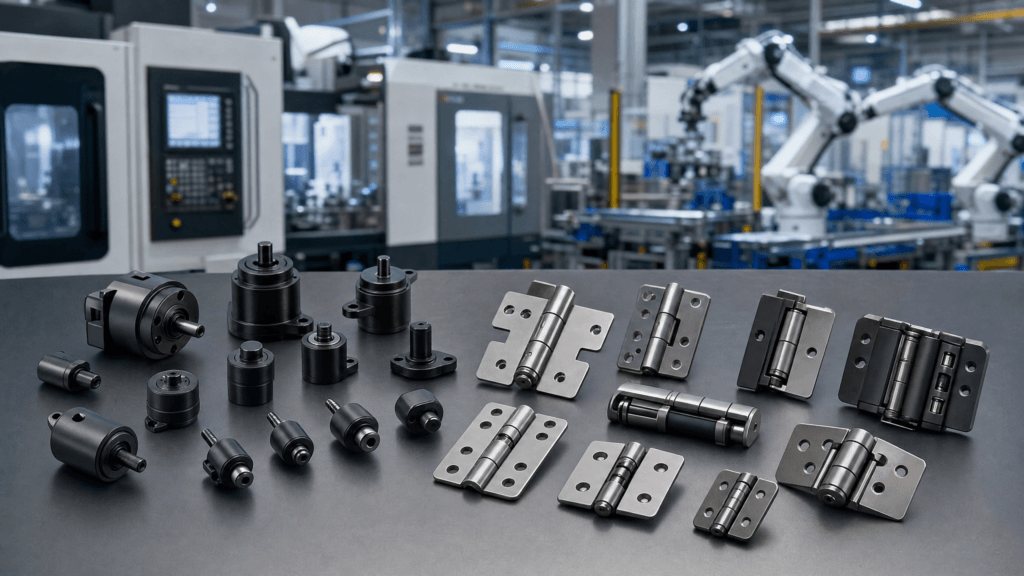
In the world of product design, creating a seamless user experience is paramount. However, a common pitfall occurs when mechanical engineers treat motion control components—like a rotary damper or a custom friction hinge—as standard catalog parts that can be simply “dropped in” at the end of the design phase.
When motion control is an afterthought, the results are predictable and costly: interference with housing structures, inadequate torque that fails to hold a monitor in place, or overpowering damping that requires excessive force to open a lid. This is where Design for Manufacturing (DFM) principles become critical.
By integrating your industrial hinge OEM manufacturer early in the product development cycle, you transition from reactive troubleshooting to proactive engineering. This guide will walk you through the best practices for selecting and integrating motion control mechanisms to ensure flawless performance from prototype to mass production.
Step 1: Defining the Kinematic Profile
Before selecting a component, engineers must define the exact kinematic profile of the moving part. This involves mapping the physical forces at play during the entire opening and closing cycle.
Calculating the Center of Gravity and Torque
The most common mistake in friction hinge torque selection is underestimating the leverage exerted by the moving panel. A 2kg laptop screen exerts significantly more rotational force at its hinge than a 2kg compact tablet.
To select the right component, you must calculate the maximum torque (usually expressed in N.m or kgf.cm) required to hold the panel at its most extreme angle. This requires identifying the distance from the hinge axis to the center of gravity of the moving component.
Understanding Damping Directions
When integrating a soft close mechanism DFM, you must specify the damping direction. Does the lid need resistance only when closing (to prevent slamming), or does it need resistance in both directions?
•One-way dampers provide high resistance in one direction and minimal resistance in the other, ideal for heavy lids that users need to lift easily but close softly.
•Two-way dampers provide consistent resistance in both directions, often used in delicate mechanisms where sudden movements in any direction could cause damage.

Step 2: Selecting the Right Motion Control Component
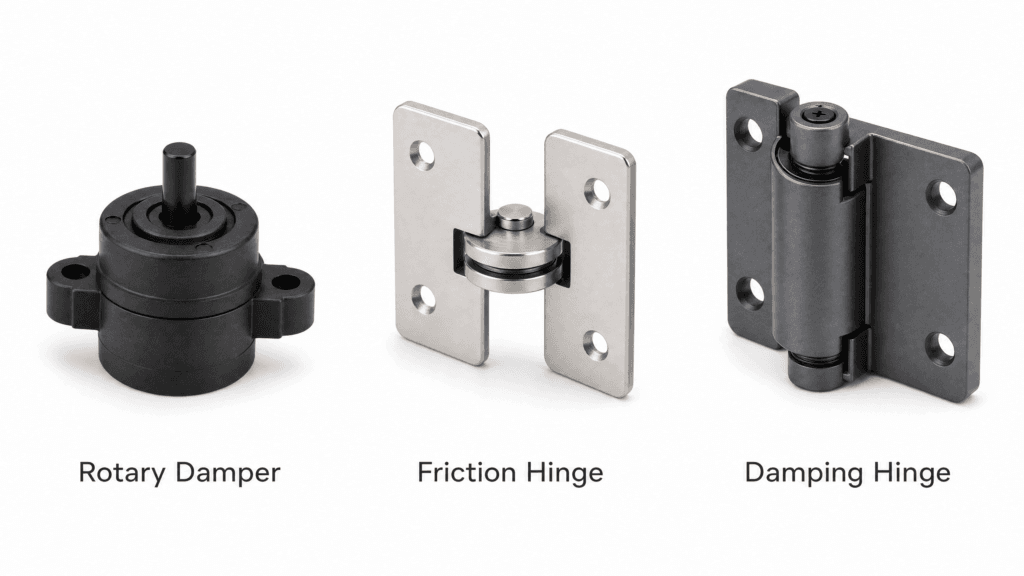
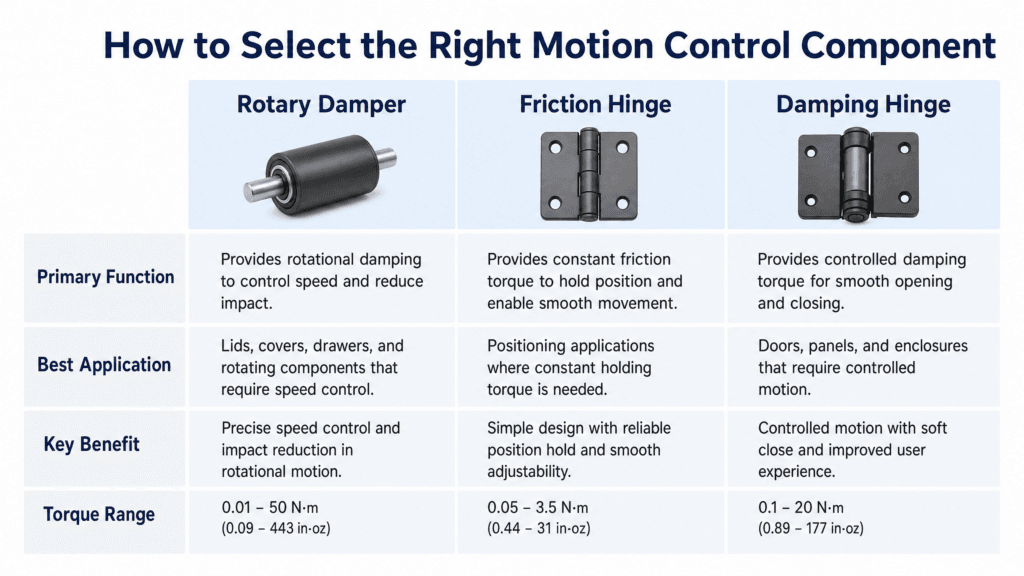
Once the kinematic profile is defined, the next step is selecting the appropriate technology. The choice between a rotary damper, a friction hinge, or a combined damping hinge depends entirely on the desired user interaction.
The Rotary Damper: Fluid Resistance for Speed Control
Rotary dampers utilize the high viscosity of internal silicone oil to convert kinetic energy into thermal energy. They are not designed to hold a position; rather, they are designed to control the speed of a movement.
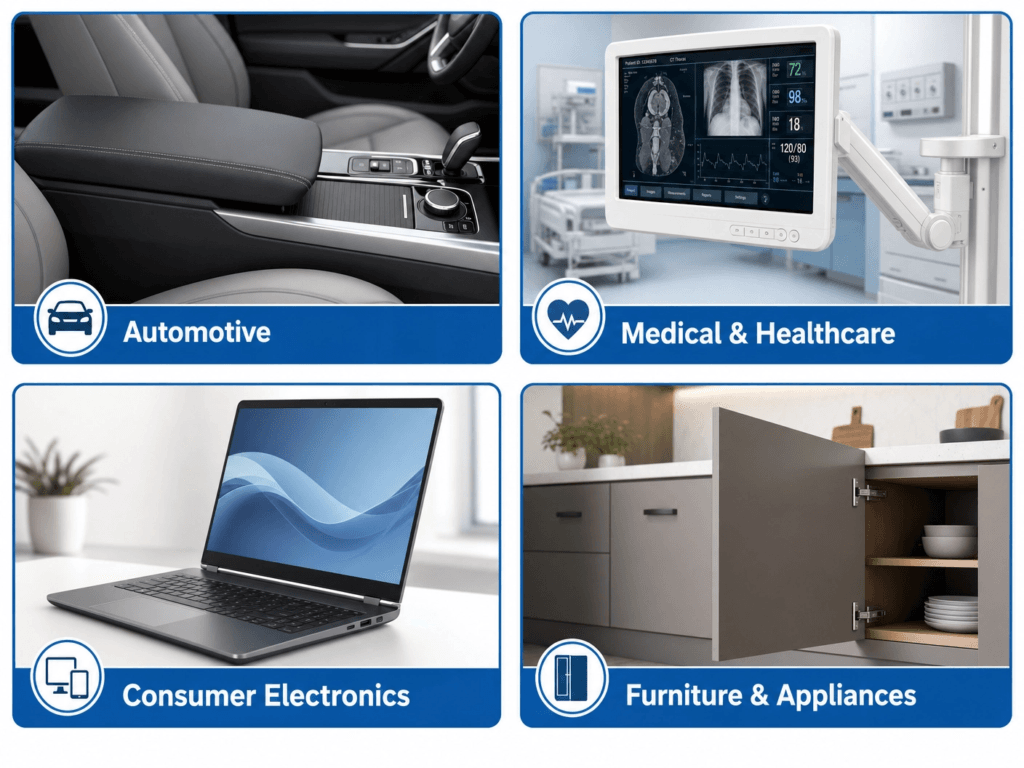
Ideal for: Washing machine lids, automotive grab handles, and toilet seats where the goal is a slow, controlled, and silent descent.
The Friction Hinge: Constant Torque for Position Holding
Unlike dampers, friction hinges rely on mechanical friction (often utilizing specialized clips or bands wrapped around a shaft) to provide constant resistance. This allows the user to move a panel to any angle and have it stay exactly where it is left.
Ideal for: Medical diagnostic monitors, industrial control panels, and laptop screens where infinite adjustability and position holding are required.
The Damping Hinge: The Integrated Solution
For applications where space is at a premium, a damping hinge combines the structural support of a hinge with the fluid resistance of a damper. These often feature a “catch” mechanism that engages the damping effect only during the final 15° to 30° of rotation.
Ideal for: Premium kitchen cabinets and heavy equipment hatches where a separate external damper would be unsightly or interfere with internal components.

Step 3: DFM Best Practices for Housing Integration
Selecting the right component is only half the battle; integrating it into your product housing requires careful consideration of manufacturing tolerances and material behaviors.
Managing Mechanical Stress and Alignment
A rotary damper integration guide will always emphasize the importance of axial alignment. If the shaft of the damper is not perfectly aligned with the rotational axis of the lid, it will introduce lateral forces (side-loading).
Side-loading is the enemy of rotary dampers. It causes uneven wear on the internal O-ring seals, which inevitably leads to silicone oil leakage and premature failure. To prevent this, design the housing to absorb lateral loads, ensuring the damper only experiences pure rotational forces.
Material Compatibility and Thermal Expansion
When mounting a metal friction hinge into a plastic housing, engineers must account for different coefficients of thermal expansion. If the product will be used in an automotive interior that experiences extreme temperature swings, the plastic mounting bosses may expand and contract differently than the metal hinge, leading to loose screws and a “wobbly” feel over time. Utilizing threaded metal inserts within the plastic housing is a standard DFM practice to ensure long-term stability.

Step 4: Validating Through Rigorous Testing
The final step in the integration process is validation. Theoretical calculations must be proven in the physical world. This is where partnering with a highly capable OEM manufacturer like Janhinge provides a distinct advantage.
At Janhinge, we don’t just supply parts; we provide comprehensive testing data. Our facilities are equipped to simulate the exact lifecycle of your product.
•Lifecycle Testing: We verify that our hinges and dampers maintain at least 85% of their original torque after 50,000 continuous cycles.
•Thermal Testing: We validate performance across a temperature range of -20°C to 70°C, ensuring the silicone oil maintains its designed viscosity.
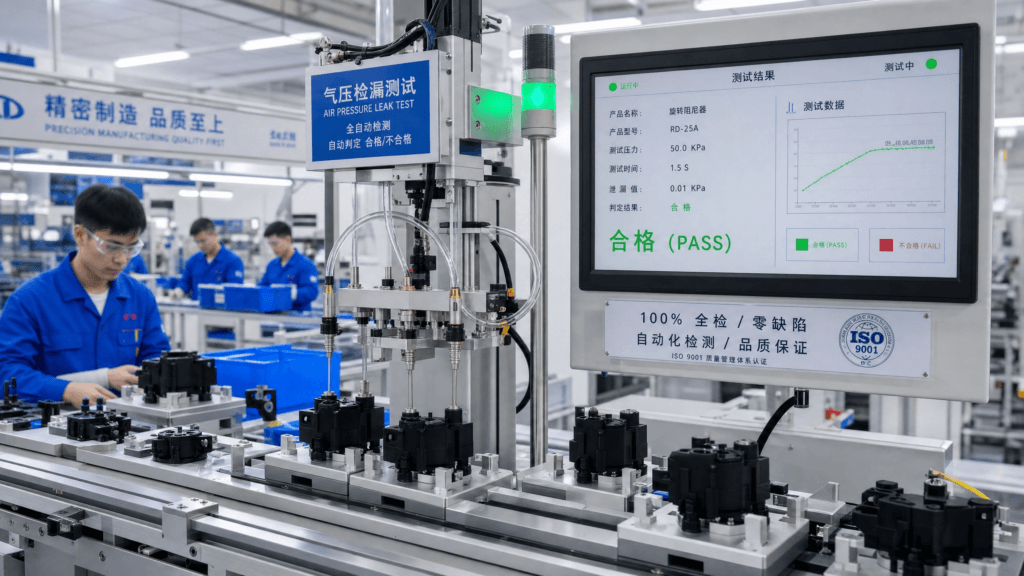
•100% Automated Leak Testing: Every single rotary damper is subjected to an automated air pressure test before shipment, guaranteeing zero leakage.

Conclusion: Engineering Motion Together
Successful motion control component design is a collaborative effort. By engaging with Janhinge during the early stages of your CAD development, you gain access to decades of specialized engineering expertise. We can help you calculate torque requirements, avoid common integration pitfalls, and deliver a tactile experience that elevates your brand.
Don’t leave your product’s movement to chance. Contact the engineering team at Janhinge today for a free DFM consultation and custom 3D CAD models.
Schedule an Engineering Consultation | Download 2D/3D Drawings
Frequently Asked Questions (FAQ) for Engineers
Q1: How do I determine the exact torque required for my application?
A: You need to calculate the moment of inertia. Measure the weight of the moving panel and the distance from the hinge pivot point to the panel’s center of gravity. Multiply the weight by the distance to get the base torque requirement. Our engineering team can assist you with these calculations to ensure accurate selection.
Q2: Can a rotary damper support the physical weight of a heavy lid?
A: No. Rotary dampers are designed to control rotational speed, not to bear structural weight. The physical weight of the lid must be supported by standard hinges or pivots. The damper should only be subjected to rotational forces.
Q3: We have very tight space constraints. Can you customize the physical dimensions of a friction hinge?
A: Yes. As an OEM manufacturer with our own mold tooling capabilities, we specialize in miniature and custom-dimension friction hinges. We can alter the mounting plate shapes, hole configurations, and overall profile to fit your specific housing design.
Q4: What happens to the damping effect in extremely cold environments?
A: Standard silicone oils thicken in cold temperatures, which can make the damping action stiff or sluggish. Janhinge uses premium, temperature-stable silicone oil formulated to maintain consistent viscosity and smooth operation even in environments as cold as -20°C.
Q5: How long does it take to get a custom prototype for testing?
A: We understand the speed of modern product development. For custom OEM/ODM designs that require new molds, we can deliver functional, test-ready prototypes in just 20 days. For modifications to standard parts, the turnaround is even faster.