
In the intricate world of product design and manufacturing, every component plays a pivotal role in defining user experience, reliability, and overall brand perception. For engineers striving for ergonomic excellence and procurement professionals seeking robust, cost-effective solutions, friction hinges stand out as a critical element. These ingenious devices offer precise position control, ensuring that lids, displays, and panels remain exactly where they are placed, enhancing both functionality and safety. This comprehensive guide explores the technical intricacies, diverse applications, and strategic procurement advantages of Janhinge’s precision friction hinges.
What Are Friction Hinges? The Science of Stable Positioning
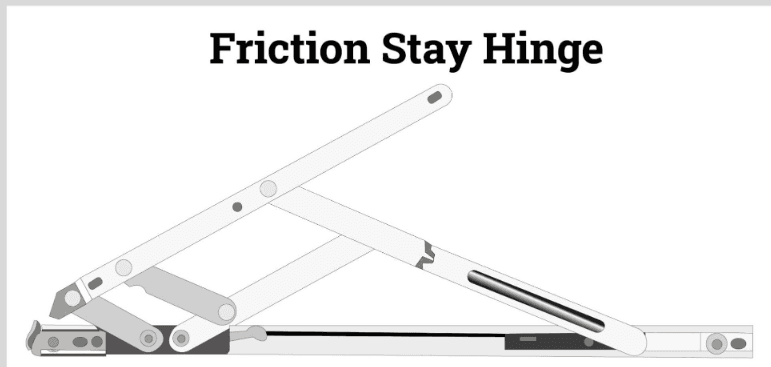
Friction hinges, often referred to as constant torque hinges, are mechanical devices designed to provide resistance to rotational movement, allowing an attached component to be held firmly in any desired position without the need for external locking mechanisms. Unlike traditional hinges that merely facilitate movement, friction hinges actively control it.
How They Work: The core principle involves internal friction elements (such as discs, washers, or specialized coatings) that create a consistent drag against rotational force. This engineered resistance counteracts gravity or other external forces, enabling the component to stay put at any angle. Janhinge’s advanced designs ensure this resistance remains stable and predictable throughout the hinge‘s operational life, providing a smooth, quality feel during adjustment.
Types of Friction Mechanisms
Friction hinges employ various internal mechanisms to generate and control torque. Common types include:
•Disc Friction: Utilizes a stack of friction discs and plates, often with a spring-loaded mechanism, to create resistance. This design allows for precise control over torque values and can be highly durable.
•Conical Friction: Employs conical surfaces that engage under pressure, offering a compact and robust solution for specific torque requirements.
•Cylindrical Friction: Involves cylindrical surfaces that slide against each other, often with specialized coatings to manage friction. This type is frequently used in smaller hinges.
Janhine leverages a combination of these mechanisms, often incorporating proprietary designs, to achieve optimal performance characteristics for each application. Our engineering team meticulously selects the appropriate friction technology based on factors such as required torque, cycle life, operating environment, and cost efficiency.
The Engineering Advantage: Precision and Durability
For design engineers, the choice of a friction hinge is a critical decision that impacts product performance, user satisfaction, and long-term reliability. Janhinge’s friction hinges are engineered with several key technical advantages:
1. Consistent Torque Performance
The hallmark of a superior friction hinge is its ability to maintain constant torque throughout its entire range of motion and over its lifespan. Janhinge achieves this through:
•Proprietary Friction Materials: Utilizing advanced polymers and metal alloys that resist wear and maintain consistent friction coefficients.
•Precision Manufacturing: Tight tolerances and rigorous quality control ensure that each hinge delivers torque within a narrow deviation (typically ±10% of specified value).
•Engineered Spring Elements: Optimized spring designs provide the necessary preload to the friction stack, preventing backlash and ensuring smooth operation.
This consistency is vital in applications where precise positioning is paramount, such as medical diagnostic equipment or high-end consumer electronics. Learn more about Janhinge’s Friction Hinges
2. Extended Cycle Life
Product longevity is a key concern for both engineers and procurement. Janhinge friction hinges are designed for high cycle life, often exceeding 50,000 cycles, with minimal torque degradation. This is achieved through:
•Hardened Components: Using heat-treated steels and robust bearing surfaces to withstand repeated stress.
•Self-Lubricating Elements: Incorporating materials that reduce internal wear and extend operational life without external maintenance.
•Rigorous Testing: Each design undergoes extensive cycle testing under various load and environmental conditions to validate its durability.
3. Customization for Unique Applications
Standard hinges rarely fit every innovative design. Janhinge excels in providing custom torque solutions tailored to specific project requirements. Our engineering team collaborates with clients to develop hinges with:
•Material Versatility: Offering a range of materials including stainless steel, zinc alloy, and engineering plastics, chosen for their strength, corrosion resistance, and aesthetic properties.
•Integrated Features: Beyond basic friction, we can incorporate features like electrical contacts for power/data transfer, or integrated mounting solutions to simplify assembly.
•Variable Torque Profiles: Different resistance levels for opening and closing, or specificangles.
•Integrated Detents: Tactilefeedback at specific angles, useful for multi-position adjustments.
•One-Way Friction: Resistance in only one direction of rotation, ideal for specific ergonomic needs.
•Environmental Resistance: Materials and coatings optimized for harsh environments, including high humidity, extreme temperatures, or corrosive agents.
Diverse Applications: Where Precision Matters
Friction hinges are not confined to a single industry; their utility spans across sectors where reliable position control, ergonomic design, and enhanced safety are paramount. From the delicate mechanisms of medical devices to the robust demands of industrial machinery and the sleek interfaces of consumer electronics, these hinges provide the critical functionality that elevates product performance and user interaction. Janhinge’s expertise in tailoring these components ensures that each application benefits from optimal motion control, contributing to both operational efficiency and user satisfaction.
Friction hinges are indispensable across a wide array of industries where controlled motion and stable positioning are critical. Their versatility makes them a preferred choice for engineers designing high-performance products.
1. Medical Devices

In the medical field, precision and reliability are non-negotiable. Friction hinges are used in:
•Medical Displays and Monitor Arms: Allowing healthcare professionals to adjust viewing angles with one hand, ensuring optimal ergonomics and patient care. Explore Janhinge’s solutions for Medical Devices
•Diagnostic Equipment Covers: Providing smooth, controlled access to sensitive internal components.
•Surgical Lighting and Instrument Trays: Maintaining precise positioning during delicate procedures.
2. Industrial Equipment

Robustness and durability are key in industrial settings. Friction hinges enhance the functionality of:
•Control Panels and HMIs: Enabling operators to tilt and position screens for better visibility and interaction, even in vibrating environments.
•Access Doors and Machine Guards: Ensuring safety by holding heavy covers open or closed securely.
•Workstation Components: Supporting adjustable shelves, tool holders, and protective shields.
3. Consumer Electronics
From laptops to smart home devices, friction hinges contribute to a premium user experience:
•Laptop and Tablet Stands: Allowing users to set their devices at comfortable viewing angles.
•Smart Home Displays: Providing adjustable interfaces for intuitive interaction.
•High-End Audio Equipment: Ensuring precise positioning of speakers or control surfaces.
4. Automotive Interiors
In vehicles, friction hinges contribute to both convenience and safety:
•Infotainment Screens: Enabling drivers and passengers to adjust display angles to reduce glare.
•Glove Compartment and Console Lids: Providing a smooth, controlled opening and closing action.
•Adjustable Armrests: Offering ergonomic support that stays in place.
Strategic Procurement: Partnering with Janhinge
For procurement professionals, selecting a friction hinge supplier involves more than just price; it’s about securing a reliable partner who can deliver quality, consistency, and support. Janhinge offers significant advantages for B2B clients:
1. Direct from Manufacturer Benefits
As a direct OEM/ODM factory, Janhinge eliminates intermediaries, offering:
•Total Cost of Ownership (TCO) Advantages: While initial unit cost is important, Janhinge focuses on providing solutions that reduce TCO through extended product lifespan, minimized maintenance, and simplified assembly processes.
•Competitive Pricing: Direct sourcing translates to better cost efficiency for your projects.
•Streamlined Communication: Direct access to our engineering and production teams ensures clear communication and faster problem-solving.
•Faster Lead Times: Optimized production processes and direct control over the supply chain reduce delivery times.
2. Quality Assurance and Compliance
Our commitment to quality is unwavering. Janhinge operates under stringent quality management systems:
•ISO 9001 Certified: Adherence to international quality standards across all manufacturing processes.
•RoHS and REACH Compliance: Ensuring our products meet global environmental and safety regulations, simplifying your compliance efforts.
•Comprehensive Testing: Every batch undergoes rigorous performance and durability testing before shipment.
3. Technical Support and Collaboration
We believe in partnership. Our support extends beyond product delivery:
•3D CAD Models and Samples: Facilitating seamless integration into your designs and enabling thorough prototyping. Request a Custom Solution
•Expert Consultation: Our engineers provide guidance on hinge selection, torque calculation, and application optimization.
•Long-Term Partnership: We aim to be a long-term strategic partner, adapting to your evolving needs and supporting future innovations.
Case Study Spotlight: Enhancing Medical Equipment Ergonomics
Consider a leading medical device manufacturer developing a new portable ultrasound machine. The challenge was to design a display that could be easily adjusted by medical professionals with one hand, remain stable during examinations, and withstand frequent cleaning with harsh disinfectants. Traditional hinges failed to provide the necessary constant torque and corrosion resistance.
Janhine partnered with the manufacturer to develop a custom stainless steel friction hinge with a specific torque profile and an integrated detent at the optimal viewing angle. The hinge was tested to over 100,000 cycles and demonstrated superior resistance to chemical exposure. The result was an ultrasound machine with enhanced ergonomics, improved user experience, and a longer service life, leading to positive feedback from clinicians and a stronger market position for the manufacturer.
This case study exemplifies Janhinge’s capability to not only supply components but to act as a solutions provider, tackling complex engineering challenges with tailored, high-performance friction hinge designs.
Frequently Asked Questions (FAQs) about Friction Hinges
1. What is the key advantage of a friction hinge over a traditional hinge?
The primary advantage is position control. A friction hinge allows a component to be held securely at any desired angle without external support, whereas a traditional hinge only facilitates movement and requires additional mechanisms to maintain position.
2. How is the torque of a friction hinge measured and specified?
Torque is measured in Newton-meters (Nm) or pound-inches (lb-in) and represents the rotational force required to move the hinge. It is specified as a constant value that the hinge will maintain throughout its range of motion. Janhinge provides detailed specifications and can customize torque values.
3. Can friction hinges be used in outdoor or harsh environments?
Yes, Janhinge offers friction hinges made from corrosion-resistant materials like stainless steel and with specialized coatings or sealing options to withstand harsh environments, including high humidity, dust, and extreme temperatures. Specific material selection depends on the application’s environmental demands.
4. What factors should engineers consider when selecting a friction hinge for a new design?
Engineers should consider the required holding torque (based on the weight and leverage of the component), the desired cycle life, the operating environment, the available space for the hinge, and any specific functional requirements like detents or one-way friction. Janhinge’s technical team can assist with this selection process.
5. How does Janhinge ensure the quality and consistency of its friction hinges for OEM clients?
Janhinge maintains ISO 9001 certification, employs stringent quality control throughout the manufacturing process, uses high-quality materials, and conducts rigorous testing (including cycle life and torque consistency tests) on all products. We also provide comprehensive technical documentation and compliance certifications.
Conclusion
For engineers and procurement professionals, the strategic integration of precision friction hinges is a clear path to enhancing product functionality, durability, and user satisfaction. Janhinge stands as a trusted partner, offering not only a superior range of custom torque solutions but also the technical expertise and manufacturing capabilities to meet the most demanding B2B requirements. By choosing Janhinge, you are investing in motion control solutions that elevate your products and streamline your supply chain. Our commitment to innovation, quality, and customer success makes us the ideal partner for your most challenging motion control requirements. Contact Janhinge today to discuss your next project and experience the difference of true engineering precision and partnership.