
Hello, automotive interior engineers and Tier 1 suppliers! In today’s highly competitive automotive market, the interior cabin has become a primary battleground for brand differentiation. Consumers no longer just look for performance and fuel efficiency; they demand a sanctuary of comfort, advanced technology, and premium tactile experiences. Every interaction within the cabin – from opening a glove box to adjusting a central display – contributes to the overall perception of vehicle quality. At Janhinge, we understand that achieving this level of refinement requires more than just high-quality materials; it demands precision engineering. This article explores how our advanced motion control solutions, specifically automotive rotary dampers and friction hinges, are essential for elevating automotive interiors, enhancing safety, and delivering the luxurious feel that modern drivers expect.
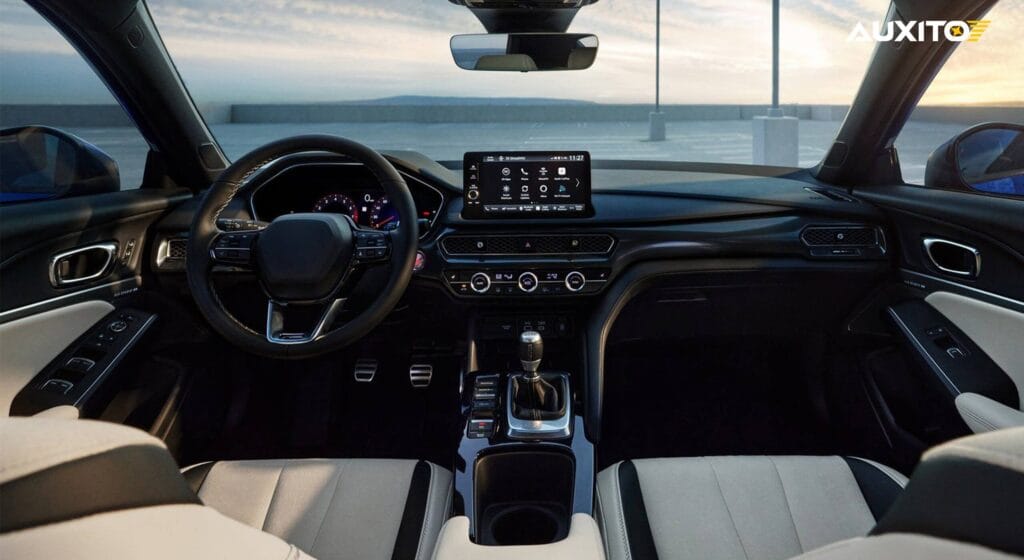
The Evolution of the Automotive Interior Experience
The automotive interior has evolved from a purely functional space to a complex, multi-sensory environment. This shift is driven by several key trends:
•The Pursuit of Premium Feel: Consumers associate smooth, controlled, and silent movements with high quality and luxury. A slamming glove box or a wobbly armrest instantly detracts from the premium experience.
•Integration of Advanced Technology: The proliferation of large, interactive displays and smart surfaces requires robust mounting and positioning solutions that are both stable and easily adjustable.
•Focus on Ergonomics and Comfort: Seats, headrests, and consoles must be highly adjustable to accommodate diverse driver profiles and ensure comfort during long journeys.
•Stringent Safety Standards: Interior components must not only be comfortable but also safe, requiring mechanisms that prevent sudden movements or sharp impacts during operation or in the event of a collision.
•Noise, Vibration, and Harshness (NVH) Reduction: A quiet cabin is a hallmark of luxury. Motion control components play a vital role in eliminating rattles, squeaks, and operational noise.
To meet these demands, automotive engineers require motion control components that offer precise performance, exceptional durability, and seamless integration into complex interior designs.
Automotive Rotary Dampers: The Silent Touch of Luxury
Rotary dampers are the unsung heroes of automotive interiors. These compact devices are designed to absorb kinetic energy, transforming rapid, uncontrolled movements into smooth, deliberate, and silent actions. They are the key to achieving the “soft-close” effect that consumers associate with high-end vehicles.
Key Benefits in Automotive Interiors:
•Premium Tactile Feedback: Providing a smooth, controlled resistance that feels luxurious and refined.
•NVH Optimization: Eliminating the noise of slamming lids and covers, contributing to a quieter cabin environment.
•Component Protection: Reducing impact forces, thereby extending the lifespan of latches, hinges, and surrounding trim.
•Enhanced Safety: Preventing heavy lids from falling abruptly, protecting fingers and hands.
Typical Automotive Applications for Rotary Dampers:
•Glove Boxes: The classic application. A rotary damper ensures the glove box door glides open smoothly and silently, rather than dropping open abruptly. Explore Janhinge’s Rotary Dampers.
•Center Console Storage Bins: Providing a soft-open and soft-close experience for armrest storage compartments.
•Cup Holders and Ashtrays: Ensuring smooth deployment and retraction of these frequently used components.
•Grab Handles (Oh-Shit Handles): Allowing the handle to return to its resting position slowly and quietly after use.
•Sunglass Holders: Providing a controlled, elegant opening motion.


Friction Hinges: Precision Positioning for the Modern Cabin
As automotive interiors become more interactive and customizable, the need for stable, adjustable positioning has never been greater. Friction hinges, also known as constant torque hinges, provide the perfect solution. They allow components to be held securely at any desired angle without the need for secondary locking mechanisms, offering infinite adjustability and a clean, uncluttered design.
Key Benefits in Automotive Interiors:
•Infinite Adjustability: Allowing users to position components exactly where they want them for optimal comfort and visibility.
•Stable Positioning: Maintaining the chosen angle securely, even under the vibration and G-forces experienced during driving.
•Ergonomic Design: Eliminating the need for cumbersome levers or buttons, resulting in a more intuitive and user-friendly experience.
•Space Optimization: Friction hinges are typically compact, allowing for sleeker interior designs and maximizing available space.
Typical Automotive Applications for Friction Hinges:
•Rotating and Tilting Central Displays: As infotainment screens grow larger, friction hinges allow drivers and passengers to adjust the viewing angle to reduce glare and improve reachability. See Janhinge’s Friction Hinges.
•Adjustable Headrests: Enabling precise positioning of headrests for optimal comfort and safety.
•Center Console Armrests: Allowing the armrest to be positioned at various heights or angles to suit different drivers.
•Fold-Down Tables and Trays: Providing stable support for rear-seat entertainment or work surfaces.
•Sun Visors: Ensuring the visor stays firmly in place, regardless of the angle.


Janhinge’s Automotive Expertise: Driving Innovation Forward
At Janhinge, we recognize that the automotive industry operates under some of the most stringent quality and performance standards in the world. Our commitment to being a premier OEM motion control partner for the automotive sector is reflected in our engineering and manufacturing processes:
1. Automotive-Grade Materials and Durability
We utilize materials specifically chosen for their performance in automotive environments, including high-performance engineering plastics, specialized alloys, and automotive-grade lubricants. Our components are designed to withstand extreme temperature fluctuations (from freezing winters to scorching summers), high humidity, and constant vibration.
2. Rigorous Automotive Testing Standards
Our products undergo extensive testing to ensure they meet or exceed automotive industry standards. This includes:
•Life Cycle Testing: Simulating years of use to guarantee long-term reliability.
•Thermal Shock and Cycling: Ensuring consistent performance across extreme temperature ranges.
•Vibration and NVH Testing: Verifying that our components do not contribute to cabin noise and maintain stability under driving conditions.
•Chemical Resistance Testing: Ensuring compatibility with interior cleaning agents and automotive fluids.
3. Custom Engineering for Seamless Integration
Automotive interior packaging is incredibly tight. Our engineering team works closely with Tier 1 suppliers and OEMs to develop custom motion control solutions that fit perfectly within specific design constraints. Whether it’s a unique mounting footprint, a specific torque profile, or a customized damping rate, we tailor our products to your exact requirements. Discover Janhinge’s Custom Solutions.
4. IATF 16949 Compliance and Quality Assurance
We understand the critical importance of quality management in the automotive supply chain. Janhinge’s manufacturing processes are aligned with the principles of IATF 16949, ensuring robust quality control, continuous improvement, and defect prevention. We provide comprehensive PPAP (Production Part Approval Process) documentation to support your validation requirements.
5. Scalable Manufacturing and Reliable Supply
With advanced, automated manufacturing facilities, Janhinge has the capacity to scale production to meet the high-volume demands of the automotive industry. Our robust supply chain management ensures reliable, on-time delivery, minimizing the risk of production line disruptions.
Partnering for the Future of Automotive Interiors
The interior of the vehicle is rapidly transforming into a smart, connected, and highly personalized living space. To stay ahead in this dynamic market, automotive engineers need partners who can deliver innovative, reliable, and high-quality components. By integrating Janhinge’s advanced rotary dampers and friction hinges into your designs, you can achieve:
•Elevated Brand Perception: Delivering the premium, refined feel that consumers demand.
•Enhanced User Experience: Providing intuitive, ergonomic, and comfortable interactions.
•Improved NVH Performance: Contributing to a quieter, more luxurious cabin environment.
•Streamlined Design and Assembly: Utilizing compact, integrated solutions that simplify manufacturing.
•Long-Term Reliability: Ensuring your interior components perform flawlessly for the life of the vehicle.
We invite you to collaborate with our automotive engineering specialists early in your design process. Together, we can engineer motion control solutions that redefine the automotive interior experience.
Ready to elevate your automotive interior designs?
•Request a Consultation with Janhinge’s Automotive Specialists
•Explore Our Full Range of Automotive Products
•Learn More About Our Custom Engineering Capabilities
Frequently Asked Questions (FAQs) for Automotive OEMs & Tier 1s
1. Can Janhinge provide PPAP documentation for automotive components?
Yes, absolutely. We understand the requirements of the automotive supply chain and can provide comprehensive Level 1 through Level 5 PPAP documentation, including control plans, FMEAs, and dimensional results, to support your part approval process.
2. How do your rotary dampers perform in extreme temperatures, such as a hot car interior in summer?
Our automotive-grade rotary dampers are engineered with specialized silicone fluids and high-performance seals that maintain consistent damping characteristics across a wide temperature range, typically from -40°C to +85°C (or higher, depending on the specific design), ensuring reliable performance in all climates.
3. Do you offer custom torque profiles for friction hinges used in automotive displays?
Yes. We frequently develop custom friction hinges with specific torque profiles (e.g., asymmetric torque, where it’s easier to move in one direction than the other) to optimize the user experience for adjusting heavy central displays or armrests.
4. What is the typical development timeline for a custom automotive motion control component?
The timeline varies based on complexity, but our agile engineering and rapid prototyping capabilities allow us to move quickly. We typically provide initial concepts within weeks and can deliver functional prototypes shortly thereafter, aligning with the fast-paced automotive development cycles.
5. Are your manufacturing facilities equipped to handle high-volume automotive production?
Yes, Janhinge operates advanced, highly automated manufacturing facilities designed for scalability and efficiency. We have the capacity and the quality control systems in place to reliably support high-volume automotive production programs.