
Introduction: The Hidden Engineering Challenge in Every Laptop
Let’s be honest — most engineers and procurement professionals don’t lose sleep over hinges. Screens? Yes. Processors? Absolutely. Battery life? Constantly. But the humble hinge? It’s often an afterthought until something goes wrong.
And when it does go wrong, it’s catastrophic.
A laptop that won’t stay open, a screen that wobbles with every touch, a lid that slowly drifts closed during a presentation — these aren’t just user experience problems. They’re brand-damaging failures that trigger warranty claims, returns, and reputational harm.
The side torque hinge — the mechanism that connects the display assembly to the base — is arguably the most mechanically stressed component in any portable computer. Every open and close cycle subjects it to friction, wear, and fatigue. Over the life of the device, this adds up to thousands, sometimes tens of thousands, of cycles.
So the question isn’t whether your hinge will fail. The question is: when, and how will you know before it does?
This guide is written for the people who actually specify, source, and validate these components — engineering leads, procurement managers, and business owners who understand that quality isn’t a cost center; it’s a competitive advantage.

Part 1: Understanding the Side Torque Hinge
What We’re Actually Talking About
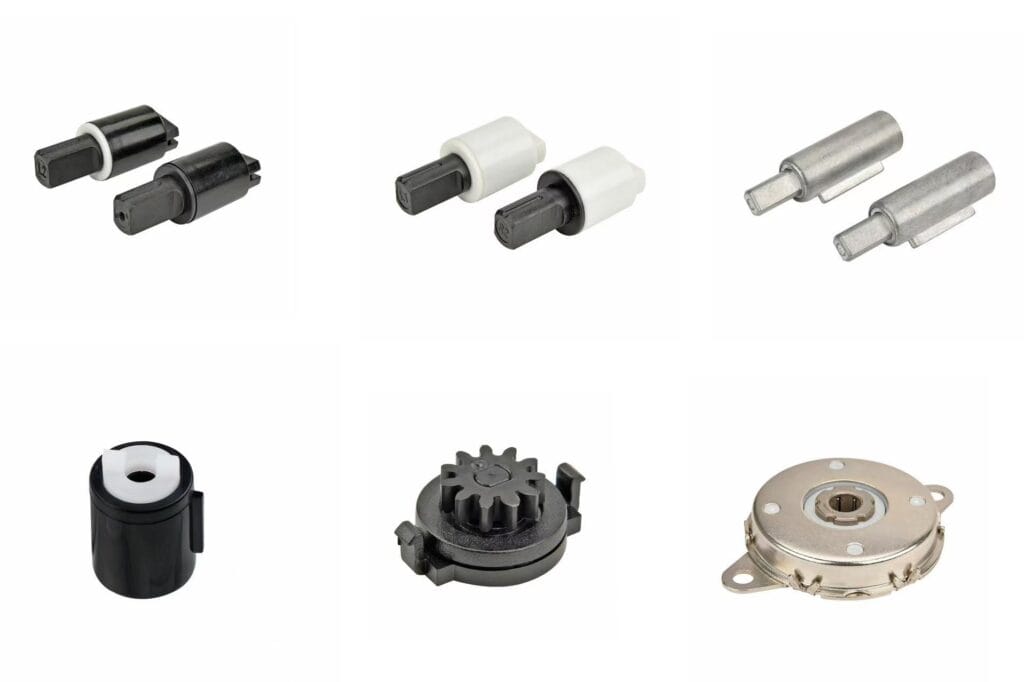
A side torque hinge (often referred to as a friction hinge or constant-torque hinge) is a mechanical assembly that provides controlled rotational resistance. In a laptop, it serves two critical functions:
- Position holding — keeping the screen at any angle the user sets
- Controlled motion — providing smooth, consistent resistance during opening and closing
The “side” distinction matters. Unlike center-mounted designs, side torque hinges work in pairs — left and right — sharing the load of the display assembly. This means torque must be balanced between both sides, and any asymmetry translates directly into user-facing issues like uneven resistance or screen twist.
The Physics Behind the Feel
Torque in a hinge is rotational force. The basic relationship is simple:
T = F × L
Where T is torque, F is force, and L is the perpendicular distance from the hinge axis to the center of gravity.
But in practice, it’s never that simple.
You need to consider:
- Static torque — the resistance that holds the panel stationary
- Dynamic torque — the resistance during movement
- Torque asymmetry — different resistance in opening vs. closing directions
- Torque decay — the gradual reduction in holding force over time
A hinge that looks perfect on paper can feel completely wrong in the hand if the torque curve isn’t properly characterized.
Part 2: Lifespan Testing — The Real Story
Why Standard Test Cycles Aren’t Enough
Most suppliers will tell you their hinges pass “20,000 cycle tests” or “50,000 cycle tests”. Some even claim 100,000 cycles.
Here’s the uncomfortable truth: cycle count alone is a vanity metric.
What actually matters is what happens during those cycles. Specifically:
- Torque decay rate — how much holding force is lost over the life of the hinge
- Torque linearity — whether resistance remains consistent across the full range of motion
- Wear patterns — where friction surfaces are degrading and at what rate
- Catastrophic failure point — when the hinge physically breaks or loses all functionality
A hinge that survives 50,000 cycles but loses 40% of its torque after 10,000 cycles is worse than a hinge that fails cleanly at 25,000 cycles. The first one creates a slow, frustrating decline in user experience. The second one at least fails predictably.
The Right Way to Run a Lifespan Test
Based on industry best practices, a proper lifespan test should include:
Test Parameters:
- Cycle speed: 5–10 RPM (simulating real manual operation)
- Temperature: 25°C ambient (plus additional testing at temperature extremes)
- Angle range: Full operating range (typically 0° to 135° or 180°)
- Measurement interval: Record torque values every 1,000 cycles
Data to Capture:
- Torque values for each open and close
- Torque-angle curves showing resistance across the full range of motion
- Torque decay curves plotting holding force against cycle count
- Static torque (holding force) vs. dynamic torque (movement resistance)
Acceptance Criteria:
- Torque decay: Less than 20% over the rated life
- Torque tolerance: Within ±10% of nominal specification
- No structural failure: No cracks, fractures, or loss of functionality
Real-World Examples
Consider how major manufacturers approach this:
- ONERugged performs 20,000 open/close cycles on their rugged laptops, with inspections every 5,000 cycles to check for looseness, stiffness, or damage
- Sugatsune rates some torque hinges for 40,000 open/close cycles — twice the standard 20,000-cycle rating
- Industry standards typically require 50,000+ cycles for consumer laptops and 100,000+ for enterprise-grade devices
But here’s the key: these aren’t just pass/fail tests. They’re characterization tests. The goal isn’t just to prove the hinge survives — it’s to understand how it survives, and how the user experience changes over time.
Part 3: Torque Calibration Standards
The Calibration Problem
Torque hinges aren’t set-and-forget components. They require precise calibration during manufacturing to ensure consistent performance.
The challenge is that torque is affected by multiple variables:
- Material selection and surface finishes
- Assembly preload
- Friction washer or spring plate tension
- Lubrication type and quantity
- Manufacturing tolerances
A 10% variation in any of these factors can push a hinge outside acceptable torque specifications.
Calibration Standards and Tolerances
The Industry Baseline
The generally accepted tolerance for laptop hinge torque is ±10% of the nominal specification. For example, if a hinge is rated at 4.5 kgf-cm, acceptable range is 4.05 to 4.95 kgf-cm.
Key Calibration Parameters:
Adjustable Torque Hinges
Some designs incorporate adjustable mechanisms — typically using a nut or screw to increase or decrease friction. This allows:
- In-process adjustment to hit torque targets
- Field adjustment for repair or customization
- Better yield rates (95%+ with proper adjustment)
However, adjustable hinges introduce their own calibration challenges. The adjustment mechanism must be:
- Stable over the product life (no loosening)
- Consistent across multiple adjustments
- Capable of holding the set torque value
Reference Standards
While there is no single global standard exclusively for laptop side torque hinges, manufacturers typically reference:
- ISO 23766 — Electronic equipment spindle testing
- GB/T 39240 — Portable computer spindle specifications
- ASTM standards for mechanical testing (with specific methods often referenced for material and fatigue testing)
- JIS Z 2241 — Material testing standards
For procurement and engineering teams, the key is to specify which standards apply to your product and ensure your suppliers can demonstrate compliance.
Part 4: Common Failure Modes and Prevention
Why Hinges Fail
Understanding failure modes is the first step to preventing them:
1. Torque Decay
The most common failure. Friction surfaces wear down over time, reducing holding force. Typical decay: 20% over 10,000 cycles.
Prevention: Choose materials with high wear resistance. Use hardened steel or advanced polymers for friction surfaces. Specify tighter decay limits in your testing protocol.
2. Shaft Deformation
Under sustained load, the hinge shaft can deform, changing the geometry and reducing torque.
Prevention: Use high-strength alloys (SUS420J2, 17-4PH) for shaft components. Design with adequate safety margins.
3. Lubrication Breakdown
Lubricants degrade over time, especially under temperature cycling and prolonged use.
Prevention: Specify lubricants with low volatility and high temperature stability. Test under temperature extremes (-20°C to 85°C).
4. Plastic Housing Damage
As torque increases, the stress on plastic mounting points increases. If the hinge becomes too stiff, it can crack the plastic housing.
Prevention: Design with proper mounting boss strength. Test the complete assembly, not just the hinge in isolation.
Part 5: What This Means for Procurement
Specifying the Right Hinge
When you’re sourcing side torque hinges, don’t just ask for “a hinge with X torque.” Ask for:
- Torque specification — nominal value, tolerance, and whether it’s adjustable
- Torque decay specification — maximum allowable decay over the rated life
- Test protocol — cycle count, speed, temperature, measurement intervals
- Material specification — shaft material, friction element material, surface treatments
- Left-right matching — maximum allowable torque difference between paired hinges
Red Flags to Watch For
- Suppliers who can’t provide torque decay data — If they haven’t measured it, they don’t understand their product
- Vague cycle count claims — “50,000 cycles” means nothing without the corresponding decay data
- No calibration process — If they can’t explain how they set and verify torque, they’re guessing
- No temperature testing — Torque changes with temperature; if they haven’t tested it, you don’t know what you’re getting
The Business Case for Quality
Here’s the math:
| Factor | Low-Quality Hinge | High-Quality Hinge |
|---|---|---|
| Unit cost | Lower | Higher (10-30%) |
| Warranty claims | Higher (3-5%) | Lower (<1%) |
| Brand reputation | At risk | Protected |
| User experience | Degrades over time | Consistent over life |
| Total cost of ownership | Higher | Lower |
A slightly more expensive hinge that maintains its torque over 50,000 cycles is almost always cheaper than a cheap hinge that fails after 15,000 cycles and generates warranty claims, returns, and negative reviews.
Summary
The side torque hinge is one of the most critical mechanical components in any laptop. Its performance — and its degradation over time — directly affects user experience, brand reputation, and warranty costs.
Proper lifespan testing isn’t just about hitting a cycle count. It’s about understanding torque decay, wear patterns, and how the user experience changes over the life of the device. Torque calibration isn’t optional — it’s essential for consistent manufacturing quality and reliable field performance.
For engineers, this means specifying clear test protocols and acceptance criteria. For procurement, it means asking the right questions and not accepting vague claims. For business owners, it means recognizing that hinge quality is a competitive advantage, not a cost to be minimized.
The best time to validate your hinge specification was before you went to production. The second best time is now.
Frequently Asked Questions
Q1: What is the typical lifespan of a laptop side torque hinge in terms of open/close cycles?
Industry standards typically require 20,000 to 50,000 open/close cycles for consumer laptops, with rugged or enterprise-grade devices often requiring 100,000+ cycles. However, cycle count alone is insufficient — you must also specify maximum allowable torque decay (typically <20% over the rated life).
Q2: How is torque measured and calibrated during manufacturing?
Torque is measured using a torque sensor or force gauge applied at a known moment arm. Calibration involves adjusting the hinge’s friction mechanism — often via a nut or screw — to achieve the target torque value within the specified tolerance (±10% is industry standard). Modern automated test systems can measure torque for each open and close cycle and generate torque-angle curves for quality verification.
Q3: What causes torque decay in laptop hinges?
Torque decay is primarily caused by wear of friction surfaces, shaft deformation, and lubrication breakdown. Over thousands of cycles, the materials that generate friction gradually wear down, reducing the resistive force. Temperature cycling and environmental factors can accelerate this process. High-quality hinges use hardened materials and advanced lubricants to minimize decay.
Q4: What standards should I reference when specifying hinge testing?
Common reference standards include ISO 23766 (electronic equipment spindle testing), GB/T 39240 (portable computer spindle specifications), and various ASTM standards for mechanical and fatigue testing. For procurement, specify not just the standard but also the specific test parameters — cycle count, speed, temperature, measurement intervals, and acceptance criteria.