
Introduction: The Hidden Engineering Challenge in Smart Mirrors
If you have ever handled a smart mirror—whether a bathroom vanity unit with integrated lighting, a full-length dressing mirror, or a commercial display mirror—you already know that the user experience hinges on more than just the display quality or the software interface. The mechanical feel of the mirror’s movement matters. A lot.
The problem is deceptively simple: a mirror that swings too freely feels cheap. One that sticks or jerks feels broken. One that slams shut risks damaging the glass, the electronics, or both. And in a premium product category where margins depend on perceived quality, these mechanical nuances can make or break your brand reputation.
This is where the smart mirror damping hinge comes in. Specifically, a hinge engineered for silent rotation and angle lock functionality transforms a mundane pivot point into a precision motion-control device. For engineers, procurement professionals, and business owners alike, understanding this component category is essential to delivering a product that feels as polished as it looks.
The Core Problem: Why Standard Hinges Don’t Work for Smart Mirrors
Let us start with what does not work.
A standard friction hinge—the kind you might find on a cabinet door or a laptop lid—relies on simple mechanical resistance. It holds position through surface contact between rotating parts. But for a smart mirror, this approach introduces several issues:
First, standard hinges often generate audible noise during rotation. The friction between metal surfaces produces a scratching or grinding sound that is immediately noticeable in a quiet bathroom or a retail showroom.
Second, conventional hinges lack controlled deceleration. When a user rotates a mirror panel, gravity takes over. Without damping, the mirror can swing too fast, creating a jarring motion that feels unsafe and unrefined.
Third, angle-holding performance degrades over time. Standard friction hinges rely on constant surface pressure, which wears down with repeated use. After 10,000 or 20,000 cycles, the holding torque drops, and the mirror begins to drift from its set position.
Fourth, and perhaps most critically for smart mirrors, the hinge must accommodate the additional weight of integrated electronics—LED lighting strips, display panels, sensors, and sometimes even embedded cameras or speakers. A standard hinge designed for a lightweight mirror door simply cannot handle the load.
The solution requires a fundamentally different approach to hinge design.
The Solution: Damping Hinge with Silent Rotation and Angle Lock
A smart mirror damping hinge combines three critical functions into a single compact mechanism:
- Controlled rotational damping – to manage speed and eliminate sudden movement
- Silent operation – through precision-engineered internal components and damping grease
- Angle lock capability – to hold the mirror securely at any desired position
How Silent Rotation Works
Silent rotation is achieved through a combination of mechanical design and material selection. Unlike standard hinges where metal-on-metal contact generates noise, a damping hinge incorporates a rotary damper or friction-based damping system that absorbs motion energy.
In a hydraulic damping configuration, fluid flows through a restricted internal path as the hinge rotates, creating smooth and consistent resistance without generating noise. In a friction-based design, precision-machined internal components maintain controlled contact pressure, eliminating the vibration that causes audible noise.
Many modern damping hinges also use damping grease—a specialized lubricant that not only reduces friction noise but also self-lubricates the moving parts, ensuring consistently quiet operation over the product’s lifetime.
The result is a rotation that feels smooth, silent, and premium—exactly what users expect from a high-end smart mirror.
How Angle Lock Works
Angle lock—sometimes called free-stop or position-holding functionality—allows the mirror to stay precisely where the user places it.
This is achieved through constant torque technology. Unlike standard hinges where torque varies throughout the rotation range, a constant torque hinge delivers uniform resistance across the entire operating angle. This means the mirror stays put at 15 degrees, 45 degrees, or 90 degrees with equal reliability.
The torque value must be carefully matched to the mirror’s weight, size, and moment arm. Too little torque, and the mirror drifts. Too much, and it becomes difficult to adjust. Leading manufacturers offer torque ranges from as low as 0.1 N·m for lightweight applications up to 50 N·m for heavy-duty installations.
For smart mirrors specifically, torque requirements typically fall in the 0.5 N·m to 3.0 N·m range, depending on panel size and weight. Custom torque values are readily available through OEM suppliers.
Technical Considerations for Engineers
When specifying a damping hinge for a smart mirror project, several engineering parameters demand attention:
Torque Specification
This is the single most important design parameter. The required torque depends on:
- Mirror panel weight (including glass, frame, and electronics)
- Distance from pivot point to center of gravity (moment arm)
- Desired user feel (light vs. firm adjustment)
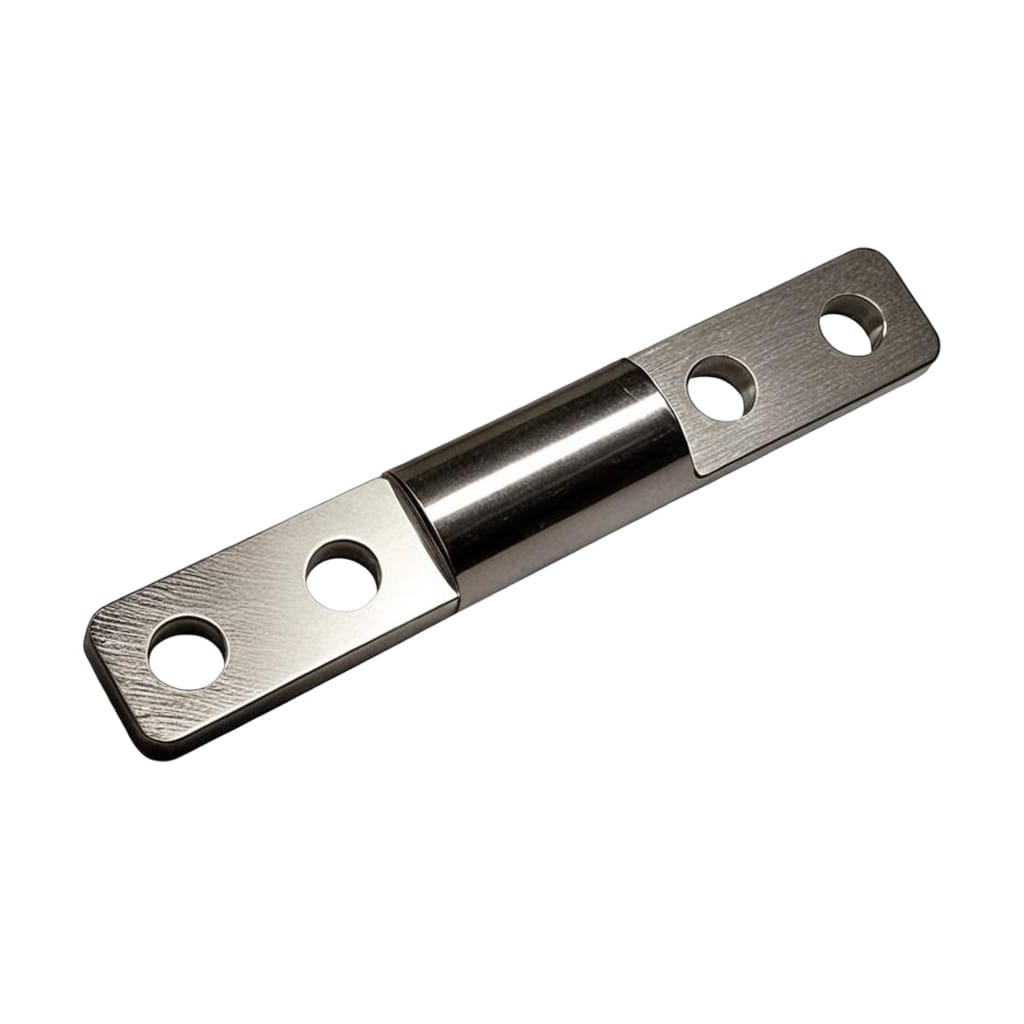
Most suppliers provide detailed torque charts and can assist with calculation. For example, the HTAN XG11-001 series offers torque options from 0.1 N·m to 1.5 N·m in a compact form factor.
Rotation Angle
Smart mirrors typically require between 90 and 180 degrees of rotation, though some applications demand full 360-degree movement. The hinge must support the full range while maintaining consistent damping and holding torque throughout.
Durability and Cycle Life
A premium smart mirror should withstand tens of thousands of adjustment cycles without performance degradation. Leading damping hinges are validated for 50,000 to 100,000 cycles or more. TÜV certification according to standards like DIN EN 15570 provides additional assurance of strength and durability.
Installation Space
Smart mirrors are increasingly slim-profile products. Available mounting space for hinges is often extremely limited. Miniature damping hinges, such as the 8×8.1 mm XG11-125, are specifically designed for compact applications.
Material and Corrosion Resistance
For bathroom applications especially, corrosion resistance is critical. Nickel-plated iron is a common choice, offering a balance of durability and cost. Stainless steel options are available for harsh environments.
Application Scenarios
Residential Bathroom Mirrors
In a bathroom setting, the mirror is adjusted multiple times daily. Silent, smooth rotation is essential—nobody wants a screeching hinge at 6 AM. The damping mechanism also prevents the mirror from slamming against the wall or cabinet, protecting both the mirror and the surrounding fixtures.
Commercial Retail Displays
Smart mirrors in retail environments—think fitting rooms or cosmetic counters—see heavy usage throughout the day. The angle lock function is critical here, as staff and customers need to position the mirror precisely and have it stay there.
Hospitality and Hotel Bathrooms
In luxury hotels, every touchpoint contributes to the guest experience. A damping hinge that delivers silent, controlled motion signals quality and attention to detail.
Medical and Healthcare Applications
Smart mirrors used in medical settings—such as telemedicine stations or patient examination rooms—require precise positioning and reliable hold. Damping hinges in these applications must also meet stringent durability and hygiene requirements.
Choosing the Right Supplier: What to Look For
For procurement professionals and business owners, selecting the right hinge supplier is as important as selecting the right hinge specification.
OEM and ODM Capability
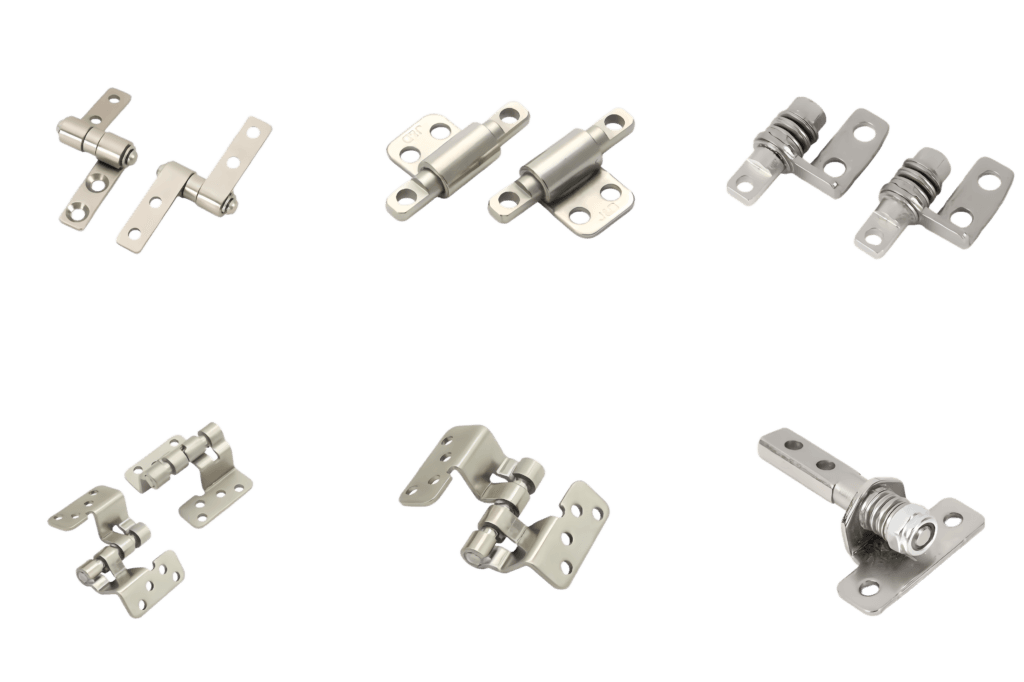
Not all projects can use off-the-shelf components. Look for suppliers that offer full OEM and ODM customization, including torque adjustment, size modification, and material selection. A supplier with in-house R&D capability can collaborate closely with your engineering team to develop a hinge that perfectly fits your product design.
Quality Control and Certification
ISO 9001 certification is a baseline indicator of quality management. Beyond that, look for suppliers that perform 100% inspection of torque, rotation smoothness, and surface finish. Life-cycle testing and durability verification should be standard practice.
Production Capacity and Lead Times
For volume production, supplier capacity matters. Leading manufacturers maintain advanced CNC facilities and can scale production to meet demand. Standard items should ship within 24 hours; custom projects typically require 20–25 days.
After-Sales Support
A clear return and replacement policy is essential. The best suppliers offer prompt resolution of any quality issues, protecting your production timeline and your reputation.
Cost-Benefit Analysis
Some procurement teams view damping hinges as a cost item to be minimized. This is a mistake.
The incremental cost of a quality damping hinge over a standard hinge is typically modest—measured in dollars or even cents per unit at volume. The value it delivers, however, is substantial:
- Reduced warranty claims from hinge failure or glass breakage
- Enhanced brand perception through premium mechanical feel
- Differentiation in a competitive market
- Longer product lifespan through superior durability
When you consider that a single warranty return can wipe out the profit on dozens of units, the investment in a quality damping hinge becomes not just justifiable but essential.

Conclusion
The smart mirror market is growing rapidly, and competition is intensifying. In this environment, every detail matters—including the hinge. A damping hinge engineered for silent rotation and reliable angle lock transforms the user experience from ordinary to exceptional. It protects your product, enhances your brand, and delivers value that far exceeds its cost.
For engineers, the technical parameters are clear: match torque to load, specify the right rotation angle, and validate durability. For procurement professionals, the supplier selection criteria are equally clear: look for OEM capability, quality certification, and reliable after-sales support. For business owners, the strategic imperative is undeniable: invest in the mechanical details that define premium quality.
FAQ
Q1: What is the difference between a damping hinge and a standard friction hinge?
A standard friction hinge relies on surface contact to create resistance, which can generate noise and wear over time. A damping hinge incorporates a controlled resistance mechanism—either hydraulic, friction-based, or rotary damper integration—that provides smooth, silent motion and consistent holding torque throughout the hinge’s lifespan.
Q2: How do I determine the correct torque for my smart mirror application?
Torque requirement depends on the mirror panel’s weight, the distance from the pivot point to its center of gravity, and the desired user feel. Most suppliers provide engineering support to calculate the optimal torque value. Typical smart mirror applications range from 0.5 N·m to 3.0 N·m.
Q3: Can damping hinges be customized for specific smart mirror designs?
Yes. Leading manufacturers offer full OEM and ODM customization, including torque range adjustment, size modification, material selection, and surface finish options. Engineering teams can collaborate from concept through prototype testing to mass production.
Q4: How many adjustment cycles can a quality damping hinge withstand?
Premium damping hinges are validated for 50,000 to 100,000 cycles or more, depending on the design and application. Some manufacturers also offer TÜV-certified products according to standards such as DIN EN 15570 for strength and durability.