
Introduction: The Component That Defines Product Feel
Here is a question worth asking: when was the last time you opened a coffee maker lid, adjusted a desk lamp, or flipped open a food processor cover and actually noticed the hinge?
If you are like most users, the answer is probably “never”—unless something went wrong. A lid that slammed shut. A cover that would not stay open. A panel that wobbled or drifted out of position. These are the moments when a poorly chosen hinge ruins an otherwise well-engineered product.
For small home appliances—think coffee machines, blenders, air fryers, robotic vacuums, portable fans, and smart kitchen gadgets—the hinge is often the most frequently touched mechanical component. It is also one of the most overlooked in the design phase. And that oversight carries real costs: warranty claims, negative reviews, and a brand perception of “cheapness” that no amount of premium marketing can undo.
The solution is a category of components that deserves far more attention than it typically receives: miniature precision friction hinges with integrated damping. These tiny mechanisms—often no larger than a coin—deliver controlled motion, silent operation, and reliable position holding in the tightest of spaces.
This article is written for engineers specifying motion-control components, procurement professionals evaluating suppliers, and business owners who understand that product quality lives in the details.
The Problem: Why Standard Hinges Fail in Small Appliances
Small home appliances present a unique set of mechanical challenges that standard hinges simply cannot handle.
Space Constraints
Modern small appliances are increasingly compact. There is no room for bulky hinge assemblies. A standard butt hinge or piano hinge, even in its smallest form, often exceeds the available mounting space. Engineers are forced to compromise—either by redesigning the product around the hinge or by accepting suboptimal hinge performance.
Weight and Moment Mismatch
A coffee maker lid might weigh only a few hundred grams, but its center of gravity can be far from the pivot point. The torque required to hold that lid open is not simply a function of weight—it is weight multiplied by distance. Standard hinges, designed for heavier loads, either provide too much resistance (making the lid difficult to open) or too little (allowing the lid to fall closed).
Rebound and Sagging
Two specific failure modes plague small appliance lids and covers:
Rebound occurs when a lid springs back from its open position—often because the hinge’s internal friction is insufficient to counteract the lid’s weight. The user opens the lid, lets go, and watches it swing back toward closed. Frustrating, and potentially dangerous if fingers are in the way.
Sagging is the opposite problem: the lid droops downward from its set position, creating uneven gaps and a visibly misaligned appearance. Over time, sagging can cause the lid to contact other components, leading to wear, noise, or even damage.
Noise and Vibration
In a quiet kitchen or a bedroom where a humidifier or fan operates, mechanical noise is unacceptable. Standard metal-on-metal hinges generate audible scratching, grinding, or clicking sounds during rotation. Worse, without damping, a lid can slam shut with a sharp bang that startles users and damages the appliance over time.
Durability Expectations
Consumers expect small appliances to last for years. A hinge that fails after a few thousand cycles—becoming loose, noisy, or unable to hold position—generates warranty claims and erodes brand trust. Many standard hinges are not validated for the cycle life that modern appliances demand.
The Solution: Mini Precision Damping Friction Hinges
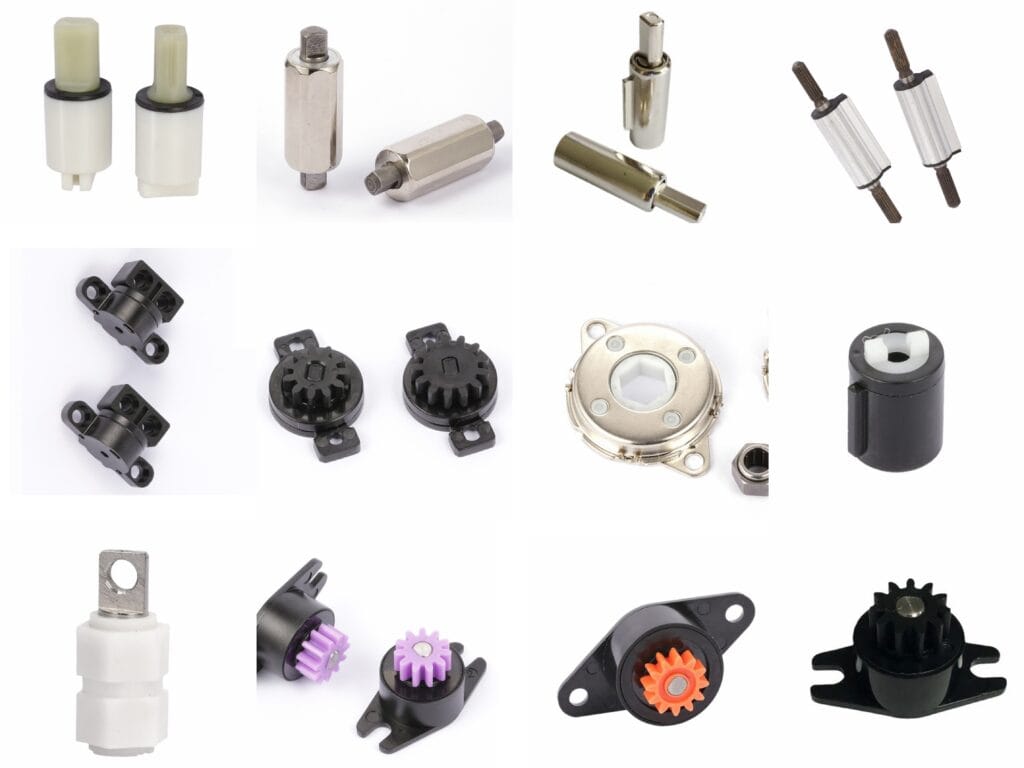
A miniature precision friction hinge with damping—often called a torque hinge, positioning hinge, or free-stop hinge—is a compact motion-control component that addresses all of these challenges in a single, elegantly simple package.
How It Works
The fundamental principle is controlled friction. Inside the hinge, precision-engineered components—often including friction plates, spring elements, and damping grease—generate consistent resistance as the hinge rotates.
Friction-based designs rely on surface contact between internal components. As the hinge turns, these surfaces slide against each other, creating a resistive torque that counteracts the weight of the attached lid or panel.
Damping grease plays a critical role. Unlike standard lubricants that simply reduce friction, damping grease provides controlled resistance while also self-lubricating the moving parts, ensuring smooth, quiet operation over the product’s lifetime.
Hydraulic or rotary damper designs incorporate a fluid-filled chamber that resists motion through fluid displacement. These designs are particularly effective for applications requiring soft-close functionality in addition to position holding.
Key Functional Benefits
Free-stop positioning — the hinge holds the lid or cover at any angle the user chooses, without the need for external supports, latches, or locking mechanisms. This is sometimes called “arbitrary stop” or “random stop” capability.
Silent rotation — precision internal components and damping grease eliminate metal-on-metal noise, resulting in a smooth, quiet motion that feels premium.
Controlled damping — the hinge slows rotation as the lid approaches the closed position, preventing slamming and reducing impact forces that can damage the appliance or its components.
360° rotation capability — many miniature friction hinges support full 360-degree rotation, allowing lids and panels to be positioned at any angle, in any direction.
Technical Specifications for Engineers
When specifying a miniature friction hinge for a small appliance application, several engineering parameters demand attention.
Torque Range
Torque—measured in Newton meters (N·m)—is the single most important specification. For small home appliances, torque requirements typically fall between 0.1 N·m and 3.0 N·m.
At the lower end of this range, a 0.1 N·m hinge might be used for a lightweight lid on a portable device. At the higher end, 2.0–3.0 N·m hinges support heavier panels or longer moment arms.
Torque must be carefully matched to the application. Too little torque, and the lid will not stay open. Too much, and the user will struggle to move it. Many suppliers offer torque options in precise increments—for example, 0.1, 0.2, 0.3, 0.8, and 2.0 N·m within a single product series.
Some hinges offer adjustable torque, allowing the friction to be tuned in the field using a simple hex key. This is particularly valuable for custom applications where door weights may vary.
Size and Mounting
Miniature hinges are defined by their compact dimensions. Some of the smallest friction hinges measure just 2.5 mm × 2.5 mm, while more common sizes range from 4 mm × 11 mm to 12 mm × 34.5 mm.
Mounting options include threaded and non-threaded designs, surface-mount and recessed configurations, and various hole patterns to suit different appliance housings.
Rotation Angle
Most miniature friction hinges support 180 degrees of rotation, with many offering full 360-degree capability. The choice depends on the application: a coffee maker lid typically needs only 90–180 degrees, while a desk lamp or adjustable display may require 360-degree movement.
Material Selection
Material choice affects strength, corrosion resistance, weight, and cost.
Steel (often nickel-plated) offers high strength and durability at a moderate cost. Nickel plating provides corrosion resistance, making it suitable for kitchen and bathroom environments.
Stainless steel provides superior corrosion resistance for demanding environments.
Zinc alloy offers good strength and corrosion resistance with excellent castability for complex shapes.
Plastic (POM, PA6) provides lightweight construction, corrosion resistance, and electrical insulation. Plastic hinges are particularly popular for applications where weight reduction is critical.
Cycle Life and Durability
Quality miniature friction hinges are validated for 20,000 to 50,000 cycles or more. Some manufacturers offer products that maintain torque within 20% of initial values even after 60,000 cycles.
For procurement professionals, cycle life validation is a critical specification. A hinge that fails after 5,000 cycles will generate warranty claims; one that lasts 50,000 cycles will outlast the appliance itself.
Application Scenarios: Where Miniature Friction Hinges Excel
Coffee Makers and Espresso Machines
The water tank lid, bean hopper cover, and brew group access panel all benefit from friction hinges. A free-stop hinge holds the lid open while the user fills the tank or adds beans, then allows smooth, controlled closure without slamming.
Blenders and Food Processors
The lid of a blender or food processor must stay securely in place during operation—but it also needs to open easily for loading ingredients. A friction hinge with sufficient holding torque ensures the lid stays open when needed and closes smoothly when the user is finished.
Air Fryers and Countertop Ovens
The door or lid of an air fryer is opened and closed multiple times per cooking session. A damping hinge prevents the door from slamming shut—protecting the glass panel and reducing noise—while also holding the door open for food access.
Robotic Vacuums
The dustbin compartment lid on a robotic vacuum is opened frequently for emptying. A miniature friction hinge holds the lid open during emptying and closes quietly when released.
Portable Fans and Air Purifiers
Adjustable fan heads and filter access panels benefit from friction hinges that allow precise angle adjustment and reliable position holding.
Smart Home Devices
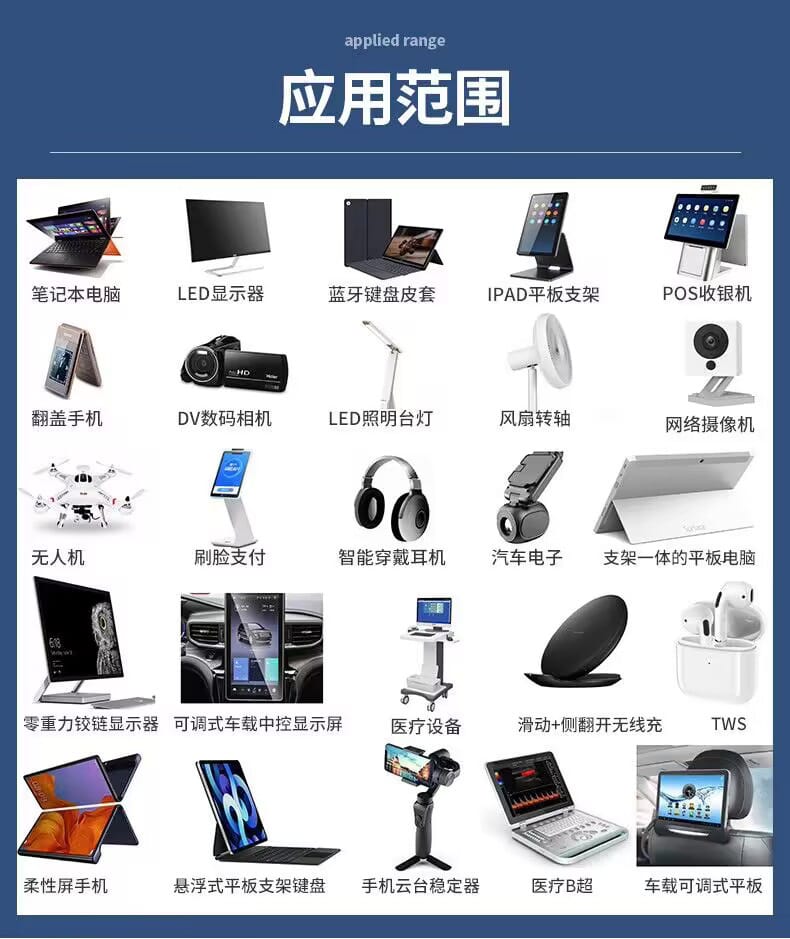
From smart displays to security cameras, any device with an adjustable viewing angle requires a hinge that holds position reliably. Miniature friction hinges deliver this functionality in a compact, unobtrusive package.
Personal Care Appliances
Hairdryer stands, makeup mirrors, and grooming devices all rely on friction hinges for smooth, adjustable positioning.
Free-Stop vs. Soft-Close: Understanding the Difference
A common point of confusion in the industry is the distinction between free-stop hinges and soft-close hinges. They serve different purposes—and the best solutions often combine both.
Free-stop hinges (also called torque hinges or positioning hinges) hold a lid or panel at any position throughout its range of motion. The user opens the lid, lets go, and it stays.
Soft-close hinges incorporate a damping mechanism—typically hydraulic or rotary—that slows the lid as it approaches the closed position, preventing slamming. They do not hold the lid in intermediate positions.
For small appliances, the ideal solution is often a hinge that provides both functions: free-stop positioning throughout the range, with soft-close damping in the final degrees of closure. This combination delivers the best user experience—precise positioning when open, gentle closure when finished.
OEM and Customization: Getting the Right Fit
For many small appliance manufacturers, off-the-shelf hinges do not fully meet their requirements. This is where OEM and ODM customization becomes essential.
What Can Be Customized
Torque value — hinges can be manufactured with specific torque values tailored to the appliance’s weight and moment arm.
Dimensions — mounting hole patterns, overall size, and housing shape can be modified to fit the appliance’s design.
Material — choice of steel, stainless steel, zinc alloy, or plastic, with various surface finishes including nickel plating and black electrophoresis.
Rotation angle — hinges can be designed for specific angular ranges, from 90 degrees to full 360 degrees.
Color — for visible hinges, color matching to the appliance’s aesthetic is often available.
Working with a Supplier
The best suppliers offer engineering support from concept through production. This includes:
- Torque calculation assistance — helping engineers determine the correct torque specification for their application
- Prototype development — producing sample hinges for testing and validation
- Performance testing — validating cycle life, torque consistency, and durability
- Production scaling — ramping from prototypes to mass production with consistent quality
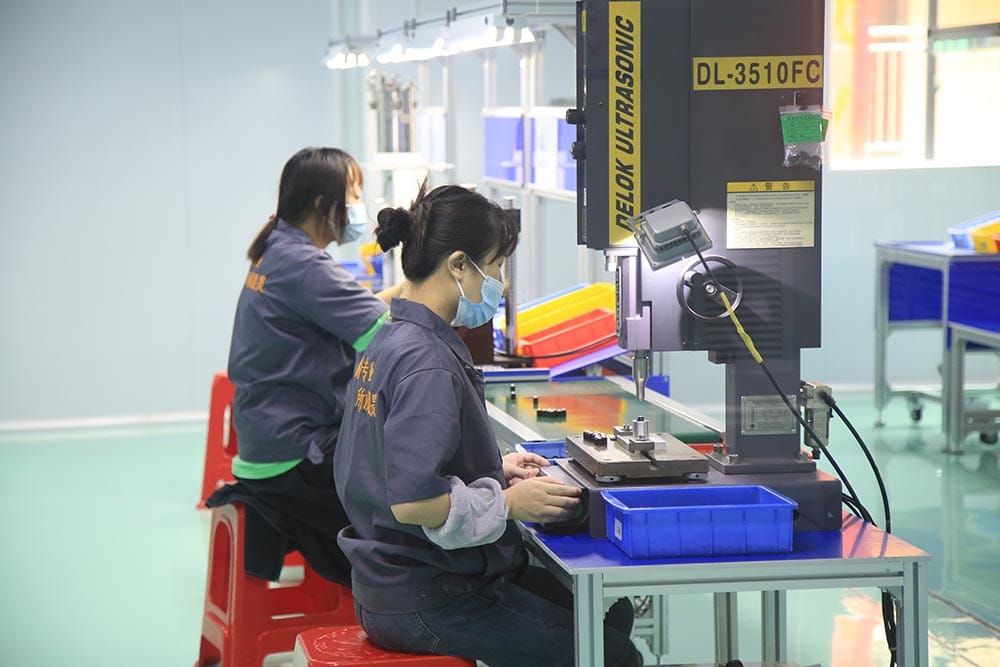
For procurement professionals, supplier selection criteria should include ISO 9001 certification, in-house R&D capability, and a demonstrated track record in the small appliance sector.
Cost-Benefit Analysis
Some procurement teams view friction hinges as a commodity to be sourced at the lowest possible price. This is a costly mistake.
The Cost of Failure
A hinge that fails—whether through rebound, sagging, noise, or premature wear—generates multiple costs:
- Warranty claims and replacement parts
- Customer dissatisfaction and negative reviews
- Brand damage that affects future sales
- Potential safety issues from slamming lids or falling panels
A single warranty return can wipe out the profit on dozens of units. When multiplied across thousands of appliances, the cost of a poor hinge choice is staggering.
The Value of Quality
A well-specified miniature friction hinge delivers:
- Reduced warranty claims through superior durability and performance
- Enhanced user experience through smooth, quiet, predictable motion
- Brand differentiation in a competitive market
- Longer product lifespan through robust construction
The incremental cost of a quality hinge over a standard alternative is typically measured in cents or a few dollars per unit at volume. The value it delivers—in reduced warranty costs, enhanced brand perception, and customer loyalty—far exceeds this modest investment.
Choosing the Right Supplier: A Checklist
For procurement professionals evaluating suppliers of miniature friction hinges, here is a practical checklist:
Quality Certification — ISO 9001:2015 certification is a baseline indicator of quality management.
Engineering Support — Does the supplier offer torque calculation assistance, prototype development, and performance testing?
Customization Capability — Can the supplier modify torque, dimensions, materials, and finishes to meet your specific requirements?
Production Capacity — Can the supplier scale production to meet your volume requirements while maintaining consistent quality?
Cycle Life Validation — Does the supplier provide documented cycle life test results? Look for 20,000–50,000 cycles minimum.
Lead Times — Are standard items in stock for immediate shipment? What are lead times for custom orders?
After-Sales Support — Does the supplier offer a clear return and replacement policy?
Conclusion
In small home appliances, the hinge is a small component with an outsized impact on user experience, product durability, and brand perception. A miniature precision friction hinge with integrated damping solves the common problems of rebound, sagging, noise, and premature wear—delivering smooth, silent, reliable motion in the tightest of spaces.
For engineers, the technical parameters are clear: specify the correct torque, select the right size and material, and validate cycle life. For procurement professionals, the supplier criteria are equally clear: look for quality certification, customization capability, and engineering support. For business owners, the strategic imperative is undeniable: invest in the components that define product quality.
The cost of a quality hinge is modest. The cost of a poor hinge—in warranty claims, customer dissatisfaction, and brand damage—is not.
FAQ
Q1: What is the difference between a friction hinge and a damping hinge?
A friction hinge (also called a torque hinge or positioning hinge) uses internal friction to hold a lid or panel at any position. A damping hinge specifically refers to a hinge that slows rotation—often through hydraulic or rotary damping—to prevent slamming. Many modern miniature hinges combine both functions: friction for position holding and damping for controlled closure.
Q2: How do I determine the correct torque for my small appliance lid?
Torque requirement depends on the lid’s weight and the distance from the hinge axis to its center of gravity. The basic formula is: Torque = Force × Distance. For a lid weighing 0.5 kg with a center of gravity 0.15 m from the pivot, the required torque is approximately 0.5 × 9.8 × 0.15 = 0.735 N·m. Most suppliers provide engineering support to calculate the optimal torque for your specific application.
Q3: Can miniature friction hinges be customized for my specific appliance design?
Yes. Leading manufacturers offer full OEM and ODM customization, including torque value adjustment, dimensional changes, material selection, surface finish, and color matching. Many suppliers also provide prototype development and performance testing to ensure the hinge meets your exact requirements.
Q4: How many cycles can a quality miniature friction hinge withstand?
Premium miniature friction hinges are validated for 20,000 to 50,000 cycles or more. Some manufacturers offer products that maintain consistent torque within 20% of initial values even after 60,000 cycles. Always verify cycle life specifications with your supplier and request test documentation.
Summary: Miniature precision friction hinges with integrated damping are essential components for small home appliances, solving rebound, sagging, noise, and premature wear through controlled friction and damping. Engineers should specify correct torque (typically 0.1–3.0 N·m), select appropriate materials, and validate cycle life (20,000+ cycles). Procurement professionals should prioritize suppliers with ISO certification, customization capability, and engineering support. The investment in quality hinges delivers reduced warranty claims, enhanced user experience, and stronger brand positioning—far exceeding the modest incremental cost.