
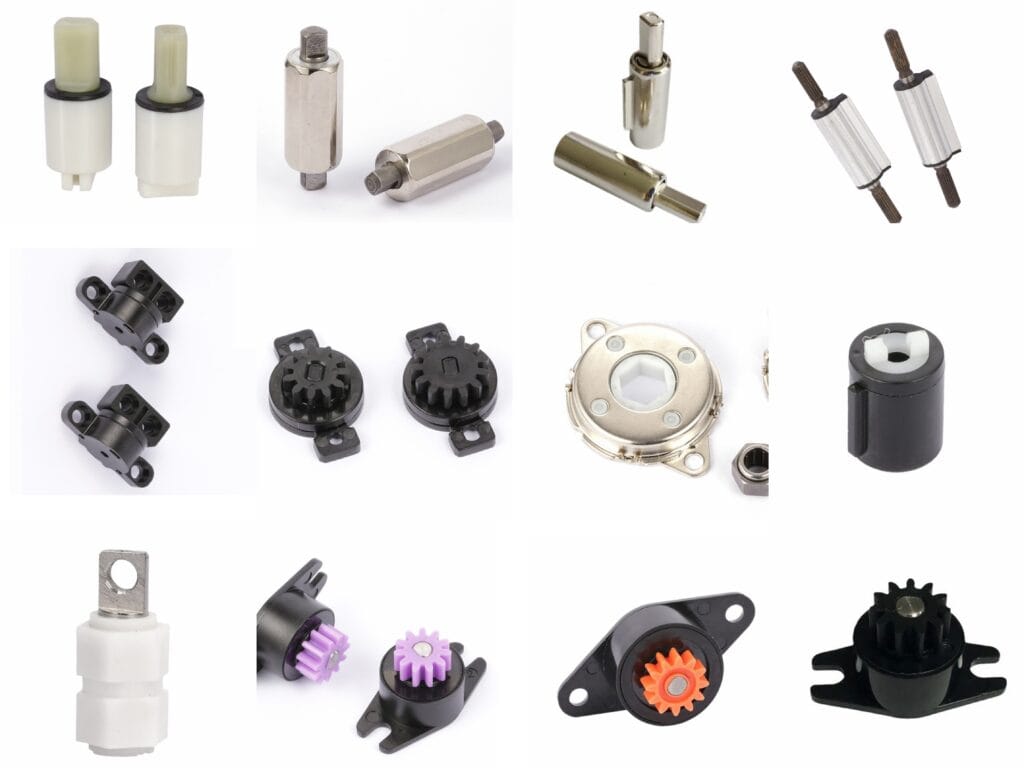
Introduction: The Component That Determines Product Lifespan
Walk into any bathroom showroom, and you will see them: gleaming mirror cabinets with integrated lighting, sleek frameless designs, and soft-close doors that glide shut with a satisfying whisper. What you will not see is the hinge that makes it all possible—and that is precisely the point.
But here is the uncomfortable reality: in the manufacturing and procurement of bathroom mirror cabinets, the longevity of the product is often dictated not by the mirror glass or the chassis, but by the hardware. Unlike dry living spaces, bathroom environments subject hardware to constant moisture, temperature fluctuations, and humidity levels that would destroy standard hinges within months.
For engineers specifying motion-control components, procurement professionals sourcing hinge solutions, and business owners who understand that product quality lives in the details, the bathroom mirror cabinet position hinge deserves far more attention than it typically receives.
The Problem: Why Standard Hinges Fail in Bathroom Environments
Bathroom mirror cabinets present a unique set of mechanical challenges that standard hinges simply cannot handle.
The Moisture Factor
Bathrooms are among the most demanding environments for any hardware component. Steam from hot showers, splashing water, and constant humidity create conditions that accelerate corrosion. A standard cold-rolled steel hinge, even when nickel-plated, is insufficient for long-term commercial use—it is prone to rusting once the plating is compromised.
The Weight Factor
Mirror cabinet doors are significantly heavier than standard wooden cabinet doors due to the weight of the glass and backing. A typical mirror door may weigh several kilograms, and the hinge must support this load while maintaining smooth, reliable operation over years of daily use.
The Usage Factor
Bathroom mirror cabinet doors are opened and closed multiple times daily—often dozens of times in a single morning routine. Over the course of a year, that adds up to thousands of cycles. Over a decade, tens of thousands. A hinge that cannot withstand this level of use will fail, generating warranty claims and customer dissatisfaction.
The Safety Factor
A failed hinge in a bathroom mirror cabinet is not just an inconvenience—it is a safety hazard. A door that falls or slams shut can break the mirror glass, damage the cabinet, or injure the user. For commercial installations—hotels, gyms, public facilities—the liability implications are significant.
The Solution: Position Hinges Engineered for Bathroom Environments
A bathroom mirror cabinet position hinge—also called a positioning hinge, torque hinge, or free-stop hinge—is a motion-control component specifically designed to address these challenges. It combines controlled friction for position holding with corrosion-resistant materials and durable construction.
How It Works
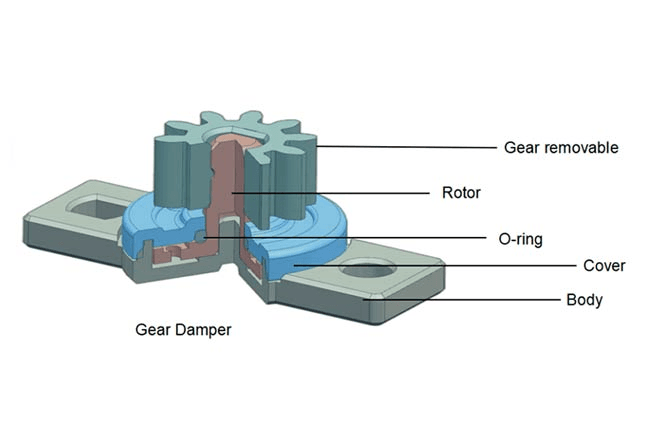
Position hinges generate resistive torque through internal friction interfaces. As the hinge rotates, internal components—friction washers, discs, or sliding surfaces—create resistance that counteracts gravity and holds the door at any angle the user chooses.
For bathroom mirror cabinet applications, this means:
- Free-stop positioning — the door stays open at any angle without the need for external stays or locks
- Smooth, controlled motion — consistent torque throughout the rotation range
- Silent operation — precision internal components eliminate metal-on-metal noise
- Long-term reliability — corrosion-resistant materials withstand the bathroom environment
Material Selection: The Foundation of Waterproof and Anti-rust Performance
The primary failure point for bathroom cabinet hardware is corrosion. Material selection is therefore the single most important decision in specifying a hinge for bathroom applications.
Stainless Steel 304: The Industry Standard
For bathroom mirror cabinets, Stainless Steel 304 is the benchmark material. This alloy offers superior resistance to oxidation and corrosion, making it ideal for high-humidity environments.
Key advantages of 304 stainless steel include:
- Superior corrosion resistance — withstands prolonged exposure to moisture without rusting
- High strength — supports heavy mirror doors without deformation
- Durability — maintains performance over decades of use
- Food-grade safety — SUS304 is rated for contact with consumables
Some manufacturers offer SUS316 as an upgrade for coastal or extreme high-humidity areas, providing even greater corrosion resistance.
Cold-Rolled Steel with Multi-Layer Plating
For applications where cost is a primary concern, cold-rolled steel hinges with advanced plating can provide adequate corrosion resistance—provided the plating is sufficiently thick and robust.
Some manufacturers use double electroplating with copper and nickel layers, achieving a total plating thickness of 3mm (1.5mm copper + 1.5mm nickel). This significantly improves anti-corrosion and anti-rust performance, extending service life to 10 years or more.
However, for B2B buyers seeking the lowest total cost of ownership over the product’s lifetime, 304 stainless steel remains the recommended choice.
Material Comparison
| Material | Corrosion Resistance | Cost | Recommended Application |
|---|---|---|---|
| Cold-Rolled Steel (Nickel Plated) | Low—prone to rust once plating compromised | Low | Low-cost, short-life products |
| Cold-Rolled Steel (Multi-layer Plating) | Moderate—48+ hours salt spray | Moderate | Mid-range applications |
| Stainless Steel 304 | High—excellent oxidation resistance | Moderate-High | Premium bathroom cabinets |
| Stainless Steel 316 | Very High—superior for coastal areas | High | Extreme humidity / marine environments |
Corrosion Testing Standards: What to Look For
For procurement professionals, verifying corrosion resistance requires understanding the relevant testing standards. Here are the key standards that define waterproof and anti-rust performance for bathroom cabinet hinges.
Salt Spray Testing (ISO 9227 / ASTM B117)
The salt spray test—also called the salt fog test—is the most widely recognized method for evaluating corrosion resistance. It involves exposing coated or uncoated metallic specimens to a concentrated continuous mist of salt water within a controlled environment.
ISO 9227 is the primary international standard for corrosion tests in artificial atmospheres. It includes three variants:
- Neutral Salt Spray (NSS) — 5% NaCl solution, pH 6.5–7.2, 35°C±2°C
- Acetic Acid Salt Spray (AASS) — accelerated testing for decorative coatings
- Copper Acetic Acid Salt Spray (CASS) — further accelerated for specific coating types
ASTM B117 is the American equivalent standard, originally published in 1939 and now recognized worldwide.
What Salt Spray Results Mean
For bathroom mirror cabinet hinges, here is what different salt spray results indicate:
- 48 hours — minimum acceptable for bathroom applications. Some manufacturers achieve Level 8 corrosion resistance at 48 hours.
- 96 hours — good performance, suitable for most bathroom environments
- 120 hours — high performance, suitable for demanding applications
- 240+ hours — premium performance, suitable for commercial and high-humidity installations
Many leading hinge manufacturers validate their products with 2 cycles (2×24 hours) of neutral salt spray testing according to DIN EN ISO 9227.
Condensation Climate Testing (ISO 6270-2)
Beyond salt spray, some manufacturers also perform condensation climate testing according to DIN EN ISO 6270-2. This test evaluates resistance to humidity through alternating humidity and air temperature cycles, providing a more comprehensive assessment of performance in real-world bathroom conditions.
Some premium hinges undergo 4 cycles (4×24 hours) of condensation climate testing.
EN 1670: Corrosion Resistance Grading
EN 1670 provides a standardized grading system for corrosion resistance of building hardware. Grades range from:
- Grade 4 — 240 hours corrosion resistance
- Grade 5 — 480 hours corrosion resistance
For bathroom applications, Grade 4 or higher is recommended. Products meeting BS EN 1670 Grade 5 provide the most robust finish for demanding environments.
Core Functional Requirements for Bathroom Mirror Cabinet Hinges
Beyond corrosion resistance, several functional requirements define a quality bathroom mirror cabinet position hinge.
Positioning (Free-Stop) Functionality
The hinge must hold the mirror door securely at any angle—typically between 90° and 165°—without drift. This is achieved through consistent torque throughout the rotation range.
For the user, this means the door stays open when they want it open, stays closed when they want it closed, and moves smoothly between positions.
Soft-Close Damping
The soft-close function relies on a hydraulic damper integrated into the hinge cup or arm. A high-quality mechanism uses a copper or brass cylinder filled with high-viscosity silicone oil, ensuring consistent resistance regardless of temperature changes.
Inferior dampers often use plastic cylinders or low-grade oil that becomes too fluid in heat (causing slamming) or too viscous in cold (preventing closure).
When evaluating samples, the door should close smoothly from a 30-degree angle without bouncing back or stalling. The closing speed should be uniform, typically taking between 3 to 5 seconds to fully engage.
3D Adjustability
For commercial installation efficiency, 3D adjustability is non-negotiable. This feature allows installers to adjust the door position in three directions—vertical (up/down), horizontal (left/right), and depth (in/out)—without removing the hinge.
High-quality hinges utilize eccentric screws for precise cam adjustment, whereas lower-tier options rely on slotted holes which can slip over time due to vibration or use.
Durability and Cycle Life
Durability is quantified through cycle testing. A robust hinge for a bathroom mirror cabinet should withstand a minimum of 50,000 open/close cycles without loss of damping function or structural failure. This equates to roughly 10–15 years of regular use.
Premium products from leading manufacturers achieve 80,000 cycles or more, meeting the requirements of DIN EN 15570 / ISO 4769.
Silent Operation
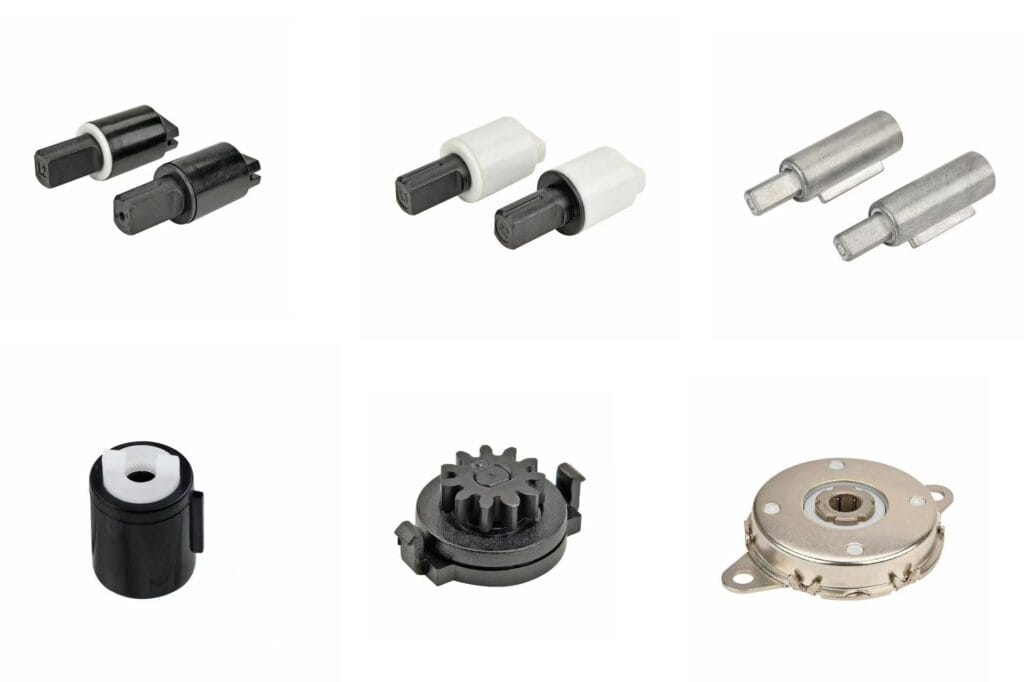
In a bathroom setting—often used early in the morning or late at night—mechanical noise is unacceptable. Mute hinges are designed to minimize noise and friction when opening or closing cabinet doors.
Leading manufacturers integrate Silent System technology into their hinges, ensuring fragile glass and mirror doors close gently and quietly.
Application Scenarios
Residential Bathrooms
In home bathrooms, mirror cabinet hinges are used daily. The combination of soft-close damping and free-stop positioning ensures a premium user experience—doors that open smoothly, stay where placed, and close quietly without slamming.
Hotels and Hospitality
In luxury hotels, every touchpoint contributes to the guest experience. A hinge that delivers silent, controlled motion signals quality and attention to detail. The durability requirements are also higher—hotel bathroom cabinets see far more cycles per year than residential equivalents.
Commercial and Public Facilities
Gyms, spas, and public restrooms require hardware that can withstand heavy usage and harsh cleaning chemicals. 304 stainless steel hinges with high corrosion resistance are essential in these environments.
Healthcare Facilities
In medical settings, cabinet doors must close completely to maintain hygiene. Soft-close and free-stop hinges ensure reliable operation while minimizing noise in patient care areas.
Choosing the Right Supplier: What to Look For
For procurement professionals and business owners, selecting the right hinge supplier is as important as selecting the right hinge specification.
Material Quality and Traceability
Does the supplier use verified 304 stainless steel or certified cold-rolled steel from reputable mills? Can they provide material certification?
Testing and Certification
Look for suppliers that provide documented test results:
- Salt spray test reports (ISO 9227 / ASTM B117) — 48 hours minimum, 96+ hours preferred
- Cycle life test reports (EN 15570 / ISO 4769) — 50,000 cycles minimum
- Corrosion resistance grading (EN 1670) — Grade 4 or higher
OEM and Customization Capability
Not all projects can use off-the-shelf components. Look for suppliers that offer full OEM and ODM customization, including torque adjustment, size modification, material selection, and finish options.
Quality Management
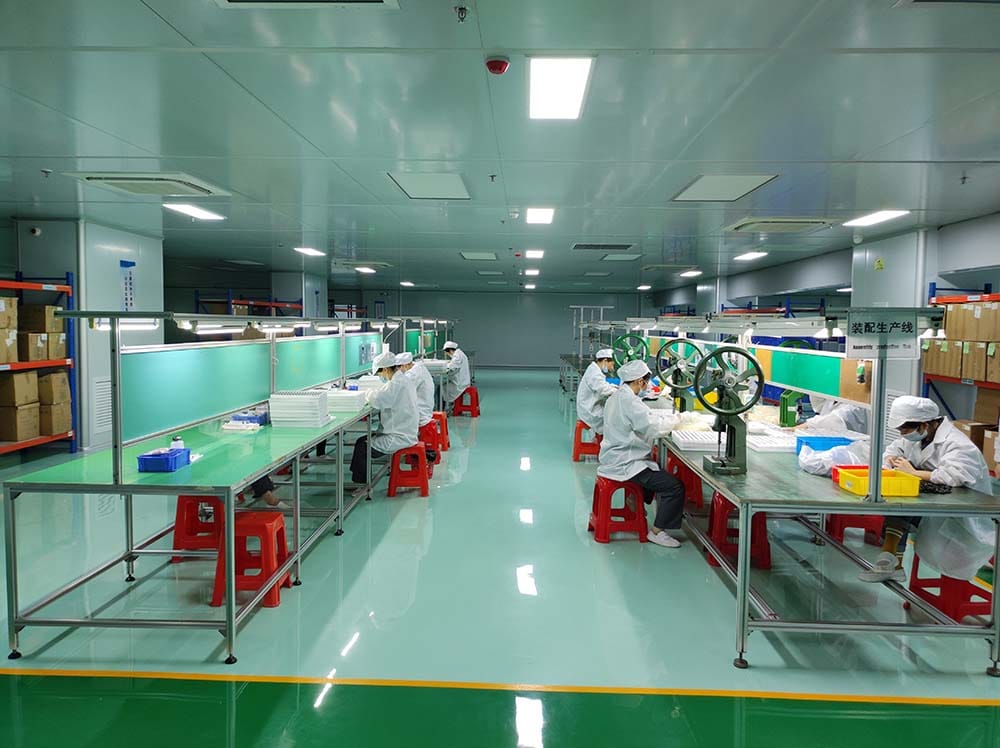
ISO 9001 certification is a baseline indicator of quality management. Beyond that, look for suppliers that perform 100% inspection of torque, rotation smoothness, and surface finish.
Production Capacity
For volume production, supplier capacity matters. Leading manufacturers maintain advanced production facilities and can scale to meet demand.
Market Trends
The global hinge market is evolving rapidly in 2025, driven by technology, sustainability demands, and shifting consumer habits. Key trends relevant to bathroom mirror cabinet hinges include:
Surge in Demand from the Bathroom Sector — Hinges used in soft-close cabinets and minimalist bathroom fixtures are seeing strong demand. In the bathroom segment, stainless steel and soft-close glass door hinges are especially popular for their rust resistance and sleek aesthetic.
Sustainability and Recyclable Materials — Hinges made from recyclable metals like aluminum and high-grade stainless steel are gaining traction. B2B buyers are increasingly preferring suppliers who can provide environmental certifications.
Customization and Design Flexibility — From matte black to brushed gold finishes, the aesthetic element is critical in bathroom hardware. Leading companies now offer customized hinge designs based on project needs.
Cost-Benefit Analysis
Some procurement teams view hinges as a commodity to be sourced at the lowest possible price. This is a costly mistake.
The Cost of Failure
A hinge that fails—whether through corrosion, torque degradation, or premature wear—generates multiple costs:
- Warranty claims and replacement parts
- Customer dissatisfaction and negative reviews
- Brand damage that affects future sales
- Potential safety issues from falling or slamming doors
- Service calls for replacement or adjustment
A single warranty return can wipe out the profit on multiple units. When multiplied across thousands of cabinets, the cost of a poor hinge choice is staggering.
The Value of Quality
A well-specified bathroom mirror cabinet position hinge delivers:
- Reduced warranty claims through superior durability and corrosion resistance
- Enhanced user experience through smooth, silent, predictable motion
- Brand differentiation in a competitive market
- Longer product lifespan — 10–20 years of reliable service
The incremental cost of a quality hinge over a standard alternative is typically modest. The value it delivers—in reduced warranty costs, enhanced brand perception, and customer loyalty—far exceeds this modest investment.
Conclusion
In bathroom mirror cabinets, the position hinge is a small component with an outsized impact on product durability, user experience, and brand reputation. A well-specified hinge—engineered with 304 stainless steel, validated through salt spray testing, and designed with soft-close damping and 3D adjustability—transforms a functional cabinet into a premium product.
For engineers, the technical parameters are clear: specify 304 stainless steel, require documented salt spray test results (48+ hours), and validate cycle life (50,000+ cycles). For procurement professionals, the supplier criteria are equally clear: look for ISO certification, testing documentation, and customization capability. For business owners, the strategic imperative is undeniable: invest in the hardware that defines product quality.
The cost of a quality hinge is modest. The cost of a poor hinge—in warranty claims, customer dissatisfaction, and brand damage—is not.
FAQ
Q1: What material is best for bathroom mirror cabinet hinges?
Stainless Steel 304 is the industry standard for bathroom applications. It offers superior resistance to oxidation and corrosion in high-humidity environments. For coastal or extreme humidity areas, SUS316 provides even greater corrosion resistance. Cold-rolled steel with multi-layer plating can be used for lower-cost applications but offers less long-term durability.
Q2: What salt spray test results should I look for in a bathroom hinge?
For bathroom applications, look for a minimum of 48 hours of neutral salt spray test (NSS) resistance without significant corrosion. Premium hinges achieve 96 hours or more. Testing should be conducted according to ISO 9227 or ASTM B117 standards. Some manufacturers also perform condensation climate testing according to ISO 6270-2.
Q3: How many cycles should a quality bathroom mirror cabinet hinge withstand?
A robust hinge for a bathroom mirror cabinet should withstand a minimum of 50,000 open/close cycles without loss of damping function or structural failure. This equates to roughly 10–15 years of regular use. Premium products achieve 80,000 cycles or more, meeting DIN EN 15570 / ISO 4769 requirements. Always request third-party lab reports verifying compliance with these standards.
Q4: What is 3D adjustability and why is it important?
3D adjustability allows installers to adjust the door position in three directions—vertical (up/down), horizontal (left/right), and depth (in/out)—without removing the hinge. This is critical for commercial installation efficiency and ensures proper alignment even with minor cabinet frame variations. High-quality hinges utilize eccentric screws for precise cam adjustment, whereas lower-tier options rely on slotted holes that can slip over time.
Summary: Bathroom mirror cabinet position hinges must be engineered for waterproof and anti-rust performance to withstand constant moisture and humidity. The industry standard is Stainless Steel 304, validated through salt spray testing (ISO 9227 / ASTM B117) for 48+ hours, and cycle life testing (EN 15570 / ISO 4769) for 50,000+ cycles. Key features include soft-close damping, free-stop positioning, and 3D adjustability. Engineers should specify corrosion-resistant materials and request documented test reports. Procurement professionals should select suppliers with ISO certification, testing capability, and OEM customization. The investment in quality hinges delivers reduced warranty claims, enhanced user experience, and stronger brand positioning.