
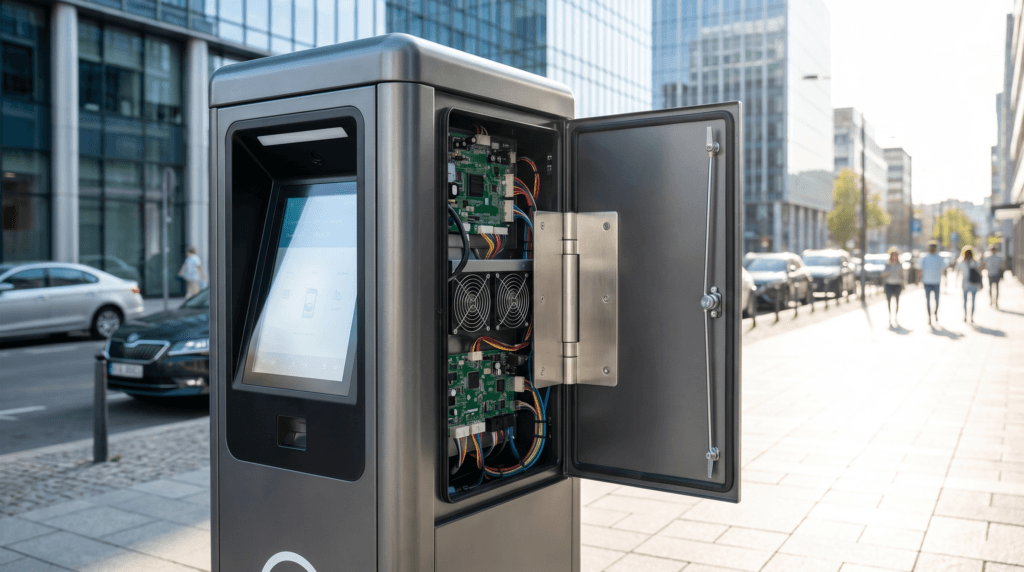
Heavy duty hinges play a critical role in the performance, safety, and durability of industrial metal doors. Whether used in commercial buildings, factories, warehouses, hospitals, or public infrastructure, the right hinge can significantly improve door stability and long-term reliability.
However, many buyers focus only on price and overlook important factors such as load capacity, corrosion resistance, material quality, and application requirements. Choosing the wrong hinge may result in door sagging, noise, poor alignment, frequent maintenance, and reduced service life.
In this guide, we will explain how to choose the best heavy duty hinges for industrial metal doors, including hinge types, material selection, surface treatments, and OEM manufacturing considerations.
What Are Heavy Duty Hinges?
Heavy duty hinges are specially designed hinges that can support large and heavy doors subjected to frequent use and demanding environments. Compared with standard residential hinges, industrial hinges are manufactured using thicker materials, larger pins, and reinforced structures to ensure better strength and durability.
These hinges are commonly used for:
- Industrial steel doors
- Commercial entrance doors
- Fire-rated doors
- Security doors
- Outdoor metal gates
- Warehouse doors
- Machinery access panels
Heavy duty hinges are engineered to withstand continuous opening and closing cycles while maintaining smooth performance over many years.
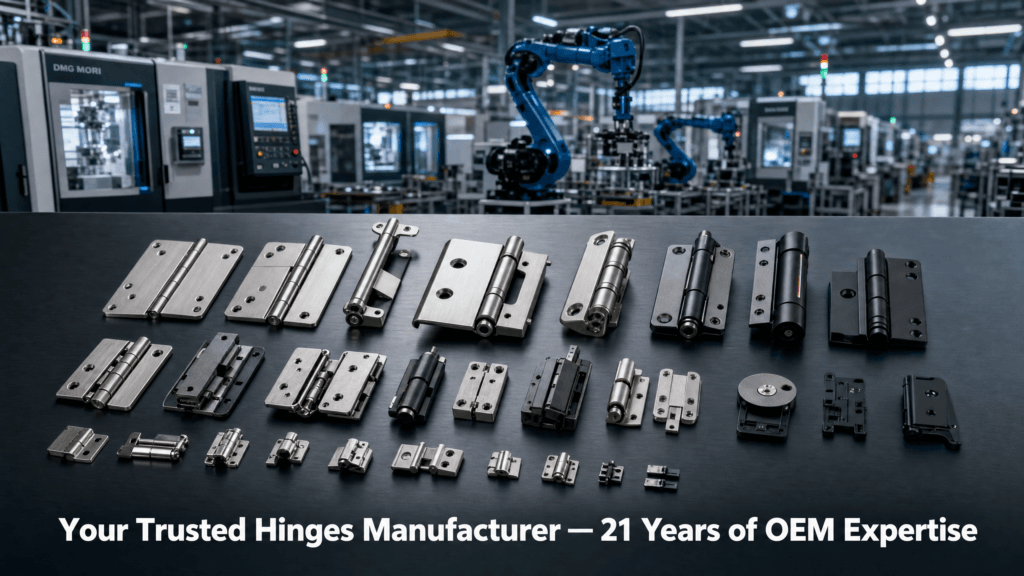
Why Choosing the Right Hinge Matters
Many industrial door problems are directly related to improper hinge selection. A low-quality or undersized hinge may initially function properly but gradually fail under long-term stress.
Common problems caused by poor hinge selection include:
- Door misalignment
- Hinge deformation
- Squeaking noise
- Rust and corrosion
- Door sagging
- Structural instability
- Increased maintenance costs
By selecting the appropriate hinge material and structure, companies can reduce maintenance expenses and improve overall building safety.
Types of Heavy Duty Hinges
Different applications require different hinge designs. Understanding the advantages of each type helps buyers choose the best option for their projects.
Butt Hinges
Butt hinges are the most common type of industrial hinge. They consist of two metal plates connected by a central pin.
Advantages include:
- Simple structure
- High strength
- Easy installation
- Wide range of sizes
Butt hinges are commonly used for commercial steel doors and industrial entry systems.
Ball Bearing Hinges
Ball bearing hinges are designed for doors that experience frequent opening and closing.
The built-in bearings reduce friction and improve smoothness during operation.
Benefits include:
- Longer service life
- Reduced wear
- Quiet operation
- Better support for heavy doors
These hinges are ideal for hospitals, schools, airports, and office buildings with high traffic flow.
Continuous Hinges
Continuous hinges, also known as piano hinges, run along the full length of the door.
Advantages include:
- Even weight distribution
- Improved stability
- Reduced stress concentration
- Enhanced durability
They are commonly used for industrial cabinets, security doors, and heavy equipment enclosures.
Concealed Hinges
Concealed hinges are hidden when the door is closed, creating a clean and modern appearance.
Benefits include:
- Better aesthetics
- Improved security
- Hidden hardware design
These hinges are widely used in modern commercial buildings and architectural projects.
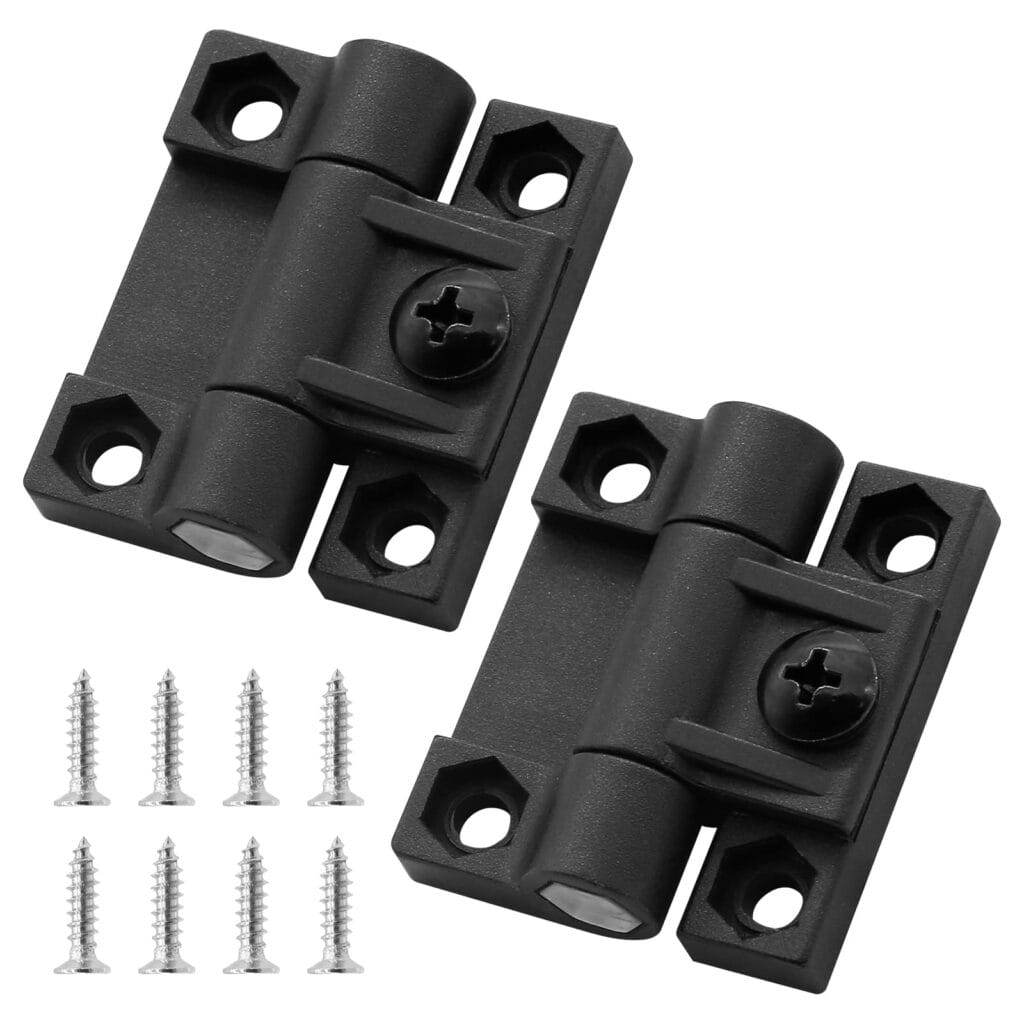
Choosing the Right Hinge Material
The material of the hinge directly affects corrosion resistance, strength, and service life.
Stainless Steel Hinges
Stainless steel hinges are among the most popular options for industrial applications.
Advantages include:
- Excellent corrosion resistance
- Strong durability
- Low maintenance
- Suitable for outdoor environments
Two common grades are:
304 Stainless Steel
Suitable for general indoor and outdoor applications.
Features include:
- Good corrosion resistance
- Affordable cost
- Widely available
316 Stainless Steel
Recommended for harsh environments such as coastal or chemical industries.
Advantages include:
- Superior salt resistance
- Better chemical resistance
- Longer outdoor lifespan
Carbon Steel Hinges
Carbon steel hinges provide excellent strength and cost efficiency.
Advantages include:
- High load capacity
- Economical pricing
- Strong structural performance
To improve corrosion resistance, carbon steel hinges are often treated with:
- Zinc plating
- Powder coating
- Electrophoretic coating
These surface treatments help reduce rust formation and extend product life.
Key Factors to Consider Before Buying Heavy Duty Hinges
Door Weight
The hinge must support the total weight of the door.
Heavy metal doors require:
- Thicker hinge plates
- Larger hinge sizes
- Reinforced pins
- Stronger mounting screws
Using undersized hinges may lead to premature failure.
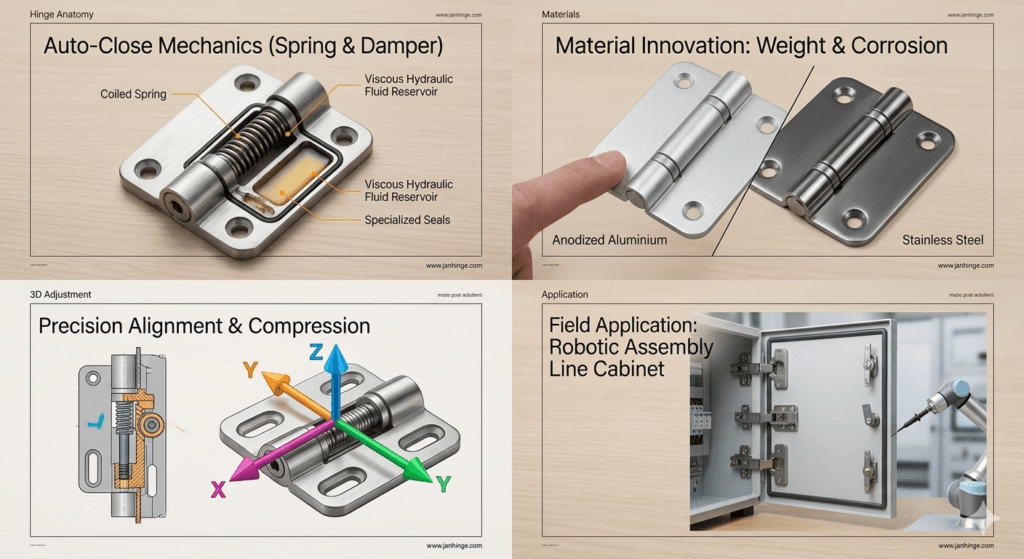
Frequency of Use
High-traffic doors require hinges with excellent wear resistance.
For doors used hundreds of times per day, ball bearing hinges are highly recommended because they reduce friction and increase durability.
Indoor or Outdoor Environment
Environmental conditions significantly affect hinge performance.
Outdoor applications require:
- Corrosion-resistant materials
- Protective coatings
- Waterproof properties
For humid or coastal areas, stainless steel hinges are usually the best solution.
Fire-Rated Requirements
Fire-rated doors require certified hinges capable of withstanding high temperatures during emergencies.
Using uncertified hinges may compromise building safety and violate regulations.
Surface Treatment and Finishing
Surface finishing improves both appearance and corrosion resistance.
Popular finishes include:
- Satin stainless steel
- Polished stainless steel
- Powder coating
- Zinc plating
- Black matte finish
The appropriate finish depends on the application environment and design preference.
OEM Heavy Duty Hinge Manufacturing
Many industrial projects require customized hinge solutions.
An experienced OEM hinge manufacturer can provide:
- Custom dimensions
- Special materials
- Customized thickness
- Surface treatment options
- Private label production
- CAD drawing support
- Custom packaging
OEM manufacturing is especially important for projects with unique structural requirements or branding needs.
Taiwan manufacturers are recognized globally for stable quality, flexible production capability, and strong export experience in industrial hardware manufacturing.
Common Applications of Heavy Duty Hinges
Heavy duty hinges are widely used across many industries.
Applications include:
Commercial Buildings
- Office doors
- Shopping malls
- Public facilities
Industrial Facilities
- Factory doors
- Machinery rooms
- Equipment access doors
Healthcare Facilities
- Hospital doors
- Cleanroom environments
Transportation Infrastructure
- Railway facilities
- Airport buildings
- Marine applications
Security Systems
- Vault doors
- Security gates
- Reinforced metal doors
Each application may require different hinge specifications depending on weight, frequency, and environmental exposure.
Maintenance Tips for Heavy Duty Hinges
Proper maintenance extends hinge lifespan and improves performance.
Recommended maintenance practices include:
- Regular lubrication
- Cleaning dust and debris
- Checking screw tightness
- Inspecting for corrosion
- Replacing worn components
Stainless steel hinges generally require less maintenance than coated steel hinges.
Why Buyers Prefer Taiwan Hinge Manufacturers
Taiwan has built a strong reputation in industrial hardware manufacturing due to:
- Stable product quality
- Competitive pricing
- Advanced production technology
- Flexible OEM services
- Strong export capabilities
Many international buyers choose Taiwan suppliers for long-term industrial hardware partnerships.
Conclusion
Choosing the right heavy duty hinge is essential for industrial door safety, stability, and long-term performance.
Before purchasing, buyers should carefully evaluate:
- Door weight
- Usage frequency
- Material selection
- Corrosion resistance
- Fire-rating requirements
- OEM customization needs
Working with an experienced OEM hinge manufacturer helps ensure better product quality, reliable performance, and long-term value.
For industrial projects, selecting high-quality heavy duty hinges is not only a hardware decision but also an investment in safety and durability.