
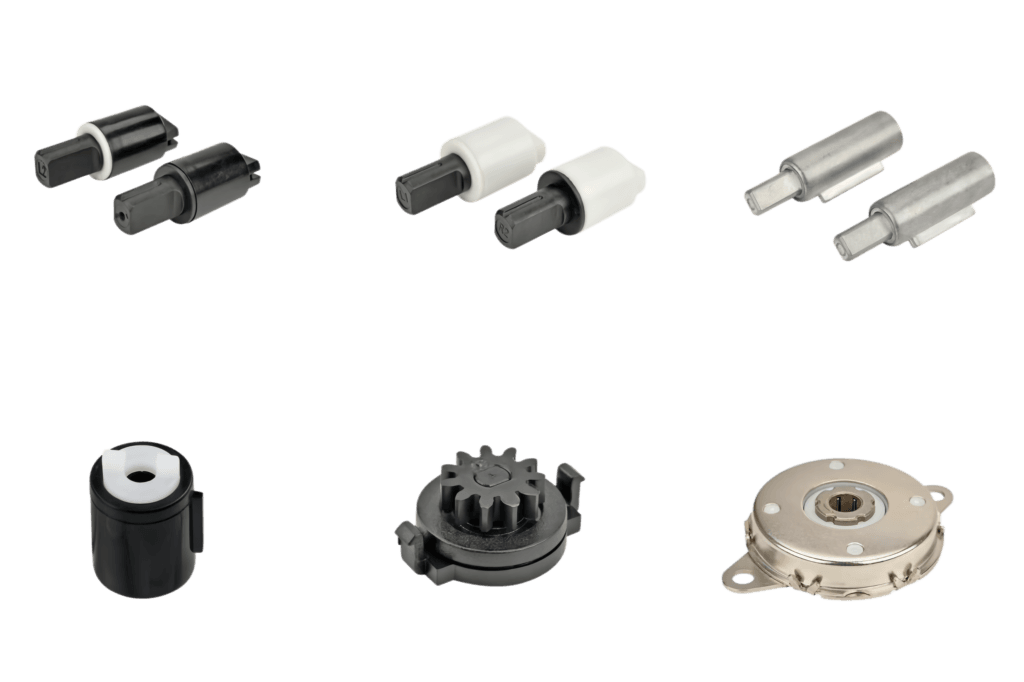
If you have ever tried to fit an off-the-shelf friction hinge into a product design, you already know the frustration. The torque is close — but not quite right. The footprint is almost there — but a few millimeters off. The opening angle works for most of your range — but not the full sweep you need.
This is why custom friction hinges exist. And if you are specifying hinges for a production run — whether it is medical equipment, industrial panels, consumer electronics, or automotive interiors — getting the customization right is not optional. It is the difference between a product that works and one that generates warranty claims.
This guide is written for engineers, procurement professionals, and decision-makers who need to understand how to specify custom friction hinges across three critical dimensions: size, torque, and angle. We will cover what is customizable, how to calculate what you need, and what to watch out for.

What Is a Custom Friction Hinge?
A friction hinge — also called a torque hinge, positioning hinge, or free-stop hinge — uses controlled internal friction to hold a door, lid, panel, or display at any angle without external locks, springs, or gas struts. Unlike a standard hinge that swings freely, a friction hinge deliberately resists movement, allowing precise positioning.
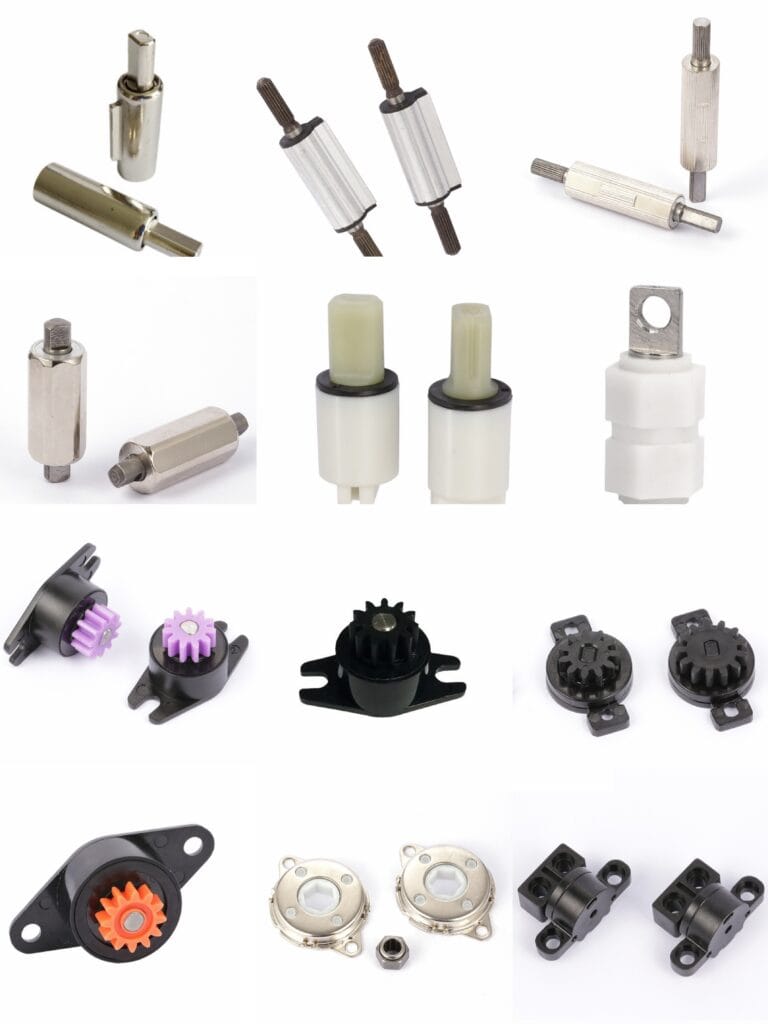
A custom friction hinge takes this concept and adapts it to your specific application. Instead of choosing from a catalog of standard sizes and torque values, you work with a manufacturer to tailor the hinge’s dimensions, holding force, rotation range, materials, and mounting configuration to your exact requirements.
As one industry engineer put it: “With custom design, engineers can tune torque, package dimensions, and material/finish choices to the actual use case — improving stability, durability, and integration efficiency so the hinge performs at its best”.
Southco, for example, notes that its positioning hinges are “scalable to suit any torque requirement and packaging space, allowing the flexibility to create a customized hinge for your unique application”.
1. Size Customization: Getting the Footprint Right
Size is where most custom hinge projects start — and where many go wrong.
What Can Be Customized?
| Dimension | What It Means | Why It Matters |
|---|---|---|
| Overall length (L) | The full length of the hinge body | Determines how much space the hinge occupies on your panel and frame |
| Overall width (W) | The full width of the hinge body | Affects clearance and aesthetics |
| Stack height | The thickness when mounted | Critical for flush-mount or low-profile designs |
| Mounting hole pattern | Hole spacing, diameter, thread type | Must match your panel and frame hole layout |
| Shaft diameter | The rotational axis size | Affects strength and torque capacity |
| Leaf dimensions | Size of each mounting leaf | Determines screw placement and load distribution |
Available Size Ranges
Friction hinges come in an astonishing range of sizes. At the miniature end, LEECO offers hinges as small as 2.5mm × 2.5mm × 17.7mm — small enough for handheld devices and tiny panel covers. At the other end, industrial hinges can exceed 50mm in width and 100mm in length.
Common size families include:
- Miniature (2.5mm – 10mm): Electronics, handheld devices, small lids
- Compact (10mm – 30mm): Laptops, monitors, medical devices
- Standard (30mm – 60mm): Industrial panels, control cabinets, furniture
- Heavy-duty (60mm+): Machinery guards, large access doors, automotive
Key Considerations for Size Customization
Mounting hole configuration is often the first customization request. Many manufacturers can change from tapped holes to through holes, adjust hole spacing, or modify screw sizes. LEECO, for example, offers customization of “select design elements” including mounting hole types.
Package clearance is another critical factor. Before finalizing size, verify your stack-up to prevent interference between the hinge and other components. A hinge that fits on paper may bind in practice if clearance is too tight.
Material choice affects size feasibility. Zinc alloy offers good strength and design flexibility at lower cost, while stainless steel provides superior corrosion resistance. Aluminum offers a higher strength-to-weight ratio — Reell’s PHCA aluminum hinge weighs just 19.5 grams, less than half the weight of equivalent zinc or steel hinges.
2. Torque Customization: Getting the Holding Force Right
Torque is the single most important specification for a friction hinge. Get it wrong, and your panel will either sag under its own weight or be impossible to move.
What Is Torque?
Torque is the rotational resistance of the hinge, measured in Newton-meters (N·m) , inch-pounds (in·lb) , or kilogram-force centimeters (kgf·cm). It is the force required to rotate the hinge through its range of motion.
Available Torque Ranges
The torque range available from custom manufacturers is exceptionally wide:
| Application Type | Typical Torque Range |
|---|---|
| Miniature electronics | 0.025 – 0.5 N·m |
| Consumer devices / monitors | 0.3 – 3.0 N·m |
| Medical equipment / panels | 1.0 – 10.0 N·m |
| Industrial machinery | 10.0 – 50.0+ N·m |
Reell’s largest hinges can hold up to 11.3 N·m each, or 22.6 N·m per pair. HTAN offers models from 0.3 N·m for miniature electronics to 50+ N·m for industrial panels. Sugatsune creates hinges with torque values ranging from 58 gf·cm to 70 kgf·cm.
Calculating the Torque You Need
The fundamental calculation starts with the load and its center of gravity. The formula used by industry leaders is:
T = W × L × cos θ
Where:
- T = required torque (N·m)
- W = weight of the door, lid, or panel (kg)
- L = distance from the hinge pivot to the center of gravity (m)
- θ = angle between the panel and the horizontal plane
The moment is at its maximum when the center of gravity is horizontal relative to the rotation axis. At that position, cos θ = 1, so the formula simplifies to T = W × L.
Worked Example
Consider a medical equipment panel weighing 2.5 kg, with its center of gravity 0.2 meters from the hinge pivot. The required torque at the horizontal position is:
T = 2.5 × 0.2 = 0.5 N·m
However, this is the theoretical minimum. In real-world applications, you should apply a safety factor. Most engineers use a factor of 1.5 to 2.0 to account for manufacturing tolerances, wear over time, and variations in operating conditions. For this example, a target torque of 0.75 to 1.0 N·m would be appropriate.
Torque Directionality Options
Custom hinges can be configured with different torque profiles:
LEECO, for example, offers symmetric torque options from 0.4 to 0.9 N·m at 0.1 N·m intervals. Some manufacturers can specify torque “at every 0.1 N·m interval” within a given range.
Torque Tolerance
Every friction hinge has a torque tolerance — typically ±15% to ±25%. A hinge rated at 2.0 N·m with ±20% tolerance could deliver anywhere from 1.6 to 2.4 N·m.
When specifying custom torque, make sure your application’s required torque falls within the low end of the tolerance band, not just the nominal value. As Sugatsune advises: “Make sure your application’s moment is smaller than the low-end torque tolerance value but not hugely smaller”.
3. Angle Customization: Defining the Range of Motion
Angle customization is often overlooked — but it can make or break a design.
What Can Be Customized?
Available Angle Ranges
The range of motion varies significantly by hinge type:
| Rotation Range | Typical Applications |
|---|---|
| 180° | Standard doors, lids, panels |
| 220° – 280° | Industrial access, specialized positioning |
| 360° | Continuous rotation applications |
Many hinges offer 360° shaft rotation, allowing full continuous movement. Others are designed with specific opening angles — for example, positioning hinges with angles of 0°, 75°, and 180° are available.
Angle Limiter Options
If you need to restrict rotation to a specific range, angle limiters can be added. Sugatsune’s HG-S-ARP angle limiter plate, for example, allows selection from five standard angles (30°, 60°, 90°, 120°, or 150°) with custom angles available upon request.
Some manufacturers offer hinges with detent stops — specific angles where the hinge locks into position. Detent position, holding torque, and overall feel are critical factors in a successful detent hinge design.
Variable Torque by Angle
For advanced applications, some manufacturers can develop custom hinges with variable torque at different angles. This allows the hinge to provide more resistance in certain positions (e.g., near horizontal where the load is highest) and less resistance in others.
Reell notes that “variable torque at different angles” is a capability they have developed for custom designs. This is particularly useful for applications where the load moment changes significantly across the range of motion.
Additional Customization Options
Beyond size, torque, and angle, custom friction hinges can be tailored in several other ways:
Materials
- Zinc alloy: Cost-effective with good strength and design flexibility
- Stainless steel (304/316): Superior corrosion resistance, ideal for medical and outdoor use
- Aluminum: High strength-to-weight ratio, lightweight
- Glass-filled nylon: Lower cost, lightweight, versatile
Finishes
- Plating (nickel, zinc, black)
- Paint (black, natural, custom colors)
- Passivation (for stainless steel)
Mounting Configurations
Special Features
- Cable pass-through: Hollow shaft for routing wires
- Lift assist: Spring assistance for heavy lids
- Weather sealing: O-ring seals for outdoor use
- Zero backlash: No play or springback
The Customization Process: What to Expect
Step 1: Define Your Requirements
Start with three critical inputs:
- Load: Weight and center of gravity of the moving panel
- Motion: Required angle range and any detent positions
- Package: Available space for the hinge (length, width, height)
Step 2: Calculate Your Torque
Use the formula T = W × L × cos θ for the worst-case angle. Add a 20-30% safety factor.
Step 3: Specify Tolerance and Life
Define what torque the hinge must deliver at end-of-life — not just on day one. Specify cycle life requirements (e.g., 20,000, 50,000 cycles).
Step 4: Engage with the Manufacturer
Work with the manufacturer’s engineering team to finalize the design. Most custom hinge manufacturers provide full OEM and ODM support. As one supplier notes: “Our R&D engineers provide full OEM and ODM customization. We can adjust torque values, hinge dimensions, and surface finishes to match your specific project needs”.
Step 5: Test Samples
Always request samples and test with the actual panel — not a mockup. As one engineer observed: “The torque value in the catalog is the holding force at 23°C under a smooth vertical load. Put that same hinge in a product that ships to a customer in northern Finland or southern Malaysia, and the operating conditions are different”.
Common Mistakes to Avoid
- Specifying torque equal to theoretical load torque — Always add margin for wear and temperature.
- Forgetting about torque tolerance — A ±20% band means your 2.0 N·m hinge could deliver 1.6 N·m. Design for the low end.
- Ignoring cycle life — Correctly torqued hinges can fail early if nobody checked cycle life against actual usage frequency.
- Testing without the full assembly — Always test with the actual panel, including all accessories and cables.
- Overlooking the operating environment — Temperature, humidity, and contaminants all affect hinge performance.
FAQ
Q1: What is the minimum order quantity (MOQ) for custom friction hinges?
MOQ varies by manufacturer and the extent of customization. Some suppliers offer custom hinges with no MOQ for small runs, while others require higher volumes for full OEM production. For semi-custom options — such as a custom shaft in a standard housing — MOQs are typically lower. Always ask your supplier about MOQ before starting the design process.
Q2: How long does it take to get custom friction hinge samples?
Lead times vary, but typical sample delivery ranges from 2 to 6 weeks depending on the complexity of the customization. Full production lead times are usually longer. Work with your supplier early in the design cycle to avoid delays.
Q3: Can I get a custom friction hinge with different torque in each direction?
Yes — this is called an asymmetric or differential torque hinge. Differential hinges typically offer 60% torque in one direction and 100% in the other. One-way hinges remove nearly all torque in one direction while maintaining full holding force in the other. These are useful for lids that need to stay open but close easily.
Q4: What torque tolerance can I expect from a custom friction hinge?
Standard torque tolerance is ±15% to ±25%. Reell specifies ±15% for zinc components and ±20% for insert plastic molded parts. Some premium suppliers can achieve tighter tolerances with excellent process control. Always specify your required tolerance clearly in your request for quotation.
Summary
Custom friction hinges give engineers and manufacturers the flexibility to match size, torque, and angle to the exact requirements of their application. The key to success is understanding what is customizable, calculating your requirements correctly, and working closely with your supplier throughout the design process.
Start with the load calculation — T = W × L × cos θ — and add a safety factor. Define your torque tolerance and cycle life requirements upfront. Test samples with the actual assembly. And never assume that “close enough” on torque or size will work in production.
The right custom friction hinge makes your product feel polished, professional, and reliable. The wrong one creates warranty claims, field failures, and frustrated customers. Get the specification right — and your product will hold its position for years to come.