
Hello, product designers, mechanical engineers, and procurement specialists! Have you ever designed a product with a lid that slams shut, a screen that won’t stay put, or a panel that sags over time? These seemingly minor issues can significantly detract from user experience, compromise safety, and ultimately damage your brand’s reputation. In today’s competitive market, consumers and industrial users alike expect a refined, controlled, and reliable interaction with every product. The good news? These common design headaches have elegant, engineered solutions. At Janhinge, we specialize in providing advanced motion control components – specifically rotary dampers and friction hinges – that eliminate the ‘slam’ and the ‘sag’, transforming your product’s functionality and perceived quality. This comprehensive guide will delve into the root causes of these problems and present practical, high-performance solutions that will elevate your designs.
The Hidden Costs of Uncontrolled Motion: Why It Matters
Uncontrolled motion in product design, whether it’s a slamming lid or an unstable display, carries significant hidden costs:
•Compromised User Experience: A jarring slam or a wobbly screen feels cheap and poorly designed, frustrating users and eroding trust.
•Safety Hazards: Slamming lids can pinch fingers, especially in household appliances or medical devices. Unstable components can lead to accidents or damage.
•Product Damage & Wear: Repeated impacts from slamming can damage hinges, latches, and the product’s structure, leading to premature failure and increased warranty claims.
•Noise Pollution: In quiet environments (offices, homes, medical facilities), loud slams are disruptive and unprofessional.
•Brand Perception: Products that lack controlled motion are often perceived as lower quality, regardless of their core functionality.
Addressing these issues proactively with the right motion control solution is not just about fixing a problem; it’s about adding value, enhancing safety, and reinforcing your brand’s commitment to excellence.
Problem 1: The Annoying ‘Slam’ – When Lids, Doors, and Drawers Close Too Fast
This is a common complaint across a vast array of products, from household appliances to industrial machinery. A lid that drops too quickly, a drawer that crashes shut, or a panel that falls without resistance creates a negative impression and can even be dangerous.
The Root Cause: Unmanaged Kinetic Energy
When a lid or door closes, gravity and its own mass generate kinetic energy. Without a mechanism to absorb and dissipate this energy, the movement becomes uncontrolled, resulting in a slam.
The Solution: Rotary Dampers – The Silent Guardians of Smooth Motion
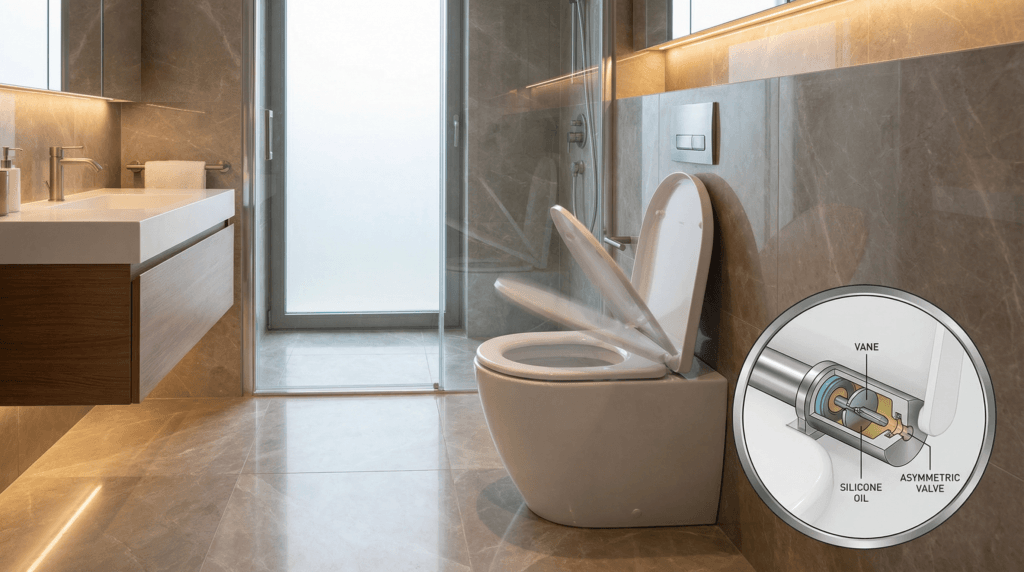
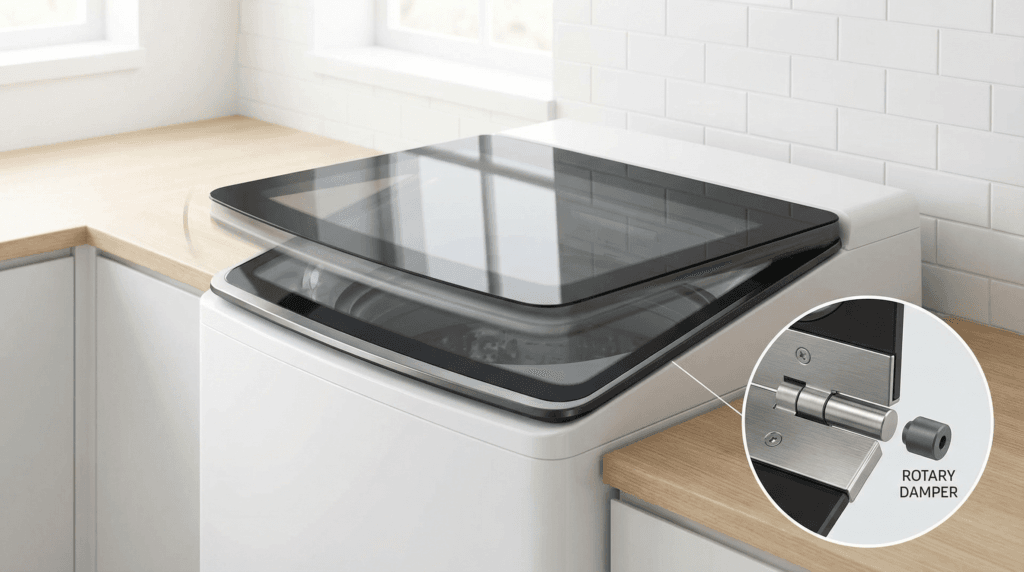
Rotary dampers are precision-engineered devices designed to provide controlled, smooth, and silent deceleration of moving parts. They work by using a viscous fluid (typically silicone oil) and internal vanes or gears to create resistance, absorbing kinetic energy and transforming it into heat. This results in a gentle, soft-close action.
How Rotary Dampers Work:
Imagine pushing a spoon through honey – the resistance you feel is similar to how a rotary damper controls motion. As the component attached to the damper moves, the internal mechanism forces the viscous fluid through small orifices, creating hydraulic resistance. This resistance slows down the movement in a controlled manner.
Key Benefits of Janhinge Rotary Dampers:
•Soft-Close Action: Eliminates slamming, protecting components and preventing injuries.
•Noise Reduction: Creates a quieter, more pleasant user environment.
•Enhanced Perceived Quality: Adds a premium feel to any product.
•Extended Product Lifespan: Reduces wear and tear on hinges and structural elements.
•Versatile Applications: Available in various torque values, sizes, and mounting configurations to suit diverse needs.
Typical Applications for Slam-Free Design:
•Appliance Lids & Doors: Washing machines, ovens, refrigerators, dishwashers.
•Furniture Drawers & Cabinet Doors: High-end cabinetry, office storage.
•Toilet Seats & Lids: The classic soft-close application.
•Automotive Interior Components: Glove boxes, center console lids.
•Industrial Machine Guards & Access Panels: Ensuring safe and controlled closure.

Problem 2: The Wobbly ‘Sag’ – When Components Won’t Stay Where You Put Them
This problem manifests as screens that drift out of position, covers that won’t stay open, or adjustable components that sag under their own weight. It’s frustrating for users and signals a lack of precision in design.
The Root Cause: Insufficient Holding Force or Uncontrolled Gravity
When a component needs to be held at a specific angle or position, it requires a consistent holding force to counteract gravity or external forces. Traditional hinges often lack this inherent holding capability, leading to instability.
The Solution: Friction Hinges – The Masters of Stable Positioning
Friction hinges, also known as constant torque hinges, are specifically designed to provide a consistent, adjustable resistance throughout their range of motion. This resistance allows a component to be held securely at any desired angle without the need for external locking mechanisms, springs, or props.
How Friction Hinges Work:
Friction hinges utilize a series of friction plates or elements that create a predetermined amount of resistance (torque) when the hinge is moved. This torque is carefully calibrated to be greater than the force of gravity acting on the component, allowing it to stay in place once positioned. The
torque remains constant throughout the hinge’s travel, providing a smooth and consistent feel.
Key Benefits of Janhinge Friction Hinges:
•Infinite Positioning: Holds components securely at any angle, eliminating sag and drift.
•Enhanced User Experience: Provides a smooth, controlled feel, conveying quality and precision.
•Simplified Design: Eliminates the need for complex locking mechanisms, springs, or props.
•Durability & Reliability: Maintains consistent torque over thousands of cycles, ensuring long-term performance.
•Compact & Integrated: Allows for sleek, minimalist designs by keeping mechanisms hidden.
Typical Applications for Stable Positioning:
•Laptop & Tablet Screens: Allowing users to position screens for optimal viewing angles.
•Adjustable Monitor Arms & Stands: Providing stable, multi-angle positioning for displays in ergonomic workstations.
•Medical Device Displays & Access Panels: Ensuring critical components remain in their set positions.
•Industrial Control Panels & Machine Guards: Holding heavy panels open for maintenance or at specific angles during operation.
•Furniture Lids & Flaps: Keeping lids open at desired angles for easy access.


The Janhinge Advantage: Your Partner in Motion Control Innovation
At Janhinge, we don’t just supply components; we provide engineered solutions. Our expertise in OEM motion control allows us to tackle your most challenging design problems with precision and innovation. Here’s why partnering with Janhinge is a strategic advantage:
1. Deep Engineering Expertise
Our team of experienced engineers specializes in motion control. We understand the nuances of torque, damping, materials science, and application-specific requirements. We work collaboratively with your design team from concept to production.
2. Customization is Our Standard
Generic solutions rarely fit perfectly. We excel in developing custom friction hinges and custom rotary dampers tailored to your exact specifications – from unique torque values and damping rates to specialized materials, sizes, and mounting configurations. Discover Janhinge’s Custom Solutions.
3. Uncompromising Quality & Testing
Every Janhinge component undergoes rigorous testing to ensure consistent performance, durability, and reliability. Our testing protocols include:
•Cycle Life Testing: Verifying performance over tens of thousands, even hundreds of thousands, of cycles.
•Environmental Testing: Assessing resistance to temperature extremes, humidity, dust, and chemicals.
•Torque & Damping Consistency: Ensuring smooth, predictable motion throughout the product’s lifespan.
4. Global Manufacturing & Supply Chain Reliability
With advanced manufacturing facilities and a robust global supply chain, Janhinge ensures scalable production and on-time delivery, supporting your project timelines and high-volume demands.
5. Value Engineering & Cost Optimization
We focus on providing high-performance solutions that are also cost-effective. Our value engineering approach helps optimize designs for manufacturability and material efficiency, ensuring you get the best performance at a competitive price.
Partnering for Superior Product Design
Solving the challenges of lid slamming and unstable positioning is more than just a technical fix; it’s about elevating your product’s perceived quality, enhancing user satisfaction, and strengthening your brand. By integrating Janhinge’s precision motion control solutions, you can achieve:
•Premium User Experience: Products that feel refined, controlled, and intuitive.
•Enhanced Safety: Protecting users from injury and components from damage.
•Increased Durability: Extending product lifespan and reducing warranty claims.
•Competitive Differentiation: Standing out in the market with superior functionality and quality.
•Design Freedom: Enabling innovative designs without compromising on motion control.
Don’t let uncontrolled motion detract from your product’s potential. Let Janhinge be your partner in engineering excellence.
Ready to transform your product’s motion?
•Request a Free Consultation with Janhinge’s Engineering Experts
•Explore Our Full Range of Rotary Dampers
•Browse Our Comprehensive Friction Hinge Solutions
•Download Our Motion Control Design Guide
Frequently Asked Questions (FAQs) for Motion Control Solutions
1. How do I choose between a rotary damper and a friction hinge for my application?
Choose a rotary damper when you need to control the speed of movement and achieve a soft-close action, typically for lids, doors, or drawers that close under gravity. Choose a friction hinge when you need to hold a component securely at any desired angle, providing stable positioning without external locking mechanisms.
2. How do I calculate the correct torque or damping force for my product?
Calculating the precise torque or damping force depends on several factors, including the weight, size, and center of gravity of the moving component, as well as the desired speed of movement. Janhinge offers specialized calculation tools and our engineering team can provide expert assistance to ensure optimal selection.
3. Can Janhinge provide custom solutions for unique product designs?
Absolutely. Customization is a core strength. We excel in designing and manufacturing bespoke rotary dampers and friction hinges tailored to your exact specifications, including unique sizes, materials, torque values, and mounting configurations.
4. What is the typical lifespan of Janhinge’s motion control components?
Our components are engineered for high cycle life, typically ranging from tens of thousands to hundreds of thousands of cycles, depending on the specific product and application. We conduct rigorous testing to validate these lifespans under various operating conditions.
5. Are Janhinge’s components suitable for harsh environments (e.g., extreme temperatures, dust, moisture)?
Yes, we offer a range of motion control solutions designed for various environmental conditions. We can specify materials and designs that provide resistance to extreme temperatures, dust, moisture, and even corrosive agents, ensuring reliable performance in challenging environments.