
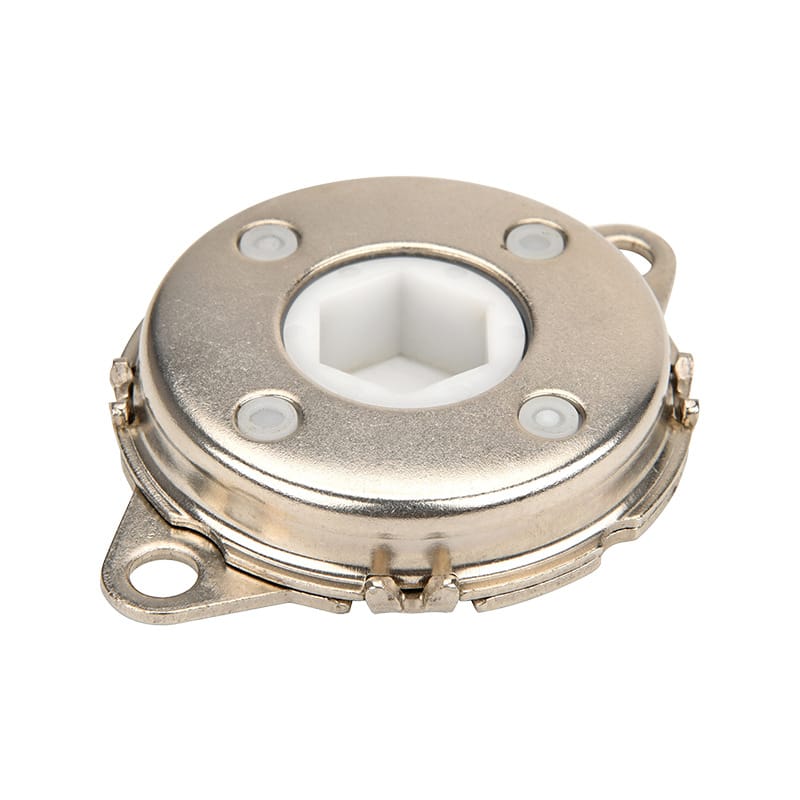
If you have ever specified a damping hinge or torque hinge for a product, you have probably encountered this scenario: the prototype feels perfect. The lid holds at any angle, the motion is smooth, and everyone on the team is happy. Then, six months into production—or worse, six months after your customers start using the product—you start getting complaints. Lids that once held firmly now sag. Screens that stayed in place now drift. The damping feels weak and inconsistent.
This is torque decay. It is not random, and it is not always a simple quality defect. In most cases, it is the result of predictable interactions between friction, material properties, pre-load loss, lubrication behavior, assembly variation, and real operating conditions. Understanding why damping hinges lose tension is the first step toward preventing it.
This guide is written for engineers, procurement professionals, and decision-makers who need to understand the root causes of torque loss in damping hinges and, more importantly, what to do about it.
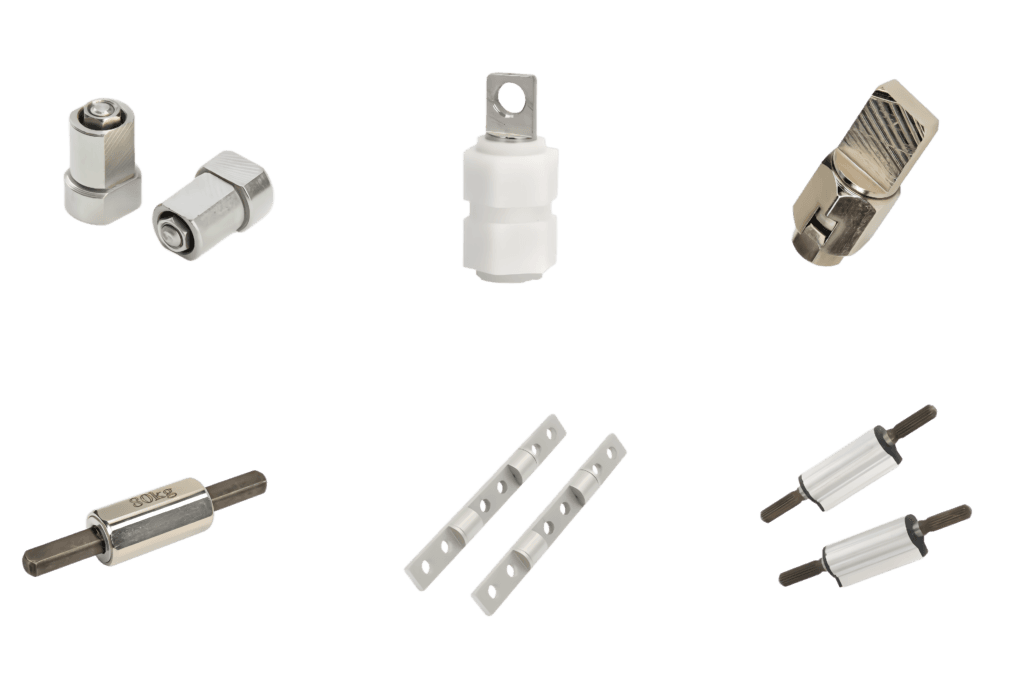
What Is Torque Decay?
In engineering terms, torque decay refers to the gradual reduction in a hinge’s output holding torque after repeated opening and closing cycles, long-term static loading, or environmental exposure. It is a dynamic performance degradation phenomenon—not an immediate structural failure.
- Reduced static holding capability: a panel that once held any angle slowly begins to slide under gravity
- Angle drift or backlash: after positioning, the hinge cannot hold the intended angle precisely
- Weaker damping feel: the difference between breakaway torque and dynamic torque changes, making the hinge feel loose or unstable
It is important to distinguish performance attenuation from structural failure. Torque decay is usually progressive—for example, a hinge rated at 2.0 N·m drops to 1.6 N·m after 10,000 cycles. Structural failure refers to fracture, seizure, shaft deformation, severe corrosion, or internal component collapse. Most industrial standards accept that some torque variation is a normal physical phenomenon. The engineering goal is not zero decay, but controlled decay that remains inside the product’s usable functional range.
How Damping Hinges Generate Torque: A Quick Primer
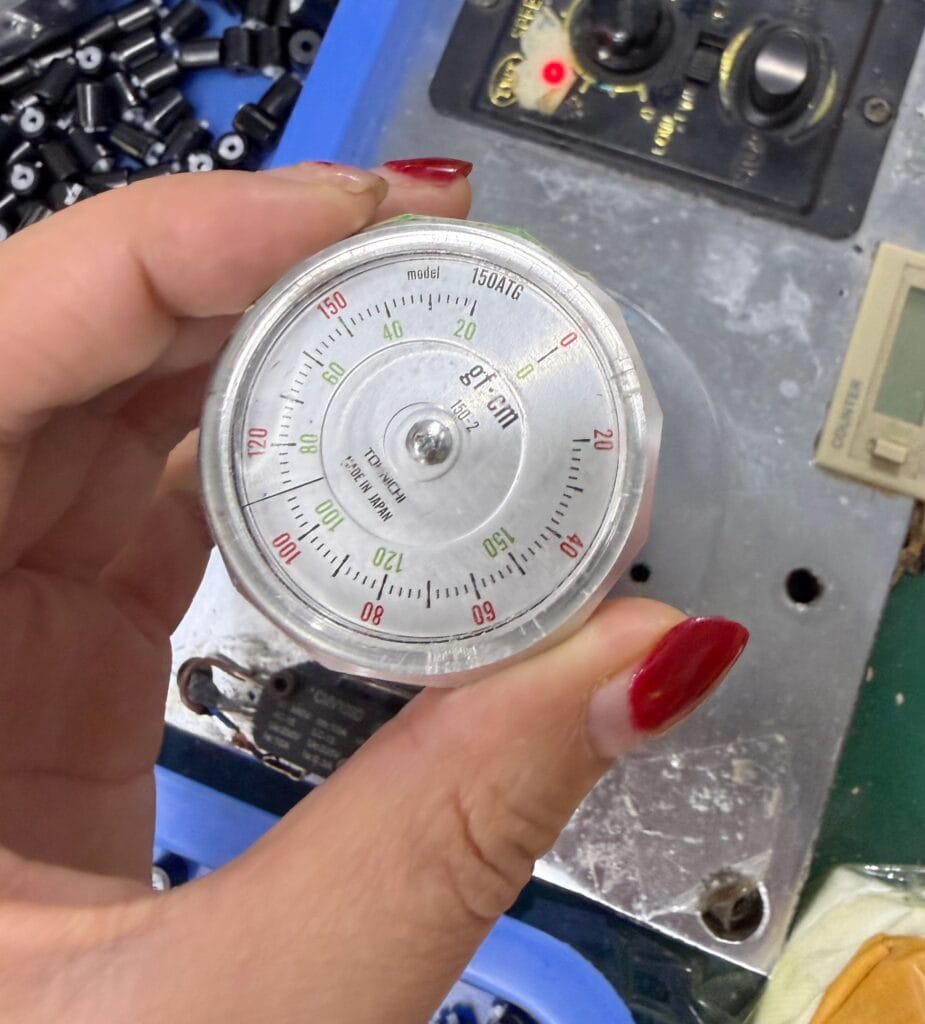
Before we dive into why torque is lost, it helps to understand how torque is generated in the first place. Although proprietary hinge designs vary, most torque hinges contain four core functional elements:
- Shaft: usually hardened steel or stainless steel, acting as the main rotational and load-bearing element
- Friction pair: friction discs, clips, sleeves, or contact elements that generate resistance against the shaft
- Pre-load components: wave springs, Belleville washers, or formed elastic clips that provide continuous contact pressure
- Lubrication or damping medium: high-viscosity grease or damping grease that smooths feel and reduces uncontrolled wear
The simplified torque relationship can be written as:
T = μ × F × r × N
Where:
- T = output torque
- μ = friction coefficient
- F = normal force or pre-load
- r = effective friction radius
- N = number of effective friction interfaces
This means torque stability depends heavily on two things staying stable over time: friction state and pre-load. Any change in lubrication quality, surface morphology, material relaxation, or dimensional fit can reduce one or both, and torque falls accordingly.
The Root Causes of Torque Loss
1. Wear of Friction Materials
This is the most common cause of torque decay. After thousands of open-close cycles, friction elements wear down. Friction pads become thinner, internal clearance increases, and the hinge’s ability to resist movement diminishes.
What makes this particularly challenging is that the normal force acting between the friction pair can fall because geometry changes slightly. Many hinges experience their largest torque drop during the first 500 to 1,000 cycles, then stabilize for a period. The initial “bedding-in” period is when surface asperities are worn down and the friction interface settles into its long-term configuration.
In some cases, wear can be so severe that it causes abnormal noise due to a stick-slip phenomenon. A hinge rated for static holding torque may fail under cyclic vibration because dynamic friction behaves differently from static friction. That difference causes slow drift in control panels, test chamber doors, and equipment lids.
Real-world data: I have seen samples drop somewhere between 35% and 42% of initial torque within 15,000 cycles. That is not a defect—that is normal wear. The question is whether the hinge was specified with enough margin to absorb that loss.
2. Pre-Load Loss and Spring Fatigue
Hinges that rely on torsion springs, wave springs, or Belleville washers to maintain contact pressure are susceptible to pre-load loss over time. As surfaces wear and spring materials experience fatigue, the pre-load force gradually diminishes.
Fatigue reduces torque output over time. Once the available holding force drops below the actual load requirement, sagging begins. This is particularly problematic in applications with high cycle counts or where the hinge is subjected to vibration.
Springs tend to come uncoiled over a period of time, reducing their compression about the shaft. Other materials suffer from wear or deformation, which tends to reduce the friction between those materials and the shaft over time.
3. Lubricant Migration and Degradation
Lubricants reduce wear, but they also lower the coefficient of friction. As hinges cycle, lubricants tend to slowly migrate out of the friction interface [0†L7-L8]. This changes the friction characteristics over time.
Under heat, some damping formulas may soften and move away from the contact area. Once the material no longer stays where it is needed, the mechanism may lose resistance in one section while collecting excess material in another.
This creates a paradox: the lubricant that protects the friction surfaces from wear also changes the friction characteristics as it moves. In some cases, lubrication failure—where the grease dries out or degrades—can make movement rough, unstable, or noisy. In other cases, contamination increases wear quickly enough that sagging follows soon after.
Critical warning: Penetrating lubricants like WD-40, motor oil, or silicone oil are especially hazardous for torque hinges. They can penetrate the friction mechanism, degrade internal friction surfaces, and eventually cause torque loss or hinge failure.
4. Temperature Effects
Temperature is one of the most overlooked causes of torque variation. Sugatsune explicitly notes that torque will decrease due to long-term use, temperature, humidity and other factors. The company also warns that torque will decrease at low temperature.
For oil-filled damping mechanisms, the damper characteristics become weaker as the temperature rises, and stronger as the temperature decreases. This is because the viscosity of the oil inside the damper is affected by temperature change. When the temperature returns to normal, the torque also returns to its original value—so this is a reversible effect, not permanent decay.
However, for grease-lubricated friction hinges, the story is different. At low temperatures, greases inherently thicken, often causing torque values to spike significantly compared to room temperature. At high temperatures, greases thin out and torque drops.
Southco takes a different approach: its constant-torque design is unaffected by normal temperature variations and maintains consistent performance without maintenance or adjustment. Its E6/ST series has an operating temperature range of -20°C to 65°C (-4°F to 150°F).
5. Installation Misalignment
This is a cause of torque loss that has nothing to do with the hinge itself—and everything to do with how it is installed.
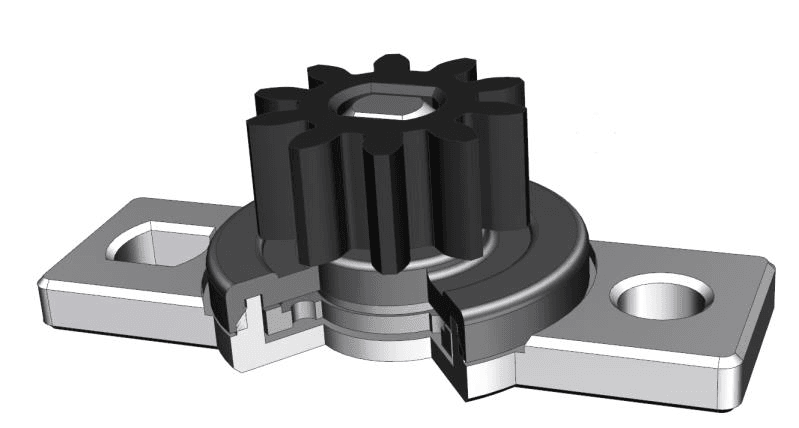
Hinge mounting positions that are non-parallel or misaligned cause uneven stress distribution or mechanical interference. When two hinges share a load, the mounting surfaces must be coplanar within tight tolerance. Sugatsune explicitly advises that when installing torque hinges, both hinge shafts must be levelled and aligned.
If mounting surfaces are not coplanar within 0.1 millimeter, one hinge absorbs most of the torque and wears faster. Symptoms of misalignment include uneven wear, looseness, abnormal noise, or even jamming. Deflection in one bracket can be mistaken for hinge looseness or torque loss.
6. Load Error and Center of Gravity Shifts
One of the most overlooked causes of torque hinge sagging is load error. A hinge that was originally acceptable can start failing when the panel becomes heavier or its center of gravity shifts.
- Replacing a panel with a heavier screen or touch module
- Adding magnets or accessories to the display area
- Using third-party hinges with insufficient holding torque
- Changing the mass distribution without rechecking hinge capacity
In these cases, the hinge may not be defective—it is simply underspecified for the actual load. Engineers often forget to include cable drag or sealing gasket compression in their torque calculations. That omission causes gradual sagging after installation.
7. Material Creep and Stress Relaxation
For hinges with zinc components or plastic elements, material creep can be a significant issue. Zinc cast devices may experience creep over time, which can loosen press fits and allow freeplay in the application.
Stress relaxation occurs when a material decreases the stress at a constant strain. In the context of damping hinges, this means the pre-load components gradually lose their ability to maintain the same level of contact pressure, even without cyclic movement. This is particularly relevant for applications with long-term static loading.
8. Adjustable Hinge Mechanism Fatigue
There is a deeper structural problem with adjustable torque hinges that does not get discussed enough: the internal components that allow adjustment—the friction elements designed to be compressed and released—wear faster than those in a fixed constant-torque assembly. The adjustment mechanism itself introduces material fatigue that accelerates torque decay.
This is a trade-off that engineers must weigh: adjustable hinges offer flexibility during development and field tuning, but they may have shorter effective life than properly specified fixed-torque hinges.
How Manufacturers Compensate for Torque Decay
Industry leaders have developed strategies to mitigate torque decay. The most common approach is to set initial torque higher than the nominal rating.
Sugatsune states explicitly: “Since torque will decrease due to long-term use, temperature, humidity and other factors, it is set to a higher level at delivery”. This is why many manufacturers use asymmetric tolerances like +40% / -20% —the hinge is deliberately shipped on the high side so that even after degradation, it still meets the minimum required torque.
Southco takes a different approach: its constant torque hinges are preset at the manufacturing stage and designed to remain constant throughout the hinge’s lifespan, offering zero-drift and backlash-free performance even under vibration or dynamic loads. Southco’s E6/ST series hinges are rated to stay within ±20% of rated torque value for 20,000 cycles. The constant-torque design is unaffected by normal temperature variations and maintains consistent performance without maintenance or adjustment.
Reell Precision Manufacturing uses a proprietary ReellTorq® clip technology with precision clips and shaft components, along with a proprietary lubricant and manufacturing process, to provide extremely consistent torque over the life of the product. Reell hinges do not require additional lubrication over life of use and are proven to withstand more than 20,000 cycles.
Solutions: How to Prevent and Address Torque Loss
During Specification
- Add a safety factor: Do not select hinge torque equal to theoretical load torque. Add 20 to 30 percent torque margin to compensate for wear and temperature variation. If the theoretical calculation is 1.0 N·m, specify a 1.2 N·m or 1.3 N·m hinge.
- Specify end-of-life torque, not initial torque: Define what torque the hinge must deliver after 10,000, 20,000, or 50,000 cycles—not just on day one.
- Choose the right material: For demanding environments, stainless steel offers better corrosion resistance than plated steel. However, be aware that expensive stainless steel pairs can gall under high contact pressure. In humid but non-corrosive indoor equipment, plated carbon steel with engineered friction pads can maintain torque stability longer than full stainless structures.
- Consider constant torque over adjustable: If your application needs repeatable feel, low maintenance, and stable behavior across production units, constant torque hinges are the better choice. Adjustable hinges offer flexibility but less repeatability.
During Installation
- Ensure proper alignment: When using two hinges, ensure both shafts are levelled and aligned. If mounting surfaces are not coplanar within 0.1 millimeter, one hinge absorbs most torque and wears faster.
- Use all mounting holes: Do not skip screws. Every mounting point contributes to load distribution.
- Match torque across multiple hinges: If one hinge is stiffer than the other, the door will twist, bind, or wear unevenly.
During Operation and Maintenance
- Monitor for early warning signs: Slight slipping at certain angles is often the first indicator of torque decay. Address it early before it becomes moderate or severe sagging.
- Control the operating environment: Where possible, keep damping hinges within their specified temperature range. Many torque hinges have an operating temperature range of -10°C to 50°C or -20°C to 65°C.
- Avoid penetrating lubricants: Never use WD-40, motor oil, or silicone oil on torque hinges. These can degrade internal friction surfaces and cause torque loss.
FAQ
Q1: Why do damping hinges lose tension over time?
Torque loss in damping hinges is caused by a combination of factors: wear of friction materials (friction pads thin out, clearance increases), pre-load loss from spring fatigue or stress relaxation, lubricant migration out of the friction interface, temperature effects that change viscosity and friction characteristics, installation misalignment that causes uneven wear, and material creep in plastic or zinc components. Most hinges experience their largest torque drop during the first 500 to 1,000 cycles as the friction interface beds in.
Q2: How can I tell if torque loss is normal wear or a defect?
Torque decay is usually progressive and predictable—for example, a gradual drop from 2.0 N·m to 1.6 N·m after 10,000 cycles. Structural failure, by contrast, refers to fracture, seizure, shaft deformation, or internal component collapse. Most industrial standards accept some torque variation as normal. The engineering goal is controlled decay that remains within the product’s usable functional range. If torque drops suddenly or catastrophically, that points to a defect or installation error.
Q3: How does temperature affect damping hinge torque?
Temperature has a significant effect. For oil-filled dampers, torque becomes weaker as temperature rises and stronger as temperature decreases, because oil viscosity changes with temperature. When temperature returns to normal, torque also returns to its original value—so this is reversible. For grease-lubricated friction hinges, low temperatures can cause grease to thicken and torque to spike significantly. Manufacturers like Sugatsune warn that torque will decrease at low temperature and set torque higher at delivery to compensate for expected degradation. Southco, by contrast, designs its constant-torque hinges to be unaffected by normal temperature variations.
Q4: Can I restore tension in a damping hinge that has lost torque?
It depends on the design. For adjustable torque hinges, you can often restore tension by turning the adjustment screw or nut to increase pre-load. For fixed torque hinges, there is no field adjustment—once torque is lost, the hinge must be replaced. In some cases, cleaning and re-lubricating the friction interface can restore some performance if the issue is contamination or dried grease. However, if the loss is due to wear of friction materials, replacement is the only reliable solution. Prevention—through proper specification, installation, and environmental control—is always better than repair.
Summary
Damping hinges lose tension for predictable, preventable reasons. Wear of friction materials, pre-load loss from spring fatigue, lubricant migration, temperature effects, installation misalignment, load errors, and material creep all contribute to torque decay over time.
The key to managing torque loss is understanding that some decay is normal—and planning for it. Add a safety factor during specification. Ensure proper installation with aligned shafts and matched torque across multiple hinges. Choose the right material and hinge type for your application. And work with suppliers who can provide documented cycle test data and torque tolerance specifications.
The hinge that holds perfectly on day one is not the engineering achievement. The hinge that still holds on day 1,000—that is where the real value lies.