
Here is a professional and persuasive marketing copy regarding the application of rotary dampers in the automotive industry. I’ve broken it down by application area and the value they bring to the “user experience.”
Elevating the Drive: Rotary Dampers in Modern Automotive Design
In the world of automotive engineering, luxury isn’t just about speed—it’s about tactile feedback and seamless motion. Rotary dampers are the unsung heroes that transform standard mechanical movements into premium, controlled experiences.

1. Interior Refinement: The Touch of Luxury
Small details define the cabin experience. Rotary dampers ensure that every storage compartment opens with a smooth, silent, and consistent motion, regardless of the temperature.
- Glove Boxes & Center Consoles: Achieve a “soft-open” effect that prevents slamming and noise.
- Cup Holders & Ash Trays: Smooth deployment that feels engineered, not just spring-loaded.
- Overhead Sunglasses Holders: Controlled descent to protect delicate eyewear.
2. Functional Ergonomics: Comfort in Motion
Dampers reduce impact and vibration, extending the lifespan of interior components and improving passenger ergonomics.
- Grab Handles: Prevent the “clack” sound when passengers release the handle; it retracts quietly and safely.
- Armrests: Provide adjustable, stable positioning with dampened resistance.
- Seat Adjustment Levers: Enhancing the tactile feel of manual seat controls.
3. External & Hidden Applications
Beyond the dashboard, rotary dampers provide safety and convenience in high-usage areas.
- Fuel Filler Doors: A premium “push-to-open” feel that keeps the door stable against wind.
- Charging Port Covers: Essential for EVs to ensure the motorized or spring-loaded cover operates with high-tech precision.
- Exterior Door Handles: Providing a weighted, high-quality feel to flush-mounted or pop-out handles.
Why Choose Our Rotary Dampers?
| Feature | Benefit |
| High Torque Stability | Consistent performance across a wide range of operating speeds. |
| Thermal Resilience | Reliable damping from $-40°C$ to $+90°C$ for global climate compatibility. |
| Compact Design | Easy integration into tight spatial envelopes within the door or dash. |
| Noise Suppression | Eliminates “buzz, squeak, and rattle” (BSR) for a quieter cabin. |
In the automotive industry, the perception of quality is largely defined by NVH—Noise, Vibration, and Harshness. Car manufacturers spend billions of dollars engineering cabins that isolate passengers from the chaotic environment outside.
However, all that effort is undermined if a passenger opens the glove box and it drops open with a loud, plastic “clack,” bouncing against its hinges. To eliminate this harshness and elevate the interior experience, automotive engineers rely on a specific type of motion control: the gear-type rotary damper. Discuss more on Whatsapp.

The Evolution of the Glove Box
Decades ago, glove boxes were simple plastic bins held shut by a latch. When unlatched, gravity pulled them open instantly. To prevent the contents from spilling out, engineers added crude rubber stoppers or simple friction cords. While these prevented the door from hitting the passenger’s knees, they did nothing to improve the tactile feel.
Today, consumers expect the interior of a $30,000 sedan to feel like a luxury lounge. The glove box must deploy smoothly, silently, and at a controlled speed.
Enter the Gear Damper
Because a glove box door is relatively lightweight (compared to a washing machine lid) and rotates through a limited arc, it is the perfect application for a gear damper.
How It Works in a Dashboard
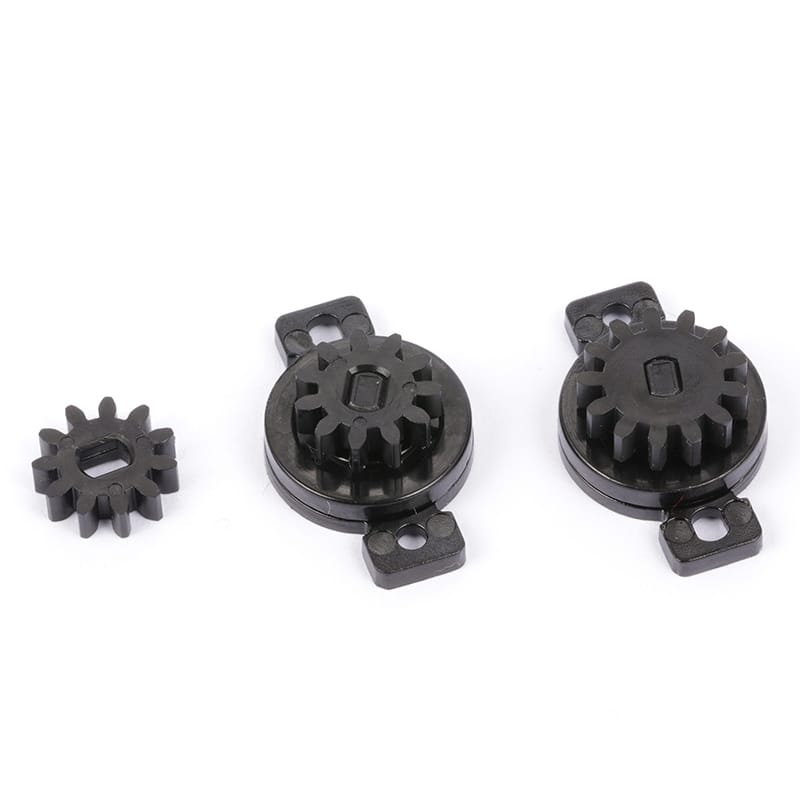
1.The Damper: A small, cylindrical gear damper is mounted securely behind the dashboard panel.
2.The Gear: The external gear of the damper protrudes through a small slot.
3.The Rack: A curved, toothed plastic rack is molded directly into the side of the glove box bin.
4.The Interaction: When the user pulls the latch, the glove box begins to fall open. The rack on the bin meshes with the gear on the damper. The falling bin forces the damper’s gear to turn.
5.The Damping: Inside the damper, the rotor shears through highly viscous silicone oil. This fluid resistance slows the rotation of the gear, which in turn slows the descent of the glove box.
The result is a glove box that glides open elegantly over 2 to 4 seconds, coming to a silent stop without any bounce or vibration.
Engineering Challenges in Automotive Environments
The cabin of a car is one of the most extreme environments for mechanical components. A glove box damper must meet rigorous automotive standards:
1. Extreme Temperature Fluctuations
A car parked in the Arizona sun can reach interior temperatures of 80°C (176°F). A car parked in a Minnesota winter can drop to -30°C (-22°F).
If the damper fluid thins out in the heat, the glove box will slam open. If it thickens too much in the cold, the glove box will refuse to open at all.
The Solution: JAN Hinge Damper uses ultra-high Viscosity Index (VI) silicone oils specifically formulated for automotive use, ensuring consistent deployment speeds across massive temperature swings.
2. NVH and Rattle Prevention
The damper itself must not become a source of noise. If the gear mesh between the damper and the glove box rack is too loose, engine vibrations will cause the plastic teeth to rattle against each other.
The Solution: Precise molding tolerances and the application of specialized dampening greases on the external gear teeth eliminate microscopic vibrations and ensure silent operation.
3. Crash Safety
In the event of a collision, the glove box must remain secure, and the components behind the dashboard must not shatter into dangerous projectiles. Automotive dampers are manufactured from high-impact, shatter-resistant plastics like Polycarbonate (PC) or Polyacetal (POM).
Beyond the Glove Box: Other Interior Applications
Once the technology was perfected for the glove box, automotive designers began applying rotary dampers throughout the cabin to eliminate NVH:
•Center Console Armrests: Vane dampers prevent heavy armrests from slamming shut.
•Overhead Grab Handles: Tiny gear dampers ensure the handle slowly retracts against the headliner silently, rather than snapping back with a loud thwack.
•Cup Holders and Ashtrays: Spring-loaded covers deploy smoothly under the control of micro gear dampers.
•Sunglass Holders: Overhead compartments glide open gently to protect delicate lenses.
Frequently Asked Questions (FAQ)
Q1: Why does my glove box open very slowly in the winter?
A: Even with high-quality silicone oil, extreme cold (e.g., below freezing) will cause the fluid viscosity to increase slightly. This creates more resistance, resulting in a slower deployment time until the cabin warms up.
Q2: Can a broken glove box damper be fixed?
A: The damper itself is a sealed unit and cannot be repaired if the internal seals blow or the gear teeth strip. The entire small damper unit must be replaced, which usually requires removing the glove box bin.
Q3: How do engineers determine the right gear ratio?
A: The gear ratio (the number of teeth on the damper vs. the rack) determines how fast the internal rotor spins relative to the falling door. Engineers use CAD software to optimize this ratio, balancing the damper’s torque curve against the weight of the specific glove box design.
Q4: Do glove box dampers provide resistance when closing?
A: Usually, yes. Most gear dampers are symmetric, meaning they provide the same resistance in both directions. Because the glove box is light, the user easily overcomes this resistance when pushing it closed.
Q5: What certifications are required for automotive dampers?
A: Automotive suppliers must typically adhere to strict quality management systems like IATF 16949, and the materials used must comply with environmental regulations like RoHS and REACH. JAN Hinge Damper components meet these rigorous global standards. Discuss more on Whatsapp.