
Introduction
If you are an engineer specifying motion-control hardware, a procurement professional managing BOM costs, or a business owner evaluating total cost of ownership, the hinge selection decision carries more weight than most people assume. A hinge that fails to hold a panel in position compromises safety. One that requires frequent replacement drives up maintenance budgets. And one that delivers the wrong tactile feedback can make an otherwise well-engineered product feel cheap.
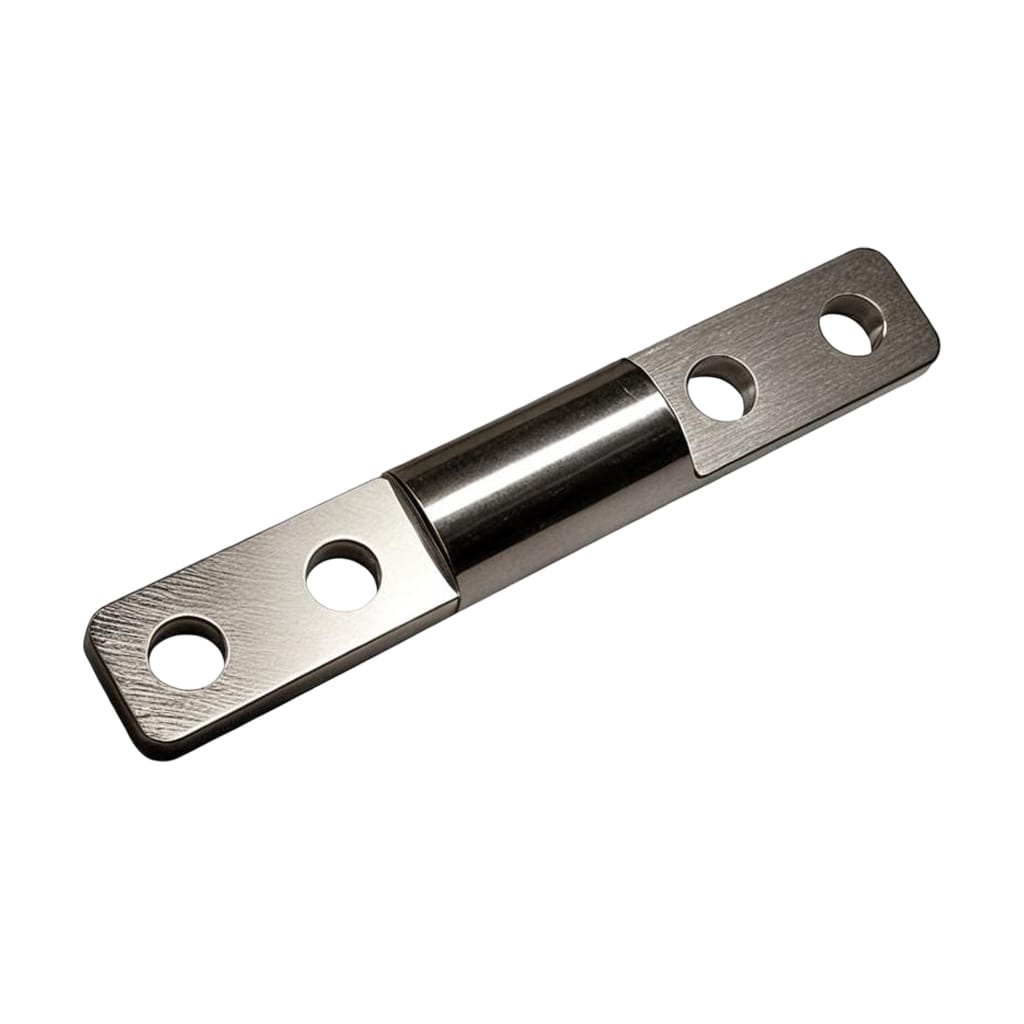
Torque hinges — also known as friction hinges or free-stop hinges — introduce controlled rotational resistance that allows doors, lids, displays, and access panels to stay in position without external support. Within this category, the fundamental divide is between fixed torque (also called constant torque) hinges and adjustable torque hinges.
The short answer to “which is better?” is: it depends entirely on your application. This guide walks through the engineering, commercial, and operational considerations that should drive your decision.

What Is a Fixed Torque Hinge?
A fixed torque hinge has its resistance torque preset at the manufacturing stage and cannot be adjusted afterward. Internally, these hinges typically use friction pads, springs, damping sleeves, or stacked friction plates that generate a consistent resistive torque through a specific preload or friction force. The torque value is selected by the engineer during the design phase based on the panel weight, center of gravity, and desired user experience.
Once installed, the hinge delivers that same torque throughout its service life — assuming the application conditions remain within the design parameters. Well-made constant-torque hinges can retain the same resistance after thousands of cycles without maintenance or parts replacement.
Key Characteristics
- Factory-preset torque: The resistance is determined during production and cannot be changed in the field.
- Consistent performance: Torque stays within a defined band — typically ±15–25% of the nominal value — rather than degrading steadily or spiking unpredictably.
- Simple construction: Fewer moving parts and no adjustment mechanism means lower manufacturing complexity.
- Lower initial cost: Fixed torque hinges are generally less expensive to produce than their adjustable counterparts.
- No field tuning required: Once specified correctly, they are ready to use out of the box.
Common Applications
Fixed torque hinges are ideal for applications with known, repeatable requirements:
- Industrial control cabinet doors
- Medical instrument panels with fixed loads
- Laptop screens and consumer electronics
- Mass-produced products where consistency across units is critical
- Enclosures and access panels with predictable panel weights
What Is an Adjustable Torque Hinge?
An adjustable torque hinge incorporates an internal friction mechanism that allows the rotational resistance to be increased or decreased within a defined range. The adjustment is typically made via an external screw or preload system, often using a simple tool like a screwdriver.
The adjustability means the same hinge family can support different panel weights, opening behaviors, or product revisions with less redesign work. Engineers can tune the hinge during prototyping, during installation, or even after years of service to compensate for wear or load changes.
Key Characteristics
- Field-adjustable torque: Resistance can be tuned after installation using a tool-operated adjustment mechanism.
- Design flexibility: One hinge model can accommodate a range of loads, reducing SKU count.
- Compensation for real-world variables: Can offset center-of-gravity estimation errors, installation tolerances, or torque loss after long service life.
- More complex construction: The adjustment feature adds components and requires greater manufacturing precision.
- Higher initial cost: Adjustable hinges typically carry a higher upfront price tag.
Common Applications
Adjustable torque hinges excel where flexibility and tuning matter more than uniformity:
- Prototyping and R&D — engineers can tune hinge feel without changing the entire part
- Variable-load applications — if accessories or mounted parts are added later, torque can often be recalibrated
- Medical equipment where different panel configurations require different resistance
- Semiconductor inspection lines and factory automation systems
- HMI panels and display systems where user feel is critical
- Service-side tuning — technicians can restore holding force after wear
Head-to-Head Comparison
| Factor | Fixed Torque Hinge | Adjustable Torque Hinge |
|---|---|---|
| Torque adjustability | None — preset at factory | Field-adjustable within range |
| Initial cost | Lower | Higher |
| Design complexity | Simple | More complex |
| Consistency across units | High | Requires careful calibration |
| Flexibility for load changes | None — must replace hinge | Can recalibrate |
| Maintenance | Minimal to none | May require periodic adjustment |
| Best for | Mass production, stable loads | Prototyping, variable loads, field tuning |
The Engineering Decision Framework
When to Choose Fixed Torque Hinges
Choose fixed torque hinges when your application meets these criteria:
1. Loads are known and stable. If the panel weight, center of gravity, and operating environment are well-defined and unlikely to change, a fixed hinge provides reliable, predictable performance without unnecessary complexity.
2. Mass production is the goal. When you are manufacturing thousands of units, consistency matters. Fixed torque hinges are easier to standardize across finished products because every unit delivers the same factory-set torque.
3. End users should not touch the setting. In medical instruments, tamper-sensitive products, or consumer devices, giving end users access to an adjustment screw is rarely desirable. Fixed hinges eliminate that risk.
4. Low maintenance is a priority. Once installed correctly, fixed torque hinges require no torque adjustment during normal use. This is a significant advantage in remote or hard-to-access installations.
5. Cost sensitivity is high. If your procurement budget is tight and the application does not demand adjustability, fixed hinges offer the lowest BOM cost.
When to Choose Adjustable Torque Hinges
Choose adjustable torque hinges when your application meets these criteria:
1. Loads are uncertain or variable. If the final panel weight is not fully fixed during development, or if the product may be revised with different components, adjustability provides a safety margin.
2. Prototyping and R&D are involved. Engineers can test different torque settings during validation without changing the entire part, accelerating the development cycle.
3. Field tuning may be required. In industrial environments where technicians may need to restore holding force after wear or load change, adjustable hinges reduce replacement frequency.
4. Multiple configurations share one hinge. If your product line includes variants with different panel weights, one adjustable hinge model can cover multiple SKUs.
5. Total cost of ownership matters more than initial cost. While adjustable hinges cost more upfront, they can reduce or eliminate the need for gas springs, support stays, locking hardware, and other components — often lowering overall system cost.
The Total Cost of Ownership Perspective
One of the most overlooked aspects of the fixed vs. adjustable decision is total cost of ownership (TCO). A fixed hinge may cost less on the BOM, but if the application also requires a gas spring, brackets, or other support hardware to achieve the same positioning function, the total system cost can quickly exceed that of a single adjustable hinge.
Consider this comparison from industry data:
- Scenario A (Standard hinge + gas spring + bracket): $1 + $15 + $3 = **$19**
- Scenario B (Adjustable torque hinge): $20
The cost difference is negligible — and the adjustable hinge eliminates multiple potential failure points, simplifies assembly, and improves aesthetics.
For engineers and procurement professionals, this is a critical insight: the lowest-cost component is not always the lowest-cost solution. When evaluating hinges, look beyond the unit price and consider the complete system cost, including hardware, labor, maintenance, and replacement frequency.
Common Misconceptions
“Adjustable hinges are always better because they offer more flexibility.”
Not necessarily. If your application has stable, predictable loads and you are producing at scale, the additional cost and complexity of an adjustable hinge offer no practical benefit. Worse, if the adjustment mechanism is accessible to end users, it introduces the risk of incorrect settings that compromise safety or performance.
“Fixed hinges are always cheaper.”
They are cheaper as individual components, but as noted above, the total system cost may tell a different story. If a fixed hinge cannot provide the required positioning function on its own, you will need to add other components — and those add cost, assembly time, and failure points.
“Adjustable hinges are less reliable because they have more parts.”
While adjustable hinges are more complex, reputable manufacturers design them for high cycle life. Torque hinges, when properly specified, can operate past 100,000 cycles without measurable degradation. The key is selecting a quality product from a supplier with verified test data.
Selection Workflow
For engineers specifying torque hinges, here is a practical selection workflow:
Step 1: Calculate the required torque. The fundamental requirement for holding a position is that the hinge’s friction torque must exceed the external disturbance torque (gravity + vibration). Calculate using: T = W × L × sin(θ), where W is the panel weight in Newtons, L is the perpendicular distance from the center of gravity to the rotation axis in meters, and θ is the angle relative to gravity.
Step 2: Determine the number of hinges. Divide the total required torque by the number of hinges to get the per-hinge requirement. Always add a safety margin — typically 20–30% — to account for manufacturing tolerances and long-term wear.
Step 3: Evaluate load stability. Will the panel weight or configuration change over the product’s life? If yes, consider adjustable torque hinges.
Step 4: Assess production volume. For mass production with stable requirements, fixed torque hinges are usually the better choice.
Step 5: Consider the operating environment. Will the hinge be exposed to vibration, temperature extremes, or corrosive conditions? Verify that the material and surface treatment — such as ISO 9227 salt spray testing for corrosion resistance — meet your requirements.
Step 6: Review cycle life data. Ask your supplier for verified cycle test results. Torque hinges should maintain performance across the expected number of operating cycles.
Industry Applications at a Glance
Frequently Asked Questions
Q1: Can I convert a fixed torque hinge into an adjustable one?
No. Fixed torque hinges Friction Hingesare manufactured with a preset resistance and do not include an adjustment mechanism. If your application requires adjustability, you must specify an adjustable torque hinge from the outset.
Q2: How often do adjustable torque hinges need to be recalibrated?
That depends on the application. In most cases, adjustable hinges are set during installation and do not require routine recalibration unless the load changes or significant wear occurs. However, in high-cycle or high-vibration environments, periodic checks may be advisable.
Q3: Are adjustable torque hinges more expensive to maintain?
Not necessarily. While they may require occasional adjustment, they can actually reduce maintenance costs by eliminating the need to replace the entire hinge when load conditions change. The adjustment feature allows technicians to restore performance rather than ordering and installing new hardware.
Q4: What torque tolerance should I expect from a fixed torque hinge?
Most reputable manufacturers specify a torque tolerance of ±15% to ±25% of the nominal value. This is one of the most important specifications to verify during selection, as it directly affects whether the hinge will hold the panel reliably.
Summary
The choice between fixed torque and adjustable torque damping hinges is not about which technology is “better” in absolute terms. It is about matching the hinge’s capabilities to your application’s specific requirements.
Fixed torque hinges are the right choice when loads are stable, production volume is high, consistency across units matters, and end users should not adjust the setting. They offer lower initial cost, simpler construction, and minimal maintenance — but they cannot adapt to changing conditions.
Adjustable torque hinges are the right choice when loads are uncertain or variable, prototyping is involved, field tuning may be required, or when the ability to compensate for wear and configuration changes outweighs the higher upfront cost. They offer flexibility and can often reduce total system cost by eliminating support components.
For engineers, the decision should be driven by torque calculations, load stability assessment, and production requirements. For procurement professionals, the focus should be on total cost of ownership rather than unit price alone. And for business owners, the right hinge choice directly impacts product quality, user safety, and long-term reliability.
There is no universal “best” hinge. There is only the right hinge for your application.