
If you have ever used a laptop, a medical monitor arm, or a kitchen cabinet that stays open at any angle without locking or sagging, you have already experienced the magic of a free stop torque hinge. But if you are an engineer or procurement professional specifying components for a new product, you probably need more than a casual understanding. You need to know how these hinges work, why they fail, and how to pick the right one for your application.
I have spent years working with design teams across industrial equipment, automotive interiors, medical devices, and consumer electronics. The one question that comes up again and again is: “What exactly is a free stop torque hinge, and how does it actually hold a panel in place without a lock?”
This guide gives you a straight answer. We will cover the working principle, the different mechanisms used to generate torque, the key performance parameters, and the most common applications. By the end, you will know exactly what to look for when specifying a free stop hinge for your next project.
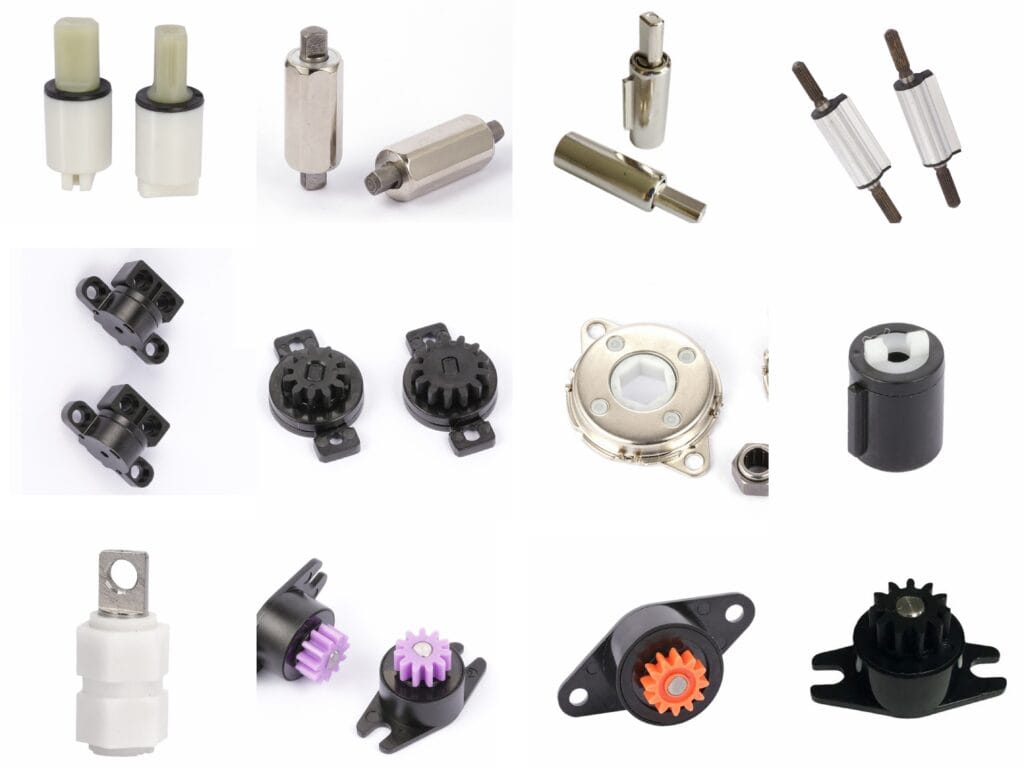
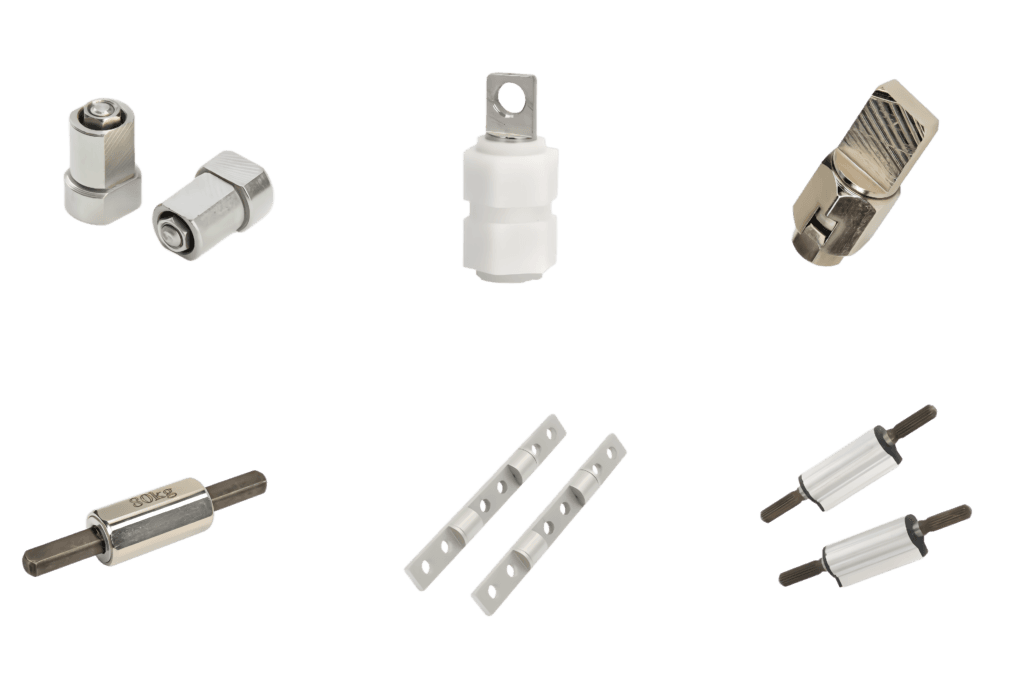
A free stop torque hinge—also called a positioning hinge, friction hinge, or constant-torque hinge—is a mechanical device that provides controlled resistance to rotational movement. Its defining characteristic is that it allows a door, lid, panel, or display to stay in any position within its range of motion without external locks, springs, or gas struts.
For a comprehensive overview of how these hinges function and their diverse applications, industry leader Sugatsune provides an excellent technical primer that covers the core principles and selection criteria.
The term “free stop” simply means the hinge does not default to open or closed; it stops wherever you place it. The “torque” part refers to the resistive force—measured in Newton-meters (N·m)—that opposes motion. That resistance is generated by friction between internal components.
What Is a Free Stop Torque Hinge?
A free stop torque hinge—also called a positioning hinge, friction hinge, or constant-torque hinge—is a mechanical device that provides controlled resistance to rotational movement. Its defining characteristic is that it allows a door, lid, panel, or display to stay in any position within its range of motion without external locks, springs, or gas struts.
The term “free stop” simply means the hinge does not default to open or closed; it stops wherever you place it. The “torque” part refers to the resistive force—measured in Newton-meters (N·m)—that opposes motion. That resistance is generated by friction between internal components.
Unlike a standard hinge that swings freely, a free stop torque hinge requires deliberate force to move. That force is calibrated to match the weight of the panel it supports. When the torque is correctly matched, the panel stays put at any angle but can still be repositioned smoothly with one hand.
These hinges are widely used in applications where positioning accuracy and user convenience matter more than simple opening and closing. Think of medical displays that need to tilt for different viewing angles, industrial control panels that must stay open during maintenance, or laptop screens that hold their position while typing.
The Working Principle: How Does It Generate Resistance?
At its core, a free stop torque hinge works by converting rotational motion into friction. The hinge contains internal elements that press against each other, creating resistance as they slide or rotate. The amount of resistance is determined by the surface area, the materials used, and the normal force pressing the elements together.
There are several distinct mechanisms used to generate torque, and each has its own performance characteristics.
1. Friction-Disc (Stacked Washer) Mechanism
This is the most common design for compact, high-cycle applications. It consists of alternating friction washers and separator plates stacked around a central shaft. A spring or Belleville washer applies axial preload, compressing the stack. When the hinge rotates, the washers slide against each other, generating friction torque.
The torque value is determined by:
- The number of friction surfaces
- The coefficient of friction between materials
- The axial preload force
This mechanism is highly repeatable and can be tuned by adjusting the preload. Many adjustable torque hinges use this design with a screw or nut to change the preload.
Advantages: Compact, consistent torque over millions of cycles, available in both one-way and bi-directional versions.
Disadvantages: Requires careful material selection to avoid wear and torque degradation.
2. Curl (Spring-Sheet) Mechanism
In this design, a spring-steel sheet is wrapped around a shaft. As the shaft rotates, the sheet tightens or loosens around it, creating friction. The torque is generated by the interference fit between the shaft and the curled spring.
This mechanism is often used in simpler, lower-cost hinges. It is inherently unidirectional—the torque is higher in one direction than the other—which can be an advantage for applications where you want the lid to stay up but close easily.
Advantages: Simple, low cost, compact.
Disadvantages: Torque degrades over time due to wear and stress relaxation; limited cycle life.
3. Pipe (Press-Fit) Mechanism
A shaft is press-fitted into a plastic or metal pipe with a tight tolerance. The interference generates friction as the shaft rotates inside the pipe. This is a very simple and low-cost approach.
Advantages: Extremely simple, minimal parts.
Disadvantages: High initial torque drop-off, poor consistency, limited to low-cycle applications. Not recommended for demanding industrial or medical use.
4. Adjustable Mechanisms
Many modern free stop hinges incorporate an adjustment feature. This allows the user or assembly technician to change the torque by turning a screw, nut, or cam that alters the internal preload. Adjustable hinges are valuable during product development or when the panel weight may vary across product variants.
Examples include the Sugatsune HG-TASJ series (spanner adjustment) and the ELESA CFU series (screwdriver adjustment).
One-Way vs. Two-Way Torque: Which One Do You Need?
Free stop hinges are classified by torque directionality.
| Type | Behavior | Common Applications |
|---|---|---|
| One-way torque | Resistance in one rotational direction only; the opposite direction is free or has minimal torque | Lids that stay open but close easily; monitor tilt mechanisms where you want to adjust up but not down |
| Two-way (bi-directional) torque | Equal resistance in both directions | Panels that need precise positioning in any direction, like tablet stands, medical arms, and industrial displays |
| Variable torque | Torque changes with angle (often higher at certain positions) | Doors with heavy lids that need more support when nearly closed |
For most lid and panel applications, two-way torque is preferred because users expect consistent feel regardless of which way they move the panel. One-way torque is useful when you want the lid to stay open but require little effort to close—a common requirement for document covers or small access doors.
Key Technical Parameters You Must Specify
When selecting a free stop torque hinge, you need to provide clear specifications. Here are the critical parameters.
1. Torque Value (N·m)
This is the primary specification. It must be high enough to hold the panel at the worst-case angle (usually horizontal) but low enough to allow comfortable operation.
As a rule of thumb, the required torque is calculated as:
T = W × L × cos θ
Where:
- T = torque (N·m)
- W = panel weight (kg)
- L = distance from pivot to center of gravity (m)
- θ = angle from horizontal
For example, a 3 kg panel with CG at 0.15 m from pivot, at horizontal position (cos 0° = 1) requires T = 3 × 0.15 = 0.45 N·m.
Always add a safety factor of 1.5 to 2.0 to account for wear, tolerances, and temperature changes.
2. Torque Tolerance
Every hinge has a tolerance band—typically ±15% to ±25%. A 2.0 N·m hinge with ±20% tolerance delivers anywhere from 1.6 to 2.4 N·m. Ensure your required torque falls within the specified range.
3. Operating Life (Cycles)
How many open/close cycles will the hinge endure over its lifetime? For consumer electronics, 10,000 cycles may suffice. For medical equipment and industrial controls, 20,000 to 50,000 cycles are common. Premium hinges are tested to 40,000 or even 60,000 cycles with minimal torque degradation.
Ask suppliers for cycle test data—preferably showing torque before and after testing.
4. Temperature Range
Torque can change with temperature due to thermal expansion and material property changes. Specify the operating temperature range of your product. Most hinges operate from -10°C to +60°C, but some are rated for -30°C to +80°C or broader.
5. Mounting Configuration
Hinges come in various mounting styles: through-hole, tapped holes, bracket mount, or custom. Ensure the hinge footprint matches your panel and frame design.
6. Material and Finish
Common materials include steel (plated or coated), stainless steel, and zinc alloy. Corrosion resistance is critical for outdoor or high-humidity applications. Stainless steel (SUS304) is the standard for medical and marine environments.
Applications: Where Are Free Stop Torque Hinges Used?
These hinges are found in an astonishing range of industries. Here are some of the most common use cases.
Medical Equipment
- Patient monitors, surgical lights, diagnostic imaging displays
- Need precise, repeatable positioning with minimal drift
- Often require stainless steel for sterilization compatibility
- Cycle life and reliability are paramount
Industrial and Control Panels
- Machine guards, operator panels, access doors
- Must stay open during maintenance and close securely
- Often use heavy-duty hinges with high torque (up to 10 N·m or more)
Electronics and Consumer Devices
- Laptops, tablets, all-in-one PCs
- The hinge must support the screen at any angle while offering smooth tactile feel
- Compact, lightweight designs are essential
Automotive Interiors
- Glove boxes, center console lids, armrests, display screens
- Must meet durability and temperature requirements
- Often use one-way torque for easy opening and controlled closing
Furniture and Office Equipment
- Ergonomic monitor arms, stand-up desks, chair armrests
- Users adjust these frequently—smooth, consistent feel is critical
Aerospace and Defense
- Control panels, instrument covers, stowage compartments
- Demanding reliability, weight, and environmental specifications
Selecting the Right Hinge: A Step-by-Step Decision Process
Here is a practical workflow I use with my clients.
- Define the load: Measure or estimate the weight and center of gravity of the moving panel.
- Calculate the required torque: Use the formula T = W × L × cos θ for the worst-case angle (usually horizontal). Add a safety factor.
- Decide on directionality: One-way or two-way? Consider user experience.
- Choose fixed vs. adjustable: If the load is uncertain or may change, choose adjustable. If mass production and consistency are key, choose fixed torque.
- Specify cycle life: Determine expected usage frequency and total lifetime cycles.
- Consider environmental factors: Temperature, humidity, chemicals, UV exposure.
- Check mounting dimensions: Ensure the hinge fits within your available space.
- Request samples: Always test with actual panels before committing to production.
Common Mistakes to Avoid
- Selecting torque equal to the minimum requirement. Always add margin for wear.
- Ignoring torque tolerance. A ±20% band can make or break your application.
- Using one hinge when two are needed. If the panel is wide, two hinges provide better stability—but they must be matched in torque.
- Forgetting to match torque across multiple hinges. If one hinge is stiffer than the other, the panel will twist.
- Overlooking installation alignment. Misaligned hinges cause binding and premature wear.
- Testing without the full assembly weight. Always test with the actual panel, including all accessories and cables.
FAQ
Q1: What is the difference between a free stop hinge and a friction hinge?
There is no functional difference—they are synonyms. “Free stop” emphasizes the ability to hold position, while “friction hinge” emphasizes the mechanism. Both refer to hinges that use friction to provide positioning resistance. Terms like “torque hinge” and “positioning hinge” are also used interchangeably.
Q2: Can a free stop hinge support a heavy lid without additional locking mechanisms?
Yes, if the torque is correctly matched to the load. However, for very heavy doors (e.g., over 10 kg), you may need a combination of hinges or a higher torque rating. Always calculate the required torque and add a safety factor. Some heavy-duty hinges offer torque up to 20 N·m or more.
Q3: How do I know if I need an adjustable torque hinge?
Choose adjustable when:
- The panel weight is not yet finalized
- You want to fine-tune the feel during development
- The product has multiple variants with different weights
- Field service may need to recalibrate after wear
Choose fixed when:
- The load is consistent and well-defined
- You prioritize cost and simplicity
- You do not want users to tamper with the adjustment
Q4: What is the typical lifespan of a free stop torque hinge?
It depends on the mechanism and quality. Low-end hinges may last 2,000–5,000 cycles. Quality friction-disc hinges from reputable manufacturers are tested to 20,000–50,000 cycles, with some exceeding 60,000 cycles. Always ask for test data. Environmental factors like temperature, dust, and moisture can reduce life.
Summary
A free stop torque hinge is a versatile, reliable solution for any application that requires a lid, panel, or display to stay at any angle without locks. It works through controlled friction—typically generated by stacked washers, spring-sheet curls, or press-fit interfaces. Key selection criteria include torque value, tolerance, cycle life, and environmental resistance.
By understanding the working principle and following the selection steps outlined above, you can specify a hinge that delivers consistent, long-lasting performance. And remember: always test with the actual load before committing to production. The right hinge will make your product feel polished and professional; the wrong one will generate complaints and warranty claims.