
Introduction
If you are sourcing friction hinges in bulk quantities—whether for medical equipment, automotive interiors, industrial enclosures, or consumer electronics—the question of lifespan testing is not academic. It is a supply chain risk management issue.
A friction hinge that fails in the field does not simply annoy the end user. It can damage expensive equipment, create safety hazards, and trigger costly product recalls. For procurement professionals and engineers, the real challenge is not whether to test, but how to test effectively when you are dealing with thousands or tens of thousands of units.
This guide walks through the practical considerations for testing friction hinge lifespan in bulk orders—from defining the right test parameters to interpreting results and holding suppliers accountable.
Why Lifespan Testing Matters for Bulk Procurement
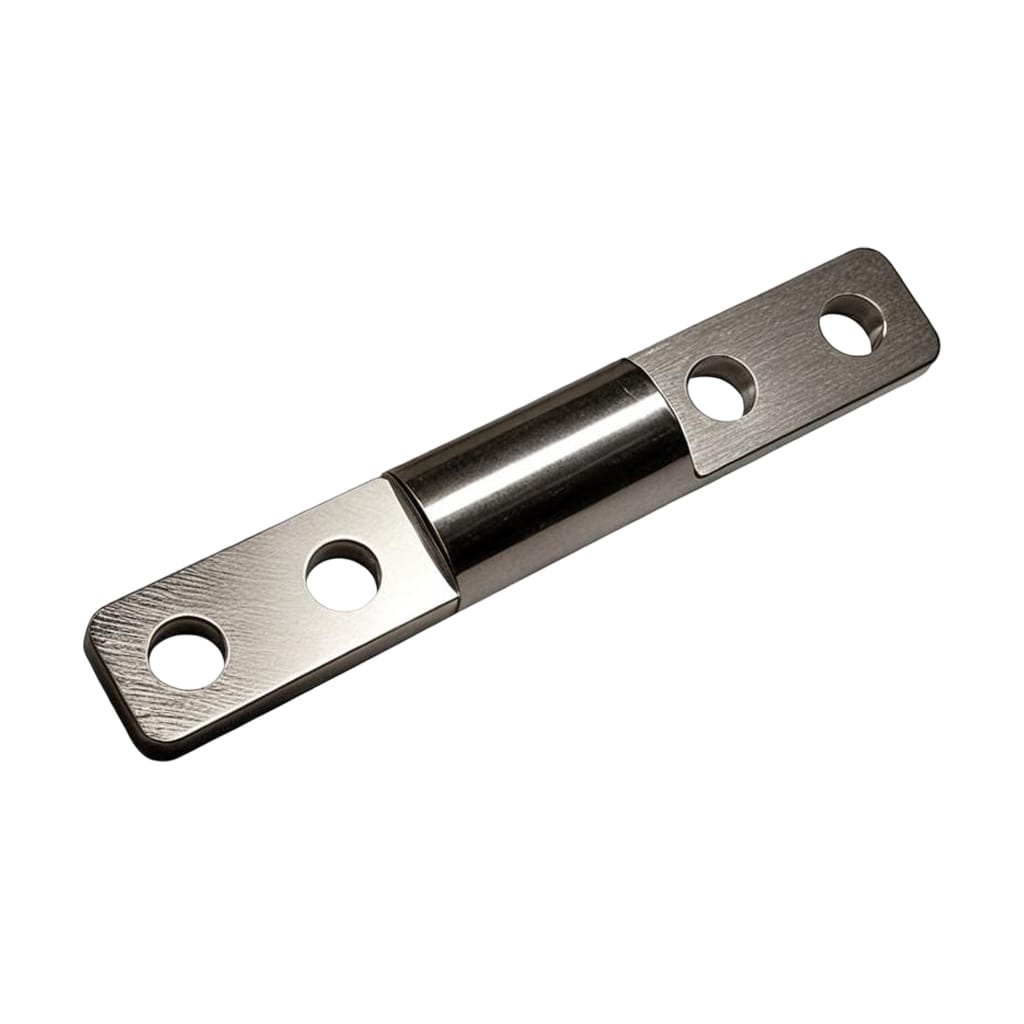
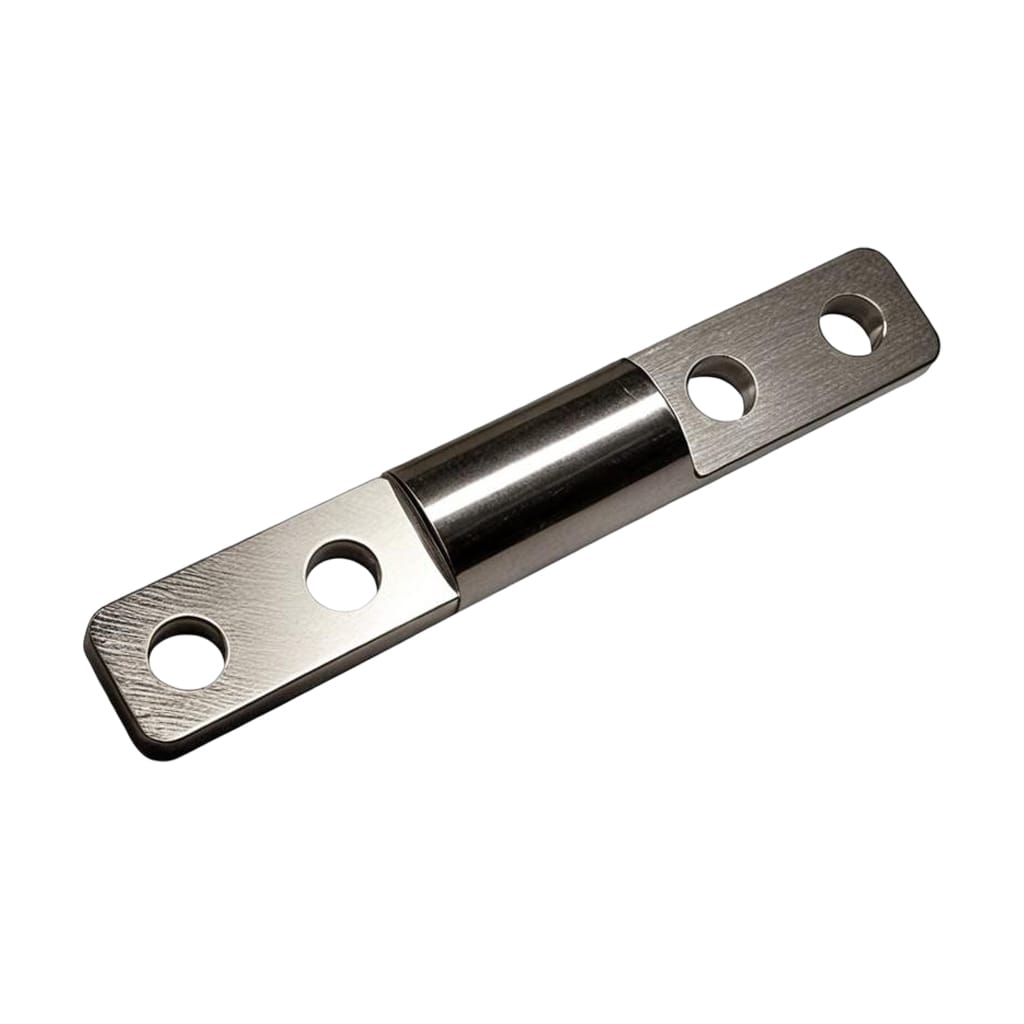
Friction hinges, also called torque hinges or position hinges, are deceptively simple components. They rely on controlled internal friction to hold a panel, lid, or display at a desired angle. Unlike standard hinges that let gravity do the work, friction hinges must maintain consistent resistance over thousands of cycles—and they must do so across an entire production batch, not just in a golden sample.
Here is the reality: a manufacturer can produce a beautiful sample hinge that passes every test. But can they reproduce that performance across 10,000 units? That is the question bulk buyers must answer.
The stakes are high. In industries like medical devices, automotive, and aerospace, hinges must survive and often exceed the lifetime of the product itself. A hinge that loses torque after 5,000 cycles in a device rated for 20,000 cycles is a functional failure—even if it remains structurally intact.
Defining the Test Protocol: What to Specify
Before you place a bulk order, you need a clear, written test protocol. Vague requirements like “must be durable” are an invitation for disappointment. Here is what a robust test specification should include:
1. Cycle Count
Cycle count is the most basic metric—and the most commonly misused. Many suppliers will quote a cycle life figure without specifying the conditions under which that figure was achieved.
Industry benchmarks vary widely by application:
- Light-duty applications (consumer electronics, small displays): 10,000–25,000 cycles
- Medium-duty applications (medical equipment, office furniture): 25,000–30,000 cycles
- Heavy-duty applications (industrial equipment, automotive): 50,000+ cycles
The critical point: Cycle count alone is meaningless without torque retention criteria.
2. Torque Retention (The 80% Rule)
A hinge that survives 50,000 cycles structurally but loses 40% of its torque has failed functionally. The industry-recognized standard for acceptable performance is that residual torque must remain above 80% of the initial value after completing the rated cycle test.
Some specifications state torque must remain within ±20% of the original static torque specification throughout the life cycle. Others use ±15% as a tighter benchmark.
What to specify: Require that after the specified cycle count, torque retention remains at or above 80% of the initial measured value. Do not accept a pass/fail judgment alone—demand the actual data.
3. Torque Tolerance in Production
Even before lifecycle testing, bulk orders must meet torque tolerance specifications. Industry standard tolerance is typically ±10% to ±15%. A reputable supplier should be able to demonstrate a Process Capability Index (Cpk) greater than 1.33 for critical torque parameters.
Why does this matter? A Cpk > 1.33 proves that product consistency comes from a controlled manufacturing process, not luck or post-production sorting.
4. Environmental Conditions
Friction hinges do not perform the same in all environments. Temperature extremes affect friction materials and lubricants. Humidity and corrosion can degrade performance over time.
Specify:
- Operating temperature range (e.g., -40°C to +80°C)
- Salt spray testing (e.g., 96–500 hours per ASTM B117)
- Humidity testing for high-moisture environments
5. Static vs. Dynamic Torque
One of the most overlooked aspects of friction hinge performance is the difference between breakaway torque (the force required to start movement) and running torque (the force required to sustain movement).
If breakaway torque exceeds running torque by more than 30%, users will experience a jerky, inconsistent feel—what engineers call “stiction”. For premium applications, the difference should be controlled between 10% and 15%.
The Testing Process: From Sample to Bulk Shipment
Phase 1: Pre-Production Sample Testing
Before committing to a bulk order, request samples for independent testing. This is your opportunity to validate the supplier’s claims before tooling and production begin.
What to test on samples:
- Initial torque measurement: Measure torque at multiple points throughout the rotation range. Friction hinges often show torque variation at different angles.
- Cycle testing: Run the samples through the full specified cycle count. Monitor torque at regular intervals—not just at the end.
- Torque decay curve analysis: Plot torque values throughout the test. A qualified curve shows a linear, gradual downward trend. A failure curve shows a cliff-like drop early in the test or exhibits violent fluctuations.
- Environmental preconditioning: Test samples after exposure to specified temperature, humidity, or salt spray conditions.
Phase 2: Production Process Validation
Once samples pass, the focus shifts to production consistency. This is where many bulk orders go wrong.
Statistical Process Control (SPC) : Require the supplier to implement SPC on critical dimensions and torque values during production. This means regular in-process measurements, not just final inspection.
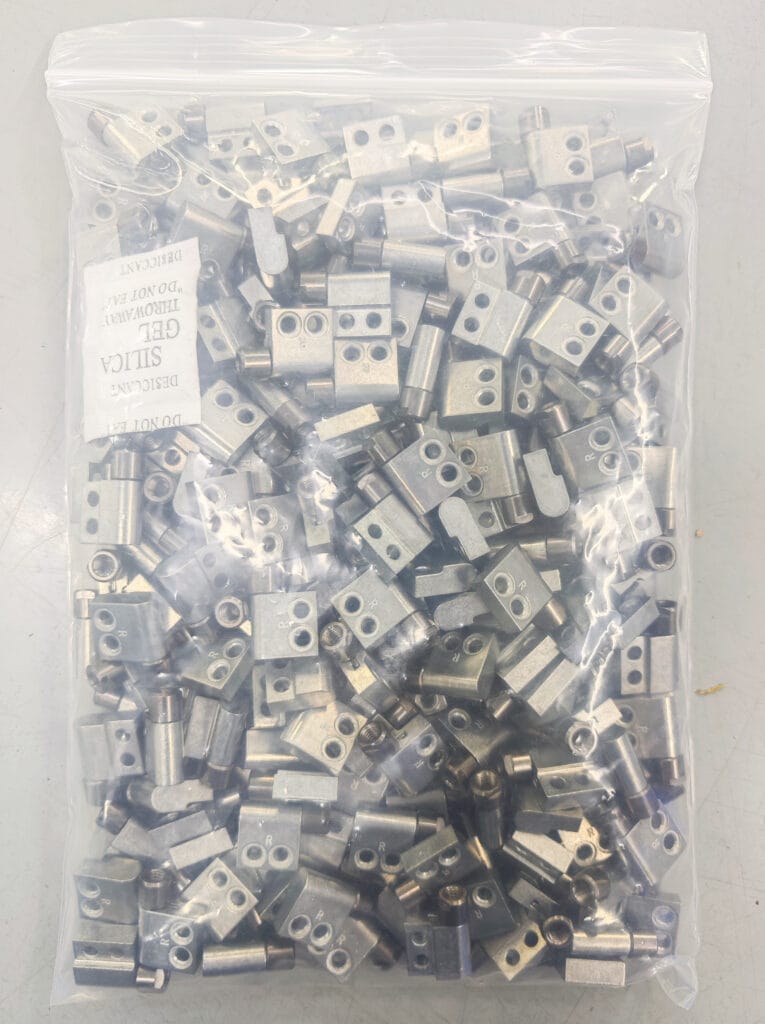
Stratified sampling: Do not accept samples drawn only from the top of the shipping box. Grease separation during transport or tool wear at the end of a production run can create quality stratification within the same batch. Require random sampling from the bottom, middle, and top of the shipment.
Phase 3: Pre-Shipment Inspection
Before the bulk shipment leaves the factory, conduct a pre-shipment inspection using Acceptance Quality Limit (AQL) sampling.
Recommended AQL levels:
- Critical defects (functional failure, zero torque, structural crack): AQL 0–0.65
- Major defects (torque outside spec, excessive play): AQL 1.0–1.5
- Minor defects (cosmetic issues): AQL 2.5–4.0
The AQL standard (ISO 2859-1) defines sample sizes and acceptable defect thresholds based on batch size and inspection level. For functional components like friction hinges, we recommend AQL 1.0 for functional parameters—meaning only 1% of units may fall outside the functional specification.
Phase 4: Ongoing Quality Monitoring
Even after the bulk order is delivered, maintain quality monitoring. Track field failure rates. If you see a pattern of torque decay or premature failure, revisit the test protocol and supplier qualification process.
Key Test Parameters at a Glance
Common Pitfalls in Bulk Friction Hinge Testing
Pitfall 1: Relying on “Golden Samples”
A perfect sample does not guarantee a stable production process. Suppliers can hand-assemble samples with extra care. The test of a supplier is whether they can reproduce that quality at volume.
Solution: Require production process validation (Cpk, SPC) in addition to sample testing.
Pitfall 2: Accepting Cycle Count Without Torque Retention
A hinge that completes 50,000 cycles but loses 50% of its torque has not passed—it has failed functionally.
Solution: Specify both cycle count and minimum torque retention (e.g., ≥80% of initial value).
Pitfall 3: Ignoring Torque Decay Patterns
A supplier who only reports “passed” after 20,000 cycles may be hiding a torque cliff at 15,000 cycles.
Solution: Require torque measurements at multiple intervals throughout the test, not just at the end.
Pitfall 4: Testing at Room Temperature Only
Friction hinges in real-world applications face temperature swings, humidity, and sometimes corrosive environments. Room-temperature testing tells you very little about field performance.
Solution: Include environmental preconditioning and testing at temperature extremes.
Pitfall 5: Inadequate Sampling
Testing only a handful of samples from a bulk order—or only samples from the top of the shipment—can miss batch-to-batch variation.
Solution: Use statistically valid sampling plans (AQL) with stratified sampling across production sub-lots.
Real-World Examples
Medical equipment manufacturer: Required 30,000-cycle life with torque retention within ±15%. Supplier provided test data showing torque decay curve with gradual decline, not a cliff. Bulk order passed. Key success factor: supplier provided full torque decay curve data, not just a pass/fail certificate.
Industrial enclosure buyer: Accepted a supplier’s “25,000-cycle” claim without torque retention specification. After 8,000 cycles in the field, panels began drifting downward. Investigation revealed torque had dropped 45%—structurally intact, functionally failed. Lesson learned: specify torque retention, not just cycle count.
Automotive interior supplier: Required Cpk > 1.33 for torque parameters across production batches. Supplier failed initial Cpk audit (1.15). After process improvement, Cpk reached 1.42. Bulk order passed with consistent torque across 50,000+ units.
Conclusion
Testing friction hinge lifespan for bulk orders is not about running a single test on a single sample. It is about building a comprehensive quality framework that spans pre-production validation, production process control, and pre-shipment inspection.
The key takeaways:
- Specify both cycle count and torque retention (e.g., 25,000 cycles with ≥80% torque retention).
- Require torque decay curve data, not just pass/fail results.
- Demand process capability (Cpk > 1.33) for torque parameters.
- Use statistically valid sampling (AQL) with stratified sampling across production sub-lots.
- Include environmental testing (temperature, humidity, corrosion) relevant to your application.
- Measure both breakaway and running torque to ensure smooth operation.
A friction hinge is a small component, but its failure can have outsized consequences. The time and effort invested in proper lifespan testing before a bulk order is far less than the cost of field failures, product recalls, and damaged customer relationships.
FAQ
Q1: What is the industry-standard cycle count for friction hinges in bulk orders?
There is no single standard—it depends on the application. Light-duty applications typically require 10,000–25,000 cycles, medium-duty applications 25,000–30,000 cycles, and heavy-duty applications 50,000+ cycles. What matters more than the raw number is the torque retention requirement attached to it.
Q2: What does “torque retention” mean, and why does it matter?
Torque retention refers to how much of the original friction torque a hinge maintains after repeated cycling. A hinge that survives 50,000 cycles structurally but loses 50% of its torque has failed functionally. The industry benchmark is ≥80% retention of initial torque after the rated cycle count.
Q3: How many samples should I test from a bulk order?
Use AQL (Acceptance Quality Limit) sampling per ISO 2859-1. For functional parameters like torque, we recommend AQL 1.0, meaning only 1% of units may fall outside specification. Sample size depends on batch size—for a typical 10,000-unit order, this might mean testing 200–315 units. Ensure samples are drawn from across the batch (bottom, middle, top).
Q4: What should I look for in a supplier’s test report?
A credible test report should include: initial torque values at multiple angles, torque measurements at regular intervals throughout the cycle test (not just at the end), torque decay curve showing trend over time, environmental test results if applicable, and statistical data (mean, standard deviation, Cpk) for batch torque values. If the report only says “passed,” it is not sufficient.