
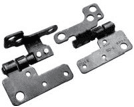
Hello there, fellow engineers and procurement specialists! As someone deeply immersed in the world of motion control, I understand the critical decisions you face daily. Choosing the right hinge for your product isn’t just a minor detail; it’s a pivotal engineering choice that can define user experience, product longevity, and even safety. Generic solutions often fall short, leading to costly redesigns, warranty claims, or a less-than-ideal user interaction. That’s why I want to share some insights from our decades of experience at Janhinge, guiding you through the nuances of precision hinges, particularly friction hinges and constant torque hinges, and how a strategic partnership can elevate your designs.
The Unsung Heroes: Why Your Hinge Choice Matters Immensely
Think about it: from the smooth opening of a medical device lid to the secure positioning of an industrial control panel, hinges are the silent workhorses that enable functionality. They dictate how a user interacts with your product, the tactile feel, and the overall perception of quality. A poorly chosen hinge can lead to sagging lids, uncontrolled movements, or even premature product failure. Conversely, a well-engineered hinge provides:
•Enhanced User Experience: Smooth, controlled motion and the ability to hold positions effortlessly.
•Increased Product Longevity: Durable materials and robust design that withstand countless cycles.
•Improved Safety: Preventing accidental closures or uncontrolled movements.
•Brand Perception: A premium feel that reflects the overall quality of your product.
At Janhinge, we don’t just supply components; we engineer motion solutions that integrate seamlessly into your product’s DNA. Our focus is on providing the precise control you need, whether it’s for delicate consumer electronics or heavy-duty industrial machinery. Explore our diverse product range here.

Friction Hinges vs. Constant Torque Hinges: A Practical Engineering Perspective
This is where many conversations begin. While often used interchangeably, understanding the subtle yet critical differences between friction hinges and constant torque hinges is key to optimal selection. As your expert guide, I’ll walk you through the technical nuances and practical implications of each, helping you make an informed decision that aligns with your product’s performance requirements and budget. Let’s break it down:
Friction Hinges: The Art of Controlled Resistance
Friction hinges, sometimes broadly referred to as torque hinges, operate on the principle of continuous resistance throughout their range of motion. They use internal friction elements (typically a combination of specialized washers, bushings, and a central shaft) to create a controlled drag that holds a component in any desired position. The torque provided by a friction hinge is designed to be consistent across its angular travel, offering a smooth, controlled feel. The mechanism often involves the compression of friction discs against a rotating shaft, generating the necessary resistance. The choice of materials for these friction elements (e.g., engineered plastics, sintered metals) is crucial for determining the hinge’s lifespan, torque stability, and environmental resistance.
Ideal Applications:
•Laptop Screens & Tablet Stands: Allowing users to set the screen at any angle without it flopping down.
•Medical Equipment: Positioning monitors, light fixtures, or access panels where precise, stable placement is crucial for ergonomics and operation.
•Appliance Lids: Ensuring a controlled, slow descent or holding a lid open at various angles.
•Industrial Enclosures: Securing access panels that need to stay open during maintenance.
Key Benefits:
•Position Control: Holds components firmly in place at any angle.
•Smooth Operation: Provides a consistent, quality feel to movement.
•Compact Design: Often integrated discreetly within the product.

Constant Torque Hinges: Engineered for Predictable Performance
Constant torque hinges are a highly specialized and refined type of friction hinge, meticulously engineered to deliver an exceptionally precise and consistent torque value throughout their entire range of motion, often boasting very high cycle life ratings (e.g., 50,000 to 100,000+ cycles). The core engineering challenge with these hinges is to maintain a near-perfect, repeatable torque output, minimizing any variations due to factors like wear, temperature fluctuations, or manufacturing tolerances. This unwavering predictability is paramount in applications where consistent force and a premium feel are non-negotiable. Unlike standard friction hinges, constant torque designs often incorporate more sophisticated internal mechanisms, such as multiple friction surfaces, precision-machined components, and specialized lubricants, all working in concert to achieve their superior performance. The design aims to compensate for any potential torque decay over time, ensuring that the hinge feels and performs the same on its first cycle as it does on its last.
Ideal Applications:
•High-End Medical Devices: Where precise positioning of delicate instruments or display arms is critical for patient care and user comfort.
•Aerospace & Defense: For panels and covers requiring exact, repeatable positioning in demanding environments.
•Laboratory Equipment: Holding heavy lids or covers securely open for safe access, such as on analytical instruments or sterilizers.
•Automotive Interiors: For glove compartments, armrests, or infotainment screens where a premium, consistent feel is expected over the vehicle’s lifetime.
Key Benefits:
•Exceptional Precision: Delivers a highly consistent torque value.
•High Cycle Life: Engineered for durability and long-term reliability, often exceeding 50,000 cycles.
•Predictable Performance: Minimal torque degradation over time and varying conditions.
Beyond the Spec Sheet: What Truly Drives Hinge Performance
As engineers, you know that numbers on a data sheet only tell part of the story. The true performance of a hinge is a symphony of design, materials, and manufacturing precision. At Janhinge, we focus on these critical elements:
•Material Science: The choice of materials for friction elements, shafts, and housings directly impacts torque consistency, wear resistance, and environmental suitability. At Janhinge, our material science expertise is a cornerstone of our design process. We meticulously select advanced alloys (e.g., stainless steel for corrosion resistance, hardened steel for durability) and high-performance engineering plastics (e.g., acetal, nylon, PEEK for specific friction characteristics and chemical resistance) to meet specific requirements, from operating in corrosive marine environments to maintaining stability under extreme temperature fluctuations. This careful material selection ensures optimal performance and extended lifespan for your application.
•Precision Manufacturing: Tight tolerances and advanced manufacturing processes are essential for consistent torque and long life. Our state-of-the-art manufacturing facilities are equipped with precision CNC machining, automated assembly lines, and stringent in-process quality checks. This allows us to achieve micron-level tolerances, which are critical for the smooth and consistent operation of our hinges. Every hinge produced at Janhinge undergoes meticulous inspection, ensuring it meets or exceeds the most stringent quality standards, including ISO 9001 certification.
•Rigorous Testing: Every design undergoes extensive testing for cycle life, torque consistency, and environmental resilience. Our in-house testing laboratories are equipped to simulate a wide array of real-world conditions, including extreme temperatures, humidity, salt spray, vibration, and shock. We conduct rigorous cycle life tests, often pushing hinges far beyond their rated lifespan (e.g., 100,000+ cycles), and continuously monitor torque output to ensure minimal degradation. This comprehensive testing regimen guarantees that our hinges will perform reliably and consistently under the most demanding operational environments, providing you with peace of mind.
•Customization Capabilities: Your product is unique, and often, a standard hinge won’t suffice. Our OEM/ODM expertise allows us to tailor hinges to your exact specifications, from custom torque values and mounting options to unique form factors. Learn more about our Custom Solutions.
The Janhinge Advantage: Your Partner in Precision Motion
Choosing Janhinge means partnering with a team that understands your engineering challenges and procurement needs. We offer:
•Direct Factory Engagement: Eliminating middlemen for clearer communication, faster development cycles, and cost efficiencies.
•Dedicated R&D Support: Our engineers collaborate with yours to co-develop innovative solutions.
•Uncompromising Quality: ISO 9001 certified manufacturing with full traceability and rigorous quality control.
•Scalable Production: From prototypes to high-volume orders, we adapt to your production demands.
We believe in building long-term relationships, acting as an extension of your team to ensure your products achieve their full potential. Our commitment is to provide not just a component, but a reliable, high-performance motion control solution that enhances your product’s value.

Real-World Impact: Janhinge Hinges in Action
Let’s look at how our hinges make a difference across various industries:
•Medical Industry: In critical medical devices, our constant torque hinges ensure display arms stay precisely positioned, enabling surgeons and nurses to focus on patient care without distraction. For example, on a mobile ultrasound machine, a Janhinge friction hinge allows the screen to be adjusted smoothly and securely, enhancing diagnostic accuracy and user comfort. Beyond displays, our hinges are integral to the controlled movement of diagnostic equipment covers, patient support arms, and even surgical lighting, where precise, drift-free positioning is paramount for both functionality and patient safety. Discover our Medical Industry Solutions.
•Industrial Equipment: Heavy-duty industrial enclosures often require robust hinges that can withstand harsh environments, frequent use, and significant loads. Our friction hinges provide reliable position control for access panels, tool covers, machine guards, and ergonomic workstations, improving operational safety, efficiency, and worker comfort. Imagine a control panel on a factory floor that needs to be opened and held at various angles for maintenance – our hinges ensure it stays exactly where it’s placed, preventing accidental closures and potential hazards. For heavy machinery, our specialized hinges can manage substantial weight, offering smooth operation and long-term durability even in dusty or vibrating environments.
•Consumer Electronics: The premium feel of a high-end laptop, a smart home device, or even a sophisticated camera often comes down to the quality of its hinge. Janhinge’s precision hinges deliver that satisfying, controlled movement – the perfect resistance when opening a laptop, the stable positioning of a smart speaker’s screen, or the fluid adjustment of a camera’s viewfinder. This attention to detail elevates user perception, enhances product durability, and contributes significantly to brand loyalty.
Ready to Elevate Your Product’s Motion?
If you’re an engineer grappling with complex motion control requirements, or a procurement professional seeking a reliable, innovative, and cost-effective hinge supplier, I invite you to connect with us. Let’s discuss your project and explore how Janhinge’s expertise can provide the perfect motion solution.
Take the next step:
•Request a Technical Consultation or Sample
•View Our Comprehensive Hinge Catalog
•Learn About Our OEM/ODM Capabilities
Frequently Asked Questions (FAQs)
1. What’s the main difference between a friction hinge and a constant torque hinge?
While both provide resistance, a friction hinge offers continuous resistance to hold a position, whereas a constant torque hinge is engineered for extremely precise and consistent torque output throughout its travel, often with higher cycle life and predictability, crucial for demanding applications.
2. How do I determine the right torque value for my application?
Determining the correct torque involves factors like the weight and size of the object being moved, its center of gravity, and the desired feel. Our engineering team can assist you with precise calculations and recommendations based on your specific design parameters.
3. Can Janhinge customize hinges for unique product designs?
Absolutely. Customization is a cornerstone of our service. We specialize in OEM/ODM solutions, working closely with your team from concept to production to develop hinges tailored to your exact specifications, including unique form factors, mounting, and torque requirements.
4. What kind of testing and quality assurance does Janhinge provide?
We adhere to stringent ISO 9001 quality standards. Our hinges undergo rigorous in-house testing, including cycle life tests (often exceeding 50,000 cycles), torque consistency checks, and environmental simulations, to ensure reliability and durability.
5. What industries does Janhinge primarily serve with its precision hinges?
Janhine serves a wide range of industries, including medical devices, industrial equipment, consumer electronics, automotive, and aerospace, where precise motion control, durability, and reliability are paramount.