
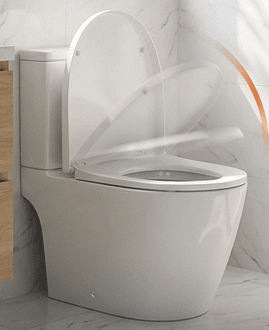
Quiet is the new luxury. In modern bathroom design, the jarring “bang” of a toilet seat is rapidly becoming a relic of the past. It is being replaced by an elegant, controlled motion—an engineering marvel hidden within the hinge: the Rotary Damper.
For OEMs, project engineers, and procurement professionals, understanding this component is the key to solving user pain points and building brand differentiation. This guide dissects rotary damper technology from a professional engineering and procurement perspective.
Part 1: Core Disassembly — Principles & Structure
A rotary damper uses the viscous resistance of a fluid to control mechanical movement. Its mission? Counteract gravitational acceleration to allow a constant, controllable low-speed descent.
1.1 The Geometry of Precision
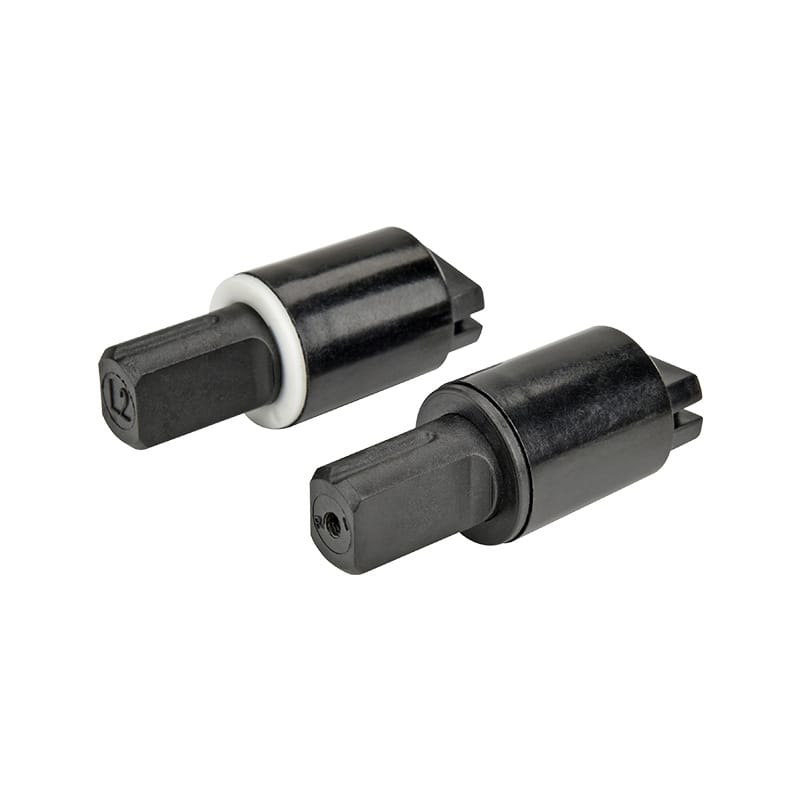
A high-performance rotary damper consists of four critical pillars:
- Stator/Housing: Typically high-strength engineering plastics (Nylon or POM), fixed to the hinge seat.
- Rotor/Shaft: The core of motion. Usually designed with a multi-bladed (vane-style) structure to maximize fluid contact. The outer end features specific gears or splines for precise engagement with the hinge pin.
- Damping Fluid: High-viscosity silicone oil (often 100,000 cSt or higher). Its high viscosity index ensures performance remains consistent across varying ambient temperatures.
- Seals: Precision O-rings and double-lip seals are the unsung heroes, preventing oil leakage and contaminant ingress over a 10-year lifespan.
1.2 The Physics: Kinetic to Thermal Energy
When a seat is released, the rotor forces silicone oil through an extremely small gap (the orifice or shear gap).
The Engineering Secret: Resistance (damping torque) is proportional to the fluid’s viscosity and shear rate. The faster the toilet seat tries to fall, the harder the oil pushes back. This effectively converts kinetic energy into trace amounts of thermal energy, dissipated into the environment.
1.3 Why Rotary Damper “High Torque” Matters
For engineers, selecting a High-Torque variant is non-negotiable for premium designs:
- Material Density: Solid wood or heavy UF (urea-formaldehyde) toilet seats require significantly more torque than flimsy PP plastic.
- The 0° Challenge: At 90° (vertical), gravity torque is zero. At 0° (horizontal), the lever arm is at its maximum. A high-torque damper ensures the toilet seat doesn’t “snap” shut in the final 10 degrees.
Part 2: Mechanism Integration — How do soft closing toilet seats work
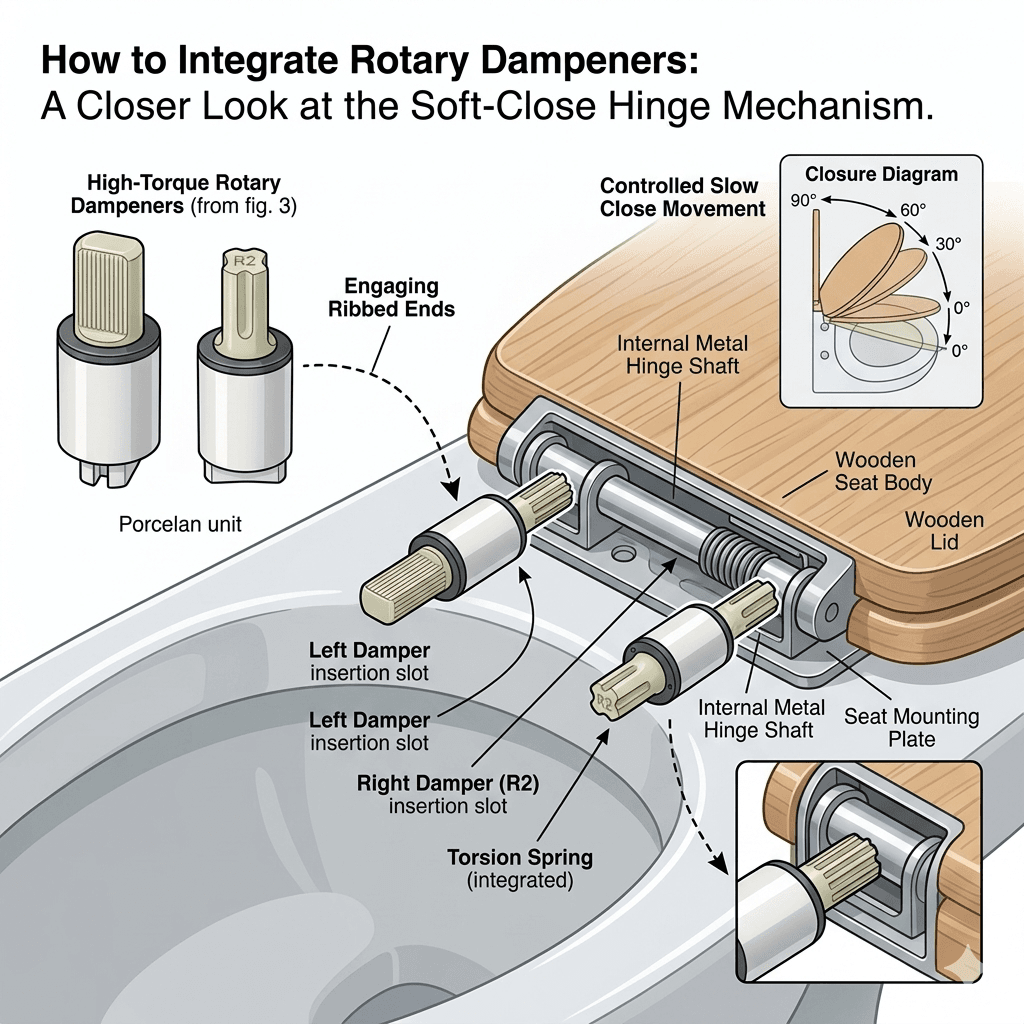
Having understood the principle of a single damper, the next step is to precisely integrate it into the hinge system of the toilet seat. This is a typical systems engineering problem, involving torque management, motion control, and material compatibility.
As shown in Figure 2, “Detailed Diagram of Toilet Seat Hinge Soft-Close Mechanism,” a complete soft-close system relies not only on a single damper but also on the coordinated work of multiple components.
Core Mechanism: Unidirectional Damping and Torque Management
The toilet seat needs to descend slowly, but if it were to rise just as slowly, the user experience would be terrible. Therefore, most toilet seat dampers are designed with unidirectional or asymmetrical damping.
Integrating a damper is a systems engineering problem involving torque management and material compatibility.
2.1 Anatomy of the Toilet Seat Soft-Close System
A complete system relies on the coordination of two distinct forces:
| Mechanism | Component | Function |
| Primary | Unidirectional Damper | Provides resistance during the Slow Close Phase but allows free movement during the Quick Lift Phase via a one-way valve. |
| Auxiliary | Torsion Spring | Provides an initial reaction force at 90° and compensates for gravity, making the descent curve linear and smooth. |
2.2 Toilet Seat Cover Lids Material Compatibility: Wood vs. Plastic
- Solid Wood: Heavier and prone to environmental deformation. Requires dampers with excellent dimensional stability to avoid eccentric loads that lead to premature seal failure.
- Plastic (PP/UF): Lighter, but requires careful interface design to prevent stress concentration at the connection point under alternating loads.
Part 3: Procurement Perspective — Avoiding Failure
For B2B clients, especially project engineers and purchasing, evaluating manufacturers requires going beyond basic qualifications and delving into technical details:
Standard 1: Torque Consistency
Test Data: Manufacturers must be able to provide torque consistency test data (CPK values) for large-volume products. Excessive torque deviation between batches, or even within the same batch, will lead to uneven soft-close times in end products, severely damaging the brand image.
High Torque Customization Capability: Assess the manufacturer’s ability to develop special torque dampers for specific toilet seat weights and lever arms (such as custom-made heavy-duty wooden seats).
Standard 2: Rigorous Life Cycle Testing
Standard Requirements: Bathroom industry standards typically require soft-close hinges to pass more than 50,000 opening and closing cycles. Reliable damper manufacturers should perform more stringent tests (such as 100,000 cycles or higher) and provide detailed test reports, including the torque decay rate after testing.
Simulating Real-World Environments: Testing should be conducted under conditions simulating real-world application environments (e.g., integrating the damper into an actual toilet seat, rather than just testing the bare unit), and include cyclic testing under both high and low temperature conditions.
Standard 3: Temperature Adaptability and Environmental Compliance
Viscosity Index Testing: Has the rotary dampder manufacturer thoroughly tested the viscosity index and temperature stability of the silicone oil it uses? A qualified product should guarantee that its torque variation is controlled within an acceptable range in environments ranging from -20°C to +80°C (as shown in Figure 1).
Compliance: Ensure the rotary damper manufacrurer selected products comply with environmental compliance requirements such as RoHS and REACH, which is crucial for customers exporting to European and American markets.
Procurement Pro Tip: Collaborative Design and Sample Verification
Don’t just place an order based on a torque parameter and price. Seek manufacturers that can provide collaborative design services. They will request toilet seat samples, or CAD drawings and material data of the toilet seat, and use professional simulation software to help you determine the optimal damper torque range, hinge design, and spring specifications. Before confirming a bulk order, a thorough laboratory verification of the damper sample customized for your specific product is required.Empty quality promises lead to after-sales nightmares. Procurement must evaluate manufacturers based on measurable failure modes.
3.1 Common Failure Modes
- Oil Leakage: Usually due to poor seal quality or pressure-fit issues during assembly.
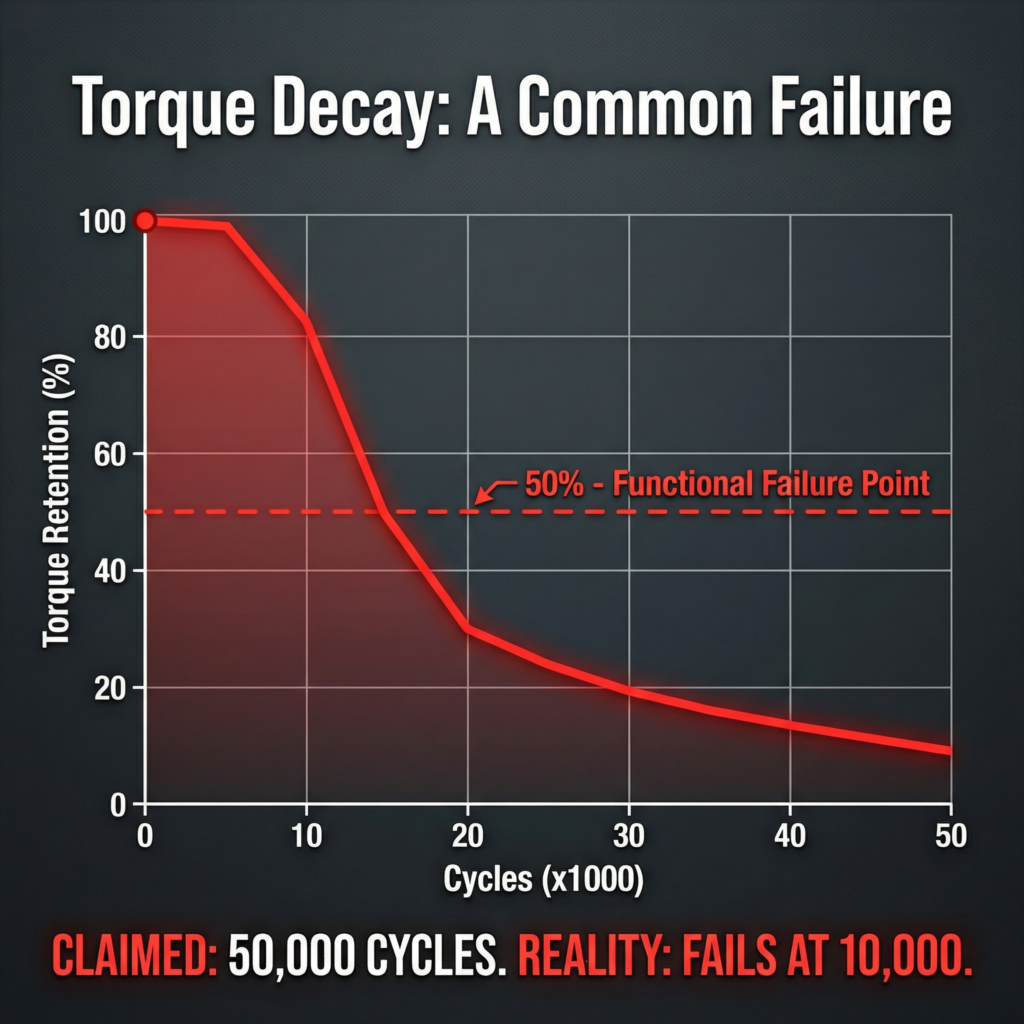
- Torque Decay: Chemical degradation of silicone oil leading to a “faster” seat over time.
- Temperature Sensitivity: Cheap oils thicken in winter (seat gets stuck) and thin out in summer (damping disappears).
3.2 The Three Evaluation Criteria
- Torque Consistency (Cpk): Manufacturers must provide data proving minimal deviation between batches. Uneven damping times ruin brand reputation.
- Rigorous Life Cycle Testing: While 50,000 cycles is the standard, elite manufacturers test to 100,000+ cycles and provide torque decay reports.
- Environmental Compliance: Ensure products meet RoHS and REACH standards, especially for export to EU/US markets.
Part 4: Beyond the Bathroom — Expanding Applications
Rotary dampers are a universal motion control solution. If your company operates in other sectors, consider these high-value applications:
- Automotive: Slow-rebound grab handles and elegant glove box opening.
- Home & Kitchen: High-end soft-close drawer slides and oven door controls.
- Consumer Electronics: Laptop hinges and copier lids.
- Medical: Precise, silent motion for medical cart drawers to avoid disturbing sensitive equipment.
Conclusion
The application of rotary dampers in toilet seat soft-close systems is a successful engineering case study of precision fluid dynamics, viscous dissipation, and system integration. For engineers and procurement professionals striving to build differentiated brand advantages, a deep understanding of its technical implications is not merely empty technical explanation, but rather a powerful tool for addressing real-world user pain points and enhancing the perceived quality of products.
By thoroughly evaluating the failure modes of rotary dampers, especially by rigorously controlling the manufacturer’s torque stability, life cycle testing, and temperature adaptability, you can build a stable, reliable, and technologically competitive supply chain for your bathroom products, automotive interiors, high-end furniture, and even medical devices. Choosing a high-quality rotary damper is not just choosing an accessory, but choosing to deliver a quiet, controlled, and exceptional quality experience to your customers.