
In the complex world of global supply chain management, finding a supplier is easy. Finding the right supplier is the true challenge. For procurement teams sourcing motion control components, the stakes are particularly high. A rotary damper is a precision-engineered component; if it fails, the entire user experience of the final product fails with it.
When you type “rotary damper supplier” into a B2B sourcing platform, you are instantly flooded with thousands of results. Many of these listings look identical, boasting low prices, fast shipping, and “high quality.” But how do you separate the world-class manufacturing partners from the high-risk trading companies?
At Janhinge, we believe in transparency. As a leading rotary damper supplier and OEM manufacturing partner IN China, we regularly host audits from some of the world’s most demanding engineering teams. In this guide, we will share the insider secrets of supplier evaluation, highlighting the five major red flags you must watch out for when vetting a new rotary damper partner. Discuss more on Whatsapp.
1: The “Everything to Everyone” Product Catalog
One of the quickest ways to spot a trading company posing as a manufacturer is to look at their product catalog. A true rotary damper supplier specializes in motion control. Their catalog will feature deep variations of rotary dampers, friction hinges, and perhaps gas springs.
If you encounter a supplier whose catalog includes rotary dampers alongside LED light bulbs, phone cases, and generic plastic toys, you are almost certainly dealing with a middleman.
Why Specialization Matters
Rotary damper manufacturing requires highly specialized knowledge of fluid dynamics, polymer science, and micro-machining. A factory that focuses exclusively on motion control will have dedicated R&D engineers, specialized testing equipment (like torque rheometers), and a deep understanding of silicone oil viscosity. A generalist trading company simply cannot provide the technical support required to troubleshoot a complex OEM application.
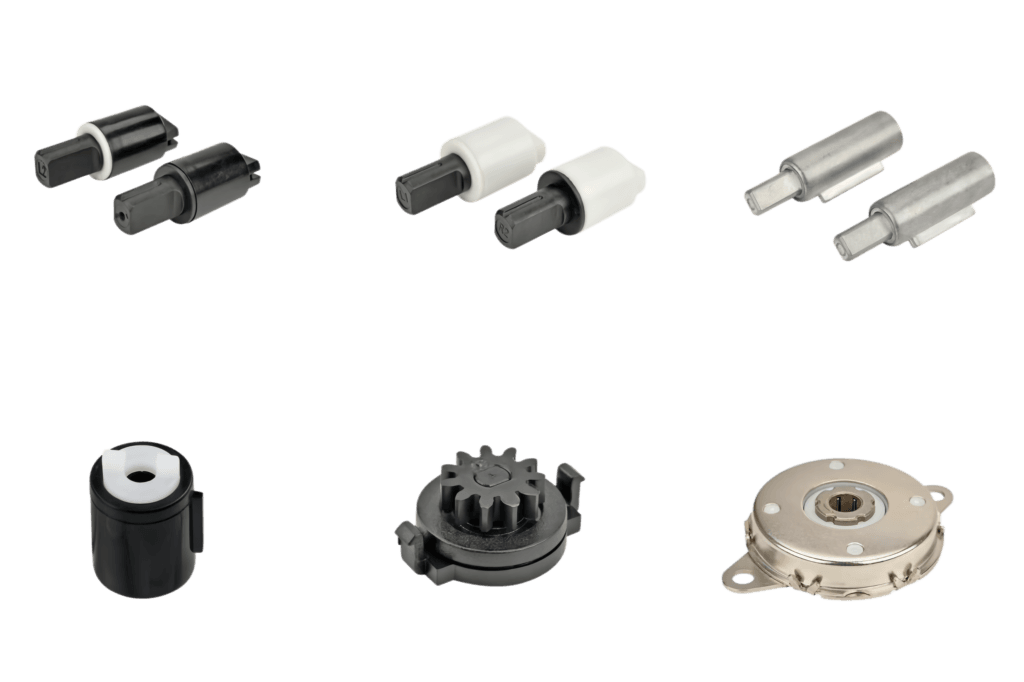
A specialized rotary damper supplier will offer a deep, focused catalog of motion control components, demonstrating their engineering expertise.
2: Vague Answers About Silicone Oil Sourcing
The silicone oil inside a rotary damper is its lifeblood. The quality, purity, and viscosity index of this oil determine how the damper will perform across different temperatures and over its entire lifecycle.
When auditing a potential rotary damper supplier, ask them directly: “Where do you source your silicone oil, and how do you verify its viscosity?”
The Danger of Cheap Oil
If the supplier gives a vague answer or refuses to disclose their oil sourcing, consider it a massive red flag. Low-tier suppliers often use cheap, unrefined silicone oil or mix it with industrial thickeners to artificially boost the torque rating. This cheap oil is highly susceptible to temperature changes. In a cold environment, it will freeze and lock the damper; in a hot environment, it will thin out, causing the damper to lose all resistance.
A premium rotary damper supplier like Janhinge uses only certified, high-viscosity-index silicone oil from reputable global chemical companies, ensuring stable performance from -40°C to +85°C.
3: Absence of Automated End-of-Line Testing
In the manufacturing of precision components, human error is the enemy of consistency. If you visit a factory (or review their video tour) and see workers manually testing the torque of each damper by twisting it by hand, you should immediately halt the audit.
The Necessity of 100% Automated Inspection
Manual testing is subjective and prone to fatigue. A worker might pass a damper that is 15% out of spec simply because they have tested 2,000 units that day.
A world-class rotary damper supplier will have fully automated, computer-controlled torque inspection stations at the end of every assembly line. These machines rotate the damper at a precise RPM, measure the exact torque output, and automatically reject any unit that falls outside the specified tolerance window. If a supplier cannot prove they utilize 100% automated torque inspection, they cannot guarantee the consistency of your bulk orders.
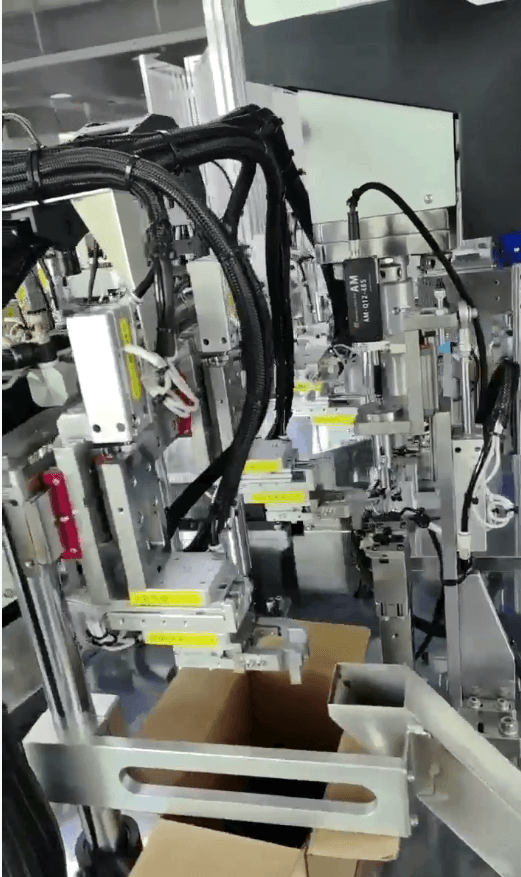
Automated 100% torque inspection is a non-negotiable requirement for any reliable rotary damper supplier.
4: Inability to Provide Raw Material Traceability
In today’s regulatory environment, ignorance is not a defense. If your final product is sold in Europe, North America, or Japan, it must comply with strict environmental regulations like RoHS (Restriction of Hazardous Substances) and REACH.
The Regrind Plastic Risk
When vetting a rotary damper supplier, ask for their material traceability records. Can they prove that the plastic used in their damper housings is 100% virgin engineering resin (like POM or PC)?
A common cost-cutting tactic among low-tier suppliers is the use of “regrind” plastic—scrap material that has been melted down and reused. Regrind plastic has severely compromised structural integrity. Under the continuous stress of rotational torque, a damper housing made from regrind plastic will eventually crack, leading to catastrophic oil leakage. A verified supplier will provide SGS or TUV material certification reports for every batch of raw material they purchase.

A comprehensive supplier evaluation matrix should heavily weight material traceability and regulatory compliance.
5: The “Yes to Everything” Sales Approach
When you approach a new rotary damper supplier with a complex OEM design, the worst answer you can hear is an immediate, unqualified “Yes.”
Engineering a custom rotary damper is a complex process involving fluid dynamics, material science, and mechanical interference. A true engineering partner will push back. They will ask questions about your application’s center of gravity, the operating temperature range, the required lifecycle, and the lateral forces the damper will experience.
The Value of Engineering Pushback
If a supplier simply says “Yes, we can make that for $0.50,” without reviewing your CAD files or asking for application details, they are likely a trading company focused solely on closing the sale. They will pass your drawing to a third-party factory, and when the prototype fails, they will blame the design.
A world-class rotary damper supplier like Janhinge operates as an extension of your engineering team. We review your requirements, identify potential failure points (such as excessive radial load on the rotor shaft), and propose design modifications to ensure the damper performs flawlessly for 50,000 cycles. Discuss more on Whatsapp.
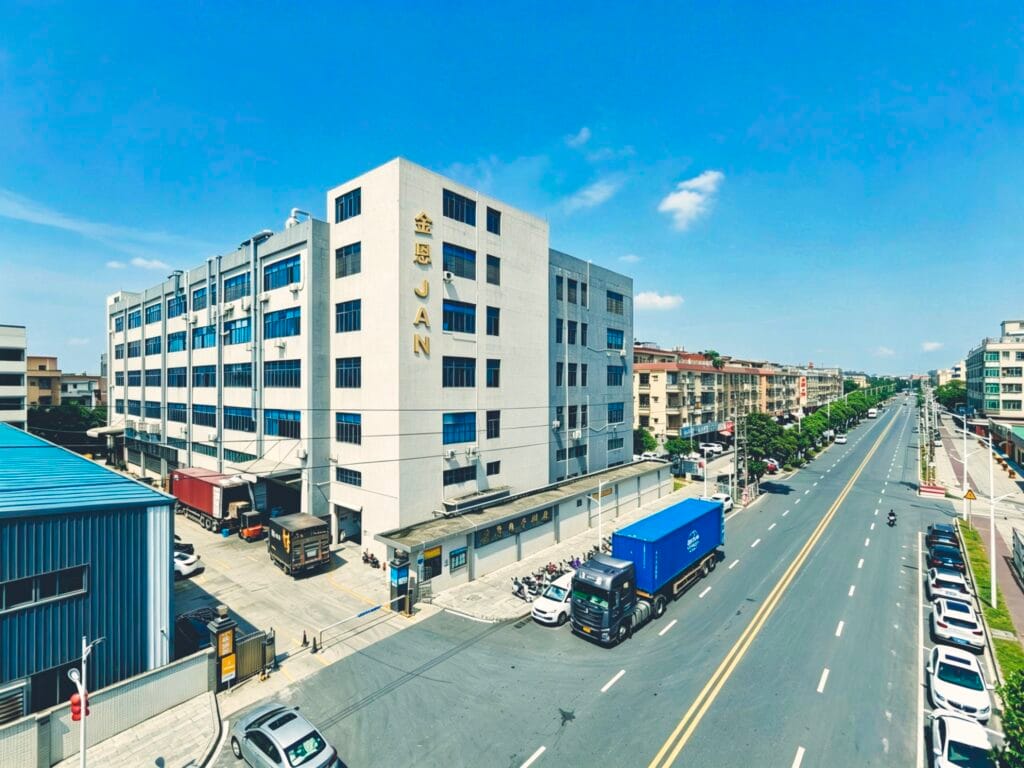
A true OEM partner combines automated manufacturing with deep engineering expertise to solve complex motion control challenges.
Red Flag #6: Lack of Comprehensive Lifecycle Testing Data
A rotary damper might feel perfect on day one, but how will it perform on day 1,000? Motion control components are subjected to continuous mechanical stress, friction, and temperature fluctuations. A supplier that cannot provide empirical data on how their dampers age is a supplier you cannot trust.
The 50,000-Cycle Standard
When auditing a rotary damper supplier, demand to see their lifecycle testing lab. A premium manufacturer will have dedicated testing rigs that continuously open and close the damper under simulated real-world loads. The industry standard for high-quality rotary dampers is a minimum of 50,000 cycles with less than a 15% drop in torque.
If a supplier claims their dampers last “a long time” but cannot produce a certified test report showing the torque decay curve over 50,000 cycles, they are guessing. And in OEM manufacturing, guessing leads to catastrophic field failures.
Environmental Stress Screening (ESS)
Beyond simple mechanical cycling, a world-class rotary damper supplier will perform Environmental Stress Screening (ESS). This involves testing the dampers in environmental chambers that simulate extreme conditions:
•Thermal Shock: Rapidly cycling the damper from -40°C to +85°C to ensure the plastic housing doesn’t crack and the silicone oil maintains its viscosity.
•Salt Spray Testing: Exposing the damper to a corrosive saline mist for 48 to 96 hours to verify the rust resistance of any exposed metal components (like the rotor shaft or mounting screws).
•Humidity Testing: Ensuring the internal seals (O-rings) do not degrade or swell when exposed to 95% relative humidity for extended periods.
If your supplier’s idea of “quality control” is just checking the dimensions with a pair of calipers, they are not equipped to be your long-term manufacturing partner.
The Global Supply Chain: Why China Remains the Hub for Rotary Dampers
Despite the recent shifts in global manufacturing, China remains the undisputed hub for precision motion control components. The ecosystem of raw material suppliers, specialized tooling shops, and high-volume assembly lines is unmatched anywhere else in the world.
When sourcing a rotary damper supplier from China, the key is to bypass the trading companies and partner directly with a verified, ISO-certified factory.
The Janhinge Advantage
At Janhinge, we have built our reputation on transparency, engineering excellence, and uncompromising quality control. As a direct manufacturer, we offer:
•In-House Tooling and Molding: Complete control over dimensional tolerances.
•Automated Oil Injection: Precise, bubble-free silicone oil filling.
•100% Torque Inspection: Every damper is tested before shipment.
•Full Material Traceability: RoHS and REACH compliant virgin plastics and alloys.
•OEM Engineering Support: Rapid prototyping and custom torque tuning.

Partnering with a verified, direct manufacturer in China ensures a stable, high-quality supply chain for your global operations.
Frequently Asked Questions (FAQs)
1. How do I verify if a rotary damper supplier is a real factory?
Ask for a live video tour of their facility, specifically requesting to see their injection molding machines, automated oil filling lines, and 100% torque inspection stations. A trading company will struggle to provide this on demand.
2. What is the standard lead time for a custom OEM rotary damper?
For a completely custom design requiring new tooling, a reputable rotary damper supplier will typically need 4 to 6 weeks to produce the first functional prototypes, followed by 2 to 4 weeks for mass production after prototype approval.
3. Why do some rotary dampers leak oil after a few months?
Oil leakage is almost always caused by poor seal design, the use of degraded regrind plastics that crack under stress, or improper installation that applies excessive lateral force to the rotor shaft.
4. Can a rotary damper supplier adjust the torque of an existing design?
Yes. A capable manufacturer can adjust the torque of a standard damper by changing the viscosity of the silicone oil or modifying the internal rotor geometry, often without requiring new external tooling.
5. What certifications should I demand from a rotary damper supplier?
At a minimum, demand ISO 9001 certification for quality management. Additionally, require SGS or TUV test reports proving that the materials used are RoHS and REACH compliant, ensuring they are free from hazardous substances.
Conclusion: Securing Your Supply Chain
The cost of a failed rotary damper is never just the price of the component. It is the cost of warranty claims, field replacements, and a damaged brand reputation. By learning to spot the red flags—generalist catalogs, vague material sourcing, manual testing, and the “yes to everything” sales pitch—procurement teams can protect their supply chain and secure a reliable, long-term manufacturing partner.
If you are tired of inconsistent quality, leaking dampers, and unresponsive suppliers, it is time to upgrade your motion control partner. Contact the engineering team at Janhinge today to discuss your OEM requirements, request a factory audit, or order engineering samples. Let us prove why we are the trusted rotary damper supplier for the world’s leading brands. Discuss more on Whatsapp.