
In the field of precision motion control, rotary dampers are more than just components; they are crucial for enhancing user experience and protecting mechanical structures. Whether you’re designing high-end car armrests, toilet seats, medical device lids, or home appliances, choosing the right damper ensures smooth, quiet, and controllable opening and closing movements.
This guide details the key technical factors to consider during the selection process.
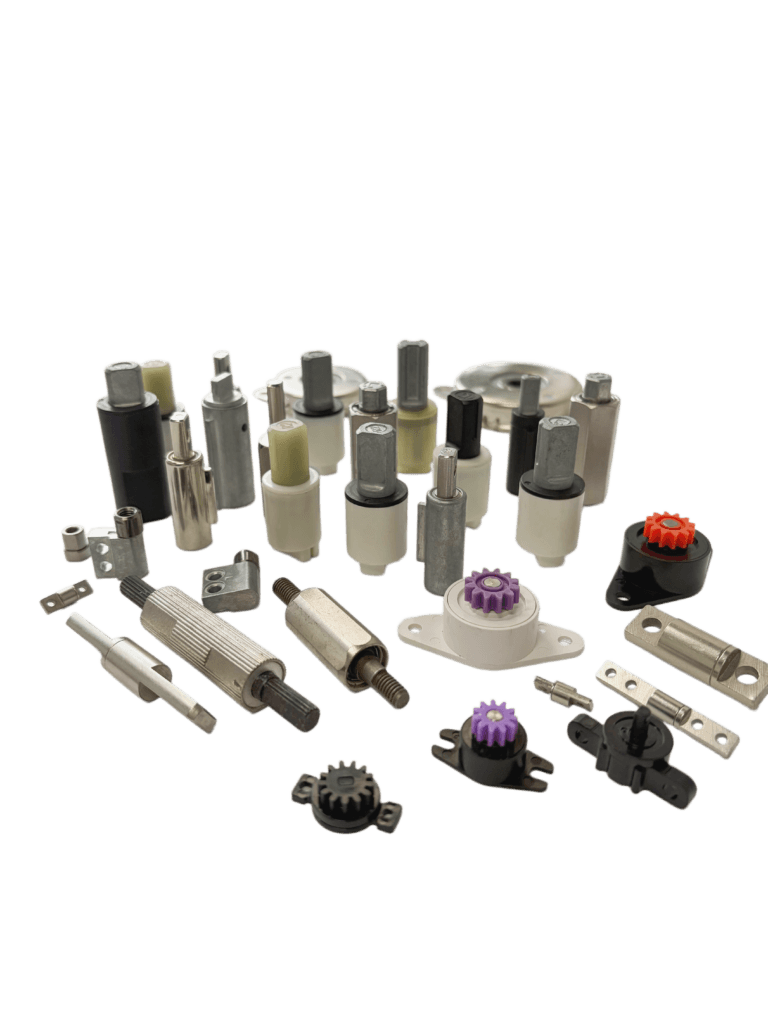
1. Identify the Motion Requirements
Before calculating rotary damper specifications, determine the required movement of your application:
- One-way Damper: Provides resistance in only one direction (e.g., clockwise or counter-clockwise), allowing the lid to open freely but close slowly.
- Two-way Damper: Provides consistent resistance in both directions.
- Angle of Rotation: Determine whether you need partial rotation (blade type) 110°, 180°, or continuous 360-degree rotation (gear type).
2. Calculate the Required Torque
Torque is the most critical parameter. Choosing too high a torque will cause the lid to fail to close, while too low a torque will result in an abrupt drop.
The basic formula for calculating the maximum torque (T) of a lid or flip cover is:
T = L/2 * W * 9.8
- T: Torque (N·m)
- L: Length of the lid from the hinge (meters)
- W: Weight of the lid (kg)
Note: For the most accurate performance, measure the rotary damper torque at the angle where gravity is strongest (typically 0° or a horizontal position). TO KNOW MORE
3. Torque Characteristics Selection
Constant Torque: Uniform resistance throughout the entire movement, suitable for arbitrary stopping and slow descent (e.g., car armrests, monitor brackets).
Progressive Torque: Low opening resistance, high resistance at the closing end, suitable for toilet seats, storage box lids (gentle closure with anti-pinch).
4.Determining the Rotary Damper Direction of Movement and Installation Method
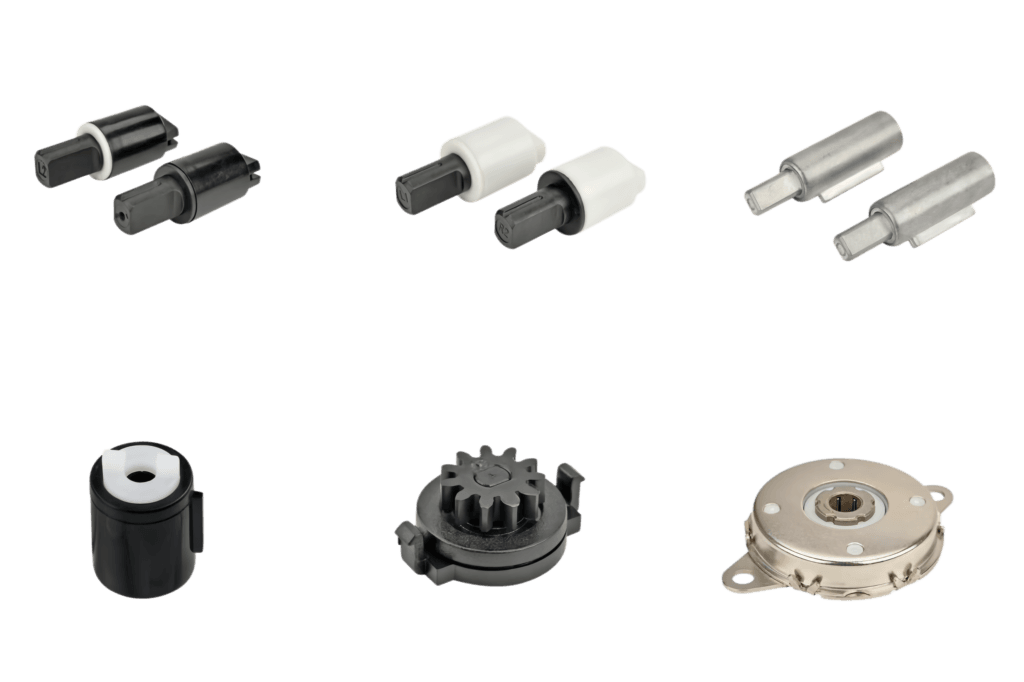
- Damping Direction
One-Way Damping: Damped in only one direction (clockwise/counterclockwise), free in the opposite direction (e.g., toilet seats, flip-top lids).
Two-Way Damping: Damped in both directions (e.g., 360° rotating display stands, two-way opening and closing lids).
- Installation Type
Gear Type: Driven by gear meshing, stable torque and high precision (suitable for flip-top lids, cabinet doors).
Shaft Type (Cylinder Type): Directly drives the rotating shaft, compact structure, easy installation (suitable for small equipment, home appliances).
5. Matching Usage Scenarios: Environment and Lifespan
- Ambient Temperature
Standard Type: -10℃ ~ 60℃ (general indoor scenarios). Wide Temperature Range: -40℃ ~ 80℃ (Automotive, Outdoor, Industrial Equipment).
High Temperature Range: >80℃ (Ovens, Industrial Furnace Doors).
- Service Life (Cycle Count)
Light Load (Household): 10,000~30,000 cycles (Cabinets, Small Appliances).
Medium Load (Commercial): 50,000~100,000 cycles (Automotive Interiors, Office Equipment).
Heavy Load (Industrial): ≥500,000 cycles (Automatic Equipment, Frequently Opening and Closing Cabinets).
6. Verify Installation Dimensions and Space
Main Body Diameter: Small (8~12mm), Medium (15~20mm), Large (>25mm).
Shaft Diameter / Shaft Length: Must match the product’s pivot and installation depth.
Rotation Angle: Confirm the product’s maximum rotation angle (e.g., 90°, 180°, 360°) to avoid damper structural interference.
7. Selection Steps (Quick Process)
Weigh and Dimension: Weigh the rotating parts and measure the distance from the pivot to the center of gravity.
Calculate torque: Use the formula, adding a 10%~20% margin.
Select directional characteristics: Unidirectional/Bidirectional, Constant torque/Progressive torque.
Consider installation space: Diameter, shaft length, installation method.
Determine environmental lifespan: Temperature range, usage frequency.
Sample testing: Actual installation testing to assess feel, closing speed, and reliability.
8. Common Application Selection Reference
Toilet seat: Unidirectional, progressive torque, 0.5~1.5 N·m.
Automotive armrest: Bidirectional, constant torque, 2~5 N·m.
Home appliance flip-tops (washing machines, microwave ovens): Unidirectional, progressive torque, 1~3 N·m.
Industrial cabinet doors: Bidirectional, constant torque, 3~10 N·m.
360° display rack: Bidirectional, constant torque, 0.5~2 N·m.
9. Consider Environmental Factors
Operational stability depends heavily on the internal damping medium (typically silicone oil).
- Temperature Sensitivity: High temperatures decrease oil viscosity, reducing damping force. Ensure your supplier provides a Torque-Temperature Curve.
- Cycle Life: Industrial applications often require 50,000 to 100,000 cycles. Verify the seal integrity to prevent oil leakage over long-term use.
10. Why Torque Consistency is Non-Negotiable
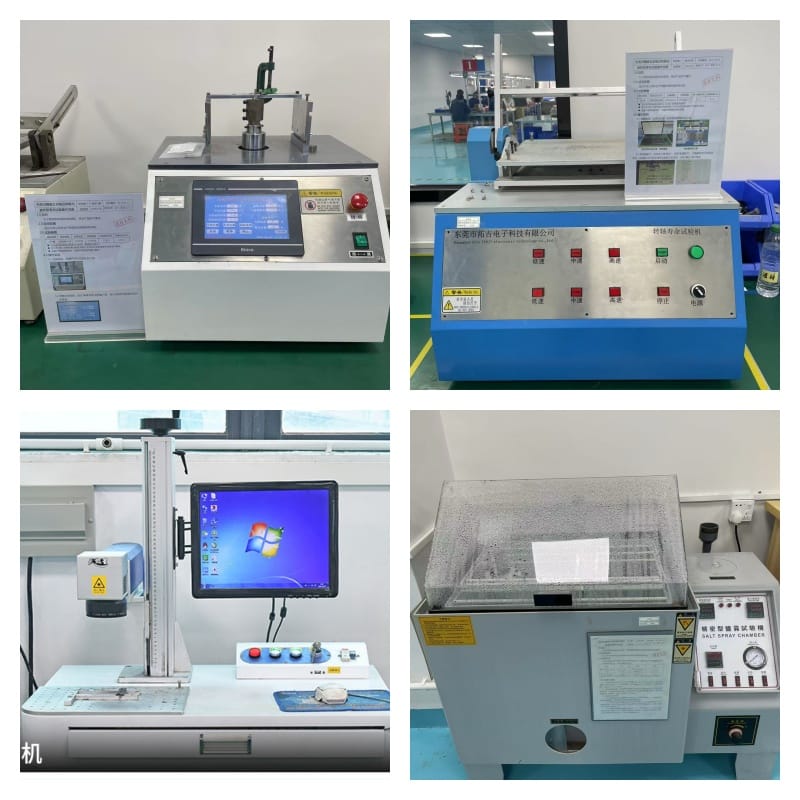
In mass production, the biggest challenge for engineers is Torque Tolerance. A wide variance in torque between individual dampers leads to inconsistent product quality on the assembly line.
At JAN, we solve this through:
- Automated Injection Molding: Ensuring the structural precision of every vane and gear.
- 100% Online Inspection: Every damper is tested for torque stability before shipment to maintain a strict tolerance range.
11. Application-Specific Selection
- Small Gear Dampers: Ideal for compact spaces like coffee machine lids, car ash trays, and electronics.
- Vane Dampers: Best for heavy-duty soft-close requirements like washing machine covers or toilet seats.
- Disk Dampers: Optimized for high-torque industrial equipment where space is limited.
What factors determine the torque consistency of JAN rotary dampers?
Torque consistency is rooted in our precision manufacturing. We utilize automated injection molding for internal components to ensure minimal dimensional tolerance. Furthermore, each damper is filled with high-index silicone oil in a vacuum environment and undergoes 100% online torque testing before packaging. This ensures that every batch delivered to your assembly line performs identically.
Can JAN dampers withstand extreme temperature fluctuations in automotive or kitchen environments?
Yes. We use specialized High-Viscosity Index (HVI) silicone oil that maintains a stable damping curve. Our rotary dampers are engineered to operate reliably within a temperature range of -20°C to +80°C. For high-heat applications like ovens or car dashboards, we provide specific test reports showing torque stability under thermal stress.
How do I choose between a vane damper and a gear damper for my project?
Selection depends on the motion required. Vane dampers are ideal for limited-angle rotation (typically up to 180°) and high-torque applications like washing machine lids. Gear dampers are designed for continuous 360° rotation and are perfect for smaller, precision-oriented movements such as car ash trays, coffee machine covers, or electronics drawers.
Are JAN motion control components compliant with international environmental standards?
Absolutely. Sustainability and safety are priorities. All JAN rotary dampers and friction hinges are fully compliant with RoHS and REACH regulations. We ensure that all materials, including the internal damping fluid and external housing, are non-toxic and environmentally responsible for global distribution.
Conclusion
Choosing the right rotating damper requires balancing mathematical precision with the accuracy of environmental testing. A damper with the right size and torque not only slows down the movement’s operation but also unifies the “feel and premium feel” of your entire brand’s mechanical movements.
Need a custom torque evaluation for your project?
[Contact JAN Engineering Team] today for technical consulting and free samples to validate your design.