
Introduction: The 10,000-Cycle Wall
Every engineer who has ever specified a friction hinge knows the pattern. The prototype feels perfect—smooth, controlled, premium. The first production run passes inspection. Then, six months into the field, the calls start coming in. Lids won’t stay open. Screens droop. Panels drift. The hinge that felt like a precision instrument on day one feels like a worn-out doorstop by month eight.
The culprit is almost always the same: torque decay after repeated cycling. A hinge rated at 2.0 N·m drops to 1.6 N·m after 10,000 cycles. The panel that once held position at any angle now slowly sinks under its own weight. The problem isn’t random failure—it’s physics. And if you don’t design for it, your product will fail in the field.
The question isn’t whether torque will decay. The question is how much and how fast. The goal is not zero decay but controlled decay that stays within the product’s usable functional range. Here’s how to achieve that.
Part One: Understanding Why Friction Hinges Lose Torque
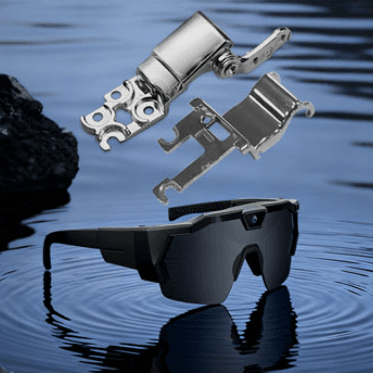
Before you can prevent torque decay, you need to understand what causes it. The physics are straightforward:
T = μ × F × r × N
Where T is output torque, μ is the coefficient of friction, F is normal force (preload), r is effective friction radius, and N is the number of effective friction interfaces.
Torque stability depends on two things staying stable: friction state and preload. Any change in lubrication quality, surface morphology, material relaxation, or dimensional fit reduces one or both, and torque falls accordingly.
The Three Primary Failure Mechanisms
1. Preload Loss
Most friction hinges rely on spring elements—wave springs, Belleville washers, or formed elastic clips—to maintain constant contact pressure between friction surfaces. As the hinge cycles, these springs relax. Material creep, thermal cycling, and surface wear all reduce the preload force over time. Springs with very high spring rates, such as Belleville washers, tend to have losses in overall torque as surfaces wear.
2. Friction Surface Wear
Every rotation cycle wears the friction interface. The surfaces that generate resistance gradually lose material. Contact pressure drops. The friction coefficient changes. What started as a controlled interference fit becomes a loose clearance fit. As friction surfaces wear, the space between them increases, and torque decreases.
3. Lubricant Migration and Degradation
Lubricants are a double-edged sword. They reduce wear and smooth operation, but as hinges cycle, lubricants slowly migrate out of the friction interface. The coefficient of friction changes. Worse, the lubricant that remains can degrade or become contaminated with wear debris, creating an abrasive slurry that accelerates wear.
The Environmental Multiplier
Temperature amplifies every one of these problems. As environment temperatures change, friction device torque fluctuates. At −30°C, torque can change by 26–34%. At elevated temperatures, plastic components expand, contact pressure drops, and lubricants thin out. A hinge that performs perfectly in a climate-controlled lab can fail catastrophically in a hot factory or cold storage environment.
Part Two: Engineering Solutions That Actually Work
1. Start with the Right Torque Window
Most engineers specify a single torque value. That’s a mistake. Every friction hinge has a tolerance band—typically ±15% to ±25%. You need to define both breakaway torque (the force required to start movement) and running torque (the force required to sustain movement) as separate requirements.
Start with the real door moment across the full angle range, then define a torque window that covers both holding and user effort limits. Include mass distribution, handle location, wiring drag, and seal compression in your calculation model. If you’re designing for 10,000 cycles, your initial torque should be high enough that the post-decay torque still meets your minimum holding requirement.
2. Select the Right Mechanism Architecture
Not all friction hinges are created equal. The internal mechanism determines everything about performance, lifespan, and cost.
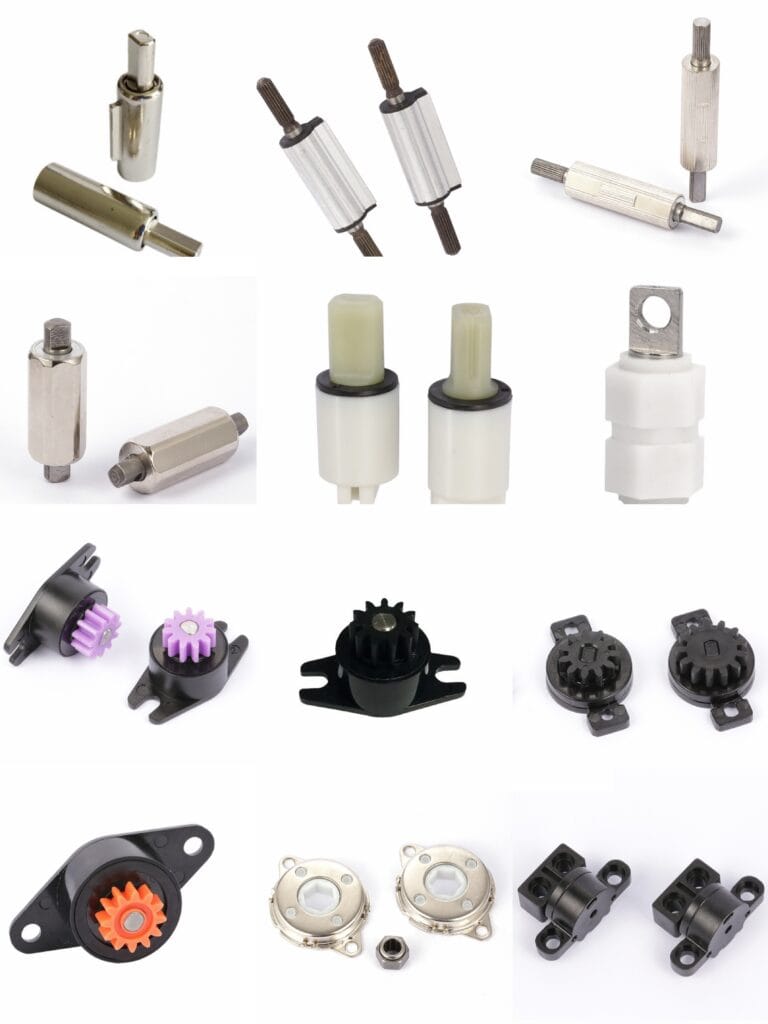
Spring-Clutch Mechanism: A hardened spring steel band wound around a central shaft. The spring’s constant radial grip creates uniform friction. Torque varies less than ±15% across the full rotation range. Lifespan can reach 50,000 cycles with zero readjustment. This is the gold standard for applications where torque consistency and cycle life are top priorities.
Interleaved Plate Design: Alternating friction discs pressed together by a spring. Scalable and modular—you can add more discs to increase torque. But more surfaces mean more wear points.
Basic Surface-Contact Design: Simple, inexpensive, and compact. But torque fades as surfaces wear—typically noticeable after a few thousand cycles. Right for low-cost applications; wrong for anything requiring 10,000-cycle reliability.
If your application demands 10,000 cycles with stable torque, spring-clutch mechanisms consistently outperform alternatives. They cost more upfront but deliver lower total cost of ownership in high-cycle or high-reliability applications.
3. Engineer the Friction Interface
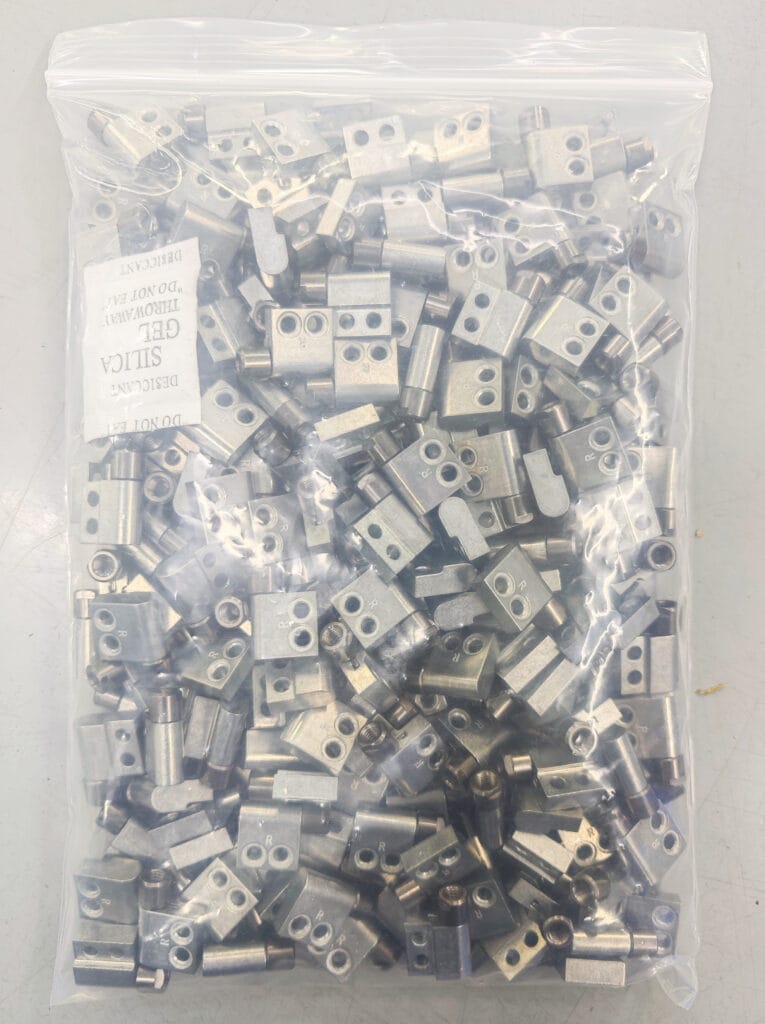
Material pairing determines torque consistency. The wrong material choice can ruin an otherwise excellent design.
Surface Roughness Matters More Than You Think. Research shows that surface roughness (Ra) of 0.15–0.30 μm is optimal for achieving torque holding rates of 80% or more of initial torque after repeated cycling. Go too smooth (below 0.08 μm) and you risk stick-slip. Go too rough and torque becomes erratic. The circumferential surface roughness should be 0.1–0.2 μm smaller than the axial direction roughness to ensure stable torque with no initial scratch and no stick-slip.
Counterintuitive Material Truth: Expensive stainless steel pairs often gall under high contact pressure. In humid but non-corrosive indoor equipment, plated carbon steel with engineered friction pads can maintain torque stability longer than full stainless structures. Engineers who choose stainless blindly often face torque fluctuation after 5,000 cycles.
Polymer Friction Members. Some of the most durable friction hinges use plastic frictional members operating against a metal shaft. These designs can achieve long cycle life without topically applied grease and can be sealed against external contamination.
4. Design for Preload Stability
The preload system is where many designs fail. Here’s what works:
Avoid High Spring Rates for Long-Life Applications. Belleville washers and other high-rate springs lose preload as surfaces wear. Lower spring rates with longer travel provide more consistent preload over the life of the hinge.
Consider Adjustable Designs. Some friction hinges implement adjustable mechanisms—sex bolts with indents that prevent loosening over time, or conical friction adjustment sections with set screws that allow preload compensation. While adjustment adds cost and complexity, it can extend useful life significantly.
Understand the Trade-off. Lubricants reduce wear, but they also lower the coefficient of friction. As hinges cycle, lubricants migrate out of the friction interface, which increases the coefficient of friction and hinge torque over time. The ideal solution often involves solid lubricants or self-lubricating materials that don’t migrate.
5. Mount It Right
Even the best-designed hinge will fail if it’s mounted wrong. Two hinges sharing a load must be mounted within tight tolerance. If mounting surfaces are not coplanar within 0.1 mm, one hinge absorbs most of the torque and wears faster.
Perfect hinge alignment during installation minimizes stress concentrations that cause hidden wear. Loose hinge fixings allow movement that creates stress cycling and accelerated wear. Quality fixings properly tightened prevent micro-movements that cause hidden damage accumulation.
Part Three: Testing—What the Datasheets Don’t Tell You
Every friction hinge datasheet claims cycle life. But the test conditions matter as much as the number.
Real Testing vs. Lab Testing
Most manufacturers test in ideal conditions—controlled temperature, consistent speed, no vibration, no contamination. That’s not how your product operates.
A robust test plan should measure torque at defined angle points, record temperature, and compare early-cycle data to late-cycle behavior. Data without angle trace can hide local dead zones where control collapses near key positions.
Use cycle testing that reflects actual duty rhythm, not only continuous lab rotation at fixed speed. Real use includes pause time, direction changes, and environmental variation.
What Good Looks Like
Some manufacturers have already figured this out. One stainless steel friction hinge passed 10,000 cycle tests within 10% torque decrease and 20,000 cycle tests within 20% decrease. Another passed 30,000 open/close cycle tests with greaseless operation.
If your supplier can’t provide cycle test data with torque retention percentages, walk away.
Part Four: What Procurement and Leadership Need to Know
The cheapest hinge is rarely the cheapest solution.
Total Cost of Ownership
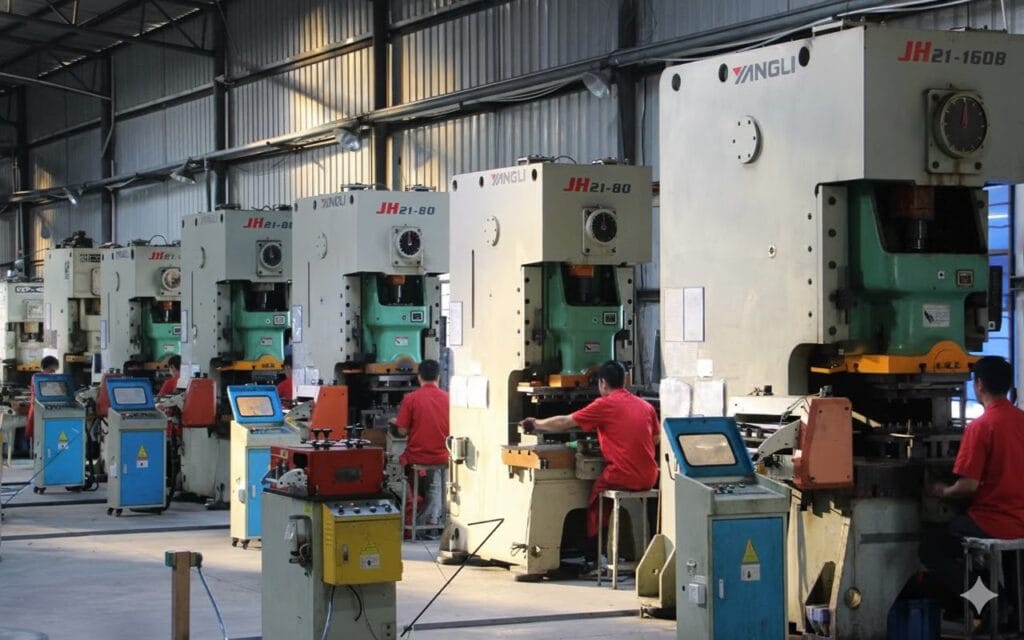
A friction hinge that costs $8 but fails at 8,000 cycles costs more than a $22 hinge that lasts 50,000 cycles—when you factor in field failures, service calls, warranty claims, and brand damage.
Basic friction hinges are inexpensive and compact, but torque fades as surfaces wear. Premium mechanisms cost more upfront but deliver lower total cost of ownership in high-cycle or high-reliability applications.
Supplier Qualification Questions
When evaluating suppliers, ask:
- What is your torque retention rate at 10,000 cycles? At 20,000?
- What test conditions did you use? Temperature? Speed? Duty cycle?
- What is your surface roughness specification and control method?
- What preload mechanism do you use? What’s its relaxation rate?
- Can you provide cycle test data from multiple production batches?
If a supplier can’t answer these questions with data, they’re not qualified to supply hinges for your application.
Conclusion
Friction hinge torque decay after 10,000 cycles is not inevitable—it’s predictable and preventable. The solution requires engineering rigor at every stage: correct torque window definition, appropriate mechanism selection, engineered friction interfaces, stable preload systems, proper mounting, and realistic testing.
The engineering goal is not zero decay, but controlled decay that remains inside the product’s usable functional range. Get this right, and your product stays reliable in the field. Get it wrong, and you’ll be explaining to customers why their $10,000 equipment can’t keep its lid open.
FAQ
Q1: Is some torque decay normal after 10,000 cycles?
Yes. Most industrial standards accept that some torque variation is a normal physical phenomenon. The engineering goal is controlled decay that remains within the product’s usable functional range. For example, a hinge rated at 2.0 N·m dropping to 1.6 N·m after 10,000 cycles represents a 20% decay—acceptable for many applications if the minimum holding torque still exceeds the load requirement.
Q2: What’s the most common mistake engineers make when specifying friction hinges?
Selecting a hinge from static load only, while ignoring dynamic opening behavior and user force limits. This leads to doors that hold in one position but feel unstable during transition. Another common mistake is weak tolerance control around mating parts and mounting interfaces—even a well-designed hinge core performs poorly when bracket flatness, hole position, or assembly preload vary across production lots.
Q3: Can I just use a higher initial torque to compensate for decay?
Not reliably. Higher initial torque often means higher contact pressure, which accelerates wear and can actually increase the decay rate. The better approach is to select a mechanism architecture and friction interface designed for long-term stability, then set initial torque high enough that post-decay torque still meets requirements. Define both breakaway torque and running torque as separate requirements.
Q4: How much should I expect to pay for a friction hinge that reliably holds torque at 10,000 cycles?
Premium spring-clutch mechanisms typically cost 2–3× more than basic surface-contact hinges. However, the total cost of ownership is often lower because you eliminate field failures, service calls, and warranty claims. For high-cycle or high-reliability applications, the premium is almost always justified. Basic zinc die-cast friction hinges might last a few hundred cycles before torque drops below usable levels.
Summary
Friction hinge torque decay after 10,000 cycles is predictable and preventable through correct torque window definition, appropriate mechanism selection (spring-clutch designs outperform basic surface-contact), engineered friction interfaces with optimal surface roughness (Ra 0.15–0.30 μm), stable preload systems, proper mounting within 0.1 mm coplanarity, and realistic cycle testing that reflects actual operating conditions. Premium hinges cost 2–3× more upfront but deliver lower total cost of ownership in high-reliability applications.