
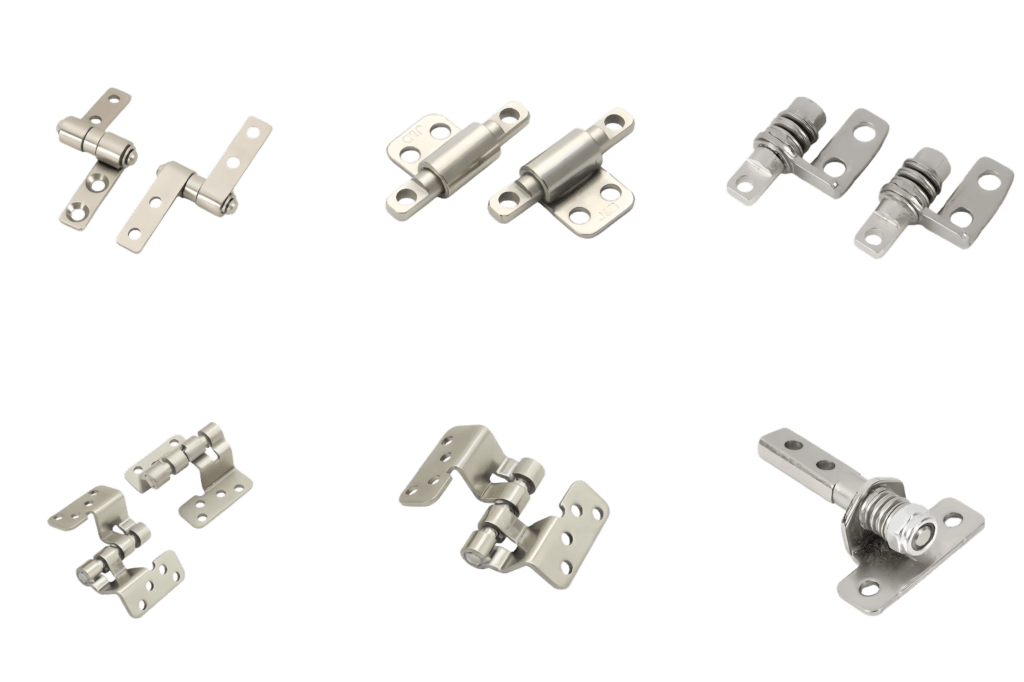
Introduction: The Hidden Safety Critical Component
Walk through any manufacturing plant, power distribution facility, or automation line, and you will see them: control cabinets, HMI stations, machinery enclosures, and access panels—all with doors and lids that operators open and close dozens of times per day.
What you will not see is the hinge that makes these operations safe, efficient, and reliable. And that is precisely the point. When a heavy industrial panel stays exactly where the operator places it—no drift, no sudden drop, no slamming—the hinge has done its job perfectly. When it fails, the consequences can be severe: crushed fingers, damaged equipment, costly downtime, and serious workplace injuries.
For engineers specifying motion-control components, procurement professionals sourcing hardware solutions, and business owners who understand that workplace safety and operational efficiency are non-negotiable, the industrial equipment panel damping hinge deserves serious attention. This is not a commodity component. It is a safety-critical device that directly impacts your product’s reliability, your customers’ safety, and your brand’s reputation.
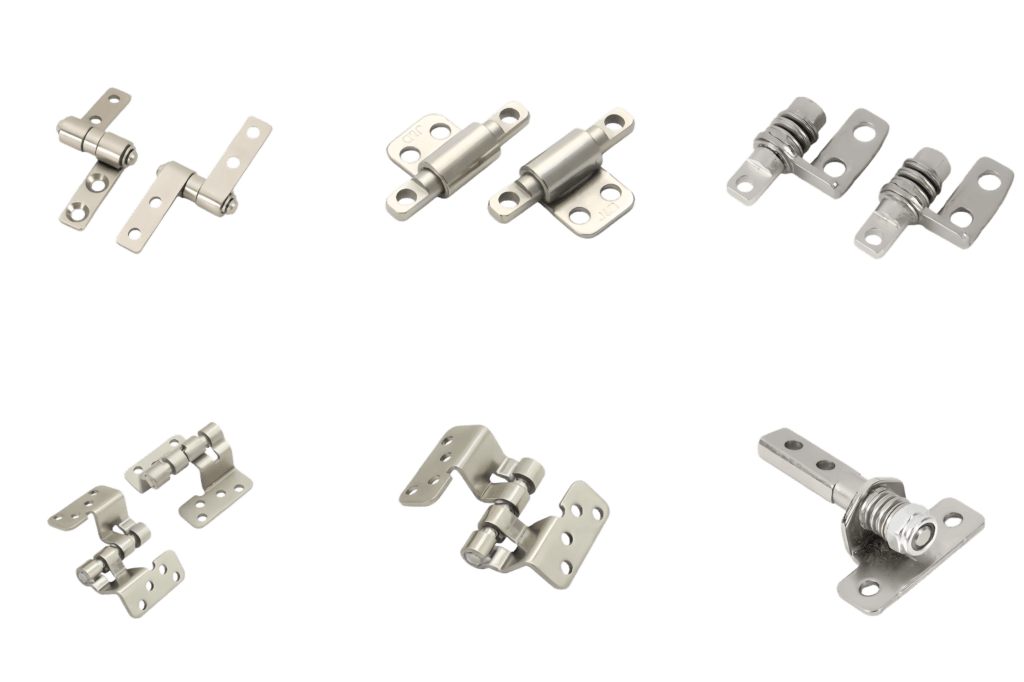
The Problem: Why Standard Hinges Fail in Industrial Environments
Industrial equipment panels and access doors face challenges that residential or commercial hinges simply cannot handle.
The Weight Factor
Industrial control panels, machine enclosures, and access doors are heavy. A typical cabinet door may weigh 20 kg or more. With the center of gravity often far from the pivot point, the gravitational torque can exceed 50 N·m. Standard hinges—designed for lightweight applications—cannot support this load. They sag, bind, or fail entirely.
The Safety Factor
According to ISO 12100 (Safety of machinery — General principles for design), uncontrolled door movement is a typical mechanical hazard. A heavy panel that falls, slams shut, or drops unexpectedly can cause serious injury. Risk reduction should prioritize engineering control measures—not warning signs or operating procedures.
The Usage Factor
Industrial panels are opened and closed constantly—for maintenance, inspection, operation, and servicing. Over the life of the equipment, this adds up to tens of thousands of cycles. A hinge that cannot withstand this level of use will fail, generating downtime, repair costs, and safety hazards.
The Environmental Factor
Industrial environments are harsh. Dust, moisture, temperature extremes, and corrosive substances are common. Standard hinges—even those with basic plating—corrode, seize, or lose their mechanical properties. In food machinery applications, hygiene requirements add another layer of complexity.
The Ergonomics Factor
Heavy lids and panels require significant effort to lift. Without assist mechanisms, operators strain their backs and shoulders. Over time, this leads to fatigue, injury, and reduced productivity.
The Solution: Heavy-duty Free Stop Damping Hinges
A heavy-duty free stop damping hinge—also called a torque hinge, friction hinge, or positioning hinge—is a precision motion-control component specifically engineered for industrial applications.
How It Works
Internally, these hinges rely on friction pairs, preload, and contact pressure to create consistent resistance. As the hinge rotates, internal components—friction elements, springs, or damping mechanisms—generate resistive torque that counteracts gravity and holds the panel at any angle.
The design goal is simple: the hinge should resist unwanted motion caused by gravity, vibration, or minor external disturbance, while still allowing intentional repositioning by the user.
Core Functional Benefits
Free-stop positioning — the hinge holds the panel securely at any angle without external supports, gas springs, or mechanical struts. This is sometimes called “arbitrary stop” or “positioning” functionality.
Controlled damping — the hinge slows rotation as the panel approaches the closed position, preventing slamming and reducing impact forces. Southco’s EC Damping Hinge uses an embedded torque engine that “generates resistance only when it’s needed the most, making panels easy to move, but nearly impossible to slam shut”.
Lift assist — for heavy top-opening lids, spring-assist mechanisms reduce the effort required to lift the panel. The HG PA202 Lift Assist Hinge “incorporates spring tension for lift assist, a built-in damper for soft-close functionality, and an adjustable torque mechanism for customizable performance”.
Silent operation — precision internal components and damping materials eliminate metal-on-metal noise. This is particularly important in environments where noise levels are regulated or where operators work in close proximity to the equipment.
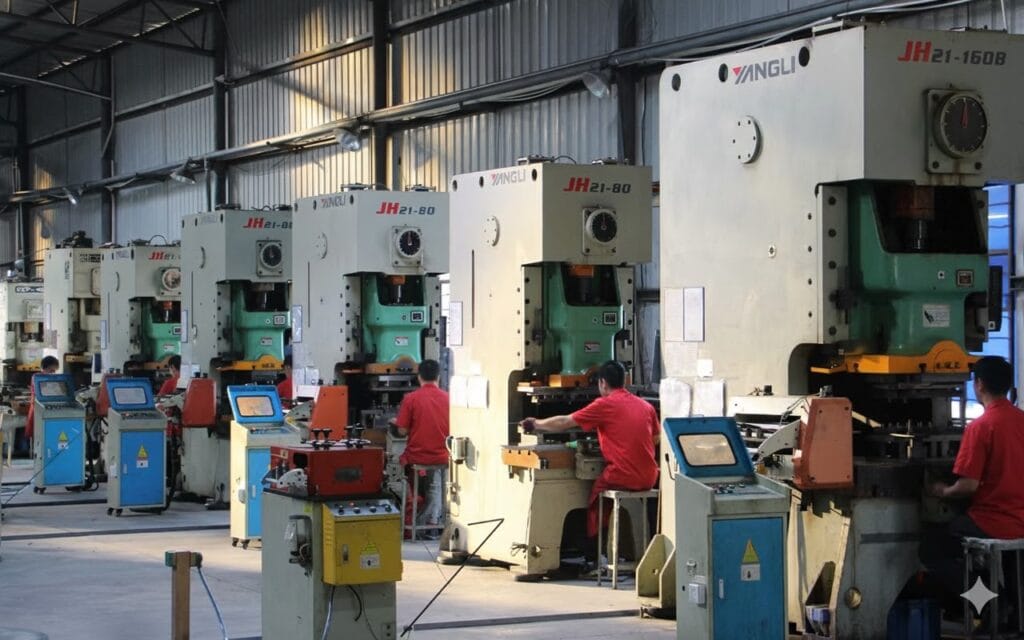
Technical Specifications for Engineers
When specifying a heavy-duty damping hinge for industrial equipment, several engineering parameters demand attention.
Torque Requirements
Torque—measured in Newton meters (N·m)—is the single most important specification. The hinge must deliver enough resistive torque to hold the panel steady against gravity, vibration, and minor external loads, while still allowing smooth movement when the operator repositions it.
For heavy-duty industrial applications, torque requirements typically range from 3.0 N·m to 50+ N·m.
Some specific examples:
- A 20 kg cabinet door with a 0.6 m width requires approximately 70.56 N·m total torque (with a 1.2 safety factor). With two hinges, each must deliver approximately 35.28 N·m.
- Adjustable torque hinges are available with ranges from 0 to 15 N·m.
- The XG11-102 free-stop torque hinge offers adjustable torque from 4.0 to 10.0 N·m.
- Southco’s E6-73 Constant Torque Hinge provides “high torque for heavy-duty applications”.
Torque Calculation
The basic relationship is: T = F × L, where T is torque in N·m, F is force in Newtons, and L is the perpendicular distance from the hinge axis to the center of gravity.
The correct conversion is: Weight (N) = Mass (kg) × 9.81.
Do not calculate from kg directly. Convert mass to force first.
Static vs. Dynamic Torque
When selecting a torque hinge, it is essential to separate static torque from dynamic torque:
- Static torque: the torque required to hold the panel stationary at a given angle
- Dynamic torque: the torque required to move the panel during opening or closing
For holding-position design, static torque is the primary value. Dynamic torque matters for user feel, movement smoothness, and the effort required to reposition the panel.
Many products have static and dynamic torque values that are not identical. Some hinges have higher starting resistance and slightly lower running resistance—one reason why a hinge that looks correct on paper can feel wrong in actual use.
Rotation Angle
Industrial applications require various rotation angles:
- 180 degrees — common for cabinet doors and access panels
- 270 degrees — for applications requiring wider access
- 360 degrees — for swivel applications and continuous rotation
Cycle Life and Durability
Industrial hinges must withstand tens of thousands of cycles without performance degradation. Industry benchmarks include:
- 20,000 cycles — minimum for most industrial applications, with torque attenuation within 20%
- 50,000 cycles — premium performance
- 100,000 cycles — heavy-duty applications
Sugatsune’s torque hinges are “tested through more than 20,000 opening and closing cycles”. The HG S Swivel Torque Hinge has “successfully passed a 20,000-cycle open/close test”. Some friction hinges maintain torque within 20% of initial values even after 50,000+ cycles.
Material Selection
Material choice affects strength, corrosion resistance, weight, and cost.
Stainless Steel 304 (SUS304) — offers excellent corrosion resistance and durability. Ideal for harsh environments, food machinery, and outdoor applications. Some manufacturers offer “stainless steel torque hinges for maximum durability and corrosion resistance, ensuring long-term performance in harsh or outdoor settings”.
Stainless Steel 316 (SUS316) — provides even greater corrosion resistance for marine and extreme environments.
Zinc alloy — offers good strength and corrosion resistance at a moderate cost. TAI SAM’s CL-153 damping hinge uses zinc alloy with a stainless steel pin.
Carbon steel with plating — provides high strength at lower cost, with nickel plating or electrogalvanizing for corrosion resistance.
Corrosion Resistance
For industrial environments, corrosion resistance is critical. Look for:
- Salt spray testing (NSS) — 96 to 480 hours according to ASTM B117
- Stainless steel construction — for corrosive environments
- Surface treatments — nano-matte coating, vibration polishing, nickel plating
Adjustable Torque
For applications where panel weight may vary or where field adjustment is desirable, adjustable torque hinges allow the friction to be tuned using a simple tool.
The HG-TAWJ40 spring-assist torque hinge offers “retaining torque can be adjusted by rotating the torque adjustment nut M6 (nominal 10 spanner) (0 to 3.5 N·m)”.
The XG11-102 free-stop torque hinge provides “adjustable torque from 4.0 to 10.0 N·m”.
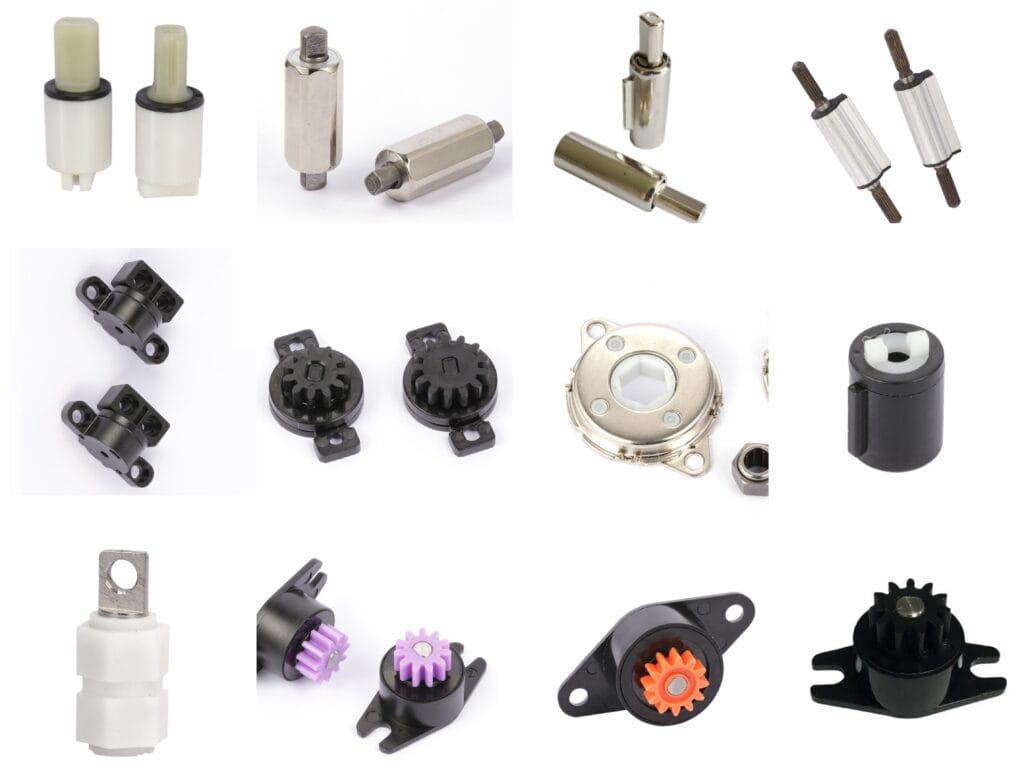
Product Types and Configurations
The industrial hinge market offers a wide range of configurations to suit different applications.
Swivel Torque Hinges
Swivel torque hinges enable 360-degree rotation and are ideal for control panels, HMI units, and machinery enclosures.
The HG S Swivel Torque Hinge “enables smooth, controlled motion with free stop positioning at any angle. Its central hole allows for seamless cable management”. This is particularly valuable for applications with integrated electronics or fluid lines.
Spring-Assist Torque Hinges
For heavy top-opening lids, spring-assist hinges reduce the effort required to lift the panel.
The HG PA202 Lift Assist Hinge is “engineered to simplify the lifting of heavy, top-opening lids. It incorporates spring tension for lift assist, a built-in damper for soft-close functionality, and an adjustable torque mechanism for customizable performance”. Its concealed mounting and hygienic design make it “ideal for food machinery applications where cleanliness and user safety are critical”.
Damper Torque Hinges
Damper torque hinges combine free-stop positioning with soft-close damping.
The HG-TQJD Damper Torque Hinge offers “torque adjustment feature enables lids and doors to stop at any position during opening or closing. Torque is generated in one direction. Almost no reverse torque is generated, allowing for smooth operation”. It has “passed 20K Cycle Test”.
Southco’s EC Damping Hinge “brings soft-close protection and embedded torque control to heavy-duty industrial lids and access panels, reducing risk of injury and equipment damage without changing panel geometry”.
Detent Hinges
Detent hinges provide positive positioning at specific angles.
The HG-S15-16C Detent Swivel Hinge is “a 360° swivel hinge with a detent function. Two types of detent intervals are available: Every 30° or Every 90°. Wiring can be passed through the hole in the center”.
Two-Axis Hinges
For applications requiring movement in multiple directions, two-axis hinges enable lids or access panels to open in various orientations.
Application Scenarios
Control Cabinets and Electrical Enclosures
In industrial automation and power distribution, control cabinet doors are opened frequently for maintenance and operation. A heavy-duty free stop hinge ensures the door stays open safely, preventing fall injuries.
HMI Units and Operator Panels
Human-Machine Interface units require precise positioning for comfortable operation. The HG S Swivel Torque Hinge is “especially suited for large control panels, HMI units, and heavy machinery ensuring safe, reliable access during routine operations”.
Machinery Access Panels
Heavy machinery requires access panels for maintenance and inspection. Free stop hinges with lift assist reduce the effort required to open heavy lids while ensuring controlled, quiet closure.
Food Processing Equipment
In food machinery, hygiene and cleanability are critical. Concealed mounting and stainless steel construction ensure compliance with food safety standards.
Medical Equipment
Medical devices require precise positioning, silent operation, and corrosion resistance. Stainless steel torque hinges are ideal for these applications.
Marine and Outdoor Equipment
For harsh environments, stainless steel torque hinges offer maximum durability and corrosion resistance. The HG-TBS Stainless Steel Torque Hinge is “suitable for corrosive environments”.

The Business Case: Why Quality Hinges Matter
Some procurement teams view hinges as a commodity to be sourced at the lowest possible price. This is a costly mistake.
The Cost of Failure
A hinge that fails in an industrial setting generates multiple costs:
- Safety incidents — crushed fingers, dropped panels, operator injuries
- Equipment damage — panels that slam shut can damage components and electronics
- Downtime — failed hinges require equipment shutdown for repair
- Warranty claims — replacement parts and service calls
- Brand damage — unreliable equipment damages customer trust
According to ISO 12100, uncontrolled door movement is a “typical mechanical hazard” that should be addressed through engineering controls. A properly specified hinge is not an expense—it is a safety investment.
The Value of Quality
A well-specified heavy-duty damping hinge delivers:
- Enhanced safety — free-stop functionality prevents unexpected panel movement
- Reduced warranty claims — through superior durability and reliability
- Improved ergonomics — lift assist reduces operator strain
- Longer product lifespan — 20,000+ cycle life
- Brand differentiation — in a competitive industrial market
Choosing the Right Supplier
For procurement professionals, supplier selection is as important as product specification.
Key Criteria
Quality Certification — ISO 9001:2015 certification is a baseline indicator of quality management.
Engineering Support — Does the supplier offer torque calculation assistance, prototype development, and performance testing? Some suppliers provide “professional technical support to ensure each hinge fits your design”.
Customization Capability — Can the supplier modify torque, dimensions, materials, and finishes? “We offer OEM and ODM customization for torque range, size, material, surface finish, and mounting style”.
Testing and Validation — Look for documented test reports: cycle life (20,000+ cycles), salt spray (96+ hours), torque tolerance (±15%).
Production Capacity — Can the supplier scale production to meet your volume requirements?
Lead Times — Standard items should ship within 24 hours. Custom orders typically require 20–25 days.
Conclusion
In industrial equipment, the panel damping hinge is a small component with an outsized impact on safety, productivity, and product reliability. A well-specified heavy-duty free stop hinge delivers controlled motion, precise positioning, and reliable performance—transforming a functional panel into a safe, ergonomic interface.
For engineers, the technical parameters are clear: calculate the required torque, specify the correct material, and validate cycle life. For procurement professionals, the supplier criteria are equally clear: look for quality certification, customization capability, and engineering support. For business owners, the strategic imperative is undeniable: invest in the components that protect your operators and your reputation.
The cost of a quality hinge is modest. The cost of a poor hinge—in safety incidents, downtime, and brand damage—is not.
FAQ
Q1: What is the difference between a free-stop hinge and a soft-close hinge?
A free-stop hinge (also called a torque hinge or positioning hinge) holds a panel at any angle using internal friction—no external supports required. A soft-close hinge only controls the final phase of closing, using a hydraulic damper to slow the panel and prevent slamming. Many industrial hinges combine both functions: free-stop positioning throughout the range with soft-close damping in the final degrees of closure.
Q2: How do I determine the correct torque for my industrial panel?
Torque requirement depends on the panel’s weight and the distance from the hinge axis to its center of gravity. The basic formula is: Torque = Force × Distance, where Force = Mass × 9.81. For a 20 kg door with a 0.6 m width and a 1.2 safety factor, the total required torque is approximately 70.56 N·m. Most suppliers provide engineering support to calculate the optimal torque for your specific application.
Q3: How many cycles can a quality industrial damping hinge withstand?
Premium industrial damping hinges are validated for 20,000 to 50,000 cycles or more. Sugatsune’s torque hinges are “tested through more than 20,000 opening and closing cycles”. Some products maintain torque within 20% of initial values even after 50,000+ cycles. Always verify cycle life specifications with your supplier and request test documentation.
Q4: Can industrial damping hinges be customized for my specific equipment design?
Yes. Leading manufacturers offer full OEM and ODM customization, including torque value adjustment, dimensional changes, material selection (stainless steel, zinc alloy, carbon steel), surface finish, and mounting style. Many suppliers also provide prototype development and performance testing to ensure the hinge meets your exact requirements. “OEM torque specification is a standard service”.
Summary: Industrial equipment panel damping hinges are precision motion-control components that deliver heavy-duty free-stop functionality, controlled damping, and reliable positioning in demanding environments. By providing consistent torque, free-stop positioning, and soft-close damping, they solve the problems of uncontrolled panel movement, operator injury, and equipment damage. Engineers should specify correct torque (typically 3.0–50+ N·m), select appropriate materials (304 stainless steel for corrosion resistance), and validate cycle life (20,000+ cycles). Procurement professionals should prioritize suppliers with ISO certification, customization capability, and engineering support. The investment in quality hinges delivers enhanced safety, reduced downtime, and stronger brand positioning.