
When specifying rotary dampers and friction hinges, engineers often focus on the immediate mechanical requirements: torque, load capacity, and spatial dimensions. However, in today’s globalized and highly regulated manufacturing environment, a component’s success is increasingly dictated by its ability to perform under extreme environmental conditions, fit into ever-shrinking product footprints, and comply with stringent international environmental standards.
For procurement professionals and lead engineers, overlooking these “secondary” factors can lead to catastrophic product failures in the field or costly supply chain disruptions. Janhinge, a leading OEM/ODM manufacturer of precision motion control components, provides this comprehensive guide to navigating the complex intersection of temperature dynamics, miniaturization, and green manufacturing.
The Thermal Challenge: Temperature and Silicone Oil Viscosity
The core mechanism of a rotary damper relies on the fluid resistance of highly viscous silicone oil. As the internal rotor turns, it forces this oil through narrow throttling channels, generating the damping effect. However, like all fluids, silicone oil is subject to thermal dynamics: its viscosity changes with temperature.
The Physics of Viscosity Shift
In cold environments, silicone oil thickens (viscosity increases). In hot environments, it thins out (viscosity decreases). For a rotary damper, this means the damping force will naturally be higher in the winter and lower in the summer, Discuss more on Whatsapp.
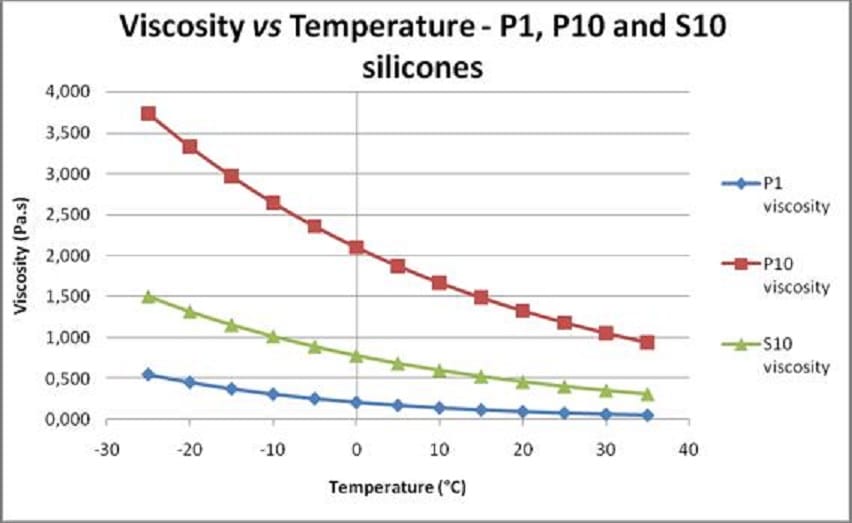
Figure 1: The exponential relationship between temperature and the viscosity of different grades of silicone oil.
If an engineer specifies a damper based solely on room-temperature testing (typically 23°C), the product may fail in the field:
•Cold Weather Failure: A car glove box damper tested at room temperature might become so stiff at -20°C that the user cannot pull the door open without breaking the latch.
•Hot Weather Failure: A heavy industrial lid damper might thin out so much at +60°C that it loses its damping ability, causing the heavy lid to slam shut and pose a safety hazard.
Engineering Temperature Compensation
To combat this, premium manufacturers like Janhinge employ several advanced engineering strategies:
1.High-Viscosity Index (VI) Silicone Oils: Standard oils have a low VI, meaning their viscosity changes drastically with temperature. Janhinge utilizes specialized, high-VI synthetic silicone fluids that maintain a much flatter viscosity curve across a broad temperature range (-40°C to +85°C).
2.Thermal Expansion Valves: In highly advanced rotary dampers, engineers can design internal bi-metallic valves or specialized O-ring channels that physically expand or contract with temperature. As the oil thins in the heat, the valve closes slightly, restricting flow and maintaining a consistent damping force.
3.Application-Specific Tuning: By understanding the primary operating environment of the final product, Janhinge engineers can custom-blend the silicone oil to ensure the optimal damping force is achieved at the product’s most common operating temperature, while maintaining safe operational limits at the extremes.

Figure 2: High-quality rotary dampers are engineered to operate reliably across extreme temperature ranges, from freezing automotive interiors to hot industrial environments.
The Miniaturization Trend: Doing More with Less Space
As consumer electronics, medical devices, and automotive interiors become more sophisticated, the available space for mechanical components is shrinking rapidly. Engineers are constantly challenged to find motion control solutions that deliver high torque in ultra-compact form factors.
The Limits of Traditional Design
In a traditional friction hinge, torque is generated by the surface area of the friction plates and the compressive force of the spring washers. To increase torque, you typically need larger plates (increasing the diameter) or stronger springs (increasing the length).
Similarly, in a rotary damper, higher damping force usually requires a larger volume of silicone oil and a larger rotor surface area.
Advanced Miniaturization Techniques
To meet the demand for miniaturization without sacrificing performance, Janhinge’s engineering team utilizes cutting-edge manufacturing techniques:
•Metal Injection Molding (MIM): For ultra-small friction hinges (such as those used in foldable smartphones or AR/VR headsets), traditional machining cannot achieve the necessary precision. MIM allows for the creation of complex, high-strength stainless steel components with tolerances measured in microns, enabling high-torque hinges that are less than 4mm in diameter.
•Multi-Plate Stacking: Instead of increasing the diameter of a friction hinge, engineers can stack multiple ultra-thin friction plates along the shaft. This multiplies the friction surface area while keeping the overall diameter incredibly small.
•Micro-Fluidic Damper Design: For miniature rotary dampers, the internal throttling channels are engineered using micro-fluidic principles, maximizing the shear force on the silicone oil within a tiny housing volume.

Figure 3: The trend toward miniaturization requires advanced manufacturing techniques to produce high-torque dampers in ultra-compact housings.
Procurement teams sourcing miniature components must be vigilant about quality control. As components shrink, the margin for error in manufacturing tolerances approaches zero. A deviation of just 0.05mm in a micro-hinge can result in a complete loss of torque.
The Green Imperative: RoHS, REACH, and Sustainable Manufacturing
In the modern supply chain, technical performance is only half the battle. Procurement professionals are increasingly tasked with ensuring that every component in their bill of materials (BOM) complies with strict international environmental regulations.
The Regulatory Landscape
Two of the most critical directives for motion control components are:
1.RoHS (Restriction of Hazardous Substances): This European Union directive restricts the use of specific hazardous materials found in electrical and electronic products. For rotary dampers and friction hinges, the primary concerns are lead (often used in older brass alloys or solders), cadmium, and hexavalent chromium (historically used in anti-corrosion platings).
2.REACH (Registration, Evaluation, Authorisation and Restriction of Chemicals): Also an EU regulation, REACH addresses the production and use of chemical substances and their potential impacts on human health and the environment. This applies to the silicone oils, synthetic greases, and plasticizers used in damper housings.

Figure 4: Compliance with RoHS and REACH directives is mandatory for motion control components used in global supply chains.
The Cost of Non-Compliance
For an OEM manufacturer, specifying a non-compliant component can have devastating consequences. If a shipment of medical devices or consumer electronics is found to contain a friction hinge with hexavalent chromium plating, the entire shipment can be impounded at customs, leading to massive financial losses and brand damage.
Janhinge’s Commitment to Green Manufacturing
To guarantee compliance and support sustainable supply chains, Janhinge’s friction and damping hinges are manufactured under strict environmental controls:
•Lead-Free Alloys: All zinc and aluminum die-cast housings, as well as stainless steel shafts, are certified lead-free.
•Trivalent Chromium Plating: Janhinge has completely eliminated hexavalent chromium from its plating processes, utilizing environmentally safe trivalent chromium or advanced electrophoretic deposition (EPD) coatings for superior corrosion resistance.
•Certified Fluids and Elastomers: Every batch of silicone oil, damping grease, and NBR/EPDM O-ring material is accompanied by a Material Safety Data Sheet (MSDS) and is independently certified to be REACH compliant.
•Eco-Friendly Packaging: Beyond the product itself, Janhinge is committed to reducing its carbon footprint by utilizing recyclable and biodegradable packaging materials for bulk shipments.
By partnering with a manufacturer that prioritizes green engineering, procurement teams can mitigate regulatory risks and align their supply chains with global sustainability goals.
Frequently Asked Questions (FAQs)
Q1: How does temperature affect the performance of a rotary damper?
Temperature directly affects the viscosity of the silicone oil inside the damper. In cold temperatures, the oil thickens, increasing the damping force (making it stiffer). In hot temperatures, the oil thins, decreasing the damping force (making it move faster). High-quality dampers use specialized, high-viscosity index oils to minimize this effect across a broad temperature range.
Q2: What is the smallest friction hinge available for consumer electronics?
Through advanced manufacturing techniques like Metal Injection Molding (MIM), friction hinges can now be engineered with diameters as small as 3mm to 4mm. These ultra-miniature hinges are essential for foldable smartphones, AR/VR headsets, and ultra-thin laptops, providing high torque in incredibly tight spaces.
Q3: Are all rotary dampers and friction hinges RoHS compliant?
No. While many reputable manufacturers have transitioned to RoHS-compliant materials, cheaper components may still utilize leaded brass alloys or hexavalent chromium platings to cut costs. Procurement teams must always demand RoHS and REACH certification documentation from their suppliers before approving a component for mass production.
Q4: Can a rotary damper be designed to compensate for extreme temperature changes?
Yes. Advanced rotary dampers can incorporate thermal expansion valves or specialized bi-metallic components that physically alter the internal throttling channels as the temperature changes. This restricts oil flow when it is hot (thin) and opens the flow when it is cold (thick), maintaining a consistent damping force regardless of the environment.
Q5: Why is Metal Injection Molding (MIM) important for miniature hinges?
Traditional CNC machining struggles to achieve the microscopic tolerances required for ultra-small friction plates and shafts. MIM allows manufacturers to mold complex, high-strength stainless steel components with extreme precision, enabling the creation of miniature hinges that deliver reliable, high-torque performance without the risk of structural failure. Contact Janhinge to learn more about their advanced manufacturing capabilities. Discuss more on Whatsapp.
Conclusion
The specification of motion control components is no longer just about calculating torque and load. In today’s demanding engineering landscape, the ability of a rotary damper or friction hinge to perform reliably across extreme temperature ranges, fit into microscopic product footprints, and comply with stringent environmental regulations is paramount.
By understanding the physics of silicone oil viscosity, the advanced manufacturing techniques driving miniaturization, and the critical importance of RoHS and REACH compliance, engineers and procurement professionals can build more resilient, sustainable, and high-performing products. Partnering with an experienced OEM manufacturer like Janhinge ensures that your motion control solutions are engineered not just for today’s requirements, but for the extreme demands of tomorrow’s technology. Discuss more on Whatsapp.
The Role of Ergonomics in Modern Workspace Design
While extreme temperatures and miniaturization dominate the conversation in consumer electronics and automotive engineering, the commercial furniture sector faces its own unique set of challenges. The modern office environment is increasingly focused on ergonomics—the science of designing the workspace to fit the user, rather than forcing the user to fit the workspace.
In this context, friction hinges and rotary dampers are not merely functional components; they are the primary interface between the user and their ergonomic equipment.
Adjustable Monitor Arms: The Friction Hinge at Work
Perhaps the most ubiquitous example of ergonomic motion control is the adjustable monitor arm. As workers transition between sitting and standing desks, or collaborate with colleagues by sharing their screens, the monitor must be easily repositionable.

Figure 5: High-torque friction hinges are the critical components that allow heavy dual-monitor setups to be adjusted effortlessly and hold their position securely.
The engineering challenge here is significant. A dual-monitor setup can weigh upwards of 15 kilograms (33 lbs). The friction hinges located at the base, the elbow, and the VESA mount tilt mechanism must provide enough holding torque to prevent the screens from sagging over time. However, if the torque is too high, the user will struggle to adjust the monitors, defeating the purpose of the ergonomic design.
To solve this, engineers utilize asymmetric (one-way) friction hinges. These hinges are designed to provide high resistance against the downward force of gravity (preventing sag) but significantly lower resistance when the user pushes the monitor upward. This creates a “weightless” feel, allowing for smooth, one-handed adjustments.
Soft-Close Mechanisms in Premium Office Furniture
Beyond monitor arms, rotary dampers are increasingly integrated into premium office furniture to enhance the acoustic environment and the perceived quality of the workspace.
•Overhead Storage Bins: In open-plan offices, the slamming of metal storage bin doors can be highly disruptive. Rotary dampers integrated into the hinge mechanisms ensure that these doors close silently and smoothly, regardless of how hard they are pushed.
•Keyboard Trays and CPU Holders: The sliding tracks of under-desk keyboard trays often incorporate linear or rotary dampers to provide a soft-stop at the end of their travel, preventing jarring impacts that could damage equipment or startle the user.
•Ergonomic Seating: The tilt mechanisms of high-end office chairs rely on sophisticated damping systems to control the speed of the recline. A poorly damped chair will throw the user backward abruptly, while a properly damped chair provides a smooth, controlled recline that supports the spine throughout the motion.
By prioritizing these ergonomic and acoustic details, furniture manufacturers can significantly elevate the value of their products. Procurement teams sourcing components for these applications must look beyond basic torque specifications and evaluate the “feel” and acoustic profile of the hinges and dampers they select. Partnering with an experienced OEM like Janhinge ensures that these critical ergonomic touchpoints are engineered for both durability and user comfort.