
In the medical device industry, precision is often a matter of life and death, and user experience directly impacts patient comfort and healthcare worker efficiency. Therefore, the selection of every component is crucial. Medical devices require not only functionality but also superior reliability, ergonomic design, and strict adherence to the most stringent safety standards. This article delves into how advanced precision motion control solutions, particularly medical-grade friction hinges and rotary dampers, can revolutionize medical device design, enhance clinical performance, and improve the human experience. Learn how partnering with Janhinge can help you navigate the complexities of medical device development and deliver exceptional products.
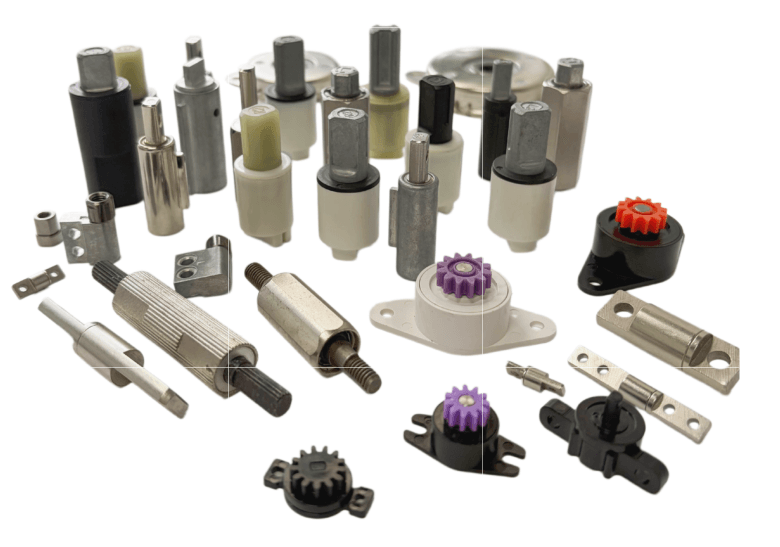
JAN HINGE DAMPERS
The Uncompromising Demands of Medical Device Design
Designing for the medical sector is a unique endeavor. Unlike many other industries, the stakes are inherently higher, leading to a stringent set of requirements for every component:
•Patient Safety: Paramount above all else. Components must prevent injury, ensure stable operation, and never fail unexpectedly.
•Ergonomics & User Comfort: Devices must be easy for clinicians to operate and comfortable for patients, reducing fatigue and improving outcomes.
•Reliability & Longevity: Medical equipment often operates continuously and must withstand frequent use, cleaning, and sterilization cycles over many years.
•Sterilization Compatibility: Materials and designs must be able to endure harsh cleaning agents, autoclaving, or other sterilization methods without degradation.
•Regulatory Compliance: Adherence to standards like ISO9001, and other regional medical device directives is non-negotiable.
•Aesthetics & Cleanliness: Smooth surfaces, minimal crevices, and high-quality finishes are essential for hygiene and perceived professionalism.
These demands mean that generic motion control components simply won’t suffice. Medical devices require specialized solutions engineered for their specific environment and operational profile. The development cycle for medical devices is often lengthy and complex, involving rigorous testing, clinical trials, and regulatory submissions. Integrating high-quality, compliant components from the outset is crucial to avoid costly redesigns and delays. Furthermore, the trend towards miniaturization, portability, and smart medical devices introduces additional constraints, requiring motion control solutions that are not only precise and reliable but also compact and energy-efficient. Janhinge’s expertise in developing bespoke solutions for these intricate requirements positions us as an ideal partner for medical device innovators.
Rotary Dampers: Ensuring Gentle, Safe, and Silent Operation in Medical Settings
In medical environments, abrupt movements and noise can be disruptive and even dangerous. Rotary dampers play a crucial role in mitigating these issues by providing controlled deceleration. They are designed to absorb kinetic energy, transforming fast, uncontrolled movements into smooth, gentle actions.
Key Benefits in Medical Devices:
•Enhanced Patient Safety: Preventing lids, covers, or trays from slamming shut, protecting patients and caregivers from injury.
•Reduced Noise: Contributing to a quieter, more healing environment by eliminating harsh impacts.
•Extended Device Lifespan: Minimizing wear and tear on components by cushioning impacts.
•Improved User Experience: Conveying a sense of quality and precision through smooth, controlled motion.
Typical Medical Applications for Rotary Dampers:
•Equipment Lids & Covers: Diagnostic machines, incubators, sterilizers, and analytical instruments often feature heavy lids that benefit from a soft-close mechanism. See Janhinge’s Rotary Damper Solutions.
•Access Panels & Drawers: Ensuring smooth, silent operation for storage compartments on medical carts or laboratory benches.
•Waste Receptacles: Controlled closing of medical waste bins to prevent spills and reduce noise.


Friction Hinges: Enabling Ergonomic Positioning and Stable Support
For medical devices that require adjustable positioning – whether for patient comfort, optimal viewing angles, or precise instrument placement – friction hinges are indispensable. These constant torque hinges allow components to be held securely at any desired angle, providing infinite adjustability without the need for cumbersome locking mechanisms.
Key Benefits in Medical Devices:
•Superior Ergonomics: Allowing caregivers to easily adjust displays, lights, or tables to their optimal working position, reducing strain and improving efficiency.
•Enhanced Patient Comfort: Enabling precise positioning of patient supports, headrests, or footrests.
•Stable & Reliable Positioning: Ensuring that once a component is positioned, it stays firmly in place, even under vibration or external forces.
•Streamlined Design: Eliminating the need for external props or locking levers, resulting in cleaner, more compact device aesthetics.
Typical Medical Applications for Friction Hinges:
•Medical Monitor Arms: Allowing displays on patient monitors, surgical carts, or diagnostic equipment to be tilted, swiveled, and rotated for optimal viewing by clinicians and patients. Explore Janhinge’s Friction Hinges for Displays.
•Adjustable Tables & Trays: Providing stable, multi-position support for instrument trays, dental equipment, or patient examination tables.
•Surgical Lights & Cameras: Enabling precise and stable positioning of overhead lights or endoscopic cameras during procedures.
•Diagnostic Device Covers: Holding covers open at various angles for easy access during maintenance or operation.


Janhinge’s Commitment to Medical-Grade Motion Control
At Janhinge, we understand that medical device manufacturers require more than just off-the-shelf components. They need partners who can deliver solutions engineered to meet the highest standards of performance, safety, and compliance. Our approach to OEM motion control for the medical sector is built on several pillars:
1. Medical-Grade Materials and Finishes
We select materials that are biocompatible, corrosion-resistant, and capable of withstanding repeated sterilization cycles (e.g., stainless steel, medical-grade plastics). Surface finishes are chosen to facilitate easy cleaning and prevent microbial growth.
2. Precision Engineering and Manufacturing
Our precision hinges and dampers are manufactured to extremely tight tolerances, ensuring consistent performance and reliability. We employ advanced manufacturing techniques and rigorous in-process quality checks to meet the exacting demands of medical applications.
3. Extensive Testing and Validation
Every medical-grade component undergoes comprehensive testing, including:
•Cycle Life Testing: Validating durability over tens of thousands of cycles.
•Torque Consistency Testing: Ensuring stable performance across the full range of motion and over time.
•Environmental Testing: Assessing resistance to temperature extremes, humidity, and chemical exposure.
•Sterilization Compatibility Testing: Confirming material integrity after various sterilization methods.
4. Customization for Seamless Integration
We specialize in developing custom medical device components. Our engineering team works closely with your R&D department to design and produce hinges and dampers that perfectly integrate into your device, optimizing form, fit, and function. From unique mounting configurations to specific torque requirements, we tailor solutions to your exact needs. Discover Janhinge’s Custom Solutions.
5. Regulatory Support and Traceability
Janhineg operates under ISO 9001 certification, and our processes are meticulously designed to support your regulatory compliance efforts. This includes providing comprehensive documentation, full material traceability, and adhering to strict process controls that align with the requirements of ISO 13485. We understand that navigating the complex regulatory landscape of medical devices is crucial, and our quality management system is built to facilitate your certification processes and ensure product safety and efficacy.
6. Research & Development for Medical Innovation
Our commitment to the medical sector extends to dedicated R&D efforts. We actively invest in:
•New Material Exploration: Investigating advanced polymers, ceramics, and metal alloys that offer enhanced biocompatibility, corrosion resistance, and performance under extreme conditions.
•Miniaturization Techniques: Developing smaller, lighter, and more integrated motion control solutions to meet the demands of portable and wearable medical devices.
•Smart Motion Integration: Exploring the integration of sensors and smart technologies into hinges and dampers to provide real-time feedback, predictive maintenance, and adaptive motion control.
•Advanced Simulation & Prototyping: Utilizing state-of-the-art simulation tools and rapid prototyping methods to accelerate the design cycle and validate performance before physical production.
7. Supply Chain Security and Risk Management
In the medical sector, supply chain disruptions can have severe consequences. Janhinge prioritizes supply chain security and risk management by:
•Dual Sourcing Strategies: Where appropriate, we implement dual sourcing for critical raw materials to minimize dependency and ensure continuity of supply.
•Robust Inventory Management: Maintaining optimal inventory levels for standard components and key materials to buffer against unforeseen demand spikes or supply chain delays.
•Geographic Diversification: Strategically locating manufacturing and supply partners to reduce risks associated with regional events.
•Transparent Communication: Proactively communicating any potential supply chain challenges and working collaboratively with our partners to find solutions.
Partnering for Innovation in Medical Motion: A Vision for the Future
Choosing the right motion control partner is not just about current needs; it’s about future-proofing your medical device designs. Janhinge is committed to being at the forefront of innovation, continuously exploring new materials, advanced manufacturing techniques, and smart motion control technologies. We believe in collaborative partnerships that drive mutual success and contribute to the advancement of healthcare.
By leveraging our expertise in medical-grade friction hinges and rotary dampers, you can:
•Accelerate Time-to-Market: Our efficient design and prototyping processes help you bring innovative products to market faster.
•Reduce Development Costs: By providing optimized, integrated solutions, we help minimize costly redesigns and manufacturing complexities.
•Enhance Brand Reputation: Delivering devices that are safe, reliable, and a pleasure to use strengthens your brand in a competitive landscape.
•Stay Ahead of the Curve: Access to Janhinge’s R&D insights and upcoming technologies ensures your products remain cutting-edge.
•Ensure Regulatory Compliance: Our detailed documentation and quality processes simplify your regulatory submissions and audits.
•Optimize Total Cost of Ownership: Through durable components, reduced maintenance, and efficient supply chain management, we help lower the long-term costs associated with your medical devices.
We invite you to engage with our team early in your design cycle. Our collaborative approach ensures that the motion control components are not an afterthought but an integral part of your product’s success, from concept to commercialization. Together, we can create medical devices that set new benchmarks for safety, ergonomics, and patient care.
Ready to elevate your medical device design?
•Request a Consultation with Janhinge’s Medical Device Specialists
•Learn More About Our Medical Industry Solutions
•Explore Our Product Portfolio
Frequently Asked Questions (FAQs) for Medical Device OEMs
1. Are Janhinge’s medical-grade components certified to ISO 13485?
While Janhinge itself is ISO 9001 certified, our manufacturing processes and quality management system are designed to support our customers’ ISO 13485 certification requirements for their final medical devices. We provide comprehensive documentation and material traceability.
2. How do you ensure the longevity and reliability of hinges in frequently used medical equipment?
We achieve this through a combination of high-performance medical-grade materials, precision manufacturing, and rigorous cycle testing that often exceeds industry standards. Our designs focus on minimizing wear and maintaining consistent performance over tens of thousands of cycles.
3. Can Janhinge provide custom torque values for specific medical device applications?
Absolutely. Custom torque values are a core part of our OEM service. Our engineering team works directly with you to determine the precise torque required for your application, ensuring optimal feel and functionality for your medical device.
4. What considerations are made for sterilization in your medical-grade components?
We carefully select materials (e.g., specific grades of stainless steel, medical-grade polymers) that are compatible with common sterilization methods such as autoclaving, EtO (Ethylene Oxide), or gamma irradiation. We can advise on material suitability based on your specific sterilization protocols.
5. How does Janhinge support rapid prototyping for new medical device designs?
Our agile development process includes rapid prototyping capabilities. We can quickly produce samples and prototypes based on your 3D models and specifications, allowing for efficient testing and iteration in your design cycle. Contact us to discuss your prototyping needs.