
Introduction: The Mechanical Foundation of PTZ Performance
Walk into any control room, broadcast studio, or security operations center, and you will see them: PTZ cameras gliding smoothly through their pan and tilt ranges, tracking subjects with eerie precision, holding their positions without a hint of drift. What you will not see is the component that makes it all possible—the friction hinge.
But here is the uncomfortable truth: when a PTZ camera fails to hold its position, generates audible mechanical noise, or struggles with micro-adjustments, the root cause is almost always the hinge or positioning mechanism. And in a market where PTZ cameras are expected to deliver positioning accuracy of ±0.02° to ±0.03°, there is no room for compromise.
For engineers specifying motion-control components, procurement professionals sourcing hinge solutions, and business owners who understand that product quality lives in the details, the PTZ camera friction hinge deserves far more attention than it typically receives.

The Problem: Why PTZ Cameras Are Different
PTZ cameras present a unique set of mechanical challenges that standard hinges simply cannot handle.
Precision at Scale
A PTZ camera is not a static device. It pans, tilts, and zooms—often hundreds of times per day. Each movement must be precise, repeatable, and free of error. As one industry analysis notes, “Cameras must return precisely to preset positions. Minor errors will accumulate, resulting in ever greater positioning inaccuracies”.
For long-range surveillance applications, the stakes are even higher. A vibration of just 0.01 degrees at the camera base—imperceptible to the human eye—translates into a displacement of several meters at a distance of 5 kilometers.
The Noise Constraint
PTZ cameras are deployed in environments where silence matters: conference rooms, broadcast studios, hospitals, and high-end retail spaces. “They must also be discreet in terms of mechanical noise, which must be minimal”. Mechanical noise from gears, belts, and hinges is unacceptable. Some PTZ cameras are designed to be “completely silent in operation”.
Rebound and Backlash
Two specific failure modes plague PTZ camera positioning:
Rebound occurs when a camera overshoots its target position and “bounces” back—often because the hinge or drive mechanism lacks sufficient friction to absorb the momentum of the moving camera head. In high-speed movements, “the camera must reach its final position without any rebound or recoil”.
Backlash—the tiny gap between interlocking gears—causes the image to “bounce” or “settle” after the camera stops moving, wasting precious seconds of observation.
Weight and Moment Management
PTZ cameras are not lightweight devices. A typical PTZ camera head may weigh several kilograms, with the center of gravity often far from the pivot point. The hinge must manage this load while maintaining smooth, consistent motion. Some surveillance cameras with long-range lenses weigh 30kg or more.
The Solution: Friction Hinges for PTZ Cameras
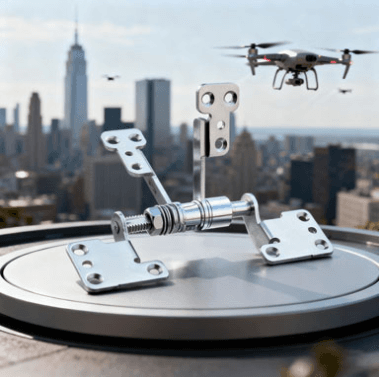
A friction hinge—also called a torque hinge or positioning hinge—is a motion-control component that uses controlled frictional torque to enable smooth rotation while holding a camera at a desired angle, without additional locks or support mechanisms.
How It Works
Friction hinges generate resistive torque through internal friction interfaces. As the hinge rotates, internal components—friction washers, discs, or sliding surfaces—create resistance that counteracts gravity and external loads.
For PTZ camera applications, this means:
- Smooth, consistent motion throughout the pan and tilt ranges
- Stable holding at any angle within the motion range
- No need for external stays, locks, or springs
Key Functional Benefits for PTZ Cameras
Free-stop positioning — the hinge holds the camera at any angle the user or system chooses, without the need for additional locking features such as clamps or set screws. This is sometimes called “arbitrary stop” or “random stop” capability.
Silent operation — precision internal components and damping materials eliminate metal-on-metal noise. Some manufacturers use aerospace-grade polymers that reduce friction by 42% compared to traditional metals.
Consistent torque — quality friction hinges provide constant torque throughout their full range of motion, without the need to exert potentially damaging excessive force.
360° rotation capability — many PTZ friction hinges support full 360-degree rotation, allowing cameras to pan continuously without mechanical stops.
Technical Specifications for Engineers
When specifying a friction hinge for a PTZ camera application, several engineering parameters demand attention.
Torque Requirements
Torque—measured in Newton meters (N·m)—is the single most important specification. The hinge must deliver enough resistive torque to hold the camera steady against gravity, wind loads, and vibration, while still allowing smooth movement when the motors engage.
For PTZ camera applications, torque requirements typically fall between 0.5 N·m and 5.65 N·m.
At the lower end, a PTZ camera head of 1–2 kg might require 0.5–1.0 N·m. At the higher end, heavy-duty surveillance cameras with long-range lenses may require 2.26–5.65 N·m. Some manufacturers offer torque hinges from 0.5 N·m to 50 N·m depending on model and size.
Some implementations specify a minimum predetermined torque of approximately 1.3 N·m to maintain camera position. Others offer adjustable torque from 0 to 4 N·m, allowing field tuning.
Rotation Angle
PTZ cameras typically require:
- Pan: 360° continuous rotation
- Tilt: 90° to 180° of vertical movement
The friction hinge must support these ranges while maintaining consistent torque throughout. Some dual-axis torque hinges generate torque in both the tilt direction and the swivel direction, with the swivel direction capable of 360° rotation.
Cycle Life and Durability
PTZ cameras are cycled constantly. A quality friction hinge must withstand tens of thousands of movements without performance degradation.
Industry standards for PTZ camera hinges include:
- 20,000 open/close cycles as a baseline
- 50,000 cycles for premium products
- 100,000+ cycles for heavy-duty applications
Some friction positioning hinges carry an “industry-leading guaranteed service life exceeding 50,000 cycles”.
Material Selection
Material choice affects strength, corrosion resistance, weight, and noise characteristics.
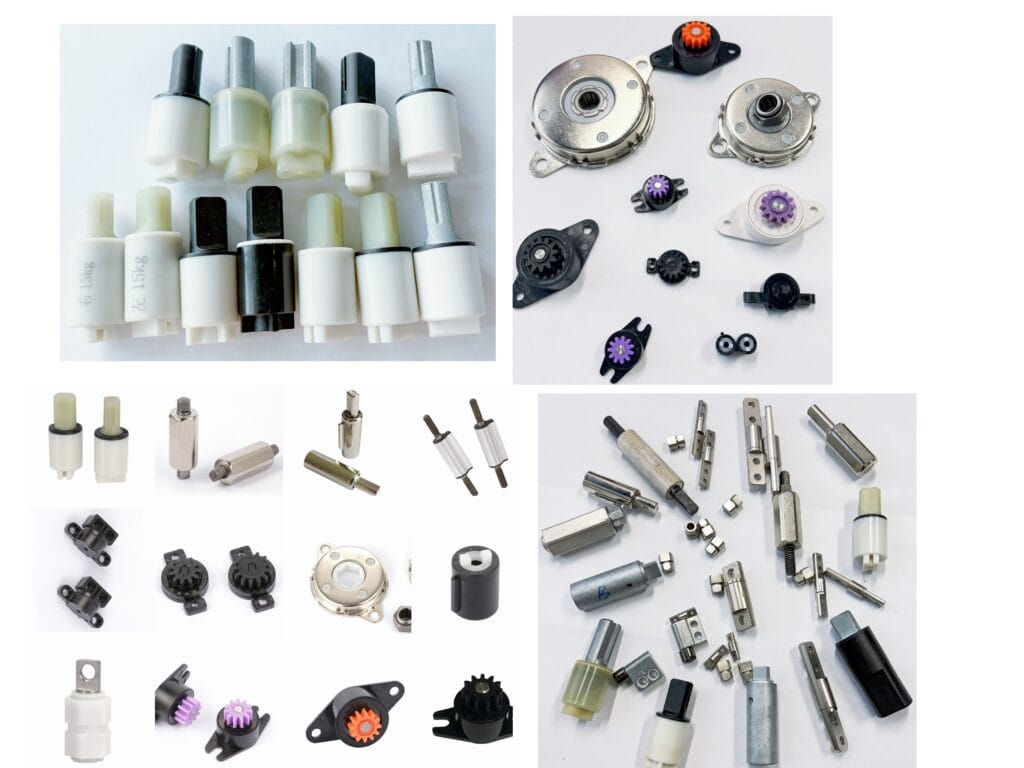
Zinc alloy die-cast housings offer good strength and corrosion resistance at a moderate cost, often combined with hardened steel shafts and torque elements.
Stainless steel provides superior corrosion resistance for outdoor or marine environments.
Aerospace-grade polymers reduce friction and noise compared to traditional metals.
Nickel-plated steel offers a balance of durability and cost for indoor applications.
Operating Temperature
PTZ cameras operate in diverse environments. Friction hinges must maintain consistent torque across the operating temperature range:
- Indoor: 0°C to 40°C
- Extended: -10°C to 50°C
- Outdoor: -25°C to 55°C for ruggedized applications
Low Noise Design: The Engineering Behind Silence
Noise is the enemy of PTZ camera performance. Here is how friction hinges achieve silent operation:
Damping Integration
Some PTZ cameras incorporate optional damping systems to reduce vibration and noise. Rotary damping hinges use viscous resistance—typically oil-based—to slow rotation and eliminate abrupt movements.
Material Innovation
The breakthrough for many high-end PTZ cameras came when manufacturers re-engineered core components using aerospace-grade polymers. These materials reduced friction by 42% compared to traditional metals. The result: “smooth transitions with zero gear whine”.
Precision Manufacturing
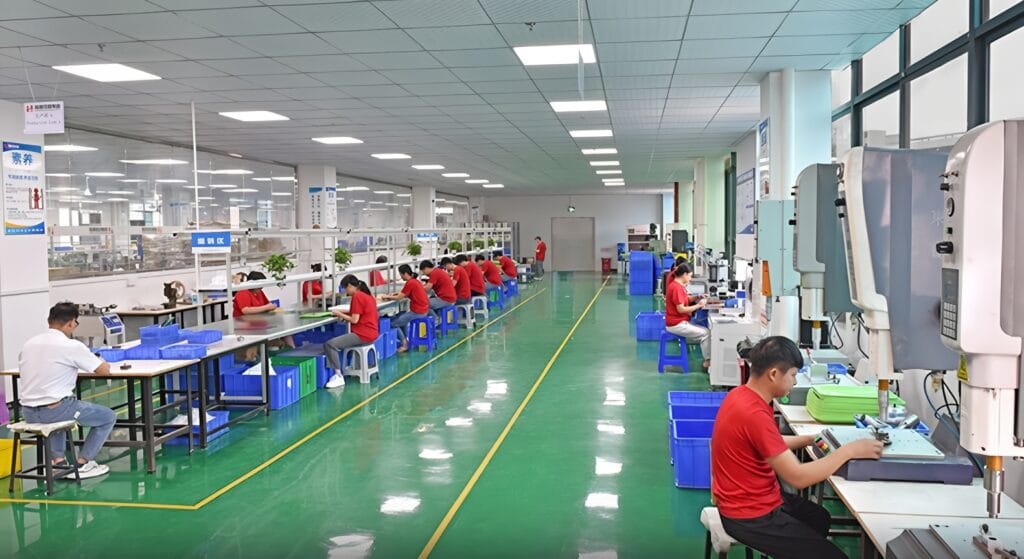
Friction hinges for PTZ cameras require precision machining and tight tolerances. Internal components must be manufactured to exacting standards to ensure consistent torque and silent operation. Leading manufacturers perform 100% inspection of torque, rotation smoothness, and surface finish.
Belt and Gear Considerations
While friction hinges themselves are silent, they often work in conjunction with belt or gear drive systems. Curvilinear belt designs keep teeth in close contact with gear cogs, and CR material belts effectively absorb vibrations and reduce noise.
Precise Positioning: The Path to ±0.02° Accuracy
PTZ cameras are expected to deliver positioning accuracy of ±0.02° to ±0.03°. Friction hinges play a critical role in achieving this precision.
Constant Torque
A friction hinge that delivers constant torque throughout its range of motion ensures that the camera moves predictably and stops precisely where intended. Inconsistent torque leads to uneven motion and positioning errors.
Zero Backlash
Backlash—the mechanical play between moving parts—is the enemy of precision positioning. Quality friction hinges are designed to eliminate free-play and spring-back while supplying consistent torque. Some PTZ camera systems achieve “zero backlash” through direct drive or precision hinge designs.
Free-Stop Functionality
Free-stop hinges hold the camera securely at any position without drift. As one manufacturer describes: “The position of the head portion with respect to the base assembly is maintained by the hinge assembly via frictional force such that the head portion will not drift from the set position by the weight of the head portion”.
Torque Compensation
Some PTZ camera systems incorporate pan/tilt torque compensation to prevent positioning errors during strong winds or external loads. This ensures that the camera maintains its preset position even under challenging conditions.
Application Scenarios
Security and Surveillance
In security applications, PTZ cameras must track subjects across wide areas, zoom in on details, and return to preset positions with absolute precision. A friction hinge with consistent torque and zero backlash ensures that the camera holds its position reliably.
Broadcast and Production
Broadcast PTZ cameras require silky-smooth motion and silent operation. “At low speed, the motion must be silky smooth, especially if the lens is gradually zooming in”. Friction hinges with damping integration deliver this performance.
Conference and Collaboration
In conference rooms, PTZ cameras must operate quietly—mechanical noise is unacceptable when microphones are live. Friction hinges with polymer components and precision manufacturing ensure silent operation.
Industrial and Medical
PTZ cameras in industrial and medical settings require precise positioning for inspection, monitoring, and telemedicine applications. Friction hinges with high cycle life and consistent torque deliver the reliability these applications demand.
OEM and Customization: Getting the Right Fit
For many PTZ camera manufacturers, off-the-shelf hinges do not fully meet their requirements. This is where OEM and ODM customization becomes essential.
What Can Be Customized
Torque value — hinges can be manufactured with specific torque values tailored to the camera’s weight and moment arm. “OEM torque specification is a standard service. Provide your required torque value, panel weight, and operating temperature range and we will confirm feasibility”.
Dimensions — mounting hole patterns, overall size, and housing shape can be modified to fit the camera’s design.
Material — choice of zinc alloy, stainless steel, polymer, or nickel-plated steel, with various surface finishes.
Rotation angle — hinges can be designed for specific angular ranges, from 90 degrees to full 360 degrees.
Dual-axis configuration — for cameras requiring both pan and tilt control, dual-axis torque hinges can be customized to generate torque in both directions.
Working with a Supplier
The best suppliers offer engineering support from concept through production. This includes:
- Torque calculation assistance — helping engineers determine the correct torque specification for their application
- Prototype development — producing sample hinges for testing and validation
- Performance testing — validating cycle life, torque consistency, and durability
- Production scaling — ramping from prototypes to mass production with consistent quality
For procurement professionals, supplier selection criteria should include ISO 9001 certification, in-house R&D capability, and a demonstrated track record in the camera or surveillance sector.
Cost-Benefit Analysis
Some procurement teams view friction hinges as a commodity to be sourced at the lowest possible price. This is a costly mistake.
The Cost of Failure
A hinge that fails—whether through torque degradation, noise generation, or positioning drift—generates multiple costs:
- Warranty claims and replacement parts
- Customer dissatisfaction and negative reviews
- Brand damage that affects future sales
- Field service calls for recalibration or replacement
The Value of Quality
A well-specified PTZ camera friction hinge delivers:
- Reduced warranty claims through superior durability and performance
- Enhanced user experience through smooth, silent, predictable motion
- Brand differentiation in a competitive market
- Longer product lifespan through robust construction
The incremental cost of a quality friction hinge over a standard alternative is typically modest. The value it delivers—in reduced warranty costs, enhanced brand perception, and customer loyalty—far exceeds this modest investment.
Choosing the Right Supplier: A Checklist
For procurement professionals evaluating suppliers of PTZ camera friction hinges, here is a practical checklist:
Quality Certification — ISO 9001:2015 certification is a baseline indicator of quality management.
Engineering Support — Does the supplier offer torque calculation assistance, prototype development, and performance testing?
Customization Capability — Can the supplier modify torque, dimensions, materials, and finishes to meet your specific requirements?
Production Capacity — Can the supplier scale production to meet your volume requirements while maintaining consistent quality?
Cycle Life Validation — Does the supplier provide documented cycle life test results? Look for 20,000–50,000 cycles minimum.
Lead Times — Are standard items in stock for immediate shipment? What are lead times for custom orders?
After-Sales Support — Does the supplier offer a clear return and replacement policy?
Conclusion
In PTZ cameras, the friction hinge is a small component with an outsized impact on performance, user experience, and product reliability. A well-specified friction hinge delivers silent operation, precise positioning, and consistent torque—transforming a mechanical mechanism into a precision motion-control device.
For engineers, the technical parameters are clear: specify the correct torque, select the right material, and validate cycle life. For procurement professionals, the supplier criteria are equally clear: look for quality certification, customization capability, and engineering support. For business owners, the strategic imperative is undeniable: invest in the components that define product quality.
The cost of a quality hinge is modest. The cost of a poor hinge—in warranty claims, customer dissatisfaction, and brand damage—is not.
FAQ
Q1: What is the difference between a friction hinge and a damping hinge for PTZ cameras?
A friction hinge (also called a torque hinge or positioning hinge) uses internal friction to hold a camera at any position, providing free-stop functionality without additional locks. A damping hinge specifically refers to a hinge that slows rotation—often through hydraulic or oil-based damping—to prevent abrupt movements and reduce noise. For PTZ cameras, the ideal solution often combines both: friction for position holding and damping for controlled, silent motion.
Q2: How do I determine the correct torque for my PTZ camera application?
Torque requirement depends on the camera head’s weight, the distance from the hinge axis to its center of gravity, and external loads such as wind. The basic formula is: Torque = Force × Distance. For a camera head weighing 3 kg with a center of gravity 0.2 m from the pivot, the required torque is approximately 3 × 9.8 × 0.2 = 5.88 N·m. Most suppliers provide engineering support to calculate the optimal torque for your specific application. Typical PTZ camera applications range from 0.5 N·m to 5.65 N·m.
Q3: How many cycles can a quality PTZ camera friction hinge withstand?
Premium friction hinges for PTZ cameras are validated for 20,000 to 50,000 cycles or more. Some manufacturers offer products that maintain consistent torque within 20% of initial values even after 50,000+ cycles. Always verify cycle life specifications with your supplier and request test documentation.
Q4: Can PTZ camera friction hinges be customized for my specific camera design?
Yes. Leading manufacturers offer full OEM and ODM customization, including torque value adjustment, dimensional changes, material selection, surface finish, and dual-axis configuration. Many suppliers also provide prototype development and performance testing to ensure the hinge meets your exact requirements. “OEM torque specification is a standard service”.
Summary: PTZ camera friction hinges are precision motion-control components that enable silent operation and precise positioning in pan-tilt-zoom cameras. By delivering consistent torque, zero backlash, and free-stop functionality, they solve the common problems of rebound, noise, and positioning drift. Engineers should specify correct torque (typically 0.5–5.65 N·m), select appropriate materials, and validate cycle life (20,000+ cycles). Procurement professionals should prioritize suppliers with ISO certification, customization capability, and engineering support. The investment in quality friction hinges delivers reduced warranty claims, enhanced user experience, and stronger brand positioning.