
In the intricate world of mechanical design, the difference between a product that feels cheap and one that exudes premium quality often comes down to a single, unassuming component: the rotary damper. While the basic premise of a damper—slowing down motion—is simple, the engineering behind it is anything but. From the fluid dynamics of silicone oil to the precise geometry of internal vanes, specifying the right rotary damper requires a deep understanding of mechanical forces.
For engineers and procurement professionals tasked with sourcing components for industrial machinery, office equipment, or high-end consumer goods, navigating the myriad of damper options can be daunting. Janhinge, a premier OEM/ODM manufacturer of motion control solutions, provides this comprehensive guide to help you master the art of rotary damper selection. Discuss more on Whatsapp.
The Mechanics of Damping: Vane vs. Gear vs. Barrel
Not all rotary dampers are created equal. The internal architecture of the damper dictates its torque capacity, rotational limits, and ideal application. Understanding these three primary types is the first step in the specification process.
1. Vane Dampers (Limited Rotation)
Vane dampers are designed for applications where the rotational movement is limited, typically to an angle of 110° to 130°. Inside the housing, a central rotor is equipped with one or more “vanes” (paddles) that push against the highly viscous silicone oil.
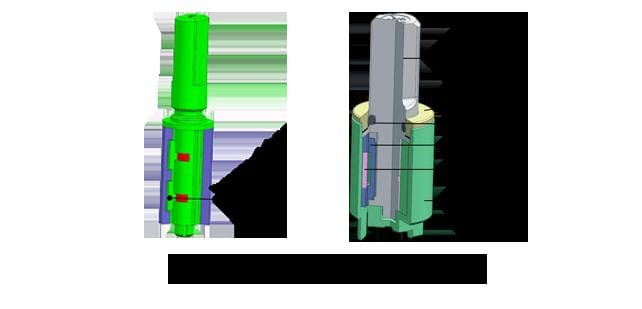
Figure 1: The internal structure of a vane damper, showing the rotor pushing fluid through narrow throttling channels.
Because the fluid is trapped within a confined chamber, vane dampers can generate exceptionally high torque relative to their size.
Best for: Heavy lids and doors that only open to a specific angle.
•Applications: Piano lids, heavy industrial printer covers, commercial freezer lids, and large medical diagnostic equipment panels.
2. Gear Dampers (Continuous Rotation)
Unlike vane dampers, gear dampers allow for continuous, 360-degree rotation. The external rotor is fitted with a gear that meshes with a corresponding rack or gear on the moving component. Inside, a disc or barrel spins continuously through the silicone oil.

Figure 2: Gear dampers allow for continuous 360-degree rotation, making them ideal for sliding mechanisms.
Because they do not have a confined fluid chamber, gear dampers generally provide lower torque than vane dampers of the same size. However, their continuous rotation makes them incredibly versatile.
Best for: Sliding mechanisms, retractable trays, and continuous rotary motion.
•Applications: Sliding doors in automotive interiors, retractable cup holders, CD/DVD trays in office copiers, and automated vending machine dispensing flaps.
3. Barrel Dampers (Compact Axial Damping)
Barrel dampers (also known as axial dampers) are cylindrical and are designed to be inserted directly into the hinge axis of a product. The outer barrel remains stationary while the inner shaft rotates, shearing the silicone oil between the two surfaces.
Best for: Applications with extreme space constraints where the damper must be hidden within the hinge joint itself.
•Applications: Automotive grab handles, overhead sunglass compartments, and small consumer electronics lids.
Janhinge’s engineering team specializes in all three architectures, providing custom torque profiles tailored to the specific weight and geometry of your product. Discuss more on Whatsapp.
The Fluid Dynamics of Silicone Oil
The heart of any rotary damper is the damping fluid. While various oils can be used, high-viscosity silicone oil is the industry standard due to its unique physical properties.
Shear Force and Resistance
When the rotor turns, it creates a shear force within the silicone oil. The resistance you feel when closing a damped lid is the physical manifestation of this fluid shear. The amount of torque generated is determined by three factors:
1.Viscosity of the Oil: Thicker oil creates more resistance.
2.Surface Area: A larger rotor or more vanes create more shear area, increasing torque.
3.Clearance (Gap): The tighter the gap between the rotor and the housing, the harder it is for the oil to pass through, resulting in higher torque.

Figure 3: The damping effect is created by the shear force of the rotor moving through highly viscous silicone oil.
The Importance of Oil Quality
Procurement teams must be wary of low-cost dampers that utilize inferior oils. Cheap mineral oils or low-grade silicones can break down under continuous shear stress, leading to a rapid loss of damping force. Furthermore, inferior oils are highly susceptible to temperature changes, becoming rock-hard in the winter and dangerously thin in the summer.
Premium manufacturers utilize synthetic, high-viscosity index (VI) silicone oils that maintain a stable molecular structure over tens of thousands of cycles and across broad temperature ranges (-40°C to +85°C).
Adjustable Rotary Dampers: The Ultimate Flexibility
In many engineering scenarios, calculating the exact required torque during the CAD phase is difficult. The final weight of a molded plastic lid might vary, or the center of gravity might shift during prototyping. If a fixed-torque damper is specified, any change in the product’s weight requires sourcing a completely new damper.
Enter the adjustable rotary damper.

Figure 4: Adjustable rotary dampers feature a tuning screw that alters the internal fluid flow, allowing engineers to dial in the perfect torque.
How Adjustable Dampers Work
Adjustable dampers feature a small tuning screw on the rear of the housing. Turning this screw physically alters the size of the internal throttling channel (the gap through which the silicone oil must pass).
•Tightening the screw: Narrows the channel, increasing fluid resistance and torque.
•Loosening the screw: Widens the channel, decreasing fluid resistance and torque.
Engineering Advantages
1.Prototyping Speed: Engineers can order a single adjustable damper for a prototype and dial in the perfect “feel” on the workbench, rather than ordering five different fixed-torque samples.
2.Manufacturing Tolerances: If a batch of injection-molded lids comes out slightly heavier than expected, the assembly line can simply adjust the dampers with a screwdriver, rather than halting production to wait for new components.
3.End-User Customization: In high-end office furniture or fitness equipment, adjustable dampers allow the end-user to customize the resistance to their personal preference.
Installation and Mounting: The Critical Last Step
Even the highest-quality rotary damper will fail prematurely if it is installed incorrectly. The most common cause of damper failure in the field is not oil degradation or seal failure, but improper mounting that introduces lateral (side) loads onto the rotor shaft.
The Dangers of Lateral Loading
Rotary dampers are designed to handle pure rotational torque. The internal bearings and O-ring seals are engineered to support the rotor as it spins. However, they are not designed to support the physical weight of the lid or door.
If a heavy lid is mounted directly onto the damper shaft without a supporting hinge, the weight of the lid pulls down on the shaft (a lateral load). This uneven pressure crushes the O-ring seal on one side, creating a gap on the other side where the pressurized silicone oil can leak out.
Proper Mounting Orientation
To ensure a 50,000+ cycle lifespan, engineers must follow strict mounting guidelines:
1.Always Use a Support Hinge: The physical weight of the moving component must be borne by a structural hinge (such as a standard butt hinge or a friction hinge). The rotary damper should only be responsible for controlling the speed of rotation, not supporting the load.
2.Align the Axes Perfectly: The axis of rotation of the support hinge must be perfectly aligned with the axis of rotation of the damper shaft. Any misalignment will cause the damper shaft to bind and introduce lateral loads during operation.
3.Use Flexible Couplings: If perfect alignment is impossible due to manufacturing tolerances, engineers should use a flexible coupling (such as a slotted joint or a flexible gear rack) to connect the damper shaft to the moving component. This allows the damper to absorb the rotational force without bearing any lateral stress.

Figure 5: Proper mounting orientation is critical. The damper axis must align perfectly with the hinge axis to prevent lateral loading and oil leakage.
By adhering to these installation principles, procurement teams can drastically reduce warranty claims and ensure the long-term reliability of their products.
Frequently Asked Questions (FAQs)
Q1: What is the difference between a vane damper and a gear damper?
A vane damper has a limited rotation angle (typically 110° to 130°) and generates high torque by pushing fluid through a confined chamber. A gear damper allows for continuous 360-degree rotation and generally provides lower torque, making it ideal for sliding mechanisms rather than heavy lifting.
Q2: Why does my rotary damper leak oil after a few months?
The most common cause of oil leakage is improper installation that introduces a lateral (side) load onto the damper shaft. Dampers are designed for rotational torque, not to support the physical weight of a lid. If the shaft is pulled sideways, it crushes the O-ring seal, allowing the pressurized silicone oil to escape. Always use a structural support hinge in conjunction with a damper.
Q3: How do I know what viscosity of silicone oil I need?
You generally do not need to specify the exact viscosity. Instead, you provide the manufacturer with the weight of your lid, the distance to its center of gravity, and the desired closing time (e.g., 3 to 5 seconds). The manufacturer’s engineering team will calculate the required torque and select the appropriate oil viscosity and internal geometry to achieve that result.
Q4: What are the benefits of an adjustable rotary damper?
Adjustable dampers feature a tuning screw that alters the internal fluid flow, allowing you to increase or decrease the torque. This is invaluable during prototyping, as you can dial in the perfect “feel” without ordering multiple fixed-torque samples. It also allows assembly lines to compensate for slight variations in the weight of molded plastic components.
Q5: Can a rotary damper be used in a high-vibration environment like a treadmill?
Yes, but it requires careful specification. In fitness equipment like folding treadmills, the damper must withstand significant shock loads when the heavy running deck is dropped. High-quality industrial dampers utilize reinforced housings, heavy-duty rotor shafts, and specialized high-viscosity index oils to ensure they do not fail under continuous vibration and impact. Contact Janhinge’s engineering team to discuss heavy-duty applications. Discuss more on Whatsapp.
Conclusion
Selecting the right rotary damper is a critical engineering decision that directly impacts the user experience and the perceived quality of a product. By understanding the fundamental differences between vane, gear, and barrel architectures, the fluid dynamics of silicone oil, and the immense value of adjustable torque mechanisms, engineers can specify components with confidence.
However, even the perfect damper will fail if improperly installed. By prioritizing correct mounting orientation and eliminating lateral loads, procurement teams can ensure the long-term reliability of their supply chain. Partnering with an experienced OEM manufacturer like Janhinge provides access to the engineering expertise, custom torque profiling, and rigorous quality control necessary to master motion in any application. Discuss more on Whatsapp.
The Future of Rotary Dampers: Smart Integration
As the Internet of Things (IoT) and smart home appliances become ubiquitous, the role of the rotary damper is evolving. Historically, a damper was a purely mechanical, passive component. Today, engineers are exploring ways to integrate motion control with electronic sensors and actuators.
Electrorheological (ER) and Magnetorheological (MR) Fluids: While currently cost-prohibitive for most consumer applications, research is ongoing into dampers that utilize ER or MR fluids instead of standard silicone oil. These “smart fluids” change their viscosity instantly when exposed to an electric or magnetic field. In theory, a smart rotary damper could be connected to a product’s central processor. If a sensor detects that a heavy lid is falling too fast, the processor could instantly increase the magnetic field, thickening the fluid and increasing the damping torque in milliseconds to prevent a slam.
Sensor Integration: Even without smart fluids, traditional silicone oil dampers are being paired with micro-switches and Hall effect sensors. For example, in a high-end automated trash can, a motor opens the lid, but a rotary damper controls the closing speed to save battery life. A sensor on the damper shaft can detect the exact angle of the lid, telling the motor when to disengage and let gravity and the damper take over.
This level of integration requires close collaboration between mechanical engineers, electrical engineers, and the damper manufacturer. As these technologies mature, the line between passive mechanical components and active electronic systems will continue to blur, opening up entirely new possibilities for premium product design. Procurement teams should look for OEM partners like Janhinge who are actively investing in R&D and capable of supporting these advanced, multi-disciplinary engineering challenges.