
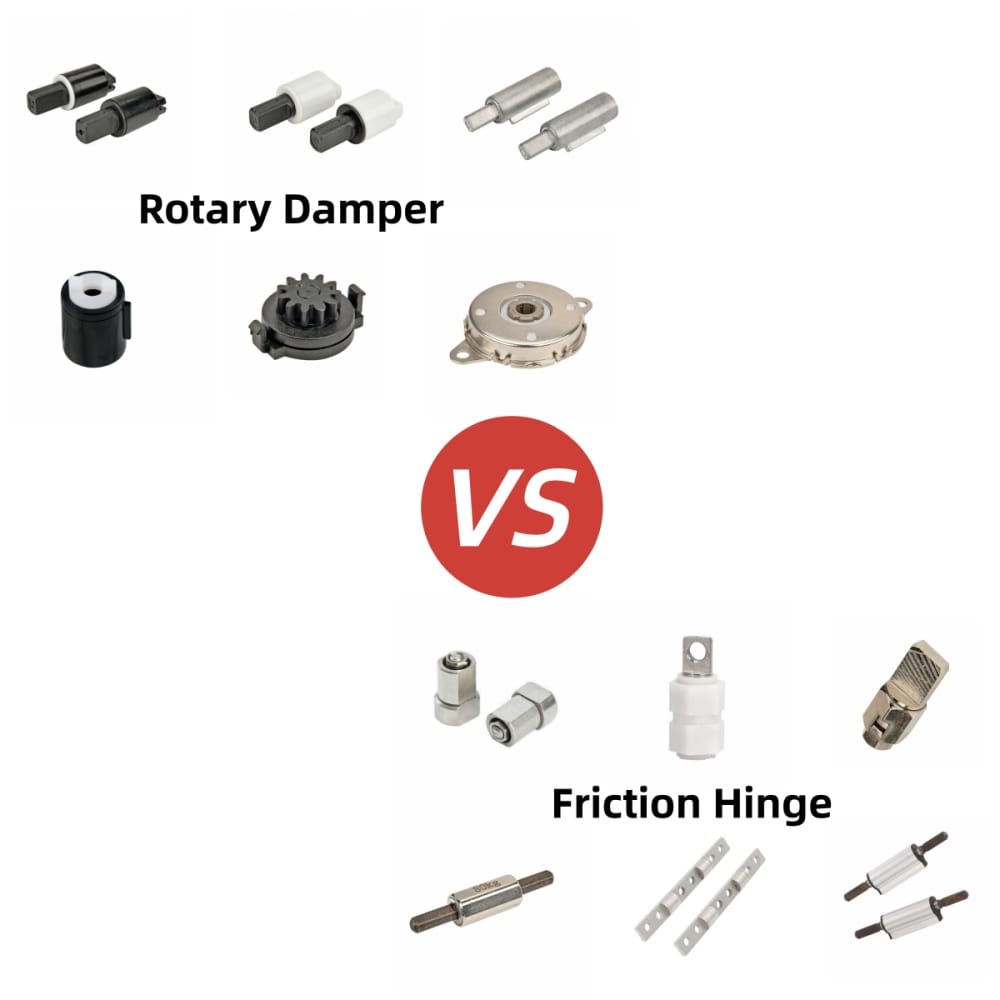
Hello, engineering and procurement professionals! In the intricate world of product design, achieving precise and controlled motion is paramount. Whether you’re aiming for a gentle, silent close or a stable, multi-position hold, the choice between a rotary damper and a friction hinge is a fundamental decision that impacts user experience, product longevity, and overall cost-effectiveness. Both are critical components in motion control, yet they serve distinct purposes and operate on different principles. At Janhinge, we specialize in both, and this comprehensive guide is designed to help you navigate the selection process, ensuring your next project benefits from the optimal motion control solution. Let’s dive into the nuances that differentiate these essential mechanisms.
Understanding Rotary Dampers: The Art of Controlled Deceleration
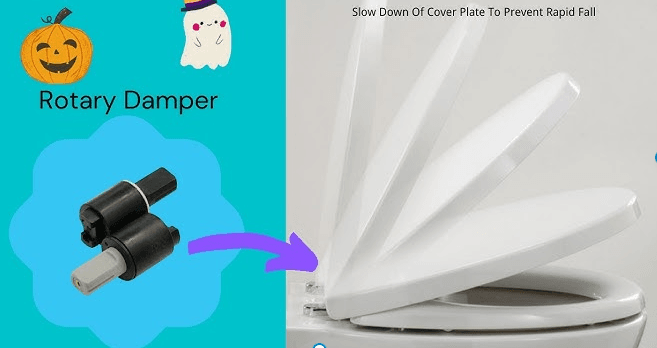
Rotary dampers are precision devices engineered to provide controlled resistance to rotational movement, primarily for slowing down or softening an action. Imagine a toilet seat closing gently, a car’s grab handle retracting smoothly, or an appliance lid descending without a harsh slam – these are classic applications where rotary dampers excel. Their core function is to absorb kinetic energy and dissipate it, typically as heat, through the viscous resistance of a fluid.
How Rotary Dampers Work:
Most rotary dampers operate on the principle of viscous damping. Inside the damper, a rotor moves through a high-viscosity silicone fluid within a sealed housing. As the rotor turns, the fluid creates resistance, which is directly proportional to the speed of rotation. This means the faster the movement, the greater the resistance, providing a smooth, controlled deceleration. Key characteristics include:
•Smooth, Gentle Motion: They prevent slamming, abrupt movements, and noise, enhancing product safety and perceived quality.
•Directional Control: Available in one-way (damping in a single direction, free movement in the other) or two-way (damping in both directions) configurations.
•Maintenance-Free: Typically sealed units that require no lubrication or adjustment throughout their lifespan.
•Compact Design: Often small and easily integrated into tight spaces.

Typical Applications for Rotary Dampers:
Rotary dampers are ideal for applications where controlled closing or opening speed is desired, but the component does not need to be held rigidly in an intermediate position. Common uses include:
•Automotive: Glove compartments, grab handles, ash trays, cup holders.
•Home Appliances: Washing machine lids, refrigerator doors, oven doors, dishwasher trays.
•Furniture: Cabinet doors, desk drawers, office chair mechanisms.
•Medical Devices: Instrument covers, access panels where gentle closing is critical.
•Consumer Electronics: CD/DVD trays, printer covers.
Understanding Friction Hinges: The Power of Position Holding
In contrast to dampers, friction hinges (also known as position control hinges or torque hinges) are designed to hold a component firmly in any desired position throughout its range of motion, without the need for external props, stays, or locking mechanisms. They achieve this through mechanical resistance, or friction, generated between internal elements.
How Friction Hinges Work:
Friction hinges utilize a series of internal friction elements (often discs or conical surfaces made from specialized materials) that are compressed together. As the hinge rotates, these elements slide against each other, creating a consistent resistive torque. This torque is carefully engineered to counteract the weight of the attached component, allowing it to remain stable at any angle. Key characteristics include:
•Infinite Positioning: The ability to hold a component securely at any angle, providing flexibility and convenience for the end-user.
•Consistent Torque: Designed to maintain a specified torque value over thousands of cycles, ensuring reliable performance.
•Durability: Constructed with robust materials and precision manufacturing to withstand repeated use.
•Enhanced User Experience: Provides a premium, controlled feel, indicating quality and thoughtful design.

Typical Applications for Friction Hinges:
Friction hinges are indispensable where a component needs to be positioned and held stable at various angles. Common uses include:
•Consumer Electronics: Laptop screens, tablet stands, monitor arms, portable device covers.
•Medical Devices: Display screens on diagnostic equipment, adjustable patient trays, instrument covers.
•Industrial Equipment: Control panel doors, machine guards, access panels, adjustable work surfaces.
•Furniture: Adjustable headrests, cabinet doors that stay open, display cases.
The Core Distinction: Damping vs. Holding – When to Choose Which?
The fundamental difference boils down to their primary function:
•Rotary Dampers: Control the speed of movement, providing a soft, gentle close or open.
•Friction Hinges: Control the position, allowing a component to be held stably at any angle.
Choosing between them depends entirely on the desired motion profile and user interaction for your product. Here’s a quick decision matrix:
| Feature/Requirement | Choose Rotary Damper If… | Choose Friction Hinge If… |
| Primary Goal | Slowing down motion, preventing slamming, soft-close/open | Holding a component at any desired angle, infinite positioning |
| User Interaction | Gentle, controlled movement; hands-off operation after initial push | User needs to manually adjust and leave component in place |
| Intermediate Positions | Not required to hold; will move to end position | Critical to hold securely at various intermediate angles |
| Energy Management | Dissipates kinetic energy | Resists external forces (gravity, vibration) to maintain position |
| Typical Torque Range | Lower, focused on speed control | Higher, focused on holding power |

Key Selection Criteria for Engineers and Procurement
Making the right choice requires a detailed evaluation of your application’s specific needs. Consider these critical factors:
1. Functionality: What is the Desired Motion?
•Damping: If your primary goal is to prevent slamming, reduce noise, or ensure a smooth, controlled descent/ascent, a rotary damper is your solution. Think about the speed of movement you want to achieve.
•Position Holding: If the component needs to stay put at any angle it’s left in, resisting gravity or vibration, then a friction hinge is essential. Consider the weight and leverage of the component.
2. Torque/Damping Force Requirements
•Rotary Dampers: The damping force is usually specified in N·m/rad/s or similar units, indicating resistance per unit of angular velocity. This needs to be matched to the kinetic energy of the moving part.
•Friction Hinges: The torque is specified in N·m (Newton-meters) or in-lbs, representing the static force required to move the hinge. Accurate torque calculation is vital to ensure the hinge can hold the load effectively. Janhinge offers torque calculation assistance to ensure precise selection.
3. Cycle Life & Durability
Both components are expected to perform reliably over thousands of cycles. Consider:
•Application Frequency: How often will the component be moved?
•Material Compatibility: Does the environment (temperature, chemicals, dust) require specific materials (e.g., stainless steel, specialized plastics)?
•Testing Standards: Ensure the manufacturer’s testing protocols meet or exceed your product’s expected lifespan and operating conditions. Janhinge’s products undergo rigorous testing to guarantee longevity.
4. Application Environment
•Temperature Range: Extreme temperatures can affect the viscosity of damper fluids or the friction properties of hinge elements.
•Contaminants: Dust, moisture, or corrosive agents can impact performance. Sealed units or specific material coatings might be necessary.
•Space Constraints: Both components come in various sizes and mounting configurations. Evaluate the available space for integration.
5. Cost & Customization
•Standard vs. Custom: While standard components are often more cost-effective, custom solutions can offer perfect fit, optimized performance, and long-term value. Janhinge excels in OEM/ODM hinge and damper manufacturing, providing tailored solutions.
•Total Cost of Ownership (TCO): Consider not just the unit cost, but also potential savings from reduced warranty claims, improved user satisfaction, and simplified assembly.
6. User Experience
•Feel: Do you want a smooth, almost effortless movement (damper) or a firm, deliberate hold (hinge)? The perceived quality and user satisfaction are heavily influenced by the tactile feedback of these components. A well-chosen damper provides a luxurious, controlled feel, while a precisely engineered friction hinge offers a reassuring stability.
•Safety: Dampers can prevent injury by slowing down heavy lids or doors. Friction hinges can prevent accidental closures or movements that might pinch fingers or damage equipment.
•Noise Reduction: Dampers are excellent for eliminating slamming noises, contributing to a quieter and more pleasant environment.
The Janhinge Advantage: Your Partner in Precision Motion Control
At Janhinge, we understand that selecting the right motion control solution is more than just picking a part; it’s about optimizing your product’s functionality, enhancing its user experience, and ensuring its long-term reliability. With decades of expertise in both rotary dampers and friction hinges, we offer a unique value proposition to our B2B partners:
•Deep Engineering Expertise: Our team of experienced engineers works closely with you from concept to production. We don’t just supply components; we provide comprehensive design support, including torque calculation, 3D modeling, prototyping, and application-specific testing. We help you navigate complex technical challenges and arrive at the most effective solution.
•Customization at Scale: We excel in OEM/ODM manufacturing, offering highly customized solutions that integrate seamlessly into your product. Whether you need a unique form factor, specific torque values, specialized materials for harsh environments, or integrated features, Janhinge has the capability to deliver. Our flexible manufacturing processes support both small-batch prototyping and high-volume production.
•Uncompromising Quality: Quality is at the core of everything we do. Our ISO 9001 certified facilities adhere to stringent quality control standards at every stage, from raw material inspection to final product testing. We utilize advanced testing equipment to ensure every damper and hinge meets precise specifications for cycle life, torque consistency, and environmental resistance. Explore Janhinge’s Quality Assurance.
•Global Supply Chain Reliability: As a direct manufacturer, we offer transparent pricing, competitive lead times, and a robust supply chain. By partnering directly with Janhinge, you eliminate middlemen, reduce costs, and gain direct access to our manufacturing process and technical support, ensuring a smooth and efficient procurement experience.
•Innovation and Continuous Improvement: The world of motion control is constantly evolving. Janhinge is committed to continuous research and development, exploring new materials, technologies, and manufacturing techniques to bring you cutting-edge solutions that keep your products ahead of the curve.
Making the Right Choice: A Strategic Decision
Choosing between a rotary damper and a friction hinge is a strategic decision that impacts your product’s performance, user satisfaction, and market competitiveness. By carefully evaluating your application’s specific needs against the distinct functionalities of each component, you can make an informed choice that elevates your design.
Remember, Janhinge is more than just a supplier; we are your dedicated partner in achieving optimal motion control. Our expertise, customization capabilities, and commitment to quality ensure that you receive not just a component, but a complete solution tailored to your success.
Ready to discuss your motion control needs?
•Request a Consultation with a Janhinge Engineer
•View Our Full Range of Rotary Dampers
•Explore Our Friction Hinge Solutions
•Download Our Product Catalogs
Frequently Asked Questions (FAQs)
1. Can I use a rotary damper and a friction hinge together in the same application?
Yes, in some complex applications, combining both a rotary damper and a friction hinge can provide a highly sophisticated motion control solution. For example, a heavy lid might use a friction hinge to hold it open at various angles, while a rotary damper ensures a soft, controlled close from any position. Our engineers can help you design such integrated solutions.
2. How do I determine the correct torque for a friction hinge or damping force for a rotary damper?
Accurate calculation involves considering the weight, dimensions, center of gravity, and desired speed/feel of the moving component. Janhinge provides detailed technical datasheets and offers direct engineering support, including specialized calculation tools and simulation services, to help you specify the exact requirements for your application. Contact us for torque calculation assistance.
3. What is the typical lead time for custom motion control solutions from Janhinge?
Lead times for custom solutions vary based on design complexity, material availability, and order volume. However, our direct factory model and agile manufacturing processes allow us to offer competitive lead times. We will provide a clear timeline during the quotation and design phase.
4. Are Janhinge’s products compliant with international quality standards?
Absolutely. Janhinge operates under strict ISO 9001 quality management systems. Our products are designed and manufactured to meet or exceed relevant industry standards, ensuring reliability and performance in diverse global markets. Specific certifications can be provided upon request.
5. What kind of after-sales support does Janhinge offer?
We pride ourselves on comprehensive after-sales support. This includes technical troubleshooting, replacement part availability, and ongoing consultation for product improvements or new applications. Our goal is to build long-term partnerships with our clients.