
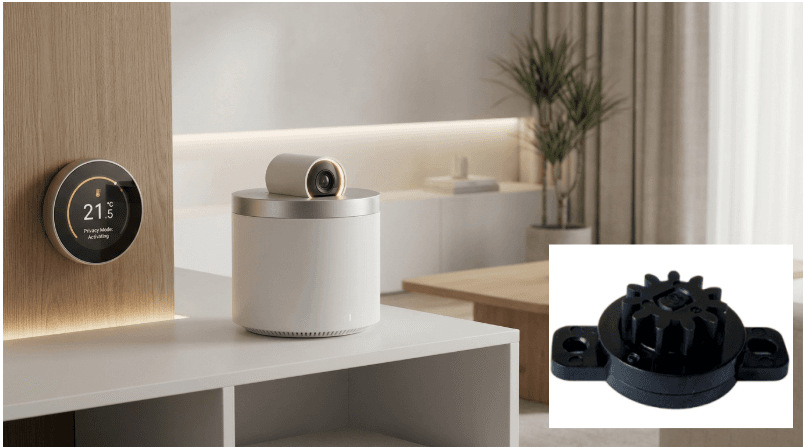
The rapid development of smart home technology has revolutionized how we interact with our living spaces. From smart thermostats and automatic curtains, to smart robot vacuums, to voice-controlled smart displays and motorized pop-up cameras, user experiences increasingly rely on the seamless, silent operation of physical components. As these devices become smaller and more sophisticated, integrating precise motion control—particularly small rotary dampers and micro friction hinges—has become a critical engineering challenge.
For product designers and procurement experts in the IoT and smart home sectors, sourcing the right micro-motion components is essential to achieving the premium “magic” experience that consumers expect from smart, connected devices. This technical guide, written by engineering experts at JAN Hinge Damper, explores the unique needs, design constraints, and strategic sourcing for motion control in smart home applications.
The Challenge of Miniaturization in IoT
Smart home devices are characterized by their compact form factors. A smart display must fit unobtrusively on a kitchen counter; a motorized camera must retract seamlessly into a slim soundbar. This miniaturization leaves very little space for mechanical components, demanding that engineers achieve maximum performance from the smallest possible footprint.
Micro Rotary Dampers for Silent Automation
When a motorized component, such as a pop-up privacy camera on a smart display or a motorized air vent on a smart HVAC system, reaches the end of its travel, it can produce a harsh, mechanical “clack.” This noise shatters the illusion of sophisticated technology and signals poor engineering to the user.
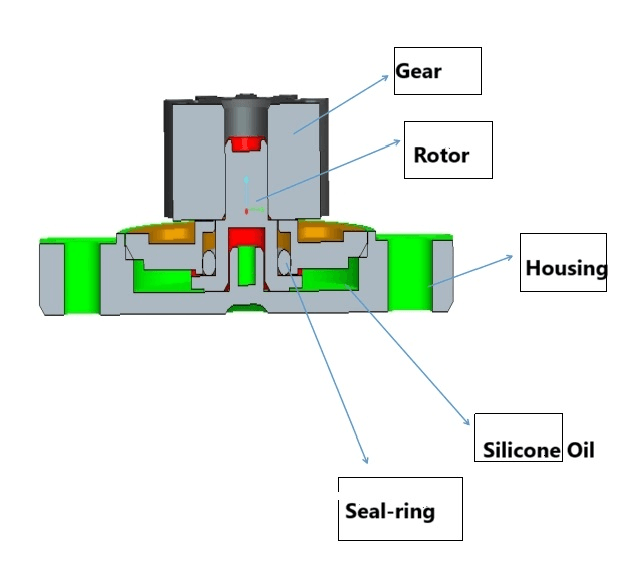
Micro rotary dampers are employed to absorb this kinetic energy at the end of travel. By utilizing the viscous resistance of silicone oil within a tiny housing (often as small as 5mm to 8mm in diameter), these dampers ensure that moving parts decelerate smoothly and silently before contacting their mechanical stops. The primary engineering challenge is achieving sufficient damping force within such a constrained volume while guaranteeing zero oil leakage over the device’s entire lifespan—a critical requirement given the proximity to sensitive electronics.
Miniature Friction Hinges for Precise Positioning
Smart displays and control panels often require user adjustment to optimize the viewing angle or camera framing. A user should be able to tilt the screen of a smart hub with one finger, and the screen must stay exactly where it is released—a property known as “free-stop” or “stay-put.”
This requires a miniature friction hinge (torque hinge). Unlike larger hinges used in laptops, these micro hinges must generate precise holding torque using extremely small friction elements (such as micro-bands or miniature disk stacks) while maintaining a smooth, consistent feel without any “stiction”—the static friction that causes a jerky, unpleasant initial movement that undermines the premium feel of the product.
Critical Specifications for Smart Home Engineers
Designing motion control for IoT devices requires meticulous attention to detail and rigorous specification of performance parameters.
1. Ultra-Low Noise Operation (NVH)
In a quiet home environment, any mechanical noise from a smart device is amplified and immediately noticed. A damper or hinge must not only prevent slamming but must also operate silently itself, producing no clicking, grinding, or rattling sounds.
Engineering Best Practice: Specify components designed for ultra-low Noise, Vibration, and Harshness (NVH). JAN Hinge Damper utilizes high-precision automated injection molding for our micro damper gears and housings, ensuring perfect meshing tolerances and eliminating internal rattling or clicking sounds during operation, typically achieving noise levels below 30 dB.
2. Zero-Leakage Sealing Technology
Smart home devices are packed with sensitive electronics, PCBs, and optical sensors. Even a microscopic leak of silicone oil from a rotary damper can cause catastrophic failure of the device, leading to costly recalls and severe brand damage.
Engineering Best Practice: Never compromise on sealing. We employ advanced ultrasonic welding techniques and proprietary micro O-ring designs to hermetically seal our miniature dampers, guaranteeing zero oil leakage even under elevated operating temperatures (e.g., inside a warm smart speaker enclosure that may reach 50°C to 60°C during normal operation).
3. High Cycle Life and Reliability
Smart home devices are expected to operate flawlessly for years. Automated functions, such as a camera retracting for privacy or blinds opening each morning, may be performed multiple times daily, accumulating cycles rapidly.
Engineering Best Practice: Demand lifecycle testing data that exceeds typical consumer electronics standards. A high-quality micro friction hinge should maintain its holding torque (with less than 15% degradation) for at least 30,000 to 50,000 cycles. Micro rotary dampers must endure similar lifecycles without seal degradation or loss of damping force.
4. Tight Torque Tolerance at Micro Scales
When dealing with very light components (e.g., a 50-gram pop-up camera), even a tiny variance in damping torque can drastically alter the closing speed, making the device feel inconsistent across units.
Engineering Best Practice: Specify a tight torque tolerance (±10% or better). Achieving this at a micro-scale requires 100% automated online torque inspection during manufacturing, ensuring every single unit performs identically and meets the specified closing speed.
| Specification | Standard Consumer Electronics | JAN Smart Home (IoT) Standard |
| Damper Diameter | 10mm – 15mm | 5mm – 8mm (Ultra-miniature) |
| Operating Noise Level | < 45 dB | < 30 dB (Whisper-quiet) |
| Torque Tolerance | ±20% | ±10% (100% online inspection) |
| Oil Leakage Risk | Low / Moderate | Zero (Ultrasonic welding / Dual-seal) |
| Lifecycle | 20,000 cycles | 30,000 – 50,000+ cycles |
Strategic Sourcing for IoT Procurement
For procurement managers in the fast-paced smart home industry, time-to-market and component reliability are paramount. IoT product cycles are short and competitive, leaving little margin for component-related delays or quality failures.
The most critical question to ask a potential supplier is whether they can scale from producing 1,000 prototypes to 500,000 mass-production units while maintaining a ±10% torque tolerance. This requires significant automated manufacturing infrastructure that many smaller component suppliers lack. The best suppliers act as an extension of your engineering team, providing torque calculations, CAD integration support, and lifecycle testing data specific to your application, rather than simply shipping off-the-shelf parts.
Frequently Asked Questions (FAQ)
Q1: What is the smallest rotary damper you manufacture for smart home applications?
We manufacture ultra-miniature rotary dampers with diameters as small as 5mm, specifically designed to fit within the tight confines of motorized pop-up cameras, smart locks, and compact sensor covers. Our engineering team can work with your CAD models to identify the optimal damper size and torque specification for your specific application.
Q2: How do you ensure that a miniature friction hinge provides a smooth feel without “stiction”?
Stiction (the jerky feeling when initially moving a hinge) is minimized through precise material selection—often specialized engineering plastics against polished, hardened steel—and proprietary lubrication techniques that ensure the dynamic friction coefficient is very close to the static friction coefficient, resulting in a smooth, linear feel from the very first degree of movement.
Q3: Are your micro dampers safe to use directly adjacent to sensitive PCBs and optical lenses?
Yes. We guarantee zero oil leakage through the use of advanced ultrasonic welding and micro O-ring sealing technologies. Our dampers are routinely integrated millimeters away from delicate camera sensors and microprocessors in consumer electronics applications without any risk of contamination.
Q4: How does the heat generated by a smart speaker or hub affect the damper’s performance?
The internal temperature of a smart device can easily reach 50°C to 60°C during normal operation. Standard silicone oil thins at these temperatures, reducing damping force and causing the component to close faster than specified. We utilize temperature-stable silicone fluids that maintain consistent viscosity across this range, ensuring reliable soft-close performance regardless of the device’s thermal state.
Q5: What is the typical lifecycle of your micro motion components, and how is it tested?
Our micro friction hinges and rotary dampers are subjected to rigorous automated lifecycle testing using computer-controlled rigs that cycle the components at their rated load while continuously monitoring torque output. They are designed to exceed 30,000 to 50,000 cycles with minimal torque degradation, ensuring they outlast the expected lifespan of the smart home device itself.
Design smart devices that feel truly intelligent. Let’s talk on Whatsapp.
Contact the JAN Engineering Team today to request ultra-miniature motion control samples and discuss custom engineering solutions for your next IoT product.