
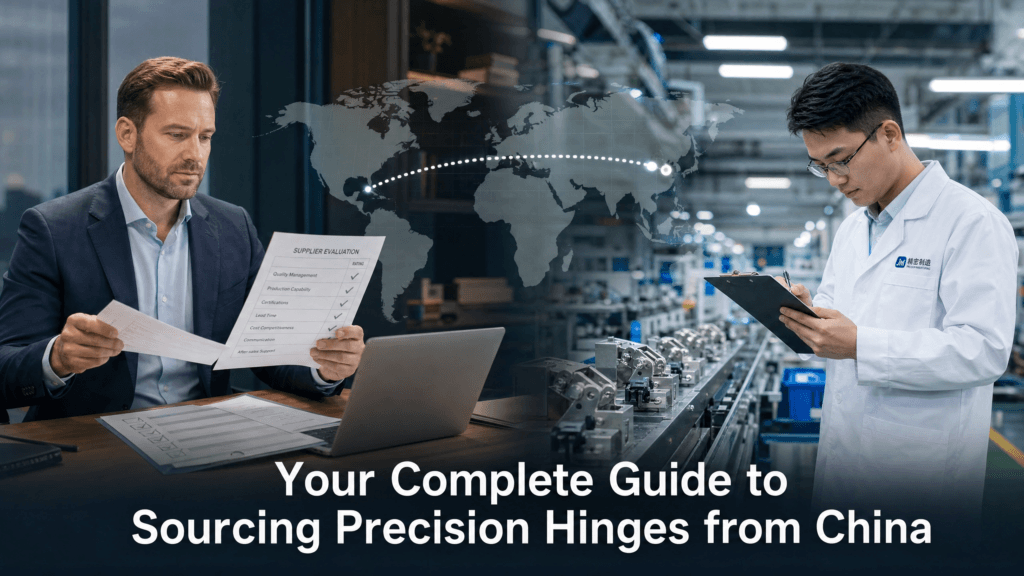
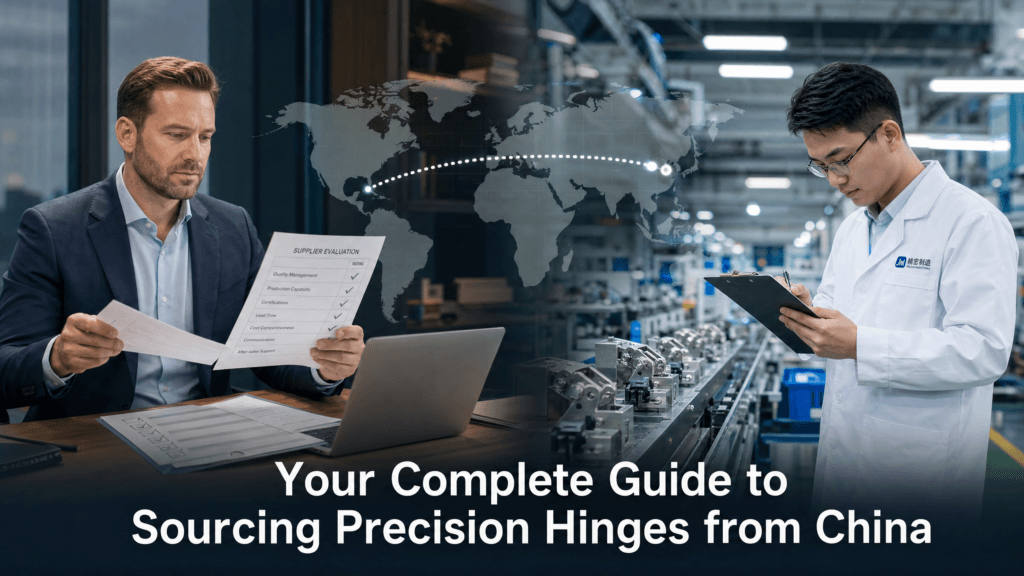
The Risks and Rewards of Global Sourcing
For procurement managers and supply chain directors, sourcing rotary damper from China offers an undeniable competitive advantage. The concentration of raw materials, advanced manufacturing infrastructure, and skilled engineering talent allows Chinese factories to produce precision motion control components at highly competitive prices.
However, the B2B sourcing landscape is fraught with hidden risks. The internet is flooded with slick websites belonging to “trading companies” posing as direct manufacturers. Partnering with a middleman instead of a direct factory leads to inflated prices, poor quality control, and zero accountability when a batch of hinges fails in the field.
To protect your supply chain, you must look beyond the glossy brochure. This article provides a comprehensive guide on how to verify China damper hinge supplier capabilities, conduct a rigorous factory audit, and build a trusted partnership with a direct OEM manufacturer like Janhinge.
Trading Company vs. Direct Factory: Spotting the Difference
The first and most critical step in B2B sourcing is verifying that you are dealing with an actual factory. Trading companies add a 20% to 40% markup to the unit cost. More dangerously, because they outsource production to the lowest bidder, they cannot guarantee batch-to-batch torque consistency or silicone oil seal integrity.
How to Verify a Direct Factory
When evaluating a China hinge manufacturer factory visit, look for these undeniable signs of a direct manufacturer:
•Business License Verification: The company’s registered business scope must explicitly state “manufacturing” or “production,” not just “sales” or “trading.”
•In-House Machinery: A true manufacturer of precision hinges will have heavy machinery on-site. Ask for video tours or photos of their CNC machining centers and injection molding machines.
•Engineering Support: Trading companies have sales reps; factories have engineers. If your technical questions about torque decay or kinematic profiles are met with vague answers or long delays, you are likely dealing with a middleman.

The 8-Point Factory Audit Checklist for Motion Control Components
If you are planning an on-site visit or hiring a third-party auditor, you need a specific checklist tailored to motion control hardware. Precision hinges and dampers are highly engineered components; standard quality audits are insufficient.
Use this factory audit checklist OEM hardware to evaluate your potential supplier:
1. ISO and IATF Certifications
Do not just ask if they are certified; ask to see the physical certificates and check their expiration dates. For automotive or premium OEM applications, IATF 16949 certification is a mandatory indicator of a mature quality management system.
2. Tooling and Mold Ownership
Who makes the molds? A premium manufacturer will have an in-house tooling department. This ensures rapid prototyping and immediate repairs if a mold wears out. Crucially, ensure your contract explicitly states that you own the rights to any custom molds you pay for.
3. Automated Assembly Lines
Manual assembly of rotary dampers leads to inconsistent silicone oil volume and pinched O-rings, which causes leaks. Look for automated oil dispensing and ultrasonic welding machines on the factory floor.
4. 100% End-of-Line Testing
This is the most important checkpoint. Does the factory rely on random batch sampling (AQL), or do they test every single unit? Janhinge utilizes automated air-pressure leak testers and torque measurement machines on 100% of our output.

5. Material Traceability
Can the factory trace a finished hinge back to the specific batch of raw steel or silicone oil used? This traceability is vital for root-cause analysis in the event of a field failure.
6. Environmental Stress Testing Labs
Ask to see their testing laboratory. They should have equipment capable of running 50,000-cycle endurance tests, as well as thermal chambers to test damper performance at -20°C and 70°C.
7. Cleanliness and Organization (5S)
A messy factory produces messy parts. Look for clear floor markings, organized tool stations, and a general adherence to 5S lean manufacturing principles.
8. Engineering Collaboration
During a factory visit, sit down with their R&D team. Present a complex design challenge and evaluate their problem-solving approach. A true OEM partner will offer Design for Manufacturing (DFM) suggestions to improve your product.

The Janhinge Sourcing Experience: Transparency and Speed
At Janhinge, we welcome factory audits. We have spent 21 years building a vertically integrated manufacturing facility in Dongguan, China, designed specifically to meet the rigorous demands of global B2B buyers.
When B2B sourcing precision hinge China from Janhinge, you bypass the middlemen and connect directly with the engineers who build your parts.
From First Contact to Mass Production
We have optimized our workflow to provide Western procurement teams with speed, transparency, and reliability:
1.Rapid Quoting: Submit your 3D CAD files or torque requirements, and our engineering team will provide a detailed technical quote within 4 hours.
2.Immediate Sampling: We hold a massive inventory of standard rotary dampers and friction hinges. Standard samples are shipped within 24 hours via DHL or FedEx.
3.Custom OEM Prototyping: If your project requires a custom mold, our in-house tooling department will deliver functional, test-ready prototypes in just 20 days.
4.Mass Production: Once you approve the sample and PPAP documentation, we initiate mass production with our 100% automated testing protocol.

Conclusion: Source with Confidence
The cheapest hinge on Alibaba is rarely the most cost-effective solution for your supply chain. Product recalls, delayed shipments, and inconsistent quality will quickly erase any initial unit cost savings.
By conducting a thorough factory audit and partnering with a verified, direct manufacturer like Janhinge, you secure your supply chain, protect your brand reputation, and ensure your products deliver a premium tactile experience.
Ready to audit our capabilities? Contact us today to schedule a virtual factory tour or request a sample pack.
Schedule a Factory Tour | Request OEM Hinge Samples
Frequently Asked Questions (FAQ)
Q1: We are based in the US/Europe. Do you support third-party factory audits?
A: Yes, absolutely. We regularly host third-party auditing firms (such as SGS, TÜV, or your own independent auditors) at our Dongguan facility. We are fully transparent and will provide full access to our production lines, testing labs, and quality documentation.
Q2: How do you handle intellectual property (IP) protection for our custom designs?
A: We take IP protection very seriously. We sign strict Non-Disclosure Agreements (NDAs) before you share any CAD files. Furthermore, because we handle all tooling and manufacturing in-house, your designs are never shared with outside sub-contractors.
Q3: What are your standard payment terms for international B2B orders?
A: For custom OEM orders, we typically require a tooling deposit to begin mold creation. For mass production, our standard terms are a 30% deposit via T/T (Telegraphic Transfer) with the 70% balance due before shipment, after you have reviewed the final inspection reports.
Q4: Can you provide material certificates (RoHS, REACH) for your hinges?
A: Yes. All our products comply with global environmental standards. We can provide full material composition reports, RoHS, and REACH compliance certificates for both the metal/plastic housings and the internal silicone oils.
Q5: Do you manage the export shipping logistics, or do we need our own freight forwarder?
A: We can accommodate either preference. We have an experienced in-house logistics team that partners with major sea and air freight carriers to deliver door-to-door (DDP/DAP) to over 40 countries. Alternatively, we are happy to work with your designated freight forwarder under FOB or EXW terms.