
The Illusion of a “Good Deal” in Motion Control Sourcing
In the complex ecosystem of modern manufacturing, motion control components like rotary dampers and friction hinges are often treated as afterthoughts—commoditized hardware squeezed into the final stages of the bill of materials (BOM). For procurement managers and business owners, the temptation to source the cheapest available option is strong. However, treating a highly engineered custom friction hinge as a simple fastener is a critical strategic error.
The reality is that motion control mechanisms are the direct physical interface between your customer and your product. Whether it is the smooth, silent descent of a premium washing machine lid, the exact positioning of a critical medical monitor, or the luxurious feel of an automotive center console, these components define the tactile quality of your brand.
When you select a supplier based solely on unit price, you are not saving money; you are accumulating hidden supply chain risks. This comprehensive guide will explore how engineers, procurement teams, and executives can look beyond the basic spec sheet to evaluate true supplier capability, mitigate catastrophic failure risks, and build a resilient supply chain with a verified rotary damper China factory.
The Engineer’s Dilemma: Bridging the Gap Between CAD and Reality
Design engineers face immense pressure to deliver flawless functionality within tight spatial constraints. When integrating a soft close damper hinge, the specifications on paper rarely tell the whole story of how the component will behave in the real world.
The Torque Consistency Crisis
One of the most pervasive issues in motion control engineering is batch-to-batch torque variation. A supplier might provide a golden sample that perfectly matches your torque requirements (measured in N.m). However, when the first mass production run arrives, the torque variance could be as high as ±30%.
This inconsistency leads to erratic product behavior: some lids slam shut, while others refuse to close fully. Engineers are then forced into a reactive loop of adjusting the product housing or adding counterweights to compensate for the supplier’s poor manufacturing tolerances.
The Thermal Performance Trap
Many low-cost dampers utilize inferior, unrefined silicone oils. While these may function adequately at room temperature (20°C), their viscosity breaks down dramatically under thermal stress. If your product is shipped to a cold climate (-10°C) or operates in a high-heat environment (like near an oven or inside a hot car cabin at 70°C), the damping effect can completely disappear, leading to mechanical shock and structural damage.
The Janhinge Engineering Advantage:
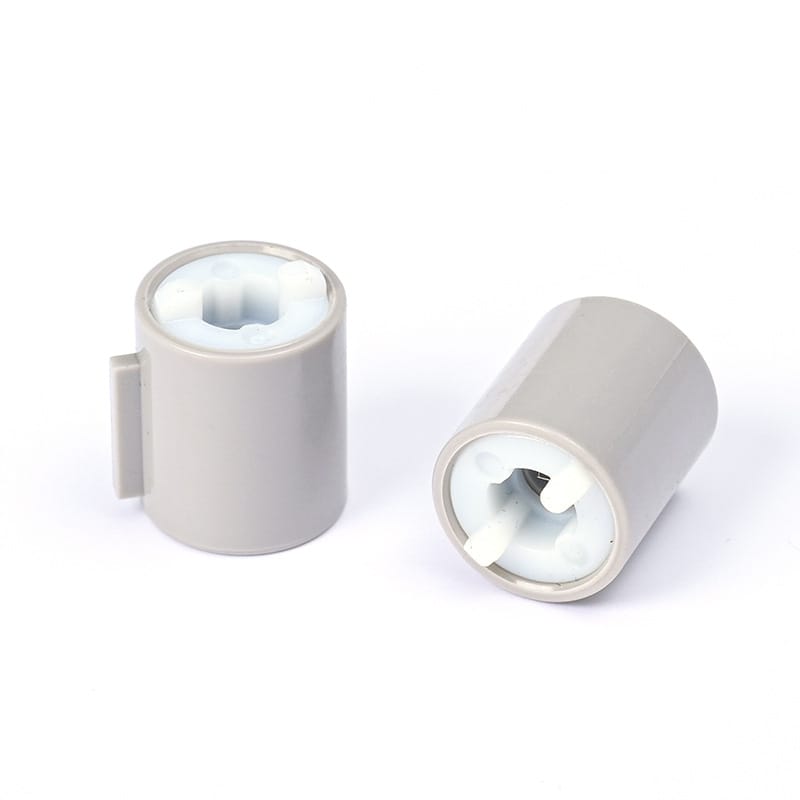
At Janhinge, we understand that a spec sheet is a promise that must be kept. We utilize premium, imported, temperature-stable silicone oil that maintains consistent viscosity across extreme temperature ranges. Furthermore, our extensive mold library and rapid prototyping capabilities mean we can deliver customized 3D CAD models and functional OEM samples in just 20 days, accelerating your time-to-market without compromising on validation.
The Procurement Perspective: Deconstructing the Total Cost of Ownership (TCO)
For procurement professionals, the mandate is clear: reduce costs while securing the supply chain. However, in the realm of industrial torque hinge OEM manufacturing, the initial purchase price is only the tip of the iceberg. The Total Cost of Ownership (TCO) includes the hidden costs of poor quality (COPQ).
The Devastating Math of Product Recalls
Consider a scenario where you save $0.10 per unit on a batch of 50,000 rotary dampers. The immediate saving is $5,000. However, if the supplier relies on outdated manual assembly and minimal spot-checking, the defect rate for oil leakage could easily reach 3%.
If those 1,500 defective dampers make it into your final assembled products—say, high-end laptops or medical devices—the cost of field failures, warranty claims, reverse logistics, and brand damage can quickly escalate into hundreds of thousands of dollars. The initial $5,000 “saving” becomes a massive financial liability.
Supply Chain Resiliency and Lead Times
Global supply chains are increasingly volatile. Relying on a supplier that outsources its injection molding, die-casting, or assembly creates multiple points of failure. A delay at any sub-tier supplier will directly impact your production line.
The Janhinge Procurement Advantage:
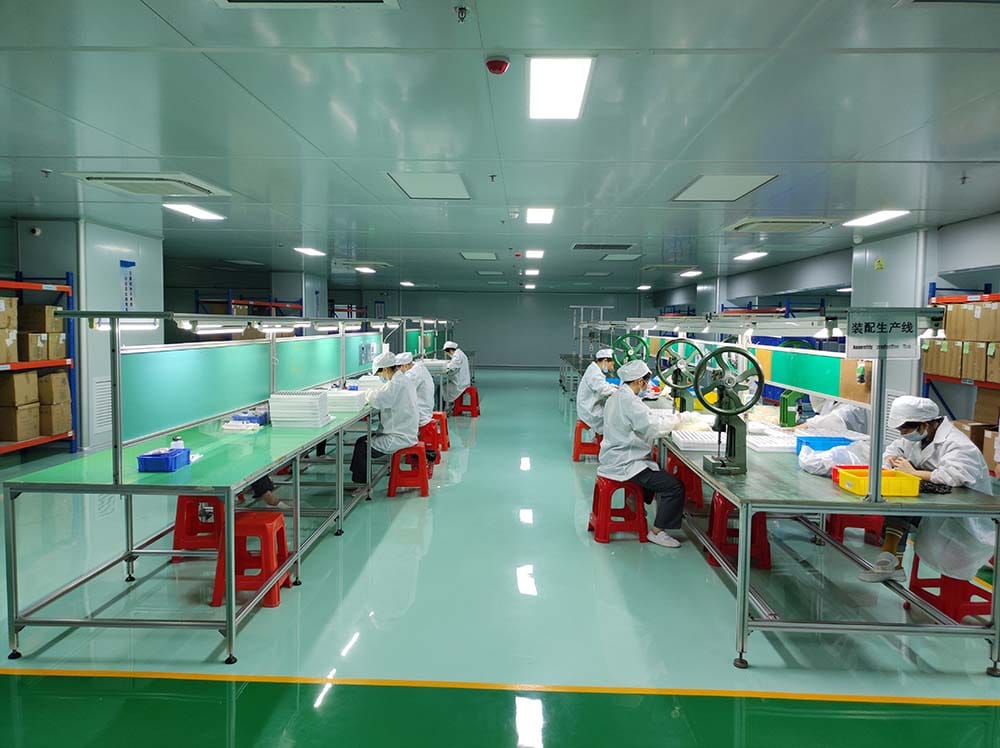
Janhinge offers a vertically integrated manufacturing ecosystem. We own our molds, operate 20 injection molding machines, 16 CNC machines, and conduct all assembly in-house. This vertical integration allows us to offer market-competitive pricing while maintaining absolute control over lead times. We can deliver 5,000-piece bulk orders in just 5 days, and 50,000-piece orders in 10 days.
More importantly, we eliminate the risk of defective parts entering your supply chain through our uncompromising commitment to 100% automated testing. Every single damper is subjected to a machine-judged air pressure leak test before it leaves our facility. You are not just buying a part; you are buying predictability.
The Executive View: Protecting Brand Equity and Driving Innovation
For business owners and C-level executives, the selection of a component supplier is a strategic decision that impacts brand positioning and long-term profitability.
In markets ranging from consumer electronics to automotive interiors, the “feel” of the product is a primary driver of perceived value. A harsh, noisy hinge makes a product feel cheap, regardless of its underlying technology. Conversely, a smooth, controlled motion conveys luxury, precision, and safety.
By partnering with a certified, reliable manufacturer, executives can shift their teams’ focus from fighting supply chain fires to driving product innovation. Knowing that your motion control components are backed by ISO 9001/14001 and IATF 16949 certifications, and supported by a robust patent portfolio, provides the peace of mind necessary to scale operations aggressively.
Conclusion: Audit Your Supplier, Secure Your Success
The difference between a functional product and an exceptional one lies in the details of its movement. As you evaluate your current or future hinge damper supply chain risk, ask the hard questions: Do they test 100% of their parts? Do they control their own tooling? Can they provide verifiable data on torque decay over 50,000 cycles?
Janhinge is not just a vendor; we are an extension of your engineering and quality assurance teams. Stop compromising on your product’s tactile experience. Contact our dedicated team today to request a custom DFM analysis, download our 2D/3D drawings, or secure free samples for your next hardware project.
Request a Custom Solution Today | Explore Our Core Product Lines
Frequently Asked Questions (FAQ) for B2B Buyers
Q1: How do you guarantee the consistency of torque in large volume orders?
A: Consistency is achieved through automation. Unlike suppliers who rely on manual assembly, Janhinge utilizes automated dispensing machines for silicone oil and automated O-ring installation. Every unit is then machine-tested for torque output. This eliminates human error and ensures that the 50,000th unit performs exactly like the first.
Q2: What specific tests do your rotary dampers undergo before shipping?
A: We do not rely on random batch sampling. Every single rotary damper undergoes a multi-stage, automated air pressure leak test. If a damper cannot hold the specified air pressure, it is automatically rejected by the machine. This 100% inspection protocol guarantees zero-leakage upon arrival at your facility.
Q3: Can you support custom torque profiles for unique product weights?
A: Absolutely. Our engineering team specializes in customizing internal friction and fluid dynamics to match your exact application requirements. Whether you need a high-holding-force friction hinge for a heavy industrial monitor or a delicate soft-close damper for a lightweight electronics cover, we can engineer the precise torque (N.m) needed.
Q4: What certifications does your manufacturing facility hold?
A: Our operations strictly adhere to international quality standards. We are fully certified under ISO 9001:2015 for quality management, ISO 14001 for environmental management, and IATF 16949, which is the stringent quality standard required by the global automotive industry.
Q5: We are transitioning our manufacturing to Southeast Asia/Mexico. Can you support global logistics?
A: Yes. While we are a direct factory located in Dongguan, China, we have extensive experience in global logistics. We partner with major carriers (FedEx, DHL, UPS) and trusted sea freight forwarders to ship to over 40 countries worldwide. We handle all export documentation to ensure a seamless supply chain transition, regardless of where your final assembly takes place.