
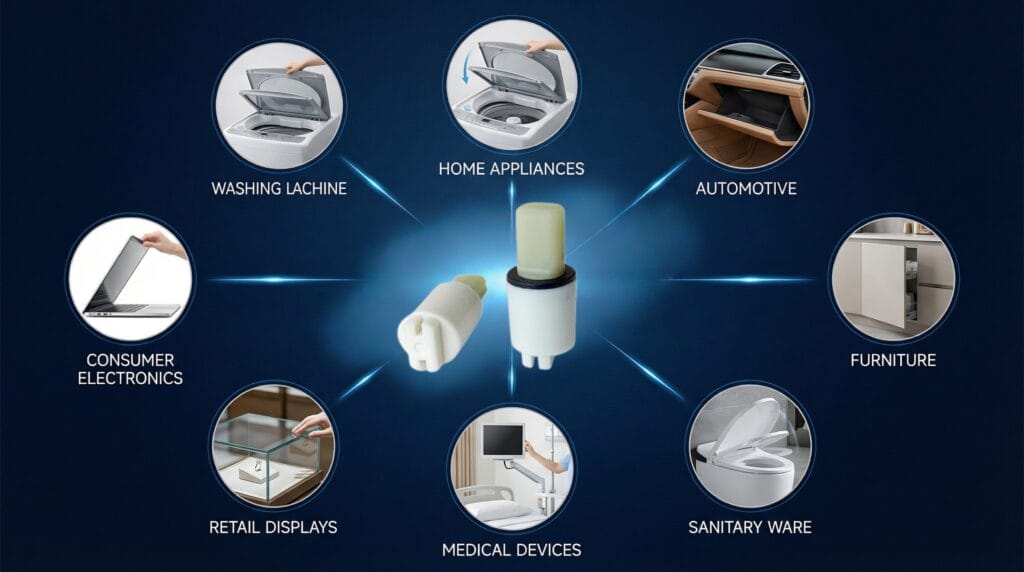
Motion control is a critical element of modern product design. When a heavy lid or cover slams shut, a drawer rattles against its frame, or a delicate instrument panel drops abruptly, the perceived quality of the product instantly diminishes. Rotary dampers—compact, fluid-filled mechanical devices that absorb kinetic energy—are the hidden heroes behind the smooth, silent, and luxurious “soft-close damper” experience we have come to expect in premium products.
But the applications of rotary dampers extend far beyond just making things quiet. They are essential for user safety, component longevity, and precise positioning. In this comprehensive guide, the engineering team at JAN Hinge Damper explores the vast and diverse applications of rotary dampers across major global industries.
1. Home Appliances (White Goods)
The home appliance sector is one of the largest consumers of rotary dampers. As appliances become more sophisticated, consumers demand quieter and safer operation.
•Washing Machines: Top-loading washing machines utilize heavy-duty vane dampers in their lid hinges. These dampers prevent the heavy glass or metal lid from slamming shut, protecting the user’s hands and preventing the glass from shattering upon impact.
•Refrigerators and Freezers: Dampers are integrated into the “soft-close” mechanisms of crisper drawers and heavy freezer chest lids, ensuring they close gently even when fully loaded with food.
•Ovens and Dishwashers: High-temperature resistant dampers are used in drop-down oven doors and dishwasher doors to provide a smooth, controlled descent when opened, preventing the door from crashing down against the user’s legs.
2. Automotive Interiors
In the automotive industry, NVH (Noise, Vibration, and Harshness) is a critical metric for vehicle quality. Rotary dampers are vital for eliminating rattles and providing a premium tactile feel inside the cabin.
•Glove Boxes: This is perhaps the most well-known automotive application. A small gear or vane damper ensures the glove box door glides open slowly and silently, rather than dropping abruptly onto the passenger’s knees.
•Center Consoles and Armrests: Dampers control the opening and closing of storage compartments between the seats.
•Cup Holders and Ashtrays: Spring-loaded, retractable cup holders rely on gear dampers to deploy smoothly when the release button is pressed.
•Overhead Grab Handles: Small dampers ensure the grab handle retracts slowly against the headliner when released, rather than snapping back with a loud “clack.”

3. Furniture and Cabinetry
The transition from functional to premium furniture is often defined by motion control.
•Kitchen and Bathroom Cabinets: Rotary dampers are integrated into concealed hinges or drawer slides to provide the ubiquitous “soft-close” feature, preventing slamming and extending the life of the cabinetry.
•Toy Boxes and Chests: For juvenile furniture, safety is paramount. Dampers are required by safety standards (like ASTM F963) to prevent heavy toy box lids from crushing a child’s fingers.
•Piano Lids: High-end pianos utilize specialized dampers to ensure the heavy keyboard cover descends slowly and silently, protecting both the instrument and the pianist’s hands.
•Office Furniture: Drop-down desk panels, keyboard trays, and filing cabinets utilize dampers for controlled, professional operation.
4. Medical and Healthcare Equipment
In medical environments, equipment must operate silently to maintain a calm atmosphere, and precisely to ensure patient safety.
•Diagnostic Monitors: While friction hinges hold the monitors in place, rotary dampers are often used in the articulating arms to ensure smooth, controlled movement when the doctor adjusts the screen position.
•Hospital Beds and Overbed Tables: Dampers control the folding mechanisms of bed rails and tables, preventing sudden drops that could startle or injure a patient.
•Medical Centrifuges and Analyzers: Heavy lids on laboratory equipment utilize dampers to ensure safe, controlled access to the internal chambers.
5. Consumer Electronics and IT
As electronics become smaller and more integrated into our daily lives, micro-motion control becomes essential.
•Laptops and Tablets: Ultra-slim disk dampers and friction hinges work together to provide the smooth opening resistance and “stay-put” functionality of laptop screens.
•Printers and Copiers: The heavy scanner lid or paper tray covers use dampers to prevent slamming, which could damage the sensitive optical components inside.
•Smart Home Devices: Pop-up cameras on smart TVs, motorized hidden sockets, and automated trash cans utilize micro-gear dampers for silent, futuristic deployment.
6. Retail and Commercial Displays
Retail environments subject fixtures to continuous, heavy abuse.
•Jewelry and Bakery Display Cases: Heavy, top-opening glass lids require commercial-grade, high-torque vane dampers. These prevent the glass from shattering if a customer or employee drops the lid, saving thousands of dollars in potential damage and liability.
•Interactive Kiosks and POS Terminals: Dampers and torque hinges allow screens to be adjusted smoothly by users of different heights while remaining stable during touch interaction.
7. Sanitary Ware
•Toilet Seats and Bidet Covers: The “soft-close toilet seat” is now a standard feature in modern bathrooms. Specialized asymmetric vane dampers allow the seat to be lifted easily but provide strong resistance when falling, eliminating the loud, unhygienic slam of a falling seat.
| Industry | Primary Application | Key Damper Requirement |
| Home Appliances | Washing Machine Lids | High Torque, Water Resistance |
| Automotive | Glove Boxes, Grab Handles | Wide Temperature Range (-20°C to 80°C) |
| Furniture | Toy Boxes, Kitchen Cabinets | Child Safety (Pinch Prevention), Longevity |
| Medical | Bed Rails, Lab Equipment | Silent Operation, Chemical Resistance |
| Retail Displays | Heavy Glass Cases | Extreme Durability, Overload Protection |
| Sanitary Ware | Soft-Close Toilet Seats | Asymmetric Damping (Easy open, slow close) |
The JAN Hinge Damper Advantage
While the applications are incredibly diverse, the underlying requirement is universal: reliability. A failed damper results in a broken product or, worse, an injury.
JAN Hinge Damper specializes in engineering and manufacturing rotary dampers for all the industries listed above. Whether you need an 8mm micro-damper for a smart home device or a 50 N·m heavy-duty damper for an industrial display case, our engineering team can customize the torque profile, housing material, and mounting configuration to seamlessly integrate into your specific application.
Frequently Asked Questions (FAQ)
Q1: Can a rotary damper be used in outdoor applications?
A: Yes, but the damper must be specifically engineered for it. We use specialized silicone oil blends that maintain stable viscosity in extreme weather (-30°C to +80°C) and utilize UV-resistant plastics or zinc alloy housings with robust O-ring seals to prevent water and dust ingress.
Q2: Are rotary dampers food-safe for use in kitchen appliances?
A: The silicone oil used inside high-quality dampers is generally non-toxic, but the damper itself is a sealed unit and the oil should never come into contact with food. For applications like refrigerator crisper drawers, we use food-grade, FDA-compliant external plastics (like specific grades of POM).
Q3: What is the smallest rotary damper available for consumer electronics?
A: Micro-motion control is a rapidly growing field. We manufacture micro-gear dampers with diameters as small as 5mm to 8mm, specifically designed for tight spaces in IoT devices, pop-up cameras, and small retractable mechanisms.
Q4: Can one damper handle a very wide or heavy lid, like a piano cover?
A: For very wide or heavy lids, it is usually better engineering practice to use two dampers (one on each hinge axis) rather than one massive damper. This distributes the torsional stress evenly across the lid, preventing the material from warping or twisting over time.
Q5: We have a unique application not listed here. Can you build a custom damper?
A: Absolutely. Custom OEM/ODM development is a core part of our business. If you have a unique motion control challenge, send us your CAD drawings and kinematic requirements. Our engineers will design a custom damper housing, shaft, and torque profile specifically for your product.
Bring premium motion control to your industry. Talk on Whatsapp
Contact the JAN Engineering Team today to discuss your specific application and request customized rotary damper samples for your next project.