
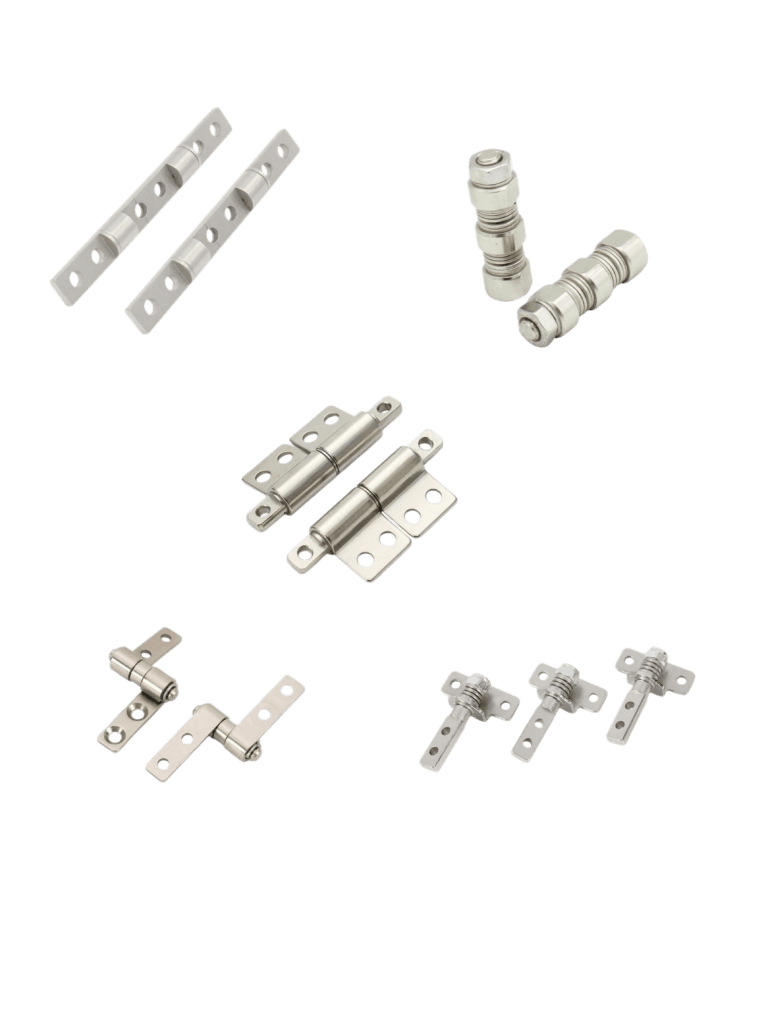
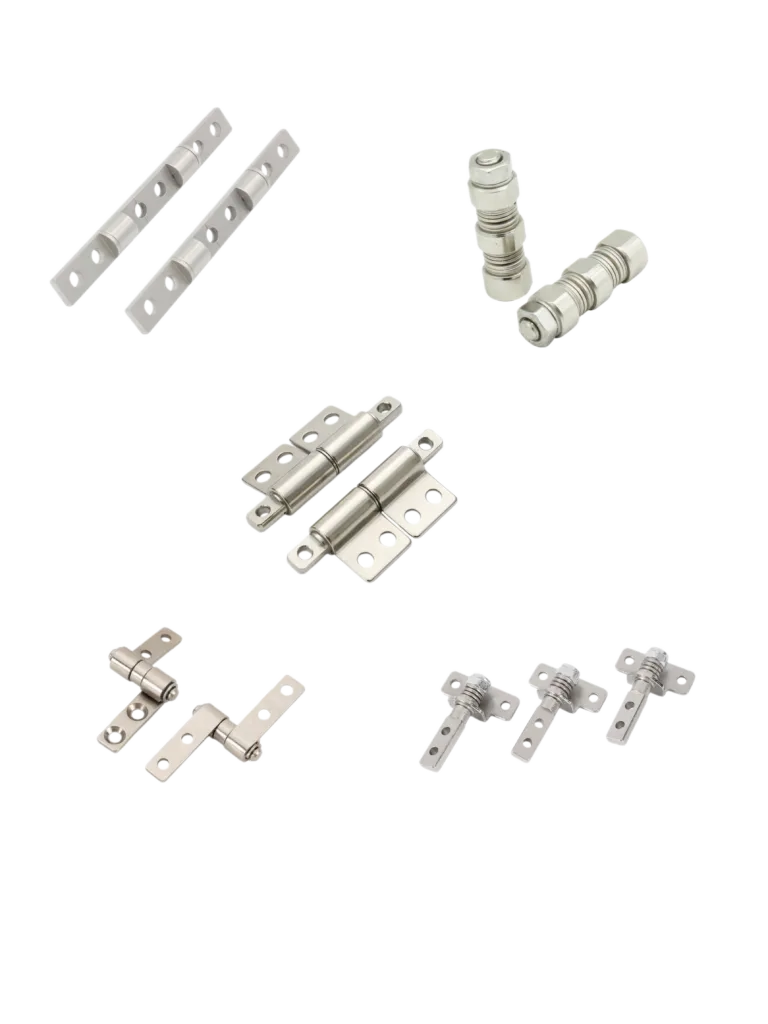
In the realm of product design, the “feel” of a device often dictates the user’s perception of its overall quality. When a user opens a laptop, adjusts a medical monitor, or lifts a heavy industrial enclosure panel, the motion should be smooth, deliberate, and secure. If a screen wobbles, a lid slams shut unexpectedly, or a control panel requires two hands to position, the user’s confidence in the engineering immediately diminishes.
The hero behind this seamless interaction is the friction hinge, also widely known in engineering circles as a constant torque hinge or position control hinge. Unlike free-swinging hinges, friction hinges are meticulously engineered to provide controlled resistance against pivoting motion, allowing components to be held securely at any desired angle — without latches, gas struts, or manual locking mechanisms.
For engineers and procurement managers, selecting the right friction hinge is not merely about finding a connector; it is about defining the tactile user interface and ensuring long-term mechanical reliability. We will explore the mechanics of friction hinges, critical selection criteria, industry applications, and the key factors procurement teams must consider when evaluating suppliers. Know more on Whatsapp.
1. The Mechanics of Position Control: How Friction Hinges Work
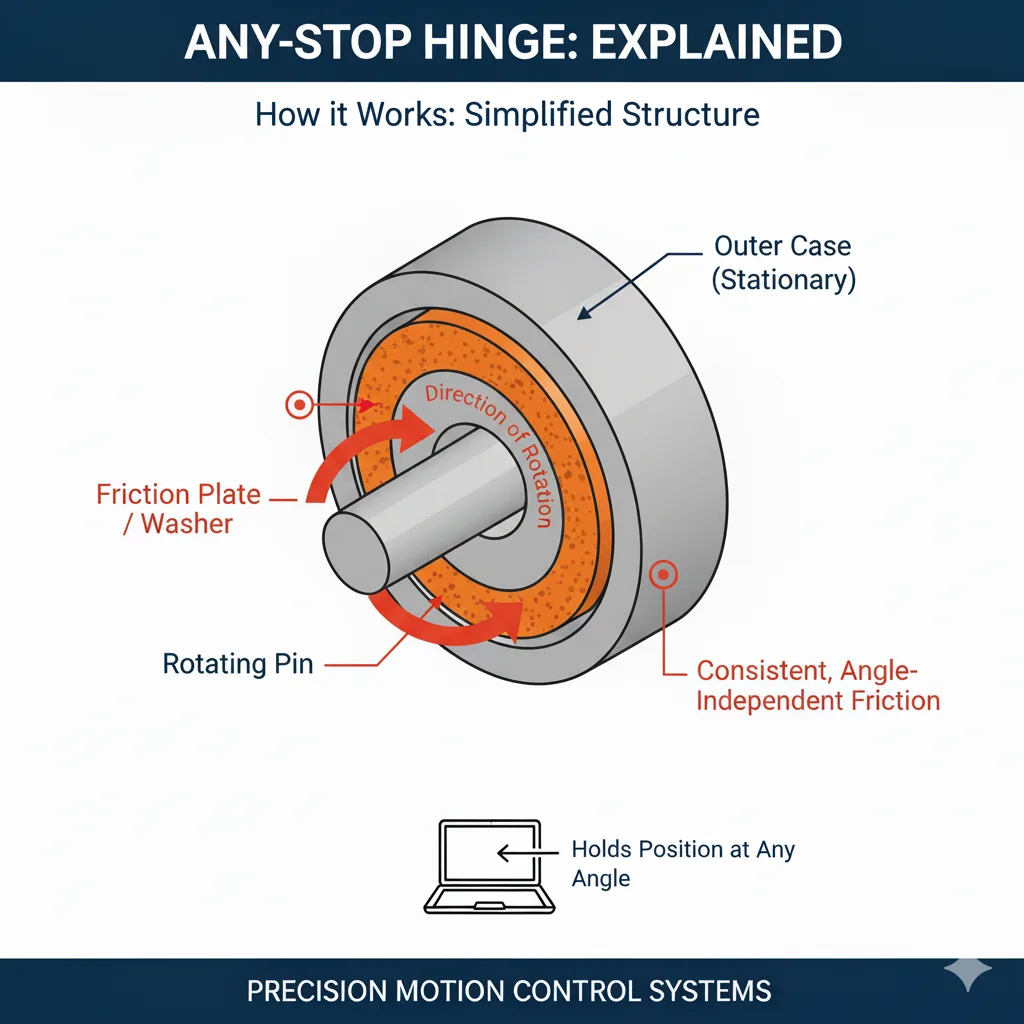
At its core, a friction hinge generates internal mechanical resistance to counteract external forces — primarily gravity. When the applied force (such as a user’s hand adjusting a screen) exceeds the hinge’s rated torque, the hinge allows smooth rotation. Once the force is removed, the internal friction firmly holds the component in place, preventing spring-back or drift. This “hold-in” capability is what engineers refer to as position control.
This precise control is typically achieved through two primary internal mechanisms, each with distinct advantages depending on the application:
Wrapped Band Technology
This is the most prevalent structure in high-performance torque hinges. A high-strength spring steel band is tightly wrapped around a central shaft. The interference fit between the band and the shaft generates consistent, predictable friction. The primary advantage of this design is its high torque density — it allows engineers to achieve significant resistance within a highly compact footprint, making it ideal for consumer electronics, portable medical devices, and tight enclosures where space is at a premium.
Disk or Washer Stack Mechanism
This design utilizes multiple layers of specialized wear-resistant washers — often high-performance polymers or hardened metals — pressed together under axial pressure, typically by a Belleville spring washer. As the hinge rotates, the friction between alternating stationary and rotating disks generates torque. This mechanism excels in providing an incredibly smooth, “silky” feel and is often preferred in applications requiring very high holding forces, such as heavy industrial access doors or large medical display arms.
2. Critical Engineering Parameters for Hinge Selection
When specifying a friction hinge, engineers must move beyond basic dimensions and evaluate the dynamic performance of the component over its entire lifecycle. Here are the four parameters that matter most:
Static Torque vs. Dynamic Torque
The most critical specification is the torque rating. Static torque is the resistance the hinge provides when stationary — the force required to initiate movement. Dynamic torque is the resistance during continuous rotation. To prevent a heavy lid from falling, the hinge’s static torque must exceed the gravitational torque exerted by the lid at its most horizontal position. The formula is: Required Torque (Nm) = Mass (kg) × 9.81 × Distance to Center of Gravity (m). Always add a 15–20% safety margin to account for manufacturing tolerances.
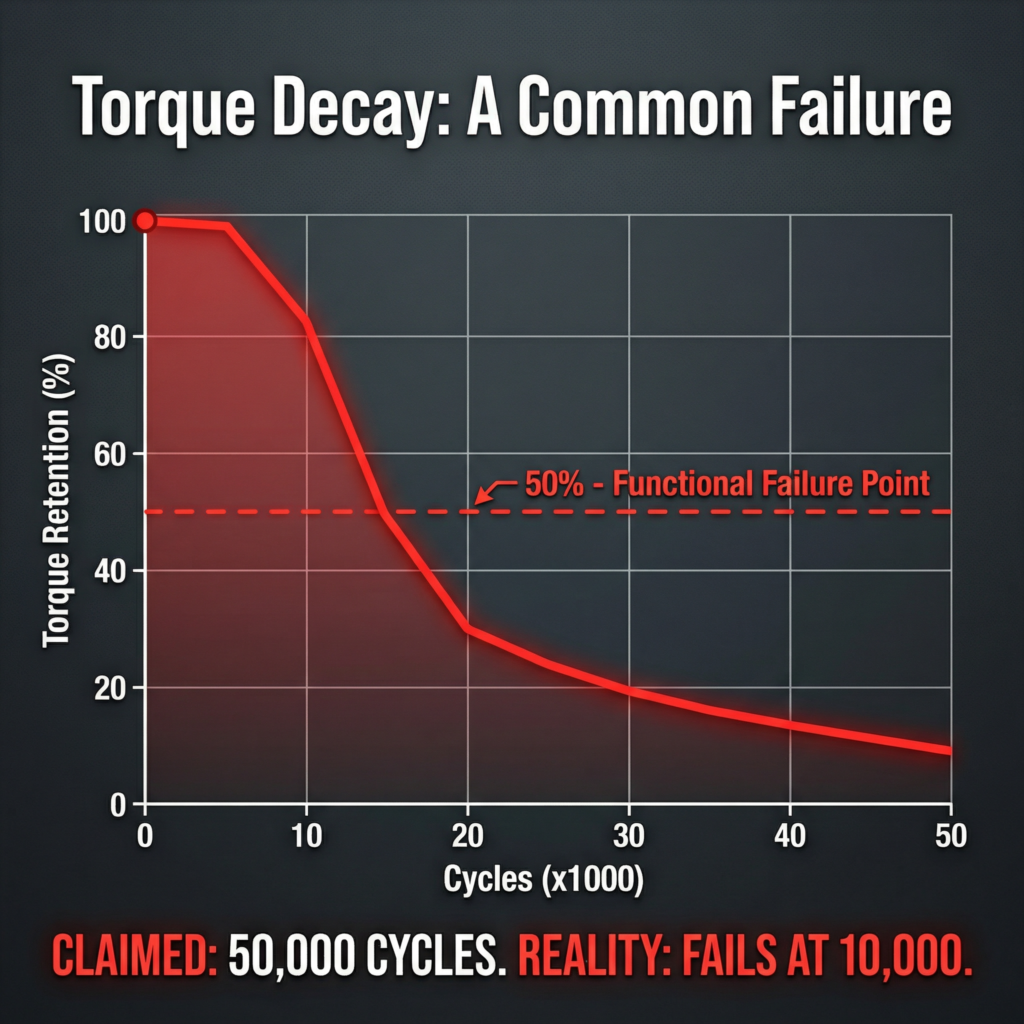
Torque Decay and Lifecycle Reliability
All friction hinges experience some degree of torque loss over time due to material wear and grease degradation. A critical metric for engineers is torque decay. A high-quality industrial-grade friction hinge should maintain at least 85% of its original torque after 20,000 to 50,000 cycles. When evaluating datasheets, always request actual lifecycle test reports from the supplier rather than relying on theoretical estimates. At JAN Hinge Damper, every hinge design is validated through continuous in-house lifecycle testing, and we provide actual test data showing torque retention above 85% after 50,000 cycles.
Asymmetric (One-Way) Torque
In many applications, the force required to open a lid should be different from the force required to close it. Asymmetric friction hinges provide high resistance in one direction — to hold a heavy lid against gravity — and low resistance in the opposite direction, making it effortless for the user to lift the lid. This ergonomic feature is highly sought after in automotive center consoles, medical equipment covers, and heavy industrial enclosures.
Operating Environment and Temperature Range
Friction hinges operating in extreme environments must be specified with appropriate lubricants and materials. Standard synthetic greases typically perform between -20°C and +80°C. For extreme applications, high-temperature synthetic greases rated up to +150°C are available. Always confirm the operating temperature range with your supplier before finalizing a specification.
3. Material Selection: Why Stainless Steel is the Non-Negotiable Standard
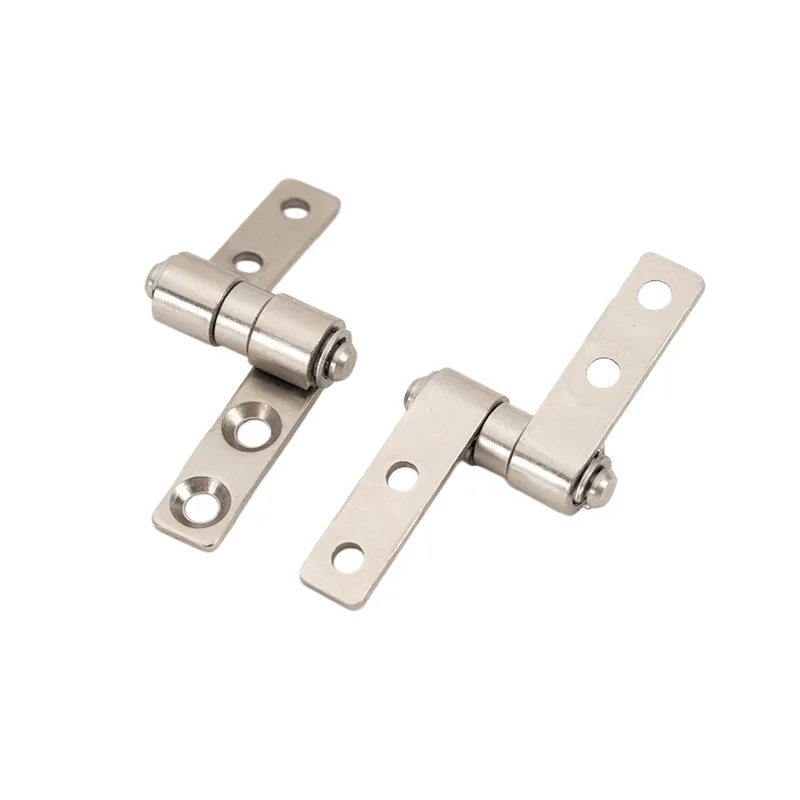
While zinc alloy and engineering plastics are common in standard hinges, high-performance friction hinges demand superior materials. Stainless steel — specifically grades 304 and 316 — is the industry standard for several compelling engineering reasons:
| Material | Creep Resistance | Corrosion Resistance | Thermal Stability | Best For |
|---|---|---|---|---|
| Stainless Steel 304 | Excellent | Good | Excellent | Consumer electronics, industrial enclosures |
| Stainless Steel 316 | Excellent | Outstanding | Excellent | Medical devices, outdoor/marine, chemical environments |
| Zinc Alloy | Poor (creeps under stress) | Moderate | Poor | Low-cost, low-cycle applications only |
| Engineering Plastic | Poor (heat-sensitive) | Good | Very Poor | Prototyping only — NOT for functional testing |
Friction hinges are under constant internal stress. Zinc alloys tend to “creep” or deform under long-term pressure, leading to rapid torque loss — often within just a few months of deployment. Stainless steel maintains its structural integrity and clamping force for years. For medical environments requiring chemical sterilization, or outdoor enclosures exposed to salt spray, 316 stainless steel is the only responsible choice.
4. Industry Applications: Where Friction Hinges Deliver the Most Value
Medical and Healthcare Equipment
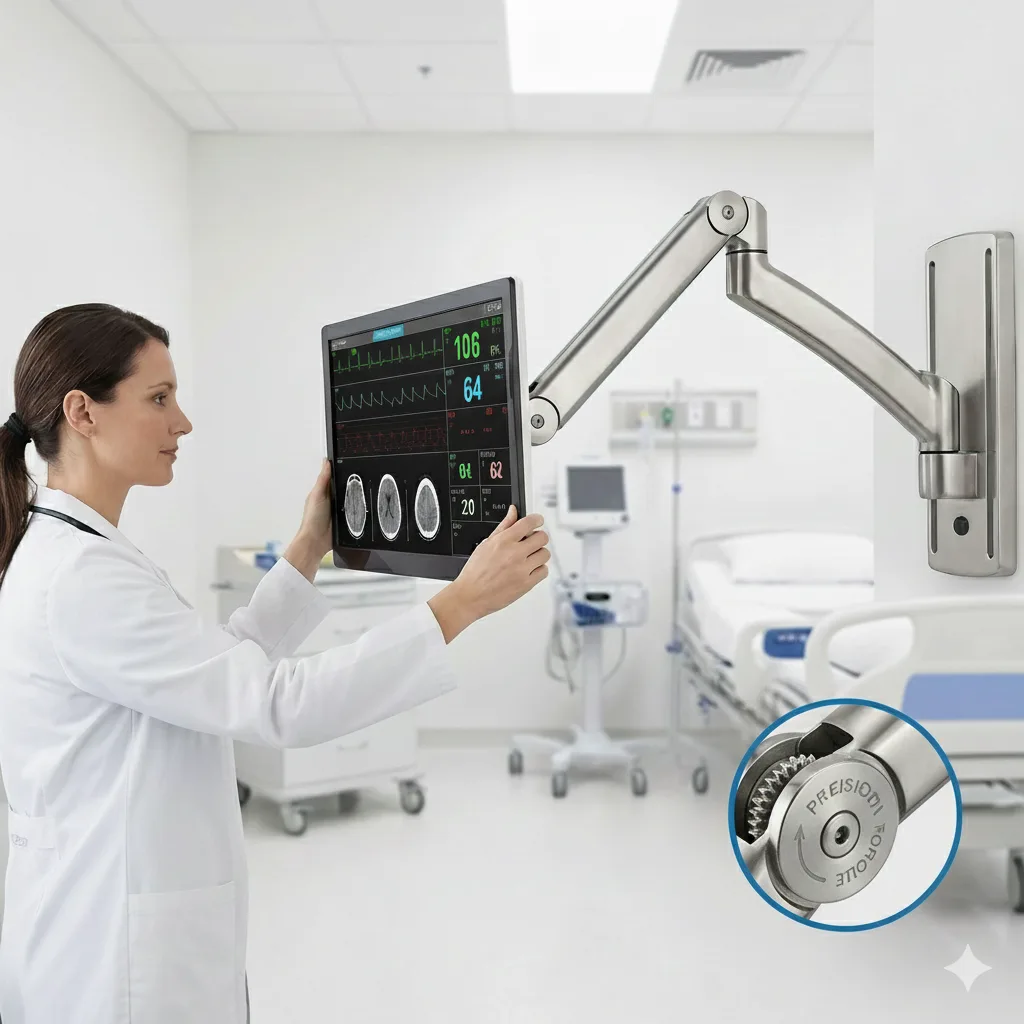
Learn more: The Critical Role of Friction Hinges in Medical Devices
In the operating room and diagnostic suite, precision is life-critical. Friction hinges in medical monitor arms allow surgeons and technicians to adjust screens with a single hand. Once released, the screen must remain perfectly stable without drifting, ensuring critical patient data is always visible. Key requirements include 316 stainless steel construction for chemical resistance, smooth and silent operation to maintain a calm clinical environment, and a lifespan of 50,000+ cycles to match the long service life of medical equipment.
Consumer Electronics: Laptops and Tablets
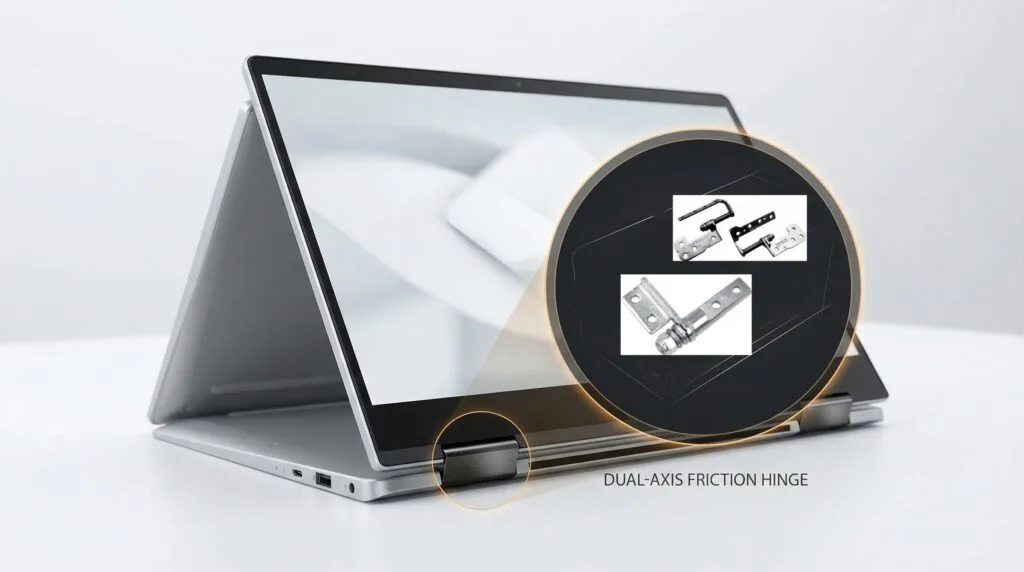
Learn more: Friction Hinges for Laptop and Tablet
The “feel” of opening a premium laptop is one of the most heavily engineered tactile experiences in consumer products. Miniature torque hinges must fit within a chassis less than 10mm thick while providing enough smooth resistance to hold the screen at any angle from 0° to 135°. They must also survive 20,000 to 30,000 opening cycles without the screen becoming “floppy.” The challenge of miniaturization is significant — achieving 1.0 Nm or more in a diameter of less than 8mm requires exceptional precision in manufacturing tolerances and heat management.
Consumer Electronics: Position Hinges for Devices
Beyond laptops, friction hinges are increasingly critical in foldable smartphones, portable displays, and smart home devices. The “one-finger open” experience — where lifting the screen does not lift the entire device base — requires asymmetric torque engineering. Premium manufacturers like JAN Hinge Damper develop proprietary hinge assemblies that provide high resistance in the hold direction and low resistance in the open direction, creating an intuitive and satisfying user experience.
Automotive Interiors
Modern vehicle interiors rely on friction hinges to enhance the perception of luxury. They are used in center console armrests, glove boxes, fold-down rear screens, and sun visor mirrors — providing smooth, silent, and controlled motion that prevents components from rattling or slamming during transit. Automotive-grade hinges must also meet stringent temperature cycling requirements, typically from -40°C to +85°C, and pass vibration and shock tests to survive the harsh dynamics of a moving vehicle.
Office and Industrial: Monitor Arms and Enclosures
Heavy control panels and protective covers on CNC machines, electrical switchgear, and industrial automation equipment require heavy-duty friction hinges. These hinges serve as passive safety devices, holding heavy access panels open while technicians perform maintenance — eliminating the need for secondary gas struts or manual prop rods. For these applications, torque ratings can range from 5 Nm to over 50 Nm, and the hinges must be rated for environments with cutting fluid, dust, and vibration.
Specialty Applications: UAVs, Drones, and Robotics
The rapidly expanding drone and robotics sector presents unique challenges for friction hinge design. Folding arm hinges on commercial UAVs must be ultra-lightweight while providing zero-play locking to prevent arm flutter during flight. Camera stabilizer mounts require precise, repeatable friction to hold sensor payloads at exact angles. These applications demand the highest precision manufacturing tolerances and often require custom alloy compositions to achieve the required strength-to-weight ratio.
5. Procurement Strategy: How to Evaluate and Select a Friction Hinge Supplier
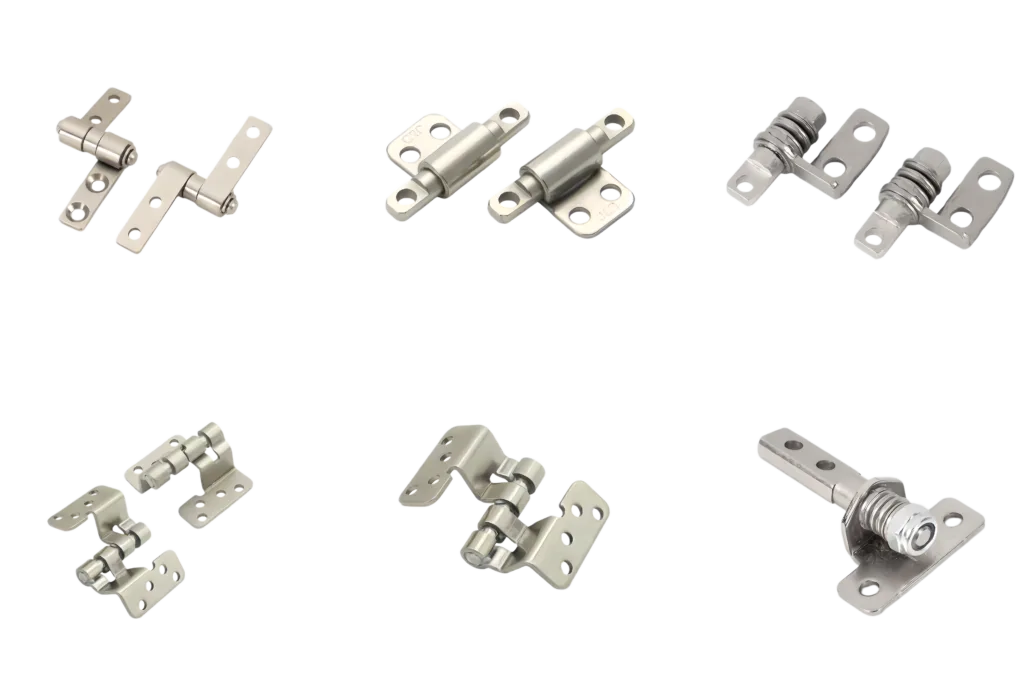
For procurement professionals, sourcing friction hinges involves balancing unit cost with long-term reliability. A hinge failure in the field often results in costly warranty claims, product recalls, and brand damage that far exceeds any savings achieved through low unit pricing. When evaluating a friction hinge manufacturer, consider the following critical factors:
100% End-of-Line Torque Testing: Does the supplier test the torque of every single hinge before shipment, or do they only perform batch sampling? Premium manufacturers guarantee torque consistency through 100% automated testing and can provide batch test reports as part of their quality documentation.
Vertical Integration and Customization Capability: Off-the-shelf hinges rarely fit complex custom designs perfectly. A strong supplier should control their own mold-making, machining, and assembly processes. This vertical integration allows them to offer rapid prototyping and custom torque tuning within weeks, not months. Ask for their typical lead time from CAD drawing to functional sample.
Lubrication Technology and Grease Specification: The quality of the internal lubricant determines the smoothness and lifespan of the hinge. Ask suppliers specifically about the thermal stability and brand of their internal greases. High-performance damping greases (such as the Nyogel series) are significantly more expensive than generic alternatives, but they are essential for a consistent, long-lasting feel.
Material Traceability and Certification: Can the supplier provide spectrographic analysis of their stainless steel to confirm it is genuine 304 or 316 grade? This is particularly important when sourcing from manufacturers who may use recycled scrap metal that does not meet the stated alloy specification.
Frequently Asked Questions (FAQ) by Industry
Industry 1: Consumer Electronics — Laptops and Portable Devices
Q: Our laptop hinge becomes loose after about 6 months of use. The screen no longer holds its position. What is causing this, and how do we fix it?
This is one of the most common complaints we hear from electronics engineers, and it almost always comes down to one of three root causes. First, the hinge may have been specified with a torque rating too close to the actual gravitational load of the screen, meaning it is operating at its absolute limit from day one. Second, the internal grease may be of insufficient quality, causing it to break down under the heat generated by repeated friction. Third, the hinge material itself may be zinc alloy or a low-grade steel that creeps under constant stress. The solution is to re-specify the hinge with a 20% torque margin above the calculated load, insist on a stainless steel construction, and request a supplier-provided lifecycle test report showing torque retention above 85% after 20,000 cycles before committing to mass production.
Industry 2: Medical Equipment — Diagnostic Displays and Surgical Arms
Q: We are designing a diagnostic monitor arm for an ultrasound machine. The display weighs 4.5 kg and needs to be adjustable by a single hand. What torque specification should we be targeting, and what material requirements apply?
For a 4.5 kg display, you first need to calculate the gravitational torque at the worst-case position (typically when the arm is fully extended horizontally). If the center of gravity is approximately 0.25 m from the pivot, the gravitational torque is approximately 4.5 × 9.81 × 0.25 = 11 Nm. Adding a 20% safety margin, you should target a hinge torque of approximately 13–14 Nm. For material, 316 stainless steel is mandatory for medical environments due to the requirement for chemical disinfectant resistance. We also strongly recommend specifying a sealed hinge design to prevent ingress of cleaning fluids into the friction mechanism. Contact the JAN engineering team for a custom torque evaluation.
Industry 3: Industrial Machinery — Enclosures and Access Panels
Q: We need a friction hinge to hold open a 15 kg steel access panel on a CNC machine. The panel is 600mm wide and opens to 90°. What type of hinge do we need, and how many should we use?
For a 15 kg panel with a center of gravity approximately 300mm from the hinge axis, the gravitational torque is approximately 15 × 9.81 × 0.3 = 44 Nm. We typically recommend distributing this load across two hinges (one at the top and one at the bottom of the panel), each rated for at least 25 Nm with a safety margin. For this application, a heavy-duty friction stay hinge with a stainless steel or hardened steel construction is the appropriate choice. Given the industrial environment with cutting fluid and metal dust, we also recommend a sealed or enclosed hinge design. For very heavy panels, consider whether an asymmetric (one-way) torque hinge would improve the user experience by making the panel easier to lift while still holding it securely open.
Industry 4: Automotive — Interior Components
Q: We are sourcing friction hinges for a center console armrest in a new vehicle model. The supplier’s sample feels perfect today, but we are concerned about performance after 3 years in a hot car interior. What should we specify in our procurement requirements?
This is exactly the right question to ask before committing to a supplier. For automotive interior applications, your procurement specification should include: (1) a temperature cycling test from -40°C to +85°C for a minimum of 500 cycles without torque loss exceeding 15%; (2) a lifecycle test of at least 30,000 cycles at elevated temperature (+70°C) to simulate a hot car environment; (3) a UV resistance test if any plastic components are exposed; and (4) a vibration test per relevant automotive standards (e.g., ISO 16750-3). Any reputable automotive-grade supplier should be able to provide these test reports as standard documentation. At JAN Hinge Damper, we hold IATF 16949 certification, which means our quality management system is specifically designed to meet automotive industry requirements.
Industry 5: Furniture and Architectural Hardware
Q: We are designing a height-adjustable drafting table with a tilting surface. The surface weighs 8 kg and needs to hold at any angle from 0° to 60°. We also need the hinge to look premium — can we get a brushed stainless finish? What is the MOQ for a custom design?
Absolutely. For an 8 kg surface with a center of gravity approximately 0.4 m from the pivot, you are looking at a required torque of approximately 31 Nm. We would recommend a pair of heavy-duty friction hinges, each rated at approximately 18–20 Nm. For the finish, brushed 304 stainless steel is a standard offering and complements high-end furniture aesthetics beautifully. Regarding MOQ: for standard torque hinges, we can often accommodate orders from as low as 100 pieces. For fully custom designs requiring new tooling, a typical MOQ is 500–1,000 pieces, with tooling costs amortized over the production run. We recommend requesting a custom sample first — our standard sample lead time is 1 business day for standard products and approximately 20 days for new mold samples. Get in touch with us to discuss your specific requirements.
Conclusion: The Detail That Defines the Product
A friction hinge may represent a small fraction of your product’s total bill of materials, but it carries a disproportionate share of the user’s judgment about “quality,” “precision,” and “reliability.” Every time a user adjusts a screen, opens a lid, or repositions a panel, they are forming an opinion about your brand — and that opinion is shaped by the hinge.
For engineers, the path to success lies in understanding the friction mechanism, calculating the correct torque with appropriate safety margins, and specifying the right materials for the operating environment. For procurement teams, the key insight is that the true cost of a hinge is not its unit price — it is its total cost of ownership over the product’s lifecycle, including warranty claims, field failures, and the brand equity lost when a product feels cheap.
If you are facing a motion control challenge or need assistance calculating the perfect torque specification for your next project, the engineering team at JAN Hinge Damper is ready to help. With 16 years of specialized manufacturing experience, ISO 9001, ISO 14001, and IATF 16949 certifications, and a dedicated rapid prototyping capability, we deliver engineered solutions — not just components.